
Heat sink saw chips are easy to miss in a quote that ends at cut length. A finned aluminum extrusion can have an acceptable dimension and still carry loose particles between fins, on a mounting face, or in the pack handed to assembly. A saw trial should therefore identify the accepted cut-part condition and the owner of any later cleaning step. It should not imply that a clean-looking sample proves thermal performance.
This guide concerns sawn aluminum heat-sink blanks, not a universal cleaning procedure or a finished electronic assembly. Use the released profile drawing, downstream process instructions, and the buyer’s actual cleanliness requirement. A photograph in this article is illustrative media-library material, not evidence that a particular lot passed a chip or residue test.
1. Name the handoff stage before specifying cleanliness
Ask whether the order delivers long extrusion stock, sawn blanks, machined heat sinks, or ready-to-install parts. A saw supplier may reasonably own cut length and visible end condition while the buyer owns washing, surface finishing, thermal-interface preparation, and installation. The cost and acceptance evidence change if the supplier is asked to take on any of those later operations. Put that boundary on the purchase order and drawing revision rather than relying on the phrase “clean parts.”
Identify where the part travels immediately after sawing. A bin for later machining has a different handling plan from a part that goes directly to a thermal-interface workstation. Even when downstream cleaning is planned, loose chips should not be allowed to damage fins or obscure a receiving check. Decide who removes them, where the check occurs, and what a rejected part returns to.
2. Map the places a chip can hide
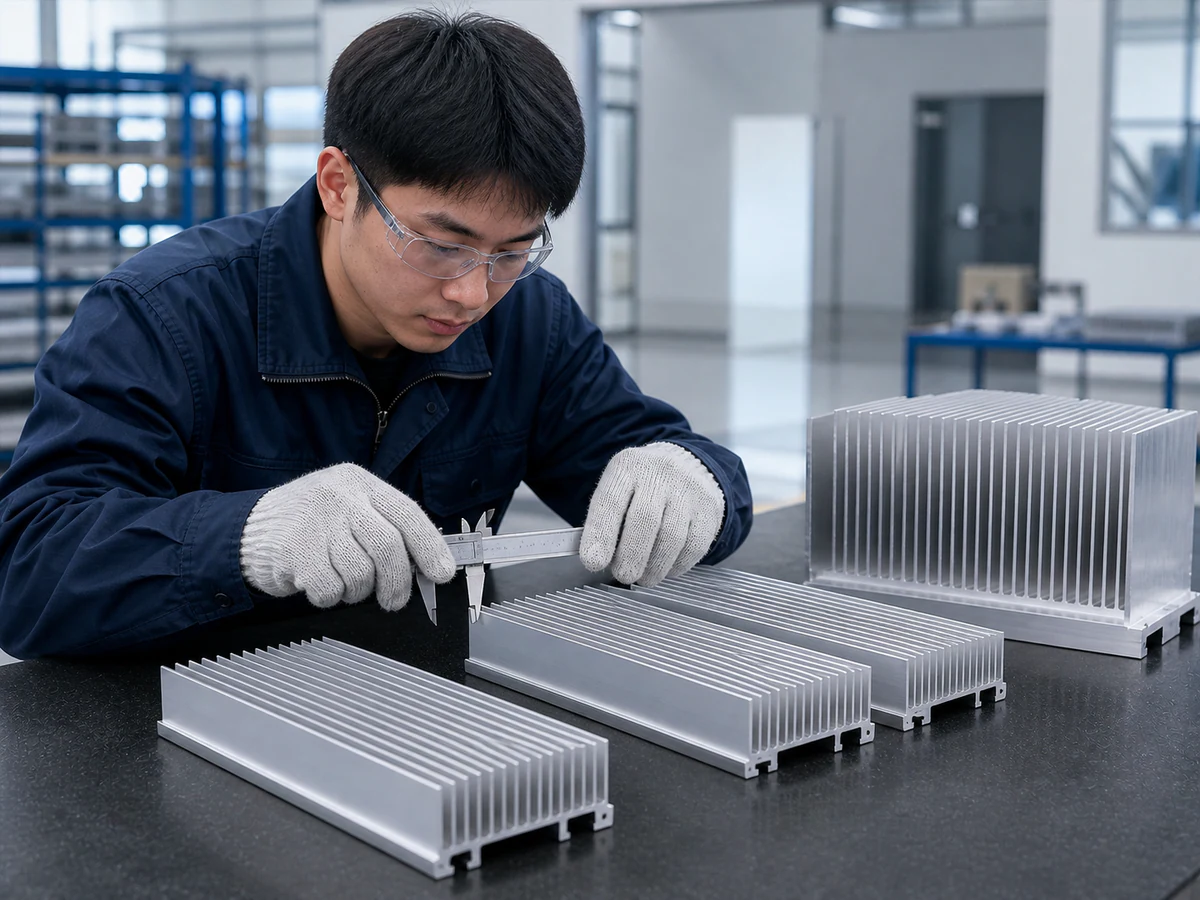
Inspect the cut end, open fin channels, recessed base features, slots, and any drilled or tapped features that already exist. Thin fins can make a quick top-down glance unreliable. Define which surfaces actually matter to the next operation: the mating base, a visible exterior, a connector area, or an airflow passage. This is a geometry and process question, so use representative extrusions instead of a flat coupon.
Keep a distinction between attached burrs and loose particles. A brushed surface may release loose chips but leave an attached edge burr; deburring may make new particles. Record both conditions separately. The profile drawing and the next assembly step must say where either condition is unacceptable. Do not invent a universal particle-count or fin-gap tolerance.
3. Control heat sink saw chips in the cutting route
For a machine-selection trial, record the actual stock section, blade and clamping setup, part orientation, chip collection path, and intended output rate. Examine the first and later pieces, including parts picked from the usual outfeed location. If the cut route uses lubricant, include its residue in the handoff question rather than assuming a dry-looking surface is ready for assembly. Distinguish machine housekeeping from cleaning the product itself; an efficient chip collector does not by itself prove every fin channel is clear.
Ask the supplier to demonstrate how an operator safely accesses the stopped machine and removes accumulated chips. The US OSHA machine-safeguarding guidance describes keeping people from reaching around a moving cutter and using a brush to remove particles only after the cutter stops. This is a safety principle for the operation, not a claim that a particular Jiurun model or pictured setup has been certified under that guidance. Site-specific guarding and lockout procedures still control the real work.
Compressed air is not a default answer to hidden chips. It can move particles into another recess or toward people. Where a site authorizes it, follow its guarding, PPE, pressure, and ventilation requirements. OSHA’s compressed-air guidance explains its US workplace limits and protective conditions; it is not a globally interchangeable cleaning specification for heat sinks.
4. Specify the next cleaning operation without making the saw trial carry it
If washing, ultrasonic cleaning, wiping, or another process is part of the approved route, name its owner and stage. Check that the method is compatible with the actual alloy, finish, adhesive, insert, and downstream packaging. Ask whether the buyer will inspect after the saw, after cleaning, or at both gates. Avoid prescribing a solvent or wash cycle from an unrelated product example.
The thermal interface is a separate acceptance point. Intel’s thermal-interface installation guidance tells installers to keep the processor’s heat-spreader surface free of oil, dust, and debris and warns that foreign material in the interface can reduce contact effectiveness. That guidance explains why contamination control matters at assembly; it does not certify the cleanliness of a sawn aluminum blank, prescribe its fin-cleaning method, or quantify this article’s heat-sink performance.
5. Write a check that a receiving inspector can repeat
For heat sink saw chips, put the check location, sample size, lighting, inspection tool, and decision owner on the order or control plan. A practical visual check can name the cut end, a specified number of fin channels or all accessible channels, the base face, and the package interior. If the buyer needs a quantified cleanliness limit, agree the test method and acceptance number with the system engineer before production. Do not treat an unspecified “no chips” note as a complete measurement plan.
Collect at least one first-off sample and a sample from sustained production under the actual part collection method. Mark the profile, revision, cut orientation, and time in the run. Record whether the inspector saw a loose chip, a remaining burr, a mark from handling, or a fluid residue. Those observations lead to different corrective actions. A photo can document a finding, but it does not replace a defined sampling decision for the lot.
6. Keep cleared parts clear through the handoff
A passed heat sink saw chips inspection loses value if loose particles in the tray fall back into fin channels. Separate new cut parts from collected scrap and used brushes, keep the agreed tray or separator clean, and identify a rework bin. Define how an inspector handles a suspect part without rubbing thin fins against its neighbors. The package and movement plan should protect fin geometry as well as the accepted particle condition.
For a separate treatment of deformation and identity at delivery, see our heat-sink fin receiving guide. Its packaging and incoming checks do not replace the post-saw chip handoff described here.
7. Send an RFQ that separates cutting, cleaning, and installation
- Identify the released profile and drawing revision, including fin and base features relevant to inspection.
- State whether the deliverable is a cut blank, cleaned blank, machined sink, or ready-to-install part.
- List the cut length, end geometry, quantity, and accepted burr condition independently of loose particles.
- Name the surfaces and channels to inspect for chips, fluid residue, and handling marks.
- Assign any deburring and cleaning step, along with the inspection gate after each operation.
- Specify how trial pieces will be collected, sampled, marked, and packed for the real route.
- Keep the downstream thermal-interface and system-performance verdict with its engineering owner.
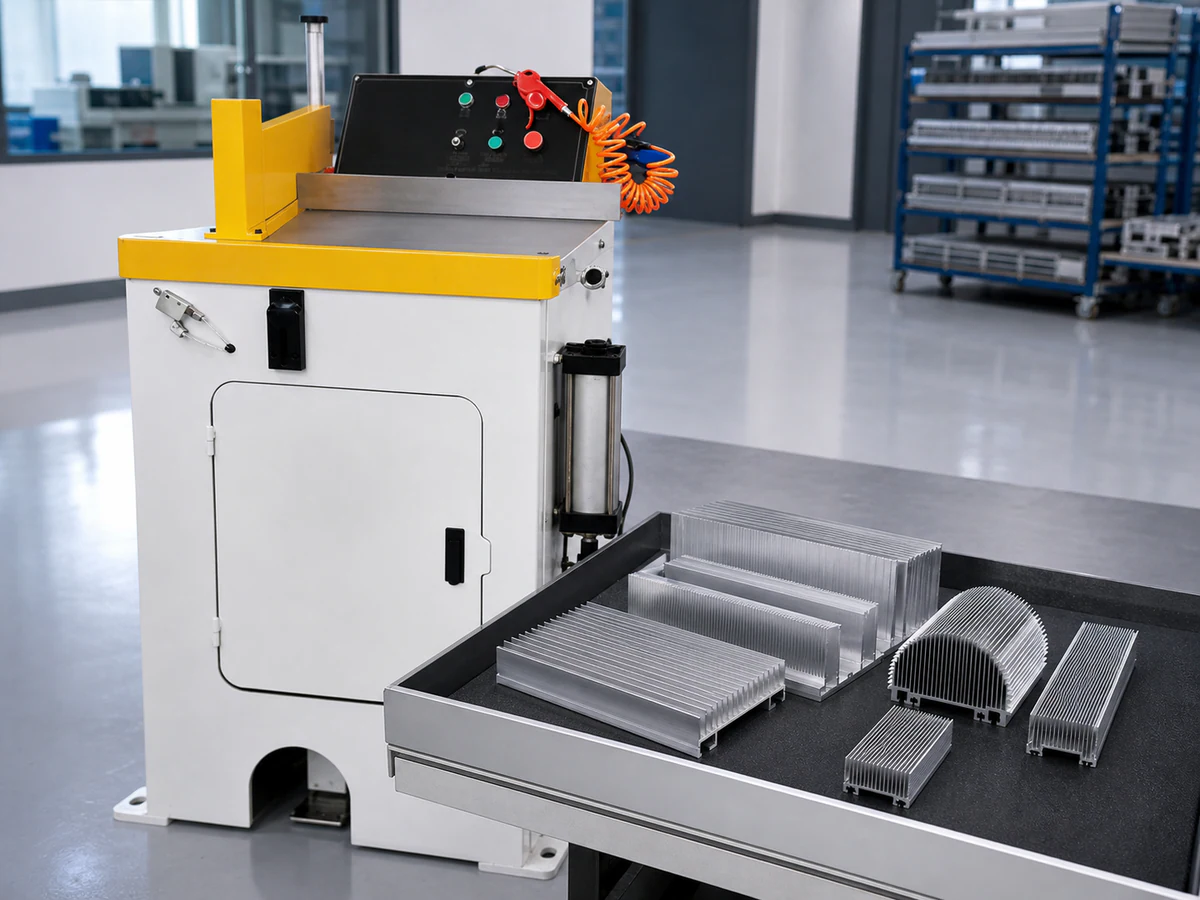
Send JiurunCut representative extrusion stock, the released cut drawing, the intended batch mix, and the agreed post-saw condition through our machine enquiry page. We can discuss a saw trial around the cutting work your factory actually retains. The buyer and system integrator should approve any later cleaning and thermal acceptance.
Watch a general aluminum-profile saw example
The following video is from Jiurun’s own YouTube channel and shows a general aluminum-profile sawing operation. It is equipment context only: it does not show the heat-sink sections pictured here, a chip-clearance trial, a customer lot, or proof of a cleanliness or thermal result.
Source and scope notes
Primary sources: US OSHA machine-safeguarding guidance, US OSHA compressed-air guidance, and Intel thermal-interface installation guidance. The RFQ and handoff recommendations are purchasing inferences, not third-party approval of Jiurun equipment or a substitute for project-specific safety and cleanliness engineering.