
An aluminum saw unloading plan should be agreed before the truck reaches the receiving bay. A purchase order may identify the saw, but it rarely tells the receiving team how the actual packed machine is divided, what each package weighs, where its manufacturer-approved handling points are, or who controls the handoff. Those missing facts can delay delivery and put people or equipment at risk. This buyer guide helps you request the right shipment information and assign a qualified handling team. It is not a rigging procedure or a substitute for the machine maker’s instructions and the site’s safety assessment.
Start with the machine as it will actually arrive
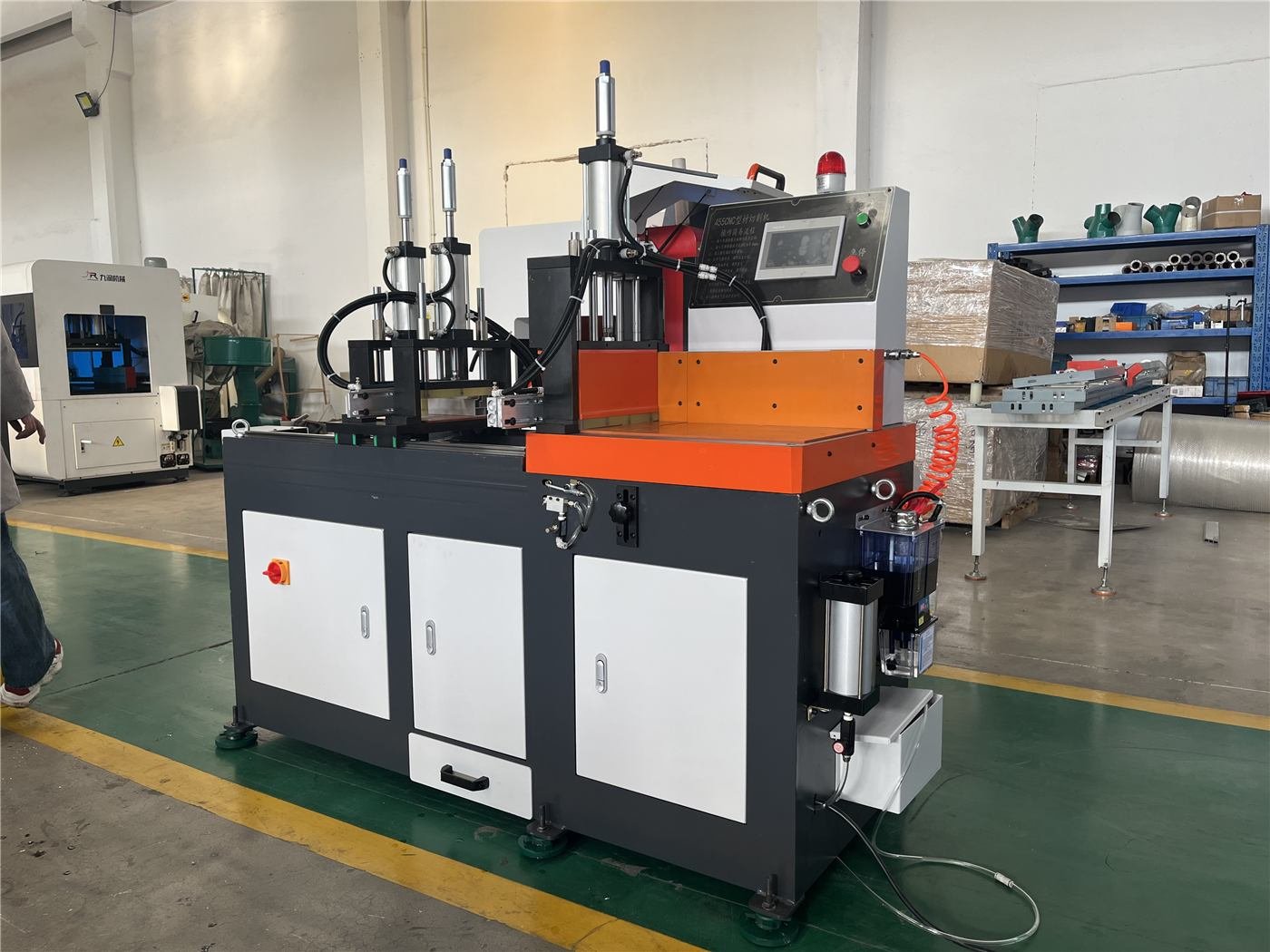
Ask the supplier for the final packing list and a handling document tied to the as-shipped configuration. The saw body, infeed table, outfeed conveyor, electrical cabinet and accessories may travel as separate units. A catalog photograph of the installed line does not tell you how many packages will arrive or which items have been removed for transport. Record each package identifier, gross mass, outside dimensions, orientation restrictions and the revision of the instructions supplied for that package.
Request the manufacturer’s approved lifting or fork-handling information for each unit. Ask where its designated points are, whether transport restraints or a shipping frame must remain in place during handling, and who will confirm the actual center of gravity and load distribution. Do not infer a lifting point from a visible ring, base opening, guard, feed table or photograph. The responsible competent team must resolve the method from the applicable instructions and the real load.
The UK HSE guidance on planning lifting operations calls for planning and organizing the work according to its complexity. Its lifting-equipment guidance identifies load weight, shape, center of gravity and available lifting points as planning inputs. These sources explain why a generic note such as “forklift available” is too thin to close a shipment-specific question; local rules and the qualified handler still govern the work.

Match the load information to the receiving site
Give the receiving lead the carrier’s vehicle type and the supplier’s proposed package list. Confirm the delivery position, available unloading space, approach and exit route, overhead and side clearances, floor or dock constraints, pedestrian separation and the point where a unit can be set down. A route that fits an assembled machine drawing may not fit a crated unit, and the reverse can also be true. Ask the site team to check the actual route with the shipment dimensions before dispatch.
Separate contractual delivery terms from physical handling responsibility. Your agreed shipping rule and named place address commercial obligations; the receiving plan must still name who provides the handler, equipment, supervision, access and communication at the vehicle. If the carrier, supplier and buyer each assume another party will unload, the problem appears only when the truck arrives. Put the responsible organization and contact beside each handoff rather than relying on the phrase “delivery included.”
The HSE’s loading and unloading guidance highlights coordination, a clear working area and the roles of visiting drivers. For a forklift, OSHA’s load-composition guidance explains that load weight, size, position and load-center distance affect stability and capacity. These are reasons to provide the qualified team with the actual package data; they are not a capacity calculation for the saw in your order.
Keep separate packages separate in the plan
Imagine a buyer ordering one enclosed saw with a long feed table. The quotation lists one machine line item, but the shipment note later identifies a saw body and two table sections. The buyer should request the handling data for all three packages, then reconcile the planned vehicle and receiving route for each. The maximum package may determine the equipment choice, while the longest package may determine the access route. Do not apply the saw body’s lifting information to the table sections just because they belong to one order.
That example is illustrative and contains no machine rating or handling method. The actual supplier must identify how the purchased configuration is packed. Where a package is split, joined or repacked after the quotation, ask for updated dimensions, mass and instructions before the receiving team signs off on the plan. Document what changed and who accepted the revised arrangement.
Put the questions on one pre-arrival sheet
A useful aluminum saw unloading plan has a short evidence column as well as a responsibility column. Ask the supplier and receiving lead to close these items before the delivery appointment:
- Package identity: Which package contains the saw body, feeder, outfeed and loose accessories? Which order revision and packing list apply?
- Load data: What are the gross mass, dimensions, orientation and center-of-gravity information for each package?
- Approved handling: Which current manufacturer instructions identify the permitted handling points and shipping restraints? Are any accessories separately required?
- Vehicle and route: What vehicle and unloading position are confirmed, and has the site checked access from that position to the set-down area?
- People and equipment: Which qualified organization plans and supervises the lift or forklift move, and who supplies suitable equipment?
- Handoff record: Who records arrival, a discrepancy, damage or a change in package information, and who can authorize a revised plan?
Keep unanswered items marked open. An email saying “standard packing” is not an approved package drawing. A photograph of a similar saw is not a weight certificate. A logistics booking is not proof that the site route or handling method was assessed. Ask for the specific supporting document or the responsible team’s written disposition.
Decide what happens if the truck arrives with a mismatch
For the aluminum saw unloading plan, give the receiving lead a clear hold route. If the package count, mass, dimensions, restraint state or identified handling points differ from the agreed information, stop treating the original plan as approved for that unit. Record the observed discrepancy, keep people clear of the unresolved handling activity and ask the supplier and qualified handling lead to reassess it. Do not improvise a new pick point or bypass a transport restraint to meet a delivery slot.
After the qualified team has completed the aluminum saw unloading plan and unloaded the equipment, the buyer still needs a separate delivery and item reconciliation. Installation and technical acceptance are later decisions. See the site installation guide and the factory versus site acceptance guide to keep these gates distinct. An unloaded saw has not thereby passed a cutting trial.
A machine video is context, not an unloading method
The JiurunCut video below shows a saw operating as general equipment context. It does not show the crated unit in this article, its mass, approved lifting points, a customer delivery or a measured handling result. Request shipment-specific documents for the actual order.
Send an RFQ that includes the arrival question
Send JiurunCut the profile and output requirements for the saw, the intended site, access limitations and the contact responsible for receiving. Ask for a quotation identifying the proposed machine and separate shipped units, plus the handling documents that can be supplied for that configuration. If the package details cannot be finalized until build completion, agree when the revised information must reach the site team before dispatch. Share your cutting requirements and delivery questions so the machine proposal and arrival plan can be reviewed together.
Aluminum saw unloading plan: buyer questions
Can I use the machine’s catalog weight for the forklift plan?
Request the gross mass and load information for each actual shipping package. A catalog machine value may exclude packing, removed units or transport frames. The competent handler must assess the specific load and equipment.
Does a visible ring show where to lift?
No. Confirm approved handling points from the manufacturer information for the as-shipped unit. Appearance alone does not establish a rating or permitted method.
Does signing the delivery note accept the machine?
Keep transport receipt, package reconciliation, installation and the agreed technical acceptance as separate records. The applicable contract and receiving procedure determine what a signature means; do not substitute it for a witnessed machine test.