
Scoreboard aluminum frame cutting is a narrower purchase than ordering a complete scoreboard. A saw can make released extrusion blanks for a cabinet perimeter, removable panel frame, mounting channel, or service cover. It does not supply the electronics, weatherproof enclosure design, mounting structure, wiring, or installation approval. Before a supplier quotes a saw or cut-part batch, define exactly which member leaves the cutting station and which downstream team owns the remaining work.
This guide is for scoreboard fabricators and purchasing teams comparing an in-house aluminum saw with outsourced cut blanks. The checks below turn a cabinet drawing into a trial that can reveal wrong profile orientation, joint gaps, damage to visible faces, and missing hardware interfaces. They are procurement questions, not a statement that any pictured frame is a scoreboard or that a Jiurun machine has passed a particular trial.
1. Identify the scoreboard construction before listing aluminum cuts
Begin with the approved product family and its revision. Some scoreboards use an extruded aluminum outer frame; other displays have sheet-metal cabinets with separate mounting channels or flanges. For example, Electro-Mech’s Model 1030 manual describes an extruded aluminum outer frame, while a Daktronics outdoor LED manual shows sheet-metal cabinet mounting details. Those are examples of differing construction routes, not specifications for your project.
Ask engineering to mark every item on the drawing as an extrusion to saw-cut, a sheet-metal part, a machined part, a bought fastener, a sealed panel, or a complete assembly. Do not infer that the whole cabinet can be made by cutting aluminum profiles. Record whether the RFQ covers only straight blanks, mitered perimeter members, predrilled channels, or a labeled kit. That scope determines whether a saw trial is meaningful.

2. Release one cut list for every cabinet and section variant
A single scoreboard range may include different widths, mounting locations, access doors, advertising panels, and sectional joints. Make a controlled cut list with the drawing revision, profile part number, alloy and temper if specified by the designer, finish state, length datum, cut angle, quantity per cabinet, and orientation of the visible face. Add a unique member label and the cabinet or section in which it belongs. If a profile can be reversed, mark which face must contact the saw datum and which end becomes left or right after cutting.
Do not average several lengths into a convenient demonstration bar. Choose the longest and shortest released members and the cross-section most likely to move under clamping. If the actual production stock is bowed, protected with film, anodized, or coated, include that condition in the supplier’s sample plan. Agree what counts as an accepted cut part at the saw exit; downstream drilling, wiring, sealing, and final fit remain separate gates unless specifically included in the quote.
3. Show joint geometry, access doors, and attachment interfaces
The cut end is not judged only by a tape measure. On a perimeter frame, miter or square-end geometry affects the corner joint and the fit of a face panel. On a sectional display, a splice, access door, or rear mounting flange may require a particular end orientation and clear width. The Nevco outdoor installation manual describes aligning sectional cabinets, joining seams, and accessing labeled cables at cabinet joints. Treat it as an example of why a cut list must preserve assembly interfaces, not as a template for unrelated scoreboard models.
Give the saw supplier an approved joint drawing and a physical mating component if possible. Ask the supplier to cut a left and right member, identify the cut faces, and assemble them with the specified connector or fixture. Inspect the resulting gap, fastener clearance, panel fit, and service-door path with the responsible designer. If a later drilled hole or weld establishes the true datum, document that so a good saw cut is not incorrectly rejected for an unperformed operation.
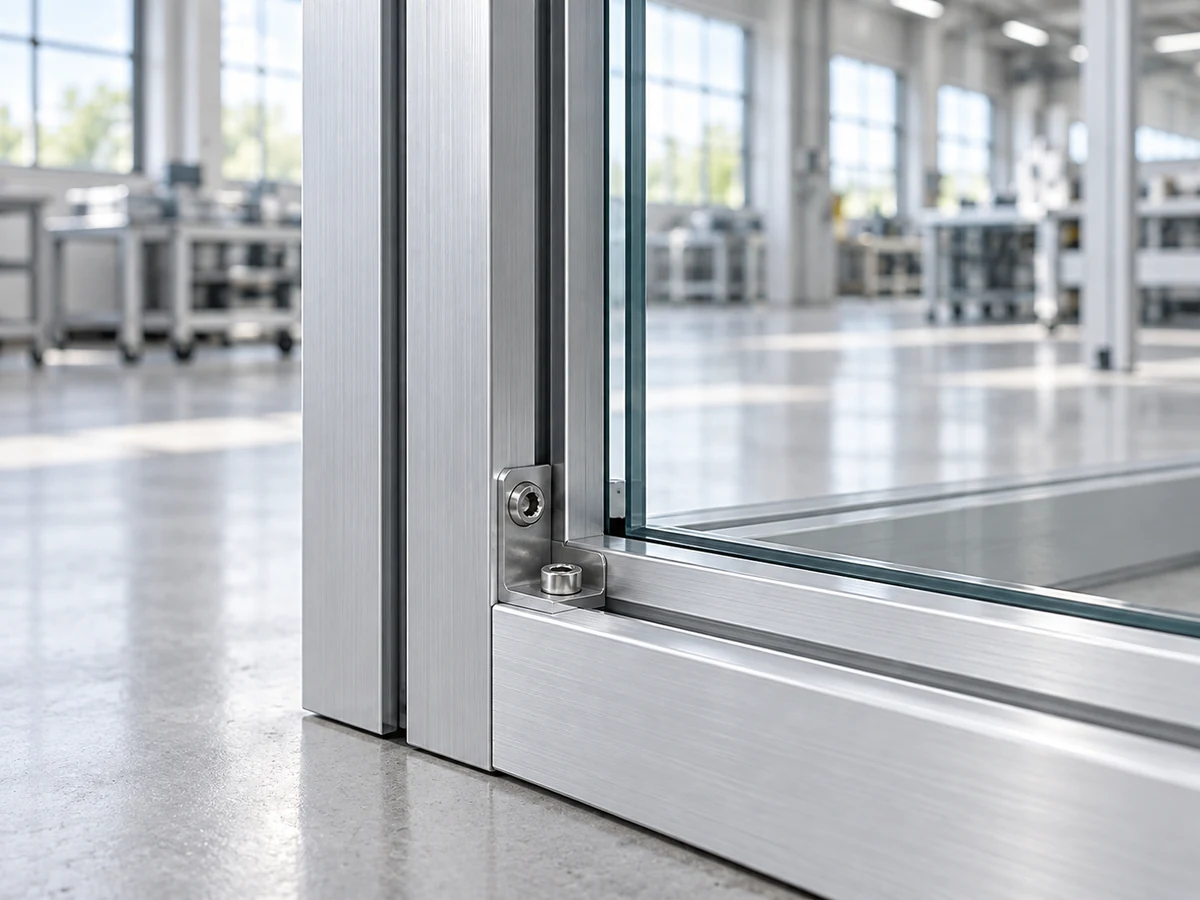
4. Plan a scoreboard aluminum frame cutting trial around the released stock
For scoreboard aluminum frame cutting, send representative stock rather than a generic aluminum bar. In the trial request, name the profile drawing, stock length and condition, required output length and angle, protective film or visible finish, and whether chips must be removed before packing. Ask the supplier to demonstrate support at infeed and outfeed, clamping contact, blade path, cut-part handling, and the method used to measure the first accepted blank. Record the actual saw configuration and blade used; do not apply a catalogue claim from another model or material.
Inspect the profile where the clamp contacts a visible face, the end that mates to a corner, and any channel that later receives a panel or fastener. A small nick on a hidden support may have a different disposition from damage on a display face. Use the drawing’s actual acceptance criteria; do not invent a universal length tolerance or cosmetic grade. For a deeper clamp-contact trial method, see the Jiurun upper-lower clamp trial guide as a separate machine-selection example.

5. Keep mounting hardware and structural approval outside the saw claim
Mounting channels, clamping angles, rods, fasteners, and the supporting structure may be crucial to the installed scoreboard, but a cut aluminum blank alone does not verify their strength or the installation. The Daktronics manual cited above describes a mounting route using channels and clamping angles for a particular sheet-metal cabinet. Your designer or scoreboard manufacturer must identify the actual load path and approved hardware for your product. Ask for the final assembly drawing before you decide where each aluminum blank stops.
Include a handoff drawing showing the cut members, mounting holes or other later operations, interface dimensions, and ownership of structural and site approval. If the saw vendor supplies a cut kit only, the quote should explicitly exclude cabinet design, fastener selection, sealing, electrical work, and field installation. That distinction prevents a supplier from being credited for acceptance work it has not performed.
6. Choose the supply route using assembly evidence, not price per cut alone
Compare three routes on the same released bill of materials: buy finished scoreboard cabinet modules, outsource labeled extrusion blanks, or cut approved profiles in-house. Finished modules may reduce local fabrication steps but still require receiving and installation checks. Outsourced blanks move cut setup to a supplier, but require drawing control, packaging, and receipt inspection. In-house cutting can shorten replenishment of repeat members only if the shop has stable profiles, fixtures, inspection capacity, and a controlled revision process.
Ask each bidder to price the same scope: profile supply, setup and trial, cut quantities by variant, first-piece inspection, scrap allowance, identification, packing, and transport. Keep downstream machining and assembly costs visible. A low cut price can be misleading if a cabinet corner must be remade or if mixed section members arrive without labels. For a related method of defining a frame kit before saw selection, see our industrial sign-frame cutting guide.
7. Specify packing, traceability, and the accepted handoff
Decide whether members leave as individual cut blanks, cabinet sets, or complete section kits. List the label fields: purchase order, drawing revision, profile ID, cut length, angle or left/right orientation, cabinet variant, quantity, and inspection status. Separate accepted parts from trial samples and rework. Protect corners and visible faces without trapping loose chips against the finish. If multiple display sections ship together, pack and identify them so the assembler can find the correct joint hardware and cable access position.
At receipt, sample the lengths and ends by the agreed method, confirm kit counts and labels, and check for transit damage before releasing assembly. This is also where responsibility for any missing mounting or sealing item becomes clear. Our cut-output traceability guide explains how to link a cut bundle to its released job.
Copy this scoreboard frame cutting RFQ checklist
- Approved scoreboard or cabinet drawing, revision, and named decision owner.
- List of extruded aluminum members versus sheet metal, electronics, bought hardware, and completed assemblies.
- Profile drawings, material and finish, stock length, member IDs, cut length, angle, quantity, and visible-face orientation.
- Left/right corner and sectional-joint samples with the approved mating hardware or fixture.
- Trial plan identifying the actual stock, offered saw configuration, blade, measurement datum, and acceptance record.
- Scope boundaries for drilling, sealing, mounting structure, wiring, and site approval.
- Packing, labels, receipt inspection, and handling of trial or rejected pieces.
A useful scoreboard aluminum frame cutting quote should let you compare the same accepted cut-member handoff across suppliers. Send the controlled drawing and sample profile to Jiurun if you want to discuss a saw trial for your released aluminum members. We can review the cutting scope and trial questions; final scoreboard design and installation acceptance remain with the responsible product and site teams.
Related equipment demonstration
The Jiurun video below shows general aluminum cutting equipment. It is an illustrative equipment view only. It does not demonstrate this scoreboard profile, the exact quoted saw configuration, a customer project, or the performance and fit checks described above.