
Tennis net post aluminum cutting is a narrow manufacturing job inside a much larger sports-equipment system. A saw can produce a controlled post blank, but it cannot by itself prove that the finished pair accepts a tensioning mechanism, fits a ground sleeve, holds a net, or meets a product standard. A useful machine trial therefore begins with the approved post drawing and ends with measured blanks handed to the people responsible for the complete post.
This guide is for a post manufacturer or an OEM buyer quoting extrusion cutoff. It does not provide a field modification, installation, net-tensioning, or safety procedure. Keep the product engineer and the finished-system supplier responsible for post design and compliance.
Tennis net post aluminum cutting: identify the real post family
Commercial tennis posts show why the finished-product label is too broad for a saw RFQ. Interplastic describes an internally reinforced 80 × 80 mm aluminum profile with an internal tensioning mechanism. Gill Athletics lists a four-inch square aluminum post pair with a winch post and a tie-off post, while ground sleeves and accessories are separate. These are different product examples; neither establishes the section, wall, length, or machine capacity required for your order.
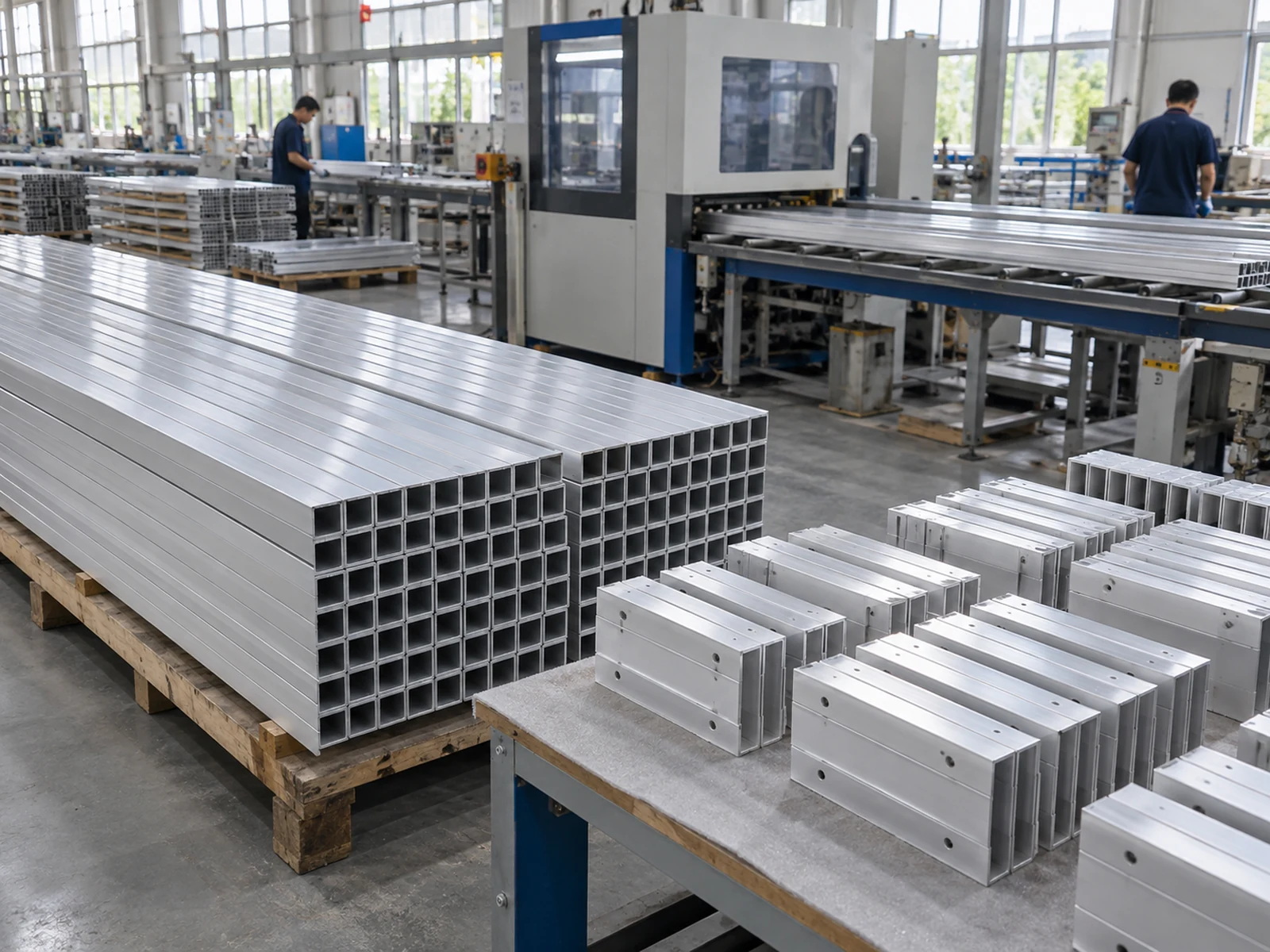
Give the saw supplier a controlled section drawing or a physical approved profile, alloy and temper if specified, finish condition, and the intended incoming stock form. Mark any internal rib, net-retention groove, rounded corner, or other feature that changes how the extrusion can be supported. A quote based only on “square aluminum tennis post” leaves the critical contact surfaces undefined.
Separate the active and passive post blanks
A pair can contain two different assemblies. In the Interplastic example, one post carries the tensioning apparatus and the other carries net attachments. The saw may cut equal-length blanks, but that does not make the downstream operations interchangeable. Put a distinct part number, revision and handedness on each blank. Record which ends receive caps, mechanism access, sleeve engagement, or later drilling and machining.
Ask the product owner to release a cut list showing quantity per pair, nominal blank length, measuring datum, end condition, permitted burr, and any remaining allowance for downstream work. Do not derive cut length from an advertised installed height or sleeve depth. Lausín y Vicente describes one square-section product with internal ribbing, a net-tightening device and ground anchors; those assembled features are reasons to ask for its own member drawing, not numbers to transfer to another system.
Confirm what the saw receives and what it delivers
State whether the saw sees unfinished extrusion, anodized or coated profile, a partially prepared member, or a purchased replacement blank. Define the output at the same level: a raw cut post, a deburred post, a marked left/right pair, or a prepared component after separate secondary operations. Cable tensioners, sleeves, caps, hooks, nets and fasteners should appear as bought or downstream items unless the quotation explicitly covers them.
A finish route matters to material handling. Cutting a prefinished profile may expose a raw end and creates a different visible-face protection requirement from cutting before coating. Ask who decides whether the end will be concealed, treated or rejected. The cutting supplier should not invent a corrosion or appearance acceptance rule from the machine catalogue.
Use the real hollow section to plan the fixture
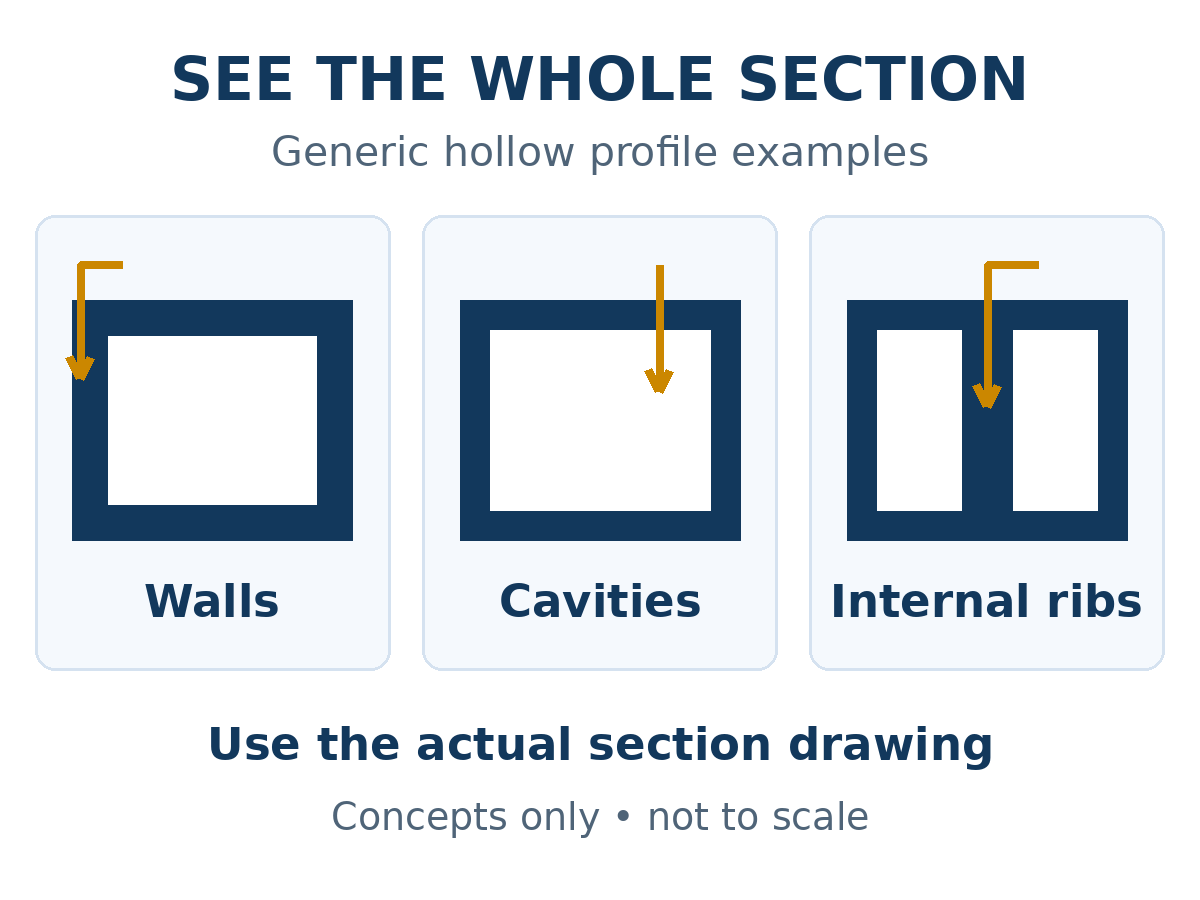
The post profile may have thin outer walls, cavities and internal ribs. Those features affect the location of safe clamp contact and the amount of support needed across the blade path. Provide the actual section and proposed orientation. In a trial, record where the back fence, side clamp, top hold-down and outfeed support touch the stock. Inspect the face after release for indentation, twisting or finish damage.
Compare at least the stiffest and least-supported orientations that the released process might use. A smooth cut on a solid bar does not validate a hollow post extrusion. Our profile-orientation RFQ guide explains how to identify contact faces and handed ends before comparing machine offers.
Measure the cut blank before judging the pair
Agree a first-off measurement plan for each released post blank: finished length between specified faces, squareness or approved end angle, burr and end opening, visible-face condition, and part identity. Record the instrument and measurement temperature if tight length tolerances make them relevant. A subsequent assembly fit check must be performed by the post-system owner using approved mating components. Keep the saw-stage record separate from completed-post testing.
Trial a small production sequence, not just one attractive sample. Include the actual long-stock support, repeated feeds or stop cycles, a changeover between profile or finish families if the purchase scope includes them, and a last-piece check. Label each measured piece so a failure can be traced to stock, setup, fixture contact, blade condition or measurement method. Our finished-length datum article explains why both parties must measure from the same faces.
Write the acceptance boundary into the saw quotation
Tennis net post aluminum cutting should be accepted at the blank stage, with separate owners for the assembled pair and its product tests.
Ask each supplier to price the same stock length, section envelope, finished blank count per shift, material condition, support arrangement, fixture set, measurement plan, scrap assumption and training scope. Request the witnessed first-off and repeat-piece results rather than an unsupported “tennis post compatible” claim. If the saw cannot handle a ribbed or prefinished profile without extra pads or supports, list those as quotation items.
A complete-post maker may also need secondary holes, mechanism assembly, surface finishing, packaging and finished-system verification. Those steps have their own owners and costs. Compare quotations at a common accepted output stage, such as labeled cut blanks per approved pair, so a low saw price does not conceal omitted labor or downstream scrap.
Send a compact trial pack
- Approved post-family drawings, revision, actual extrusion section and incoming stock condition.
- Separate active and passive blank part numbers, quantities, cut datums and end acceptance.
- Finish and visible-face rules, plus approved fixture contact and support constraints.
- First-off and repeat-piece measurement sheet with the decision maker named.
- Explicit list of downstream mechanisms, sleeves, caps, coating and product tests outside saw acceptance.
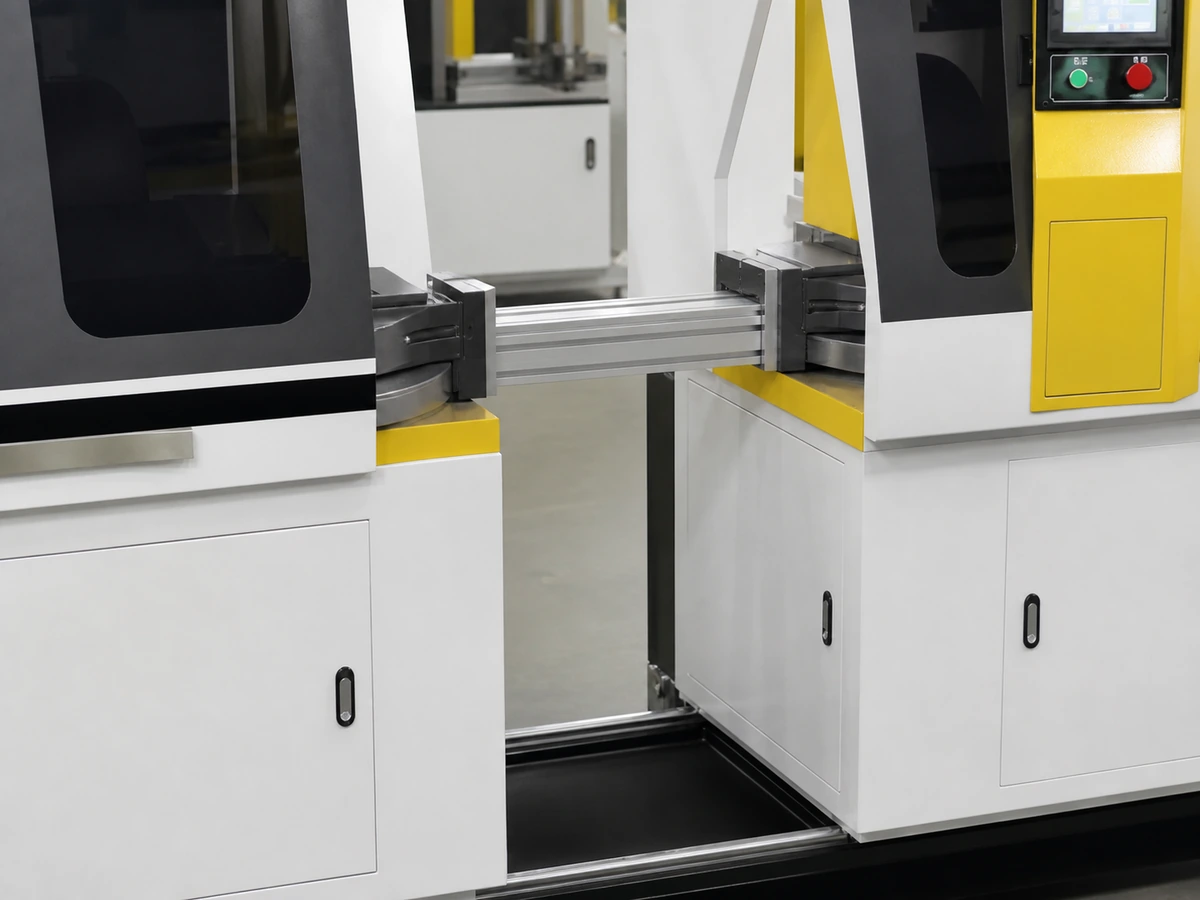
Video context: The Jiurun Machinery video below shows a separate aluminum-profile cutting machine scene. It illustrates saw equipment operation only; it does not show the tennis-post material, a quoted machine configuration, a customer order, a post-blank trial, or finished-product performance.
If you have the released section and blank cut list, send them to Jiurun with the acceptance sheet. We can discuss a saw trial around those actual members while your product engineer retains approval of the assembled tennis-post system.