
An aluminum saw fixture transfer is a machine-interface decision, not a promise that a clamp can be unbolted and reused. When a plant replaces its saw, the existing profile nests, stops, work supports or special clamps may represent years of useful setup knowledge. They may also depend on mounting holes, table height, saw-head travel, guarding, air circuits or a part datum that the new machine does not share. Before asking suppliers to credit the old tooling against a new quote, classify each item as transferable after approval, adaptable under a documented engineering change, or unsuitable for the new cell. The buyer should compare those routes at the same accepted-part and safe-operation boundary.
This guide addresses buyer-owned workholding for aluminum profile cutting. It does not assume that a JiurunCut model accepts a fixture pictured here, or that a photo establishes a safe configuration. The machine supplier and the owner’s responsible engineer must review the exact machine version and proposed interface before any modification or powered trial.
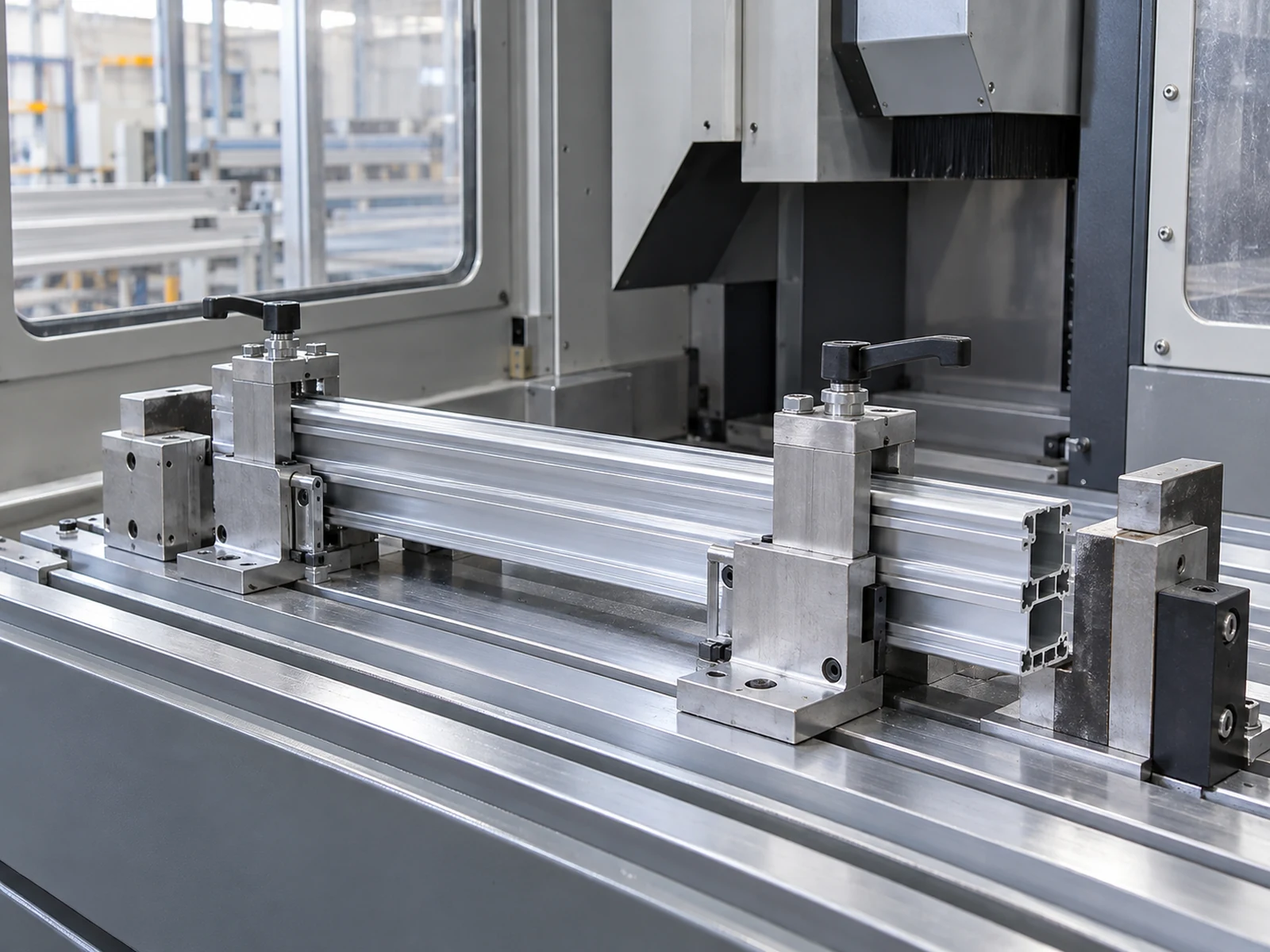
Start with an inventory of the old tooling
Give every fixture element an identity before anyone prices a transfer. Record the existing machine and fixture revision, maker or owner, drawing and photograph, base plate, attachment pattern, locators, clamp jaws, stops, support arms, pneumatic or electrical connections, and any guarding or interlock interface. Separate a removable workpiece-contact piece from a machine-integrated actuator or safety-related part. A clamp jaw may be reusable while its base, cylinder, hose routing or sensor needs a new design. Document wear, deformation, missing drawings and field modifications rather than calling the whole assembly “standard.”
Ask the owner to supply the product drawings and the actual profile family, including the shortest and longest parts, cross-sections, surface finish, cut angle, required datum and accepted cut-end criteria. A fixture that worked for one old cut list is not automatically suitable for a changed order mix. If the old machine still runs, capture how operators locate each profile, which faces contact the clamps, where the cut piece is supported, and what happens at the last short piece. Record the setup under the owner’s normal safety procedure; a video of a running saw is not a substitute for drawings and inspection.
Compare three routes on the new machine
Route 1: transfer the existing fixture as designed
Price its inspection, disconnection, transport, mounting, setup and accepted-part trial. The new machine maker must approve the complete physical and control interface for the exact version before this route is released.
Route 2: adapt identified pieces of the fixture
Price new adapters or workpiece-contact pieces, revised drawings, a guarding and control-interface review, commissioning and trial. Name the engineer who owns the revision and verifies clearances, clamp action and the part datum.
Route 3: specify new tooling for the new saw
Price the new base, jaws, stops, supports, documentation, spares and training. The bidder must demonstrate coverage of the released part mix and acceptance plan rather than assuming that standard clamps cover every profile.
Do not compare only the price of a new clamp with the labor to move an old one. Include downtime, machine modification responsibility, replacement parts, control integration and the risk of an unapproved setup. If no drawings or ownership rights are available for the old fixture, the transfer route may need to be treated as a separate engineering project rather than a credit in the saw price.

Aluminum saw fixture transfer: verify the machine interface
Request a drawing that places the old fixture on the proposed saw, rather than relying on a similar-looking table. Show attachment pattern, table and cut-line datums, saw-head and blade envelope, moving-axis travel, chip and coolant path, workpiece support, loading route, maintenance access and guards in both operating and service positions. The supplier should identify every assumed dimension and every required adapter. If the fixture changes the usable cutting envelope, the quotation must state the new limit for the representative parts, not just the machine’s catalog capacity.
Document how the clamp is actuated and released, how the operator knows its state, and what happens on power or air loss and restart. A transferred cylinder or switch cannot be treated as plug-compatible because the connector fits. Any change to machine controls, guarding or interlocks requires the responsible machine supplier’s design and validation process. Do not bypass a safety function to make a trial possible. The owner should agree who supplies the drawings, who approves the installation, and who records the final configuration.
For context, elumatec’s DG 79 product information lists vertical and horizontal clamping with optional work supports and other accessories. Emmegi’s Radial 550 information describes its own profile-positioning, clamping and intermediate support options. These examples show why a buyer must ask for the exact machine-and-option interface; they do not establish interchangeability with a JiurunCut saw or the customer’s old fixture.
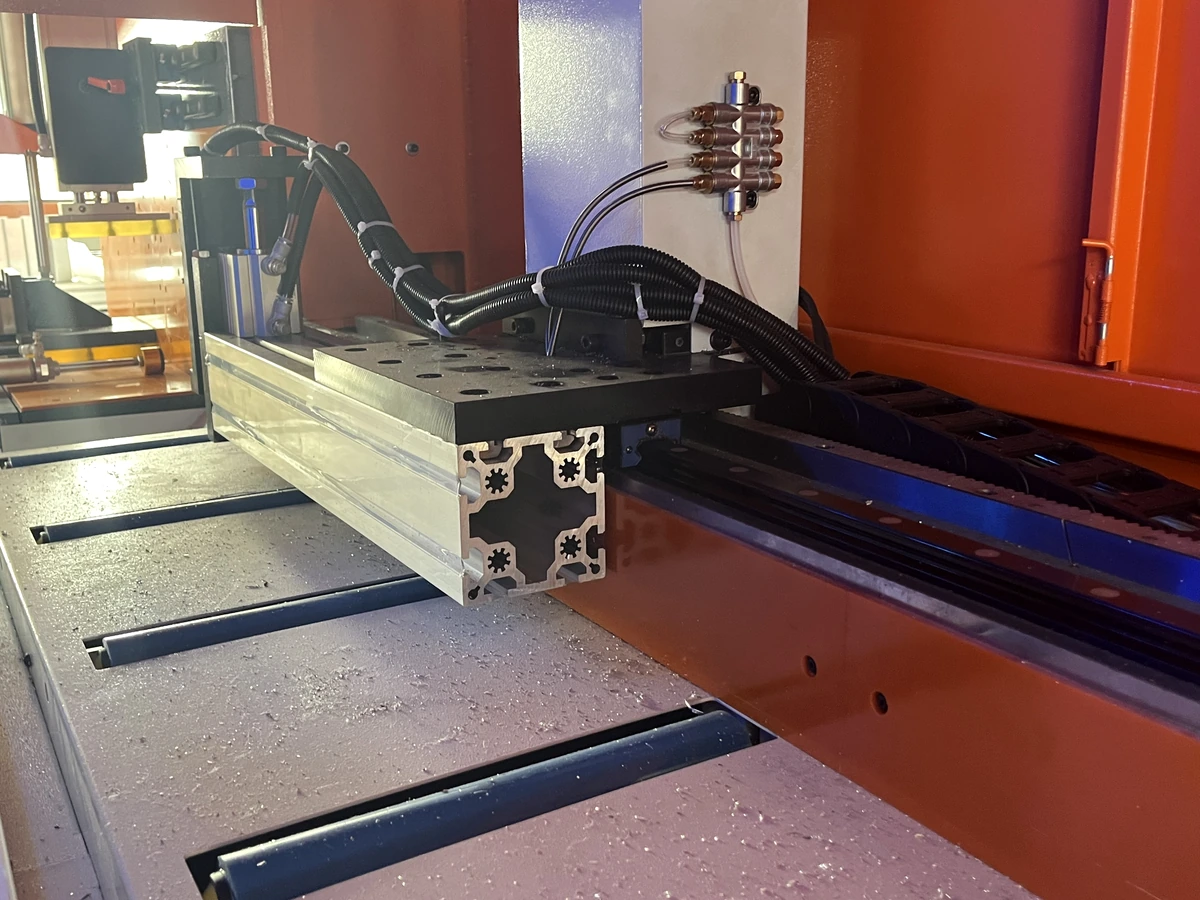
Specify a witnessed accepted-part trial
For an aluminum saw fixture transfer, select parts that challenge the proposed setup before release: a representative cross-section, the longest support case, the shortest retained piece, a visible-finish surface and any angled or multi-orientation cut. Use the released profile and drawing revision. Agree which faces locate the work, where the measurement datum lies, what cut-end condition is acceptable, how many setup changes are needed, and who inspects the results. If the trial uses substitute stock or temporary tooling, label the evidence accordingly and list the remaining acceptance work.
Record clamp marks, movement, cut-end condition, length and angle checks where required by the drawing, and the handling of the final offcut. A successful first piece does not prove repeated production, and a fixture drawing does not prove that an altered saw retains its original safety assessment. The machine supplier should identify the commissioning and documentation needed before the owner releases the cell for production. The owner should retain the approved fixture revision, setup instructions, trial record and spare-part list with the machine’s configuration file.
If the old fixture will stay with an outsourced cut-part supplier, use the separate fixture ownership and exit-term guide. For a fixture worn on the current machine, see the rebuild-or-replace decision. The broader saw retrofit-versus-replacement guide addresses the machine choice; this page addresses whether buyer-owned tooling can move with that choice.
Send a quote package that separates machine and tooling responsibility
Provide the new saw bidder with the released part mix, old fixture inventory and photos, available interface drawings, desired transfer route, site services, proposed acceptance samples and the person authorized to approve fixture changes. Ask for separate lines for the base machine, standard workholding, inspection of old tooling, engineered adapters, new fixture pieces, installation, commissioning and trial. Ask the bidder to list exclusions and unresolved interfaces. This makes a low machine price comparable with a quote that includes a working, documented setup.
JiurunCut can review the aluminum profiles, cut drawings and intended saw-stage trial with the buyer. Send the actual fixture and machine-version evidence as well if transfer is being considered. We can then discuss the cutting scope and what must be confirmed in a model-specific quotation; the owner and responsible machine engineer retain approval of any transferred fixture, safety-related changes and production release. Contact JiurunCut with the part and fixture package.
Video: general aluminum-cutting equipment footage from JiurunCut’s own channel. It does not demonstrate this customer’s fixture, transfer, saw configuration, trial or operating result.