
An AHU frame kit receiving check should answer a different question from a saw trial or a bill-of-materials release: did the site receive the complete, revision-matched members and joining items needed to assemble the specified air-handling-unit casing? A neat bundle of aluminum profiles is not necessarily an installable frame. One missing handed upright, wrong connector or incompatible panel interface can stop assembly even when every delivered saw cut looks clean.
This guide is for a buyer who has already chosen the AHU casing design and is receiving either cut members, a prepared frame kit or a more complete module. It does not assign an AHU performance class to any Jiurun machine. The approved unit drawings, supplier submittal and purchase order control the product; the saw quote controls only the cutting work it actually includes. If the factory supply route is still undecided, start with our AHU frame kit bill-of-materials guide.
Define the receiving unit before counting pieces
Ask the supplier to state the unit of delivery for each AHU section: loose cut profiles, a labeled cut-member kit, a frame with connectors installed, or a casing module with panels, doors and seals. Those are different purchasing and inspection scopes. A quotation for cut profiles should not silently be judged as a tested casing, while a module order should not be accepted simply because the loose profile count is correct.
Give every assembly or section a stable identifier tied to the released drawing revision. The receiving sheet should name the expected member IDs, section type, length and orientation, left- or right-hand status where relevant, finish, connector/hardware pack, and the panel or door interface that will be fitted later. If the order is split into deliveries, identify which complete assembly can be built from each shipment. Counting all pieces across a project may conceal one incomplete unit.
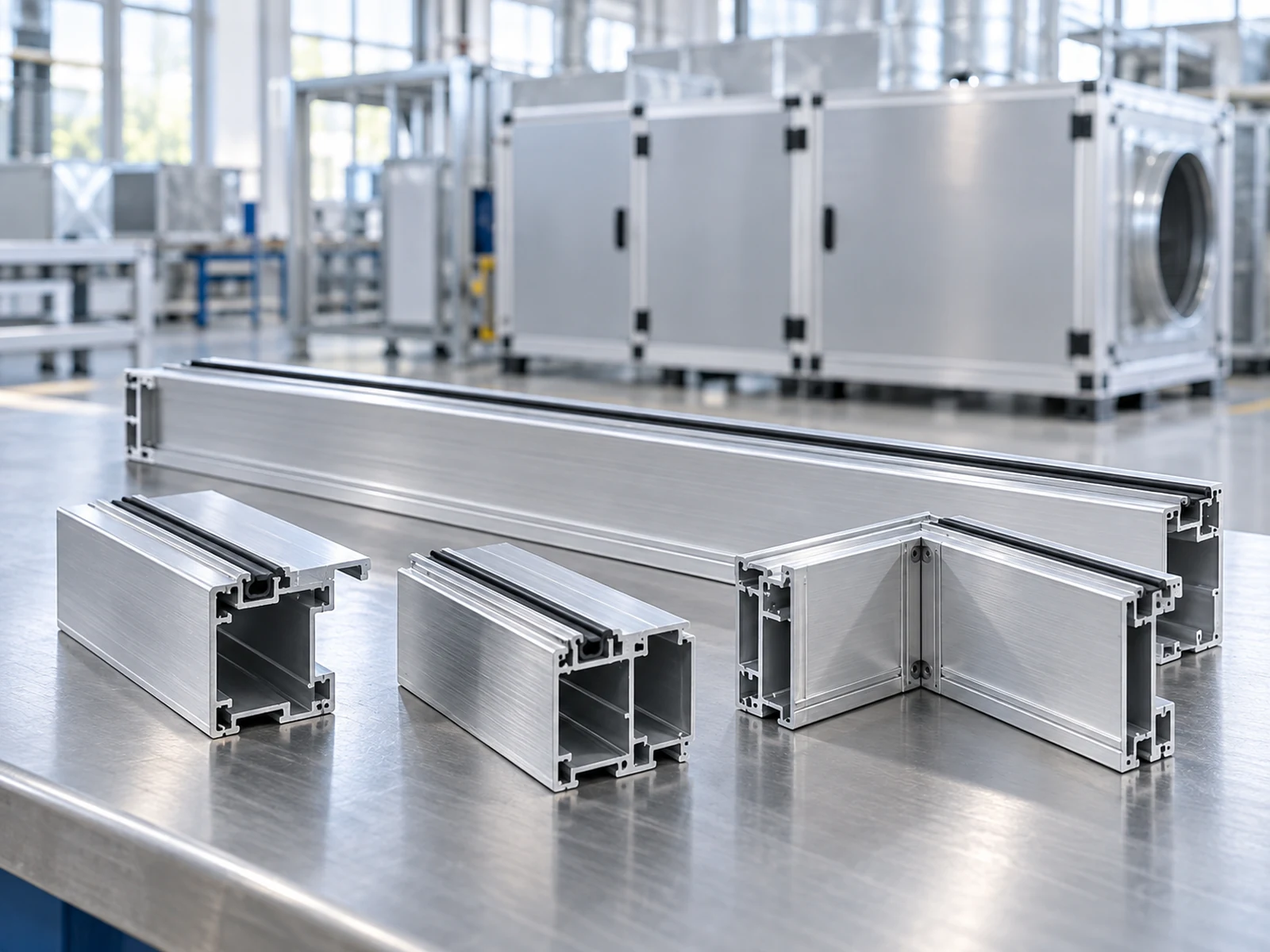
Check identity and completeness at the package boundary
At receipt, reconcile the package labels and packing list to the purchase order and the latest approved kit schedule. Record the supplier’s lot or batch reference, package number, assembly identifier, member identifier, quantity and any declared substitutions. Keep an earlier revision physically apart until engineering has resolved it. A substitution of an extrusion section, corner connector or finish is a design decision, not a warehouse convenience.
A useful first pass has three outcomes: complete for the named assembly, short or mismatched, or unresolved pending drawing/packing clarification. Photograph damaged or opened packages before disturbing the contents. Then count by member ID rather than total pieces. A pair of equal-length rails can still be unusable if both are the same hand. Check that small hardware and connector packs are traceable to the corresponding frame; an unmarked mixed bag is not proof that the kit is complete.
Agree who supplies and checks panel fasteners, door hinges, gasket material and any thermal-break parts. The Eurovent AHU certification programme treats casing strength, leakage, filter bypass and thermal characteristics as AHU-level attributes. That is a reason to protect the casing design and interfaces, not evidence that a cut-member shipment—or a saw—has passed those tests.
Inspect cut members without inventing a tolerance
Compare a representative member from each released profile and cut family with the drawing and the supplier’s agreed inspection record. Check the specified datum and cut length, end angle where applicable, profile orientation, end condition, finish-sensitive face and any hole or slot that the purchased scope actually includes. Record actual readings for measured characteristics and a clear pass/fail description for visual characteristics. The buyer’s drawing and agreed method set the limits; there is no universal AHU frame length tolerance to assume here.
Distinguish incoming extrusion condition from saw-created effects. A bowed, twisted or marked stock section may have arrived that way. A burr, crushed lip or damaged protective face can arise during cutting or later handling. Keep the package, lot and sample identifiers together so a defect can be traced without automatically blaming the saw. If the offer includes only sawing, drilling, milling, deburring, cleaning, coating and final fitting must be named separately rather than implied by the word “kit.”
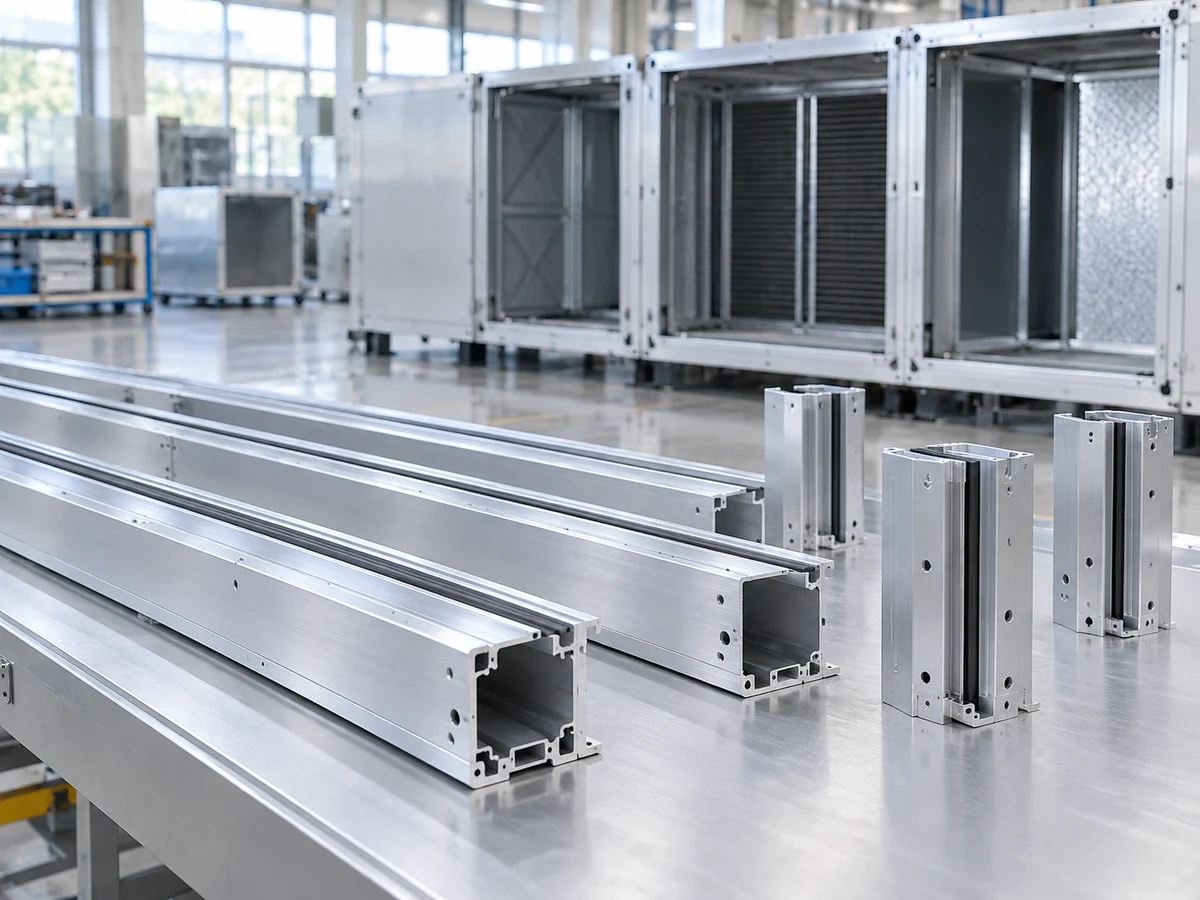
Use a controlled dry fit to expose interface errors
Where the purchase includes a prepared frame kit, select a representative corner or section for a controlled dry fit before releasing all packages to installation. Use the approved connector, mating upright and beam, panel edge or door opening reference, and assembly instruction. Verify that the labeled members meet at the intended joint and that the connection can be made without forcing a wrong profile or hiding a cut-end error behind a cover. Record which assembly was tried and what remained untested.
Do not treat this local fit check as an AHU casing leakage or thermal-performance test. ASHRAE’s air-handling and distribution handbook discusses access, maintenance and commissioning at the installed-system level. Those duties depend on the unit arrangement and site conditions. The receiving team can verify that the parts and interfaces specified for doors, panels and seals are present; the AHU designer or responsible installer must approve the completed casing and any required system test.

Contain a short or wrong kit without losing the evidence
If a member is missing, damaged or on the wrong revision, mark the affected assembly as on hold and separate its packages from released kits. Record the shortage by member ID and quantity, package number, drawing revision and observed condition. Agree whether the supplier will send a replacement member, rework an approved part, or replace the complete module. The buyer’s engineering authority should approve any change that affects a joint, finish, access opening or seal path. Do not let an urgent site crew cut an unapproved substitute merely to close a schedule gap.
If part of the delivery can proceed, define the exact assemblies that are complete and release only those. Keep the commercial short-shipment resolution separate from technical acceptance. An agreed credit or delivery promise does not make the remaining frame buildable. For an installed unit needing replacement members, use a separate AHU frame repair decision so that existing casing dimensions and OEM responsibilities are considered.
Put the right evidence in the RFQ and receiving packet
Before awarding a frame-kit or cutting order, ask each supplier to price the same delivery boundary and return a sample kit schedule. State whether it covers cut members only, labeled sets, connector packs, protected finish, preparation operations, assembly trial, packing and site delivery. Price and lead time should be compared per complete accepted assembly, not per unlabeled kilogram of profile. If a saw investment is part of the route, ask how representative profile sections, cut lengths and orientations will be demonstrated and how finished pieces will be measured; a feed-position specification is not finished-part accuracy.
- Release documents: approved unit/section drawing, revision, member schedule and permitted substitutions.
- Delivery evidence: packing list mapped to assembly and member IDs, package labels, quantities and identified connector packs.
- Cut-part evidence: agreed dimensional/visual checks, datum and method, traceable sample IDs, and the named work outside the saw.
- Fit evidence: representative joint or module dry-fit record with any deviations and responsible approver.
- Disposition rule: quarantine and replacement path for short, damaged or mismatched kits, plus the authority to release complete unaffected assemblies.
For general process context, the following video shows Jiurun Machinery aluminum-profile cutting equipment. It is general equipment footage, not footage of this AHU kit, material, model configuration, customer, receiving inspection, site installation, trial result or casing performance.
Ask for a kit the site can actually assemble
Send the AHU section drawings, released member list, profile samples or sections, required cut lengths and angles, finish and interface requirements, expected shipment split and site handover method. Ask the supplier to return an itemized scope and a representative receiving/fit-check record. Contact JiurunCut with the actual aluminum profiles and cut-list requirements to discuss the cutting equipment and sample trial; keep AHU design, sealing and installed performance approval with the responsible system parties.