
An air handling unit (AHU) frame kit can look simple on a purchase order: aluminum members cut to length for one casing. The buying risk is that a length list alone does not identify the profiles, their orientation, the connectors, or the version of the unit that those members must build. A supplier can cut every listed length correctly and still deliver a kit that the assembly team cannot use.
This guide is for a buyer deciding what to release to a cutting supplier and what to ask a saw vendor to demonstrate. It concerns the frame-member package, not the performance rating of an assembled AHU. The design owner must approve the unit configuration, interfaces, and any applicable casing requirements. A saw purchase cannot resolve an unreleased frame design.
Define the purchased unit before requesting a price
First decide whether the supplier is pricing raw stock, individual cut blanks, a labeled member kit, or an assembled frame. These are different deliverables. A blank may have only a section identity and cut length; a kit adds quantities, location labels, and a packing sequence; an assembled frame adds connector and fit obligations. State which of these is included, who supplies fasteners or corner pieces, and who owns any drilling, tapping, notching, gasket installation, or panel fit. If a feature is outside the cutting supplier’s scope, say so in the RFQ.
For a repeat unit, assign the frame drawing, cut list, and bill of materials (BOM) one common revision. For a configurable unit, identify the exact size and option combination for each kit. A purchase order that cites a generic AHU family while attaching a cut list from another variant invites substitution. Put the released revision and unit identifier on the quotation, traveler, kit label, and receiving record.
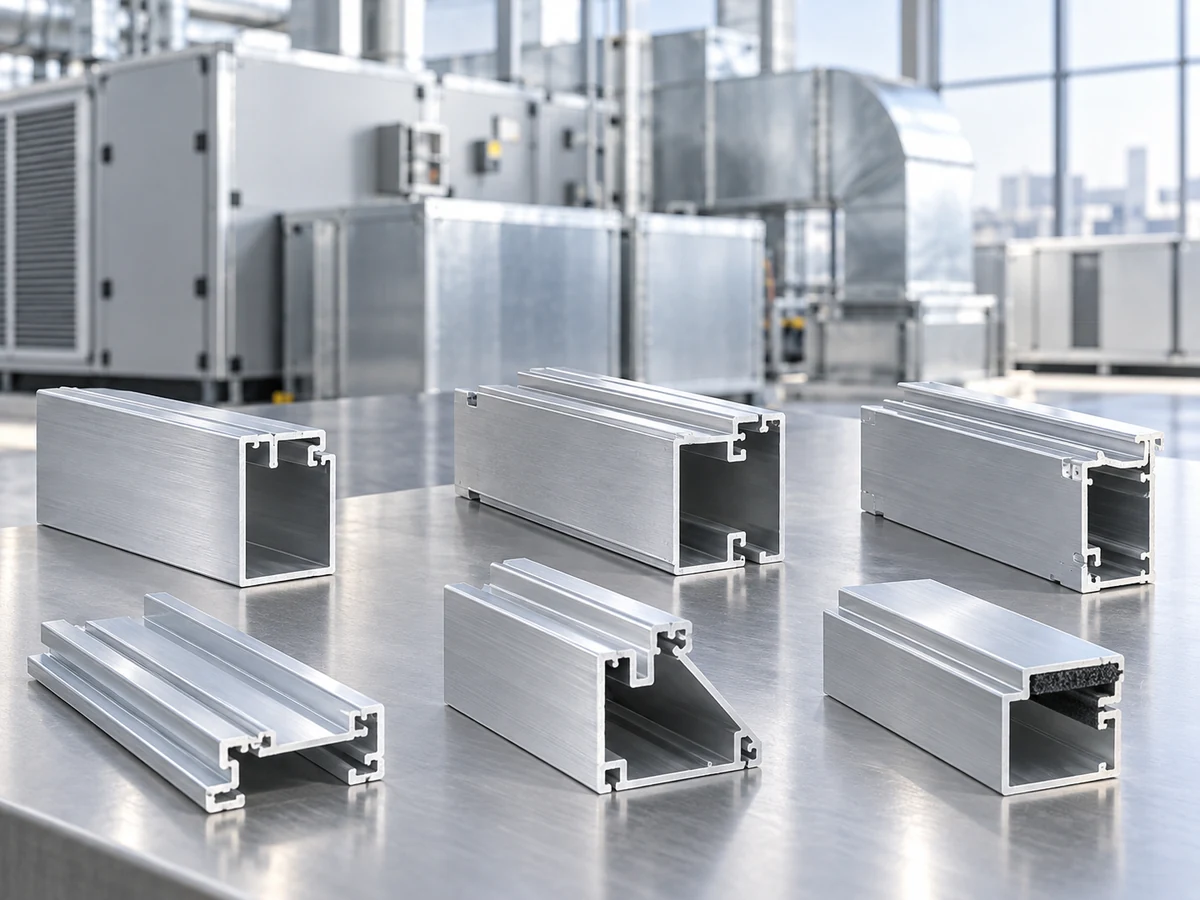
Make the AHU frame kit bill of materials identify each section
Each line needs more than a nominal length. Record the profile drawing or approved part number, cross-section and orientation, alloy and temper if the design specifies them, surface finish, cut length with its reference faces, angle or end treatment, quantity per unit, and where the member fits. Keep a separate line when the same nominal section has a different gasket groove, panel-retaining lip, connector cavity, or finish. Do not merge lines merely because two extrusions look similar from the outside.
A practical BOM also distinguishes purchased components from operations. A corner bracket is a component; a drilled hole is an operation; a completed frame is an assembly. Mixing these on one unqualified line makes quotations incomparable. Ask the design owner to mark approved alternatives explicitly. If a substitute profile would alter panel capture, thermal break, seal path, or connector fit, it requires engineering approval before the cut order changes.
Reconcile the cut list with the kit quantity
Work from the approved assembly layout to the member list, then to a cut list. For each location, check how many members are required per unit, whether the length is overall or between finished faces, and which end is left or right. State how kerf, clamping allowance, and any later machining are handled in the supplier’s process plan. Do not treat a saw’s feed positioning specification as a promise of finished-part accuracy. The acceptable cut-part dimensions and inspection method belong on the released drawing and trial plan.
For mixed-length kits, request a cut list organized by profile ID and finished part ID rather than a single column of lengths. Mark handed or mitered members visibly. Set a rule for excess stock, short offcuts, damaged pieces, and replacements. If a buyer orders one kit per AHU but the supplier invoices loose members, agree in advance how shortages and partial kits will be identified.
Keep connector and panel interfaces in the release package
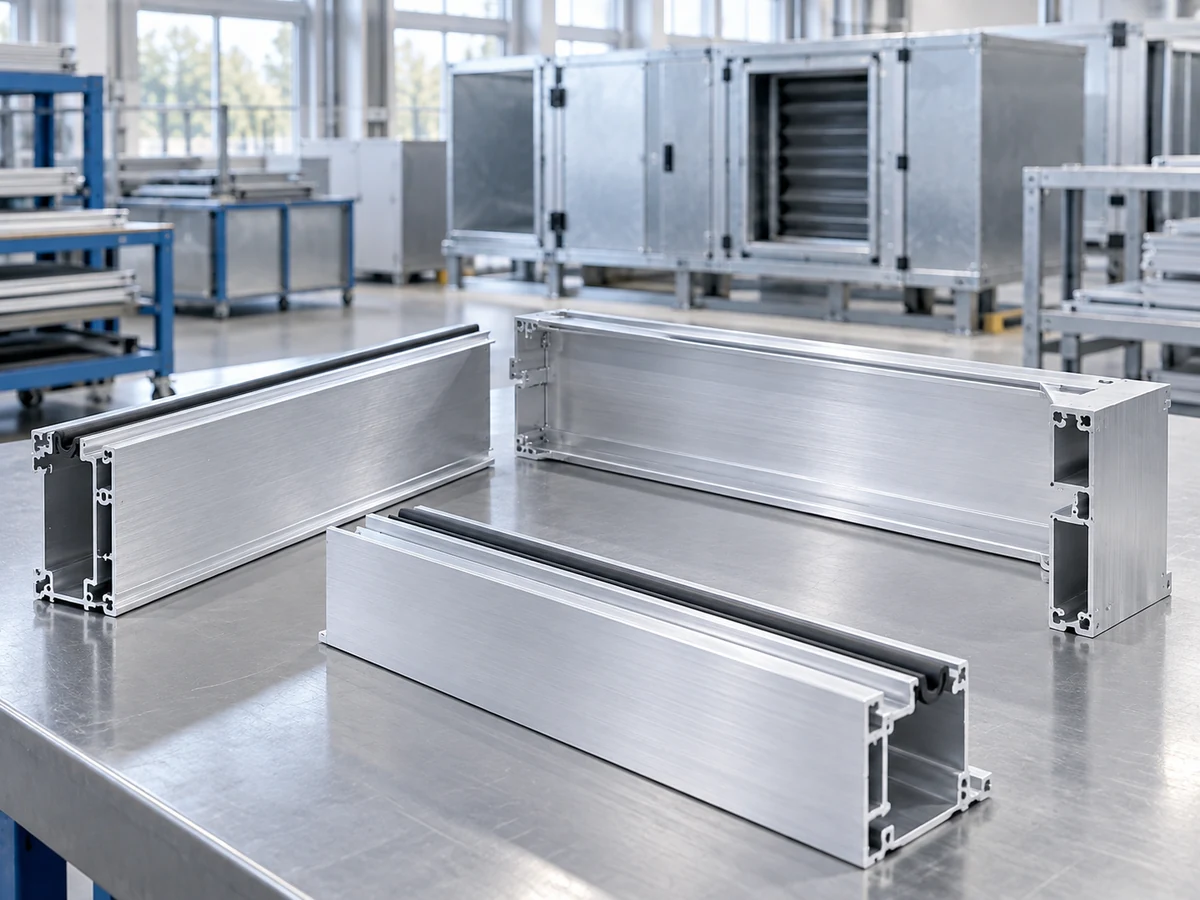
The saw cuts a member, but the AHU casing is built at its joints and panel edges. Supply the supplier with the controlled detail for corner pieces, fastener engagement, panel-retaining features, and any seal or gasket interface that constrains the member ends. State whether burr removal and surface protection are included in the cut-part acceptance criteria. If the drawing does not define these interfaces, release a design clarification before asking vendors to promise an assembly-ready kit.
ASHRAE’s guidance on AHU leakage treats the completed casing and its penetrations as a system to be tested at specified conditions. That is a separate responsibility from cutting frame members. A cut blank or saw demonstration must never be represented as proof of casing leakage, strength, or thermal performance. Use the assembled-unit acceptance plan chosen by the design owner for those claims.

Send a quote package a saw supplier can actually evaluate
Once the BOM is released, a saw RFQ should carry representative physical profiles or controlled section drawings, the longest and shortest cut lengths, end angles, batch mix, output volume assumptions, and the approved cut-part tolerance and inspection method. Include profiles with delicate lips or cavities, not only a convenient rectangular bar. Ask the vendor to state the exact machine configuration, clamping and support arrangement, blade and process assumptions, operator steps, and exclusions. A catalog number alone is insufficient when handling and cut geometry vary across the kit.
Run a witnessed trial on the released representative members, with a mutually agreed sample count and measurement plan. Inspect the cut end, burrs, surface marks, length reference, handedness, and ability to dry-fit with the approved connector and panel interface. Record which observations are saw-output results and which are downstream assembly results. A successful trial should support a specific purchasing decision for the evaluated configuration; it does not certify every profile, unit size, or production condition.
80/20’s official design resources illustrate why profile choice, miter planning, fastening method, and a generated BOM are connected in an extrusion-based build. The example is useful for structuring questions, but its product system is not a substitute for an AHU manufacturer’s approved drawing.
Receive kits against the released revision
At receipt, check the kit label against the purchase order, unit identifier, BOM revision, and packing list before counting parts. Sample profile identity and critical member dimensions using the specified method. Confirm that left and right pieces remain separated and that protective packing has not hidden end damage. Quarantine an unexplained extra, missing member, or mixed revision rather than quietly modifying the BOM to make the shipment pass.
For recurring orders, log deviations by part ID and cause: wrong section, wrong end treatment, wrong quantity, transit damage, or wrong revision. Route each through an agreed disposition owner. This is more useful than a single pass/fail score because it reveals whether the correction belongs in engineering release, saw setup, kitting, or logistics.
Decision gate: release, clarify, or change the supply route
- Release a cut-member kit RFQ when the design owner has approved the profile IDs, cut list, connector and panel interfaces, revision, and receiving method.
- Clarify before quoting when the kit list names lengths but not section identity, handedness, or operations outside the saw.
- Buy an approved assembly instead when the buyer needs a tested casing or guaranteed interface outcome that cannot be assigned to a loose cut-part supplier.
- Trial a saw configuration when the member package is stable but the intended clamping, end quality, and throughput assumptions still need evidence.
For the more general machine and frame-fit questions, see our HVAC aluminum frame cutting guide. To request a saw review, send the released member list and representative section drawings; we can discuss a scoped trial without treating a catalog claim as an accepted part result.
General equipment video
The video below is from Jiurun Machinery’s own YouTube channel and shows general saw equipment footage. It is an equipment-view example only. It does not show this AHU material, the profile IDs in this guide, a specified machine configuration, a customer kit, a witnessed trial, or cutting or casing performance evidence.
Sources and scope
80/20 Tech Toolkit discusses extrusion profile selection and miter-cut planning; 80/20 IdeaBuilder describes a BOM generated from a defined design. ASHRAE Handbook, Duct Construction, Section 5 addresses AHU casing leakage testing. These sources inform the process boundary; the buyer’s released drawings and project requirements govern this specific kit.