
Cold aluminum extrusion stock before a saw trial creates two separate buyer decisions: whether the delivered bars are suitable to enter the cutting cell and whether the measured cut parts can be compared fairly with the drawing. A truck-to-workshop temperature change can put moisture on or between metal surfaces, while temperature differences can affect a length measurement. Neither a dry-looking outer wrap nor one good first piece settles both questions. This guide turns the handoff into a documented staging, inspection and trial-release plan.
Use this for a machine selection trial, supplier qualification or acceptance run when representative stock arrives from a different environment. It is a buyer workflow, not a fixed conditioning time, an assurance about a specific alloy or a claim that a JiurunCut model has passed the proposed trial. The material supplier, site metrology team and machine builder should approve the details that apply to the actual profile and drawing.
Separate cold-stock condition from saw condition
At receipt, record the purchase order, alloy and temper designation, extrusion drawing and revision, surface finish, supplier lot, bar count and length, packaging condition, delivery time and the people who accepted custody. Retain the supplier’s material identification. If the shipment contains several lots or finishes, keep them segregated: a convenient top bar is not automatically representative of the entire truck.
Photograph the package before opening, especially a torn cover, trapped water, wet separator or temperature-sensitive indicator if one was supplied. Record observations without inventing a cause. A wet wrapper is a reason to inspect the metal under an agreed procedure; it is not by itself proof that every profile is damaged. Likewise, a clean visible outer bar does not release inaccessible mating faces in a tightly packed bundle. See our long-extrusion delivery guide for the separate commercial handoff and damage record.
The Aluminum Association’s water-staining guidance explains why condensation and moisture between close metal surfaces matter, and recommends dry, ventilated storage and attention to metal temperature relative to the surrounding air’s dew point. Much of that publication discusses flat-rolled products. Applying its general moisture-control principle to an extrusion bundle is a prudent buyer inference, not a profile-specific acceptance standard.
Stage the actual batch, then define a release check
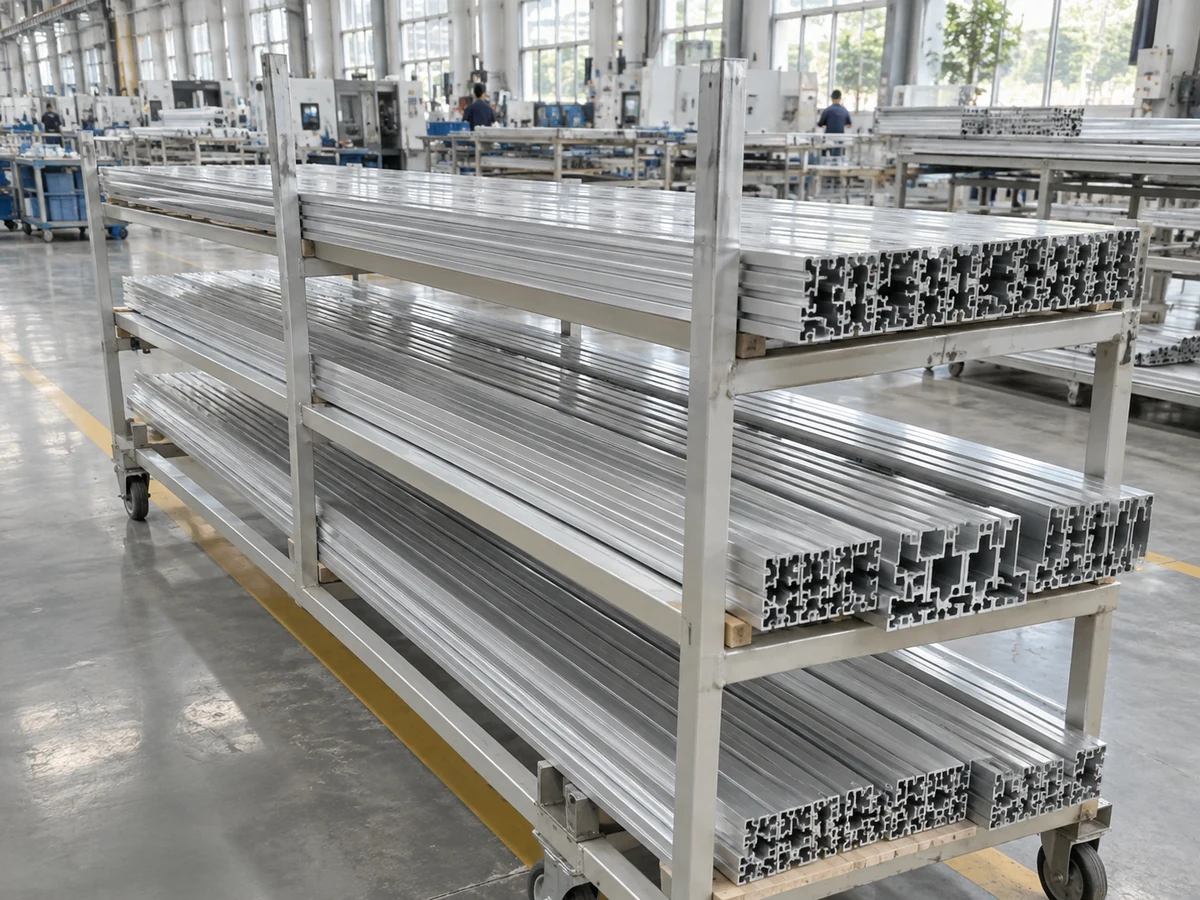
Place the identified batch in a designated indoor location with support appropriate to its length and section. Keep wrappers intact where they protect the finish and inspect any damaged area under the material supplier’s procedure. Avoid mixing the trial lot with previously acclimated bars, rejected stock or remnant pieces. Mark who may move or cut the material while its condition is pending. A colored hold tag can help, but the traceable lot record is the control.
Do not promise that a universal number of hours makes every bar ready. Time depends on bar mass, packaging, airflow, ambient conditions and the temperature history that the receiving team may not know. Agree who measures the metal surface and room conditions, where and when readings are taken, and what evidence permits unpacking or trial cutting. If temperature or moisture instruments are used, record their identity and method. A thermometer reading at one exposed end may not represent the center of a wrapped bundle.
The staging plan should answer three concrete questions: Is the packaging or metal visibly wet? Have the selected bars reached a stable condition under the site’s approved method? Are the surface and identification acceptable for the intended finish and cut trial? A visibly stained or uncertain profile should be held for a material disposition decision, not quietly substituted with a clean bar to make the saw look successful. Do not heat profiles or remove protective film merely to accelerate a demonstration without the supplier’s approval.
Set dimensional measurement conditions before cutting
Temperature affects the length of a part and the measurement system. ISO 1:2022 defines a standard reference temperature for specifying geometrical and dimensional properties; NIST’s dimensional-metrology work explains how temperature and thermal-expansion uncertainty affect length results away from that reference. Those sources support a measurement plan. They do not set a universal saw tolerance, a compulsory waiting period or a correction factor for an unidentified alloy and setup.
Before the trial, identify the finished dimension, datum, drawing tolerance, measuring tool, calibration status, workpiece condition and responsible inspector. If the site’s procedure allows measurement away from reference conditions, the metrology team should state how temperature is recorded, whether a correction is justified and how uncertainty is considered. Do not turn a feeder-positioning value into finished-part accuracy. Do not treat a caliper reading on a short, warm part as directly comparable with a long cold bar without a defined method.
Take representative readings from the material and the cut parts at planned points, and record the measurement time relative to cutting. If the acceptance criterion is tight enough for thermal effects or instrument limits to matter, pause the pass/fail decision until the approved measurement conditions are met. Our measurement-dispute guide covers how buyer and supplier agree the datum and method when their results differ.

Run a representative saw trial without losing lot identity
Release one documented subset of the staged batch for the initial setup. Record the stock lot, bar identifier or bundle reference, profile orientation, program revision, blade and clamp setup, machine configuration, first-piece time and operator. Keep setup cuts and rejected pieces separate from accepted parts. A saw trial on an unrelated warm offcut can check basic motion but cannot qualify how the delivered batch feeds, clamps or measures.
At the machine, check the longest and shortest specified lengths, section extremes, finish protection, support and outfeed handling relevant to the order. Observe whether a bar stays supported without new scratches or distortion. Inspect cut ends and finished dimensions against the buyer’s drawing and agreed sampling plan. If water staining, a bowed profile, feed slip or an uncertain length reading appears, record which gate failed and who owns the next action. A machine fault, material condition and measurement disagreement require different remedies.
The photo below shows long profiles supported near a guarded saw. It is useful for discussing the stock-to-machine boundary, but it is not an image of a cold shipment or a documented acceptance test.

Keep the saw cold-start first-piece check separate. That check concerns machine readiness after a shutdown; this article concerns incoming material condition and the measurement basis for a representative trial. Both may apply on the same day, but passing one does not pass the other.
Write two release decisions into the trial record
First, make a material release decision: identify which lot and bars may be opened, cut and used, which remain on hold, and what surface or traceability questions remain. Second, make a trial acceptance decision: identify which work mix, cut settings, dimensions and appearance checks were actually witnessed, the measurement conditions, exceptions and corrective actions. A conditional decision should state the unresolved evidence and the person authorized to close it.
- Receiving packet: order and drawing revision, stock identification, package photographs, condition observations and lot segregation.
- Staging packet: storage location and supports, environmental and metal readings where relevant, inspection method, hold/release authority and any material-supplier instruction.
- Cut packet: chosen representative bars, setup and first-piece record, accepted and rejected counts, cut-end photos, measurement method and instrument identity.
- Decision packet: a separate conclusion for material condition and machine-trial result, including limits on what was not tested.
Send this proposed packet to the machine builder before the trial, together with drawings, stock dimensions, finish requirements and the expected delivery conditions. Ask which checks can be witnessed at the factory and which need site conditions or the actual shipment. If the stock cannot be safely or fairly released during the visit, schedule a documented retest rather than filling an acceptance sheet with results from another bar.
Related equipment footage
The following video is from Jiurun Machinery’s YouTube channel and shows general aluminum-saw and long-stock feeding footage. It is an equipment-process illustration only. It does not depict this cold delivery, material lot, model configuration, customer, temperature reading, test cut, dimensional result or performance claim.
Need a machine proposal? Contact JiurunCut with your profile drawing, alloy and temper, bar and cut lengths, finish, incoming-stock conditions and inspection method. We can discuss a representative cutting trial and identify which material and measurement decisions your team must make before acceptance.