
A supplier cutting machine change should trigger a defined part release decision, even when the supplier, drawing and purchase order stay the same. A replacement saw can alter how an aluminum profile is located, clamped, fed and measured. The practical response is to identify which orders are affected, compare representative first pieces with the agreed requirements, and authorize only the part families and lots supported by that evidence. This guide addresses a planned machine replacement at the same outsourced cutting source. An emergency breakdown, a move to another site, or a blade-only change needs its own change boundary.
Supplier cutting machine change: define the new route
Ask the supplier to identify the previous and replacement machine and the date the new route began producing your parts. Record the affected purchase orders, drawing revisions, profile or stock lots, and work in progress. Separate cut parts completed on the old machine from parts made on the replacement. A shared supplier name does not tell a buyer which route produced a particular lot.
Then establish the scope of the change. Did only the saw change, or did the fixture, clamp contact, feed arrangement, blade specification, coolant or lubricant, program, inspection setup, or operator method also change? You do not need a supplier’s proprietary settings to make a release decision, but you do need a reliable description of what changed and which controls were rechecked. If work moved to a different facility or subcontractor, use a site-change review as well.
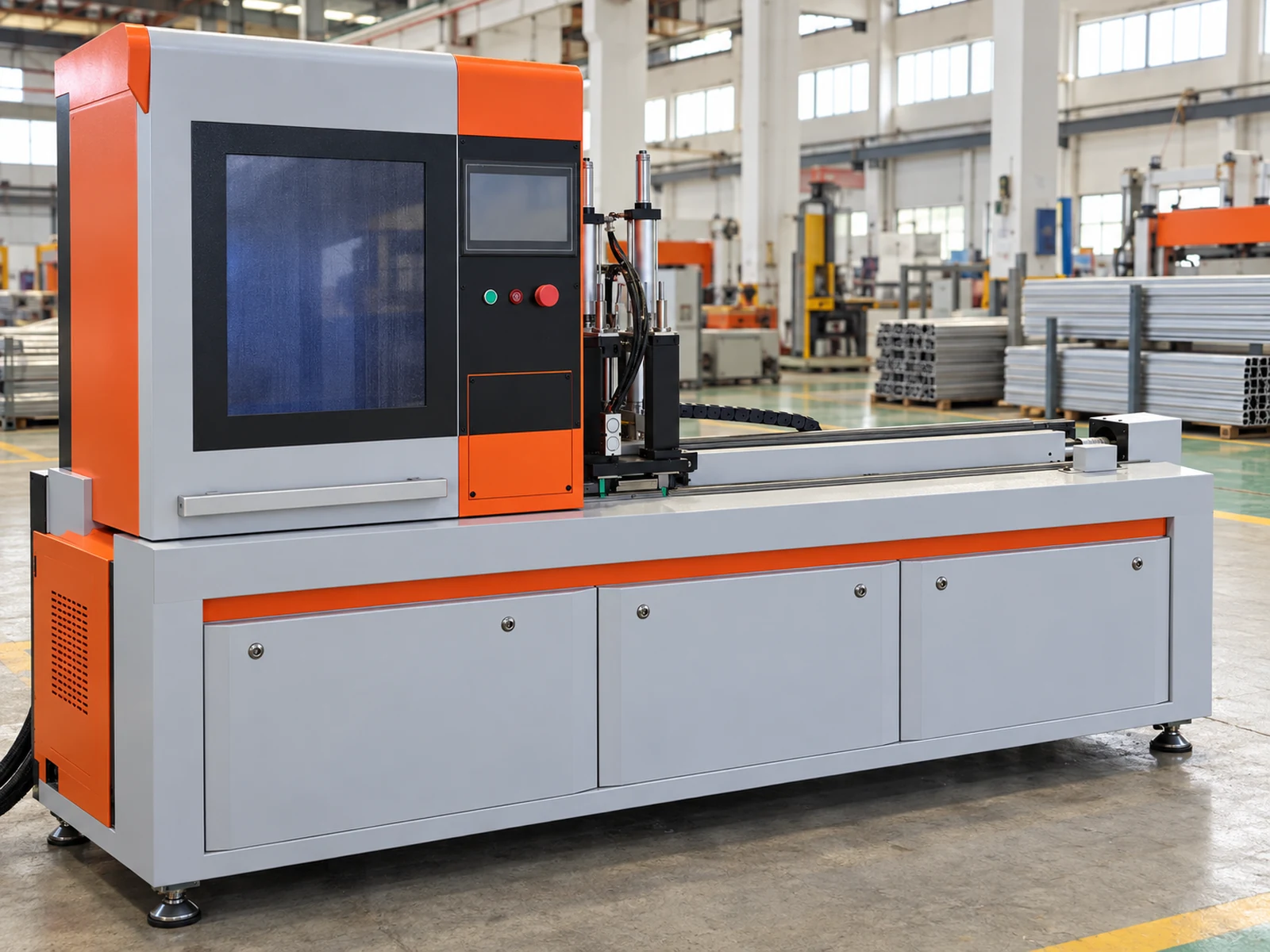
Define the affected part families before asking for samples
A single passing cut does not represent every extrusion. Build a short matrix from the current drawings and orders. Group parts only where the material form, locating surfaces, cut geometry, critical features and inspection method are genuinely comparable. A thin-wall hollow extrusion may react differently to clamping from a solid bar. A short stop-length part may expose a different setup concern from a long member. An appearance-critical exposed end may need a different review from an end hidden by later assembly.
- Part number, drawing revision and purchase order: confirm which contract requirements apply.
- Profile shape, material specification and stock lot: distinguish machine effects from incoming-stock differences.
- Critical length, angle, end-face and burr requirements: choose inspection characteristics from the actual drawing.
- Fixture contact and cut orientation: identify parts that may need separate trials.
- Old-route inventory and first new-route lot: keep accepted and unapproved output traceable.
Choose representative first pieces for each justified family, including the setup that is most demanding under the agreed drawing or inspection plan. Do not invent a universal tolerance, a fixed sample count, or a cut-quality guarantee. If the customer contract specifies a formal change notice, first-article process or approval authority, follow that agreement.
Recheck workholding and feed before judging the cut
The replacement saw may contact the profile at different points or apply force in a different direction. Review whether the part is supported at the cut, whether a hollow section can deflect, whether a painted or visible face touches the clamp, and whether the stop or feed reference is the same datum used on the drawing. Ask how the supplier verified the new fixture or program for the affected shapes. A supplier photo can help explain the setup, but acceptance comes from the agreed inspection results for your parts.

If the event was an unplanned stoppage and the supplier is proposing an alternate recovery route, first reconcile accepted inventory and recovery authority using the separate machine-breakdown decision guide. A planned replacement can use a calmer, preproduction qualification gate.
Compare first pieces with the drawing and an accepted reference
Request identifiable first pieces from the replacement machine before ordinary production is mixed into released stock. Where practical, retain an accepted old-route sample and compare it to a new-route sample made to the same drawing revision and material specification. If the stock lot or drawing changed at the same time, document those differences; a before-and-after comparison alone can no longer isolate the machine change.
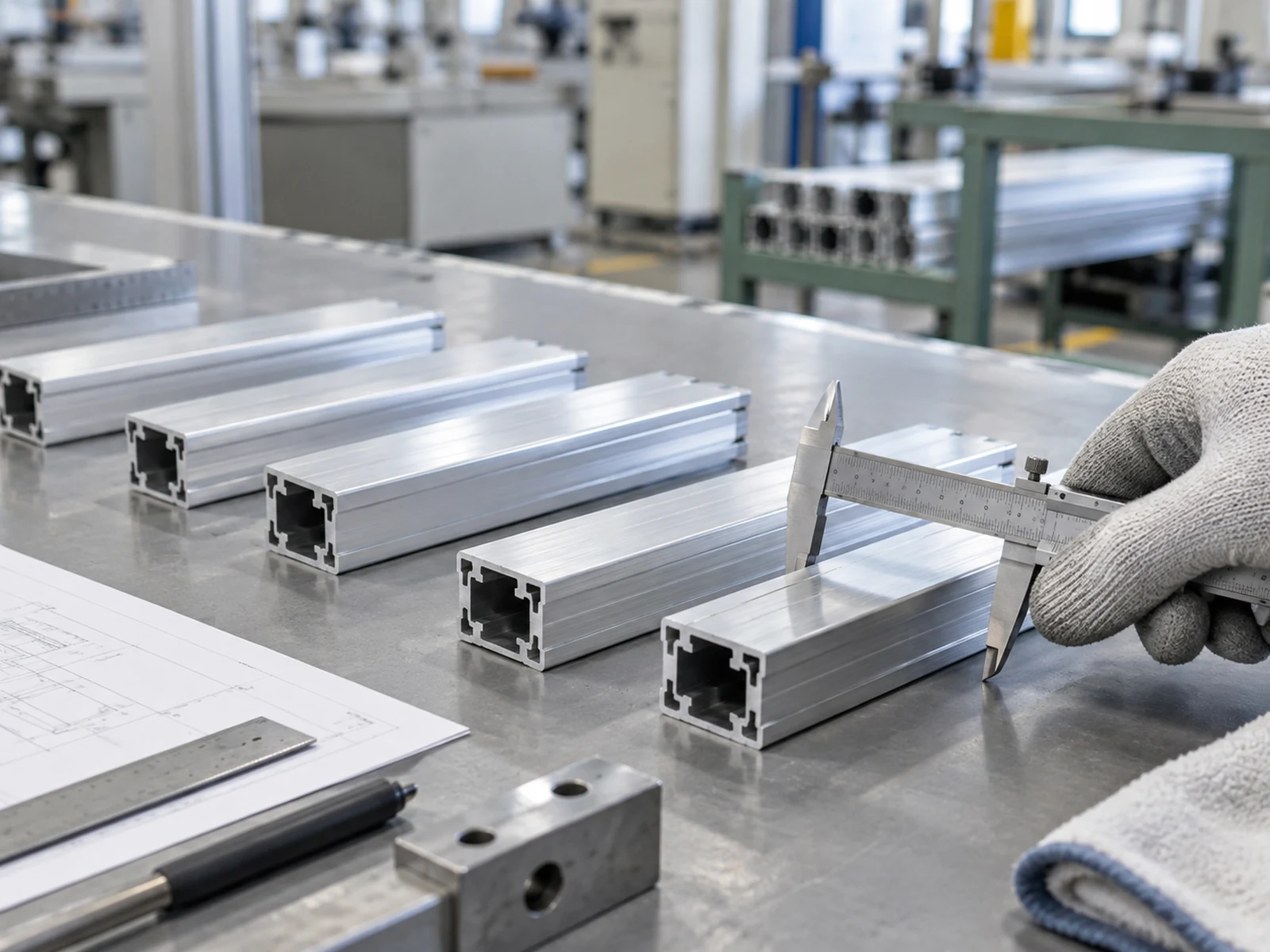
Use the drawing and end use to choose checks: cut length and its datum, angle or squareness where specified, end-face condition, burrs or sharp edges, deformation near clamp contact, and visible-surface damage. For a part that is assembled, coated or welded later, check the features that matter to that downstream operation. A photo may show appearance, but it is not a substitute for a recorded dimensional result when a dimension controls fit.
Record the measurement method, fixture or reference datum, instrument identity and calibration status where relevant, inspector and sample identity. The NIST discussion of measurement uncertainty is a useful reminder that a number near a limit needs an understood measurement method. Its publication is general metrology context, not a test result for aluminum saw cutting. When an outcome is borderline, resolve the measurement method and uncertainty under the buyer’s agreed quality system before release.
What evidence should the supplier send?
Keep the package short enough to use, but complete enough to trace the decision: a dated machine-change notice, the previous and replacement route identifiers, affected part numbers and orders, a summary of related fixture, blade, program and inspection changes, identified first-piece samples, results against the correct drawing revision, exceptions and their disposition, and the supplier’s authorized sign-off. Ask for a clear boundary between old-machine inventory and new-machine output. If the supplier claims a process is unchanged, ask what evidence supports that statement.
The ISO/IAF Auditing Practices Group guidance on external providers describes risk-based attention to externally provided processes and verification. It is educational audit guidance, not an automatic contractual requirement or a certificate for this supplier. Your drawing, purchase agreement and applicable quality procedure define the actual release obligation.
Make a release decision by part family and lot
Approve the defined family and identified first new-route lot when the supplier has disclosed the change and the agreed first-piece checks support release. Record who approved it and from which lot or date the approval applies. Do not silently extend that approval to another profile, fixture or drawing revision.
Conditional release can be appropriate only when the buyer and supplier agree a limited scope, additional inspection and a written disposition path. State the lot quantity or boundary and the feature being monitored. Hold output when samples, traceability or authority are missing, or when results do not meet the agreed requirements. Reject or request corrective action according to the contract when the evidence confirms nonconformance.
Keep price and schedule discussions separate from the technical acceptance result. Confirm when the replacement route can deliver, whether qualification consumes stock or time, and who owns any agreed rework or delay. A faster promised lead time does not turn an unapproved first piece into an accepted part.
Buyer checklist for a supplier cutting machine change
- Which exact machine and production date define the change?
- Which purchase orders, drawing revisions, material lots and work-in-progress bins were affected?
- Did fixtures, clamping, blades, programs, lubrication or inspection methods also change?
- Which representative part families and difficult setups were trialed?
- Can the supplier provide identified first-piece results against each applicable drawing?
- How are old-route and new-route lots segregated until approval?
- Who has authority to approve, conditionally release or hold output?
For a focused example of checking a setup’s first output, see the cold-start first-piece review. A blade-only substitution calls for the narrower supplier blade-change gate.
General equipment footage
The following footage is from Jiurun Machinery’s own YouTube channel. It shows general aluminum cutting equipment in operation. It does not document a supplier’s replacement machine, this article’s material or part family, a customer, a first-piece trial, settings, or achievable performance.
Need a clearer machine and cut-part review?
If you are deciding whether to qualify an outsourced cut-part route or bring cutting in-house, send Jiurun Machinery the drawing requirements, profile cross-section, expected volume and the particular change boundary. We can discuss the machine-selection questions and the evidence to request, while final part acceptance remains with the buyer and its supplier. Contact Jiurun Machinery to start that review.