
Cleanroom equipment frame replacement kits create a different saw purchase problem from building a new room or running a one-off corner trial. The buyer already has an installed frame, a service window and an approved part identity. A replacement member that looks similar can still miss a slot, connector, cut-end orientation or later finishing step. Before investing in an aluminum saw, determine which replacements your factory actually cuts, how often those orders recur and what must be accepted as a complete kit.
This guide concerns aluminum members for cleanroom equipment frames and related modular assemblies. It does not assume every cleanroom wall or enclosure has an aluminum frame. Some systems rely on finished steel panels or supplier-made modules; for those jobs, buying the correct component may be the right route. The saw decision starts with the installed system, not a room-class label.
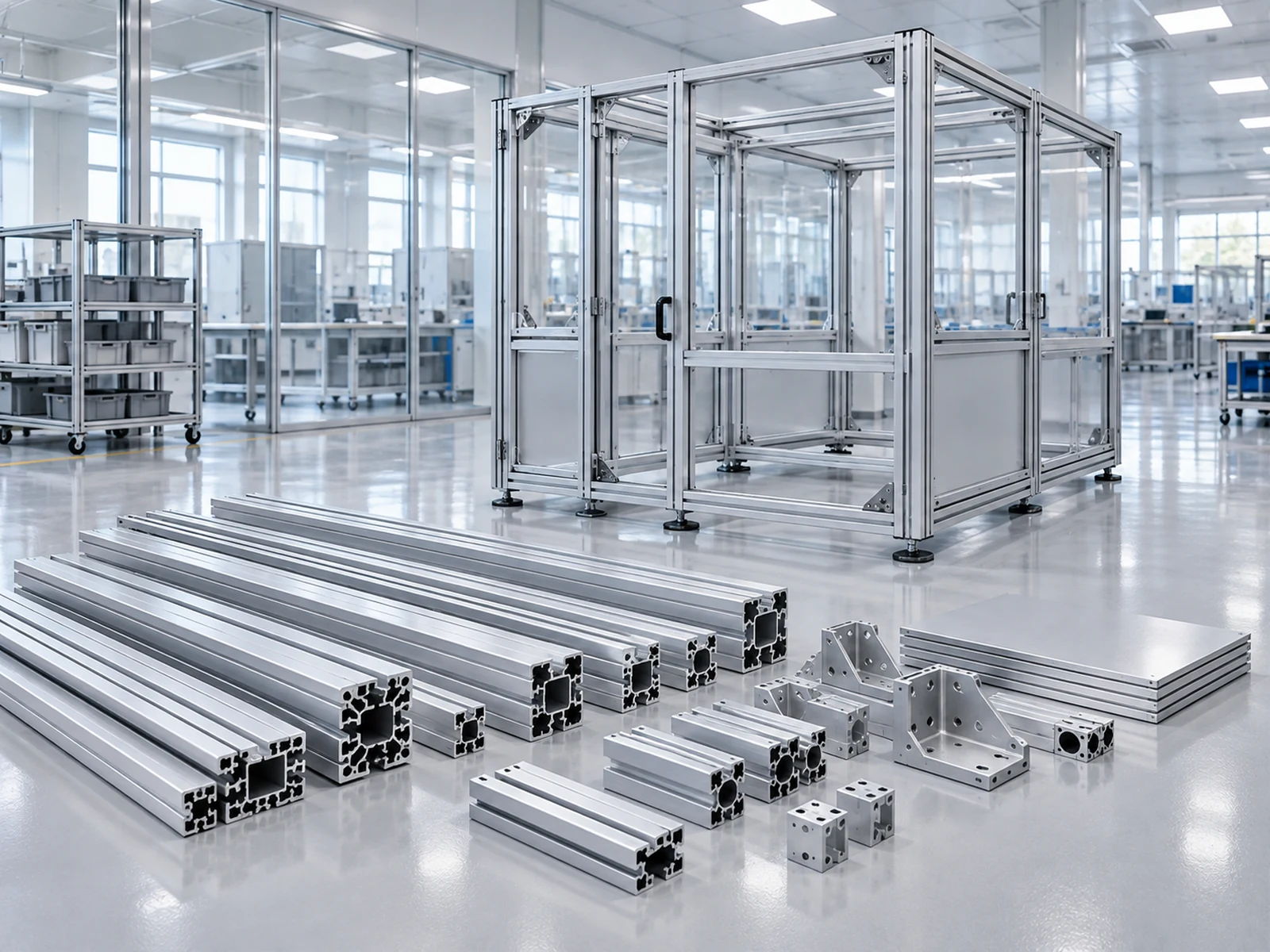
Start with the installed member, not a generic profile name
Ask the service or project team for the installed assembly identifier, current approved drawing revision, profile cross-section, slot series, finish, connector family and the location of every replacement member. Record whether a member is a removable rail, post, door or panel surround, or a structural part that requires an engineering approval before any substitution. An old purchase description such as “40 mm cleanroom extrusion” is not a cutting specification. Two profiles with the same outside dimension may differ at the slot or connector interface.
If the field team cannot identify the installed revision, treat the part as an identification task. Photograph the removed component and its joint, measure the actual cross-section, and compare it with approved drawings and supplier records. Do not infer compatibility from a photograph alone. Bosch Rexroth’s aluminum profile catalog guidance points buyers to cross-sections, material numbers and dimensional drawings; those are the types of records needed before a replacement cut list is released. A different profile system may use different slot and fastener standards.
Decide whether the saw belongs in the replacement route
Separate three supply routes for each replacement family: buy a finished OEM spare, buy an approved pre-cut member from an extrusion or fabrication partner, or cut the released blank in-house and perform any further operations under your own process. An in-house saw can shorten the wait for repeat members only when you control the correct stock and downstream work. It cannot make a wrong profile compatible, approve an undocumented field change or replace a qualified finished panel.
Compare the routes against the same accepted output: a labeled replacement kit ready for the next approved assembly or service step. Count the recurring member mix, order variability, minimum external order, urgent response window, stock carrying cost, operator time, downstream drilling or milling, inspection and rejected kits. If demand is infrequent or the OEM controls a proprietary joint, purchasing the approved spare can be more sensible than owning cutting capacity. If many released lengths share one verified stock family and service demand is predictable, an in-house cutting trial becomes worth pricing.
Cleanroom equipment frame replacement kits need revision control
For cleanroom equipment frame replacement kits, define each kit by assembly and revision, not by a bag of lengths. For each line, record part number, quantity, stock family, finished length datum, end angle or orientation, cut face requirements, secondary operations, finish protection, connector pack and destination. Preserve the relationship between the old installed part and its replacement revision. If one service order spans two revisions, the kit list must show which combination is approved. The saw operator should receive the released member record, not decide compatibility on the shop floor.
- Identify which members are cut from stock and which arrive as finished panels, brackets, doors or sealed components.
- Mark the reference face and orientation used by the installer; a correct numeric length with the wrong handed end can still block assembly.
- Specify which holes, threads, slots, gaskets, covers or protective film are applied after cutting, and who accepts them.
- Label and segregate each kit by assembly, revision and service order so a replacement cannot be mixed with another installed system.
For the broader factory-versus-module boundary, see our cleanroom system manufacturing saw guide. The present decision is narrower: repeat replacement members for an already identified equipment frame.
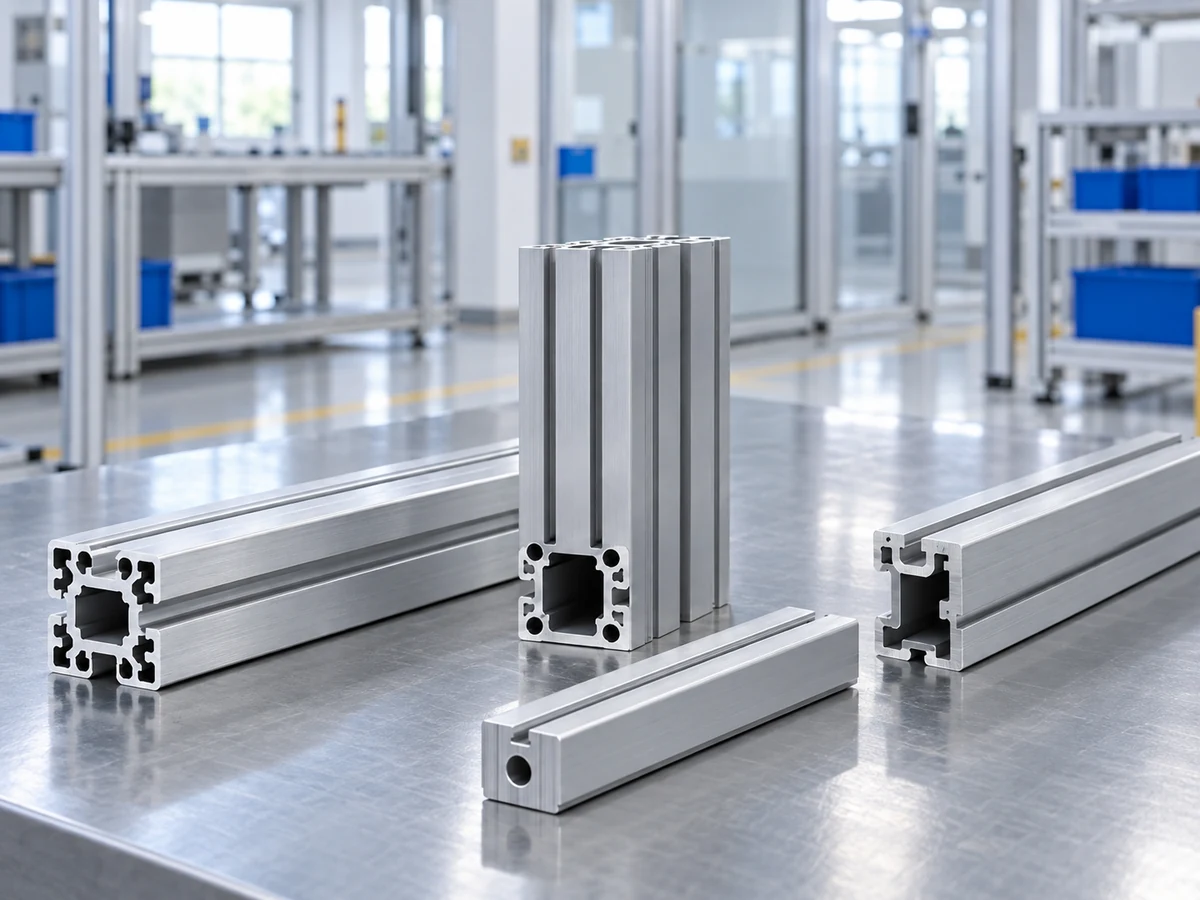
Run a trial on the released replacement family
A useful saw trial uses the stock profile, wall range, finish and joint style that the buyer will actually replenish. Include the longest relevant member and the shortest member the process must hold, plus any angled or handed ends. Record which datum controls each dimension and where the cut member goes next. A neat loose end is insufficient evidence if the part is later drilled, joined or installed with a cover.
Inspect representative first and last parts of a run using the buyer’s drawing and measurement method. Check length from the defined datum, end angle where applicable, burr condition, surface protection, identification and dry fit with the approved connector and mating member. Document setup changes when switching among family variants. A shop trial establishes only the tested configuration and method; it does not certify a cleanroom, confirm every field installation or promise finished-system performance. Our cleanroom frame extrusion saw trial checklist covers the member-end and corner-fit test in more detail.
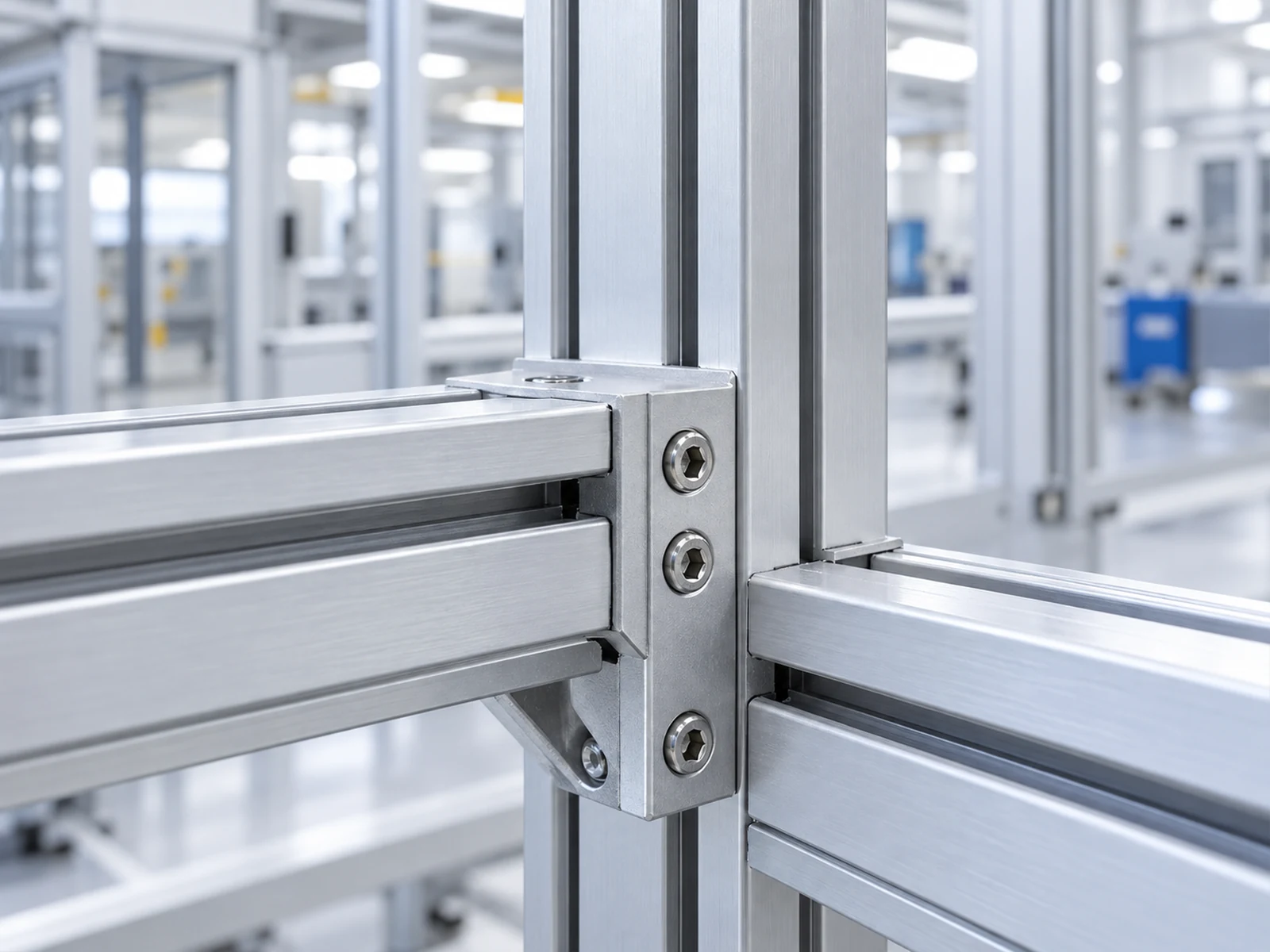
Keep cleanroom suitability and handover separate
Cutting an aluminum member is a fabrication step, not a cleanroom qualification. The owner or system integrator must define the applicable installation and operations controls, including how parts are cleaned, packed, brought into the controlled area and accepted. ISO 14644-4:2022 addresses design, construction and start-up of cleanroom installations, including modified and refurbished installations. ISO 14644-5:2025 addresses operational control programs. Neither standard turns a saw-cut member into proof of room compliance.
Ask the customer which handover records are actually required: released part and revision, stock identity, inspection result, secondary-operation completion, cleaning and packaging instruction, and the party accepting the installed assembly. Keep saw acceptance, kit acceptance and room or equipment qualification as separate decisions. If the buyer cannot define those boundaries, pause the machine specification until the responsible engineering and quality teams do.
Request comparable quotations
Give each saw supplier the same released family matrix and trial plan. Request the machine configuration, clamping approach for the actual cross-sections, blade and consumable assumptions, material support, setup/changeover method, safety features, service support and the documented acceptance procedure. State which activities are outside the saw scope, such as drilling, washing, packaging or installation. Compare total cost at the accepted kit rather than a headline cutting speed or a feeding-accuracy figure. Feeding accuracy alone is not finished-part accuracy.
A purchasing request can be concise: “We replenish these approved aluminum equipment-frame members by assembly and revision. Here are the profile drawings, stock finish, length and angle matrix, connector samples, downstream operations, inspection datums, monthly mix and required service window. Show a trial on the released family, identify the exact machine configuration, and quote the route to an accepted replacement kit.” A supplier who cannot test the representative part family has not yet demonstrated this application.
A general equipment view
The video below shows a Jiurun angle-saw example so buyers can see a general equipment workflow. It is not footage of the replacement family, an approved profile or a cleanroom-qualified process. Use the released part matrix and representative trial, rather than the video, to judge a proposed configuration.
Decision rule
Buy or trial an in-house saw when the installed system has identifiable aluminum members, the replacement family is released, repeat volume and response time justify controlled stock, and the factory can inspect and complete the kit. Continue buying approved finished spares when compatibility is proprietary, demand is sporadic or the job is principally a finished panel or system repair. The useful output of this decision is a dependable replacement kit, not merely a pile of cut lengths.
For a configuration discussion, send Jiurun the approved member drawings, actual stock samples, connector details and expected kit mix through our contact page. We can discuss a representative cutting trial and a configuration proposal; final suitability depends on the tested material, released design and downstream acceptance plan.