
Aluminum saw site survey evidence should answer a buying question before a supplier prices a machine for a particular building: what can the buyer and supplier verify from drawings, measurements and labelled photos, and what still requires an on-site check? A remote exchange can identify a promising machine route. It cannot turn an unmeasured doorway, an unverified electrical service or a photograph of open floor into an installation approval.
This guide is for a buyer planning a new or replacement industrial aluminum cutting station. It is about the evidence and decision gate before a quotation or site visit, not a universal floor specification. The actual machine, options, longest stock, local rules, utility capacity and installation method must be reviewed by the supplier and the qualified people responsible at the site. If a critical fact is unknown, ask for a conditional proposal or arrange a visit rather than marking the site ready.
A practical sequence is: define the candidate production route; assemble a traceable remote evidence pack; mark what is confirmed, assumed or unknown; decide whether a site visit is needed; then carry unresolved items into the quotation and final installation review. This keeps a fast first conversation useful without disguising uncertainty. Six remote quote checks organize that sequence: job scope, current plan, indexed photos, critical measurements, utility and delivery facts, and a written decision about which unknowns require a visit.
Start with the cutting route, not the empty floor
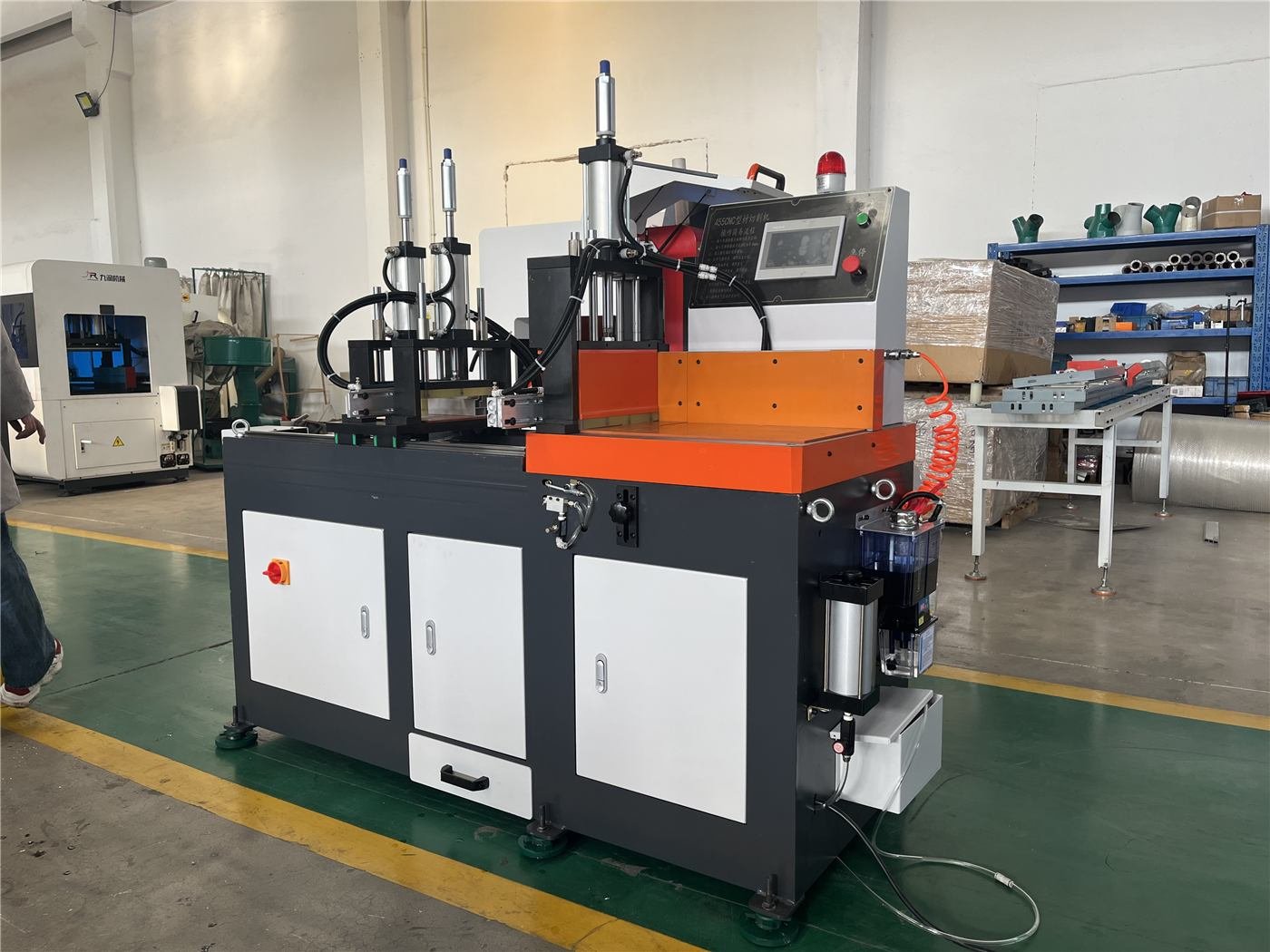
A site survey is only meaningful against a proposed cutting job. Give the supplier the profile or tube sections, alloy or stock description where relevant, maximum incoming lengths, required cut lengths and angles, order mix, expected output, and how accepted parts will be removed. Distinguish the saw itself from an infeed rack, outfeed table, chip collection, electrical cabinet, guarding, handling equipment and any future expansion that is actually in scope. A compact saw photograph tells the buyer little about the installed cell.
Ask for the proposed configuration and an arrangement drawing with revision and orientation. Overlay that specific equipment envelope on a dimensioned site plan. Show doors, columns, walls, existing machines, pedestrian routes, forklifts, stock staging and the discharge path. Identify whether the drawing represents normal operation, guards and cabinet doors opened for authorized work, or delivery/rigging movement. These are different states of the same space. The related whole-workflow layout guide develops the physical route; the survey here decides which remote inputs are strong enough to use and which must be checked on site.
Aluminum saw site survey: build a remote evidence pack
Request a current floor plan with a date, scale, dimensions and a marked machine orientation. Pair it with a simple photo set: one wide view of the intended station, views along the planned infeed and outfeed, both sides of the proposed machine position, the receiving door and route from unloading, and any connection point or obstruction that could alter the proposal. Number the photo positions on the plan. A wide-angle image may make a gap look larger than it is; write down the measured dimension beside the photo rather than estimating it from pixels.
For each critical measurement, record who measured it, where the endpoints were, the unit, the date and the current condition. A clear width through a door is different from the nominal door size. Ceiling height at the saw is different from clearance under a beam on the rigging route. A stock path that is open today may be occupied during a normal shift. If a floor plan is old, show changes since that revision. A supplier can then ask precise questions instead of treating a collage of unlabeled photos as a site survey.
The remote pack should also name the local decision owners: production for material flow, facilities for utilities and floor records, maintenance for service tasks, safety for movement and safeguarding, and the carrier or rigger for the actual delivery path. A single buyer may coordinate these inputs, but a supplier photo review does not replace the qualified checks each owner must make. Keep a short issue log with owner, evidence, required decision and due date.
Separate three kinds of findings
Confirmed: a current, identified drawing and a measured fact agree, with the responsible owner named. Conditional: a layout may work if a named action occurs, such as moving a rack or changing an option, but the action is not yet approved. Unknown: there is no reliable measurement, document or accountable sign-off. Use these labels on the plan and in the RFQ. An unknown is not a failure of the buyer; it is a signal to obtain evidence before the purchase becomes harder to change.
Remote evidence can usually support an early comparison of candidate machine classes, approximate cell arrangement, proposed stock route and a list of utility questions. It may also show a plainly blocked doorway or conflict with an existing aisle. It cannot, by itself, verify structural floor capacity, a safe maintenance method, a final electrical connection, a rigging route under load, an applicable legal clearance or actual cutting performance. These require the appropriate site records, qualified review, physical measurement or machine trial.
Check delivery, utilities and maintenance as separate routes
Trace the delivery path from the unloading point to the final position. Record clear openings, turns, floor or ramp transitions, overhead obstructions and any lift or temporary removal that might be needed. Ask the supplier for packed dimensions and mass of the quoted configuration and ask the rigger or responsible site team to check the actual route. A floor photograph showing space around the final position says nothing about whether the machine can enter the building. If the route is uncertain, make delivery feasibility a hold point before a firm installation commitment.
For utilities, identify the available supply at the proposed connection point and who will verify it. Ask for the quoted configuration’s electrical, compressed-air and extraction or coolant interfaces only where those systems are included. Do not infer capacity from a nearby socket, hose or cabinet photograph. Local trades and the manufacturer’s actual documentation need to reconcile supply characteristics, routing, isolation and responsibility for connection. If the proposal changes, recheck the utility schedule rather than reusing the first answer.
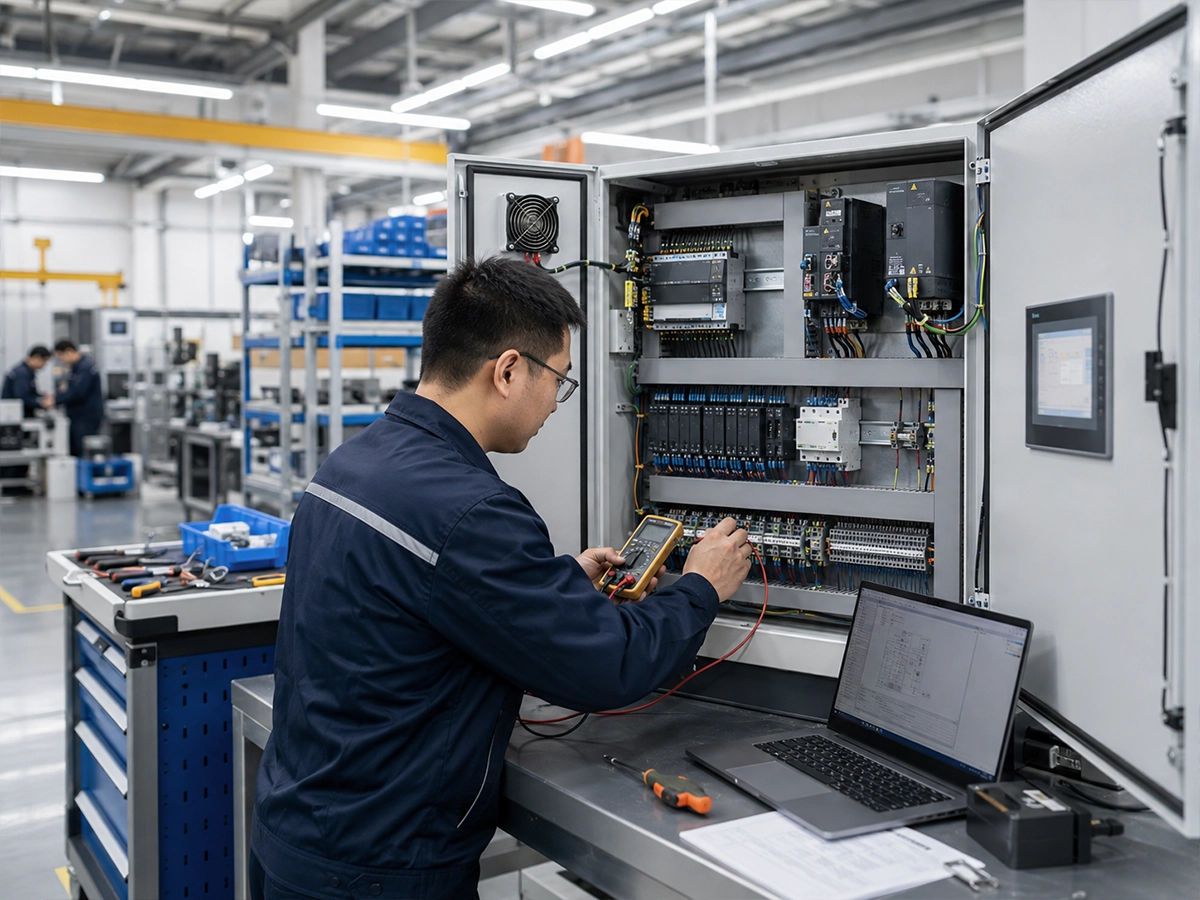
Maintenance access is a third route. Show the service faces, guards, cabinet doors and space needed for the actual authorized tasks, then identify how that work area stays clear of stock, production traffic and stored parts. The service-aisle buying checklist addresses that decision in detail. A remote review can flag an obvious conflict, but competent site personnel must confirm the final work method and relevant controls. Do not treat a photographed gap as proof of safe clearance.
Use an on-site visit when the answer changes the purchase
Escalate to a visit or qualified local measurement when the site drawing is missing or disputed; the route has narrow turns or overhead restrictions; a floor or utility record is unavailable; the supplier’s option choice depends on a tight dimension; pedestrian and vehicle paths interact; the station shares services with other equipment; or moving existing machines is part of the plan. A visit is also appropriate when different teams disagree about what space is actually reserved. The purpose is to close the named uncertainties, not to repeat every question already supported by reliable documents.
Before a visit, send the candidate arrangement drawing, photo index and issue log. Ask the visitor to return marked measurements, a photo key, proposed changes, unresolved risks and named owners. A site visit without a defined question can still produce an attractive set of photos but leave the quote scope unclear. Conversely, an adequate remote package can avoid a visit for early comparison while retaining a clear final-site-verification hold point.
Turn survey findings into a quoteable decision
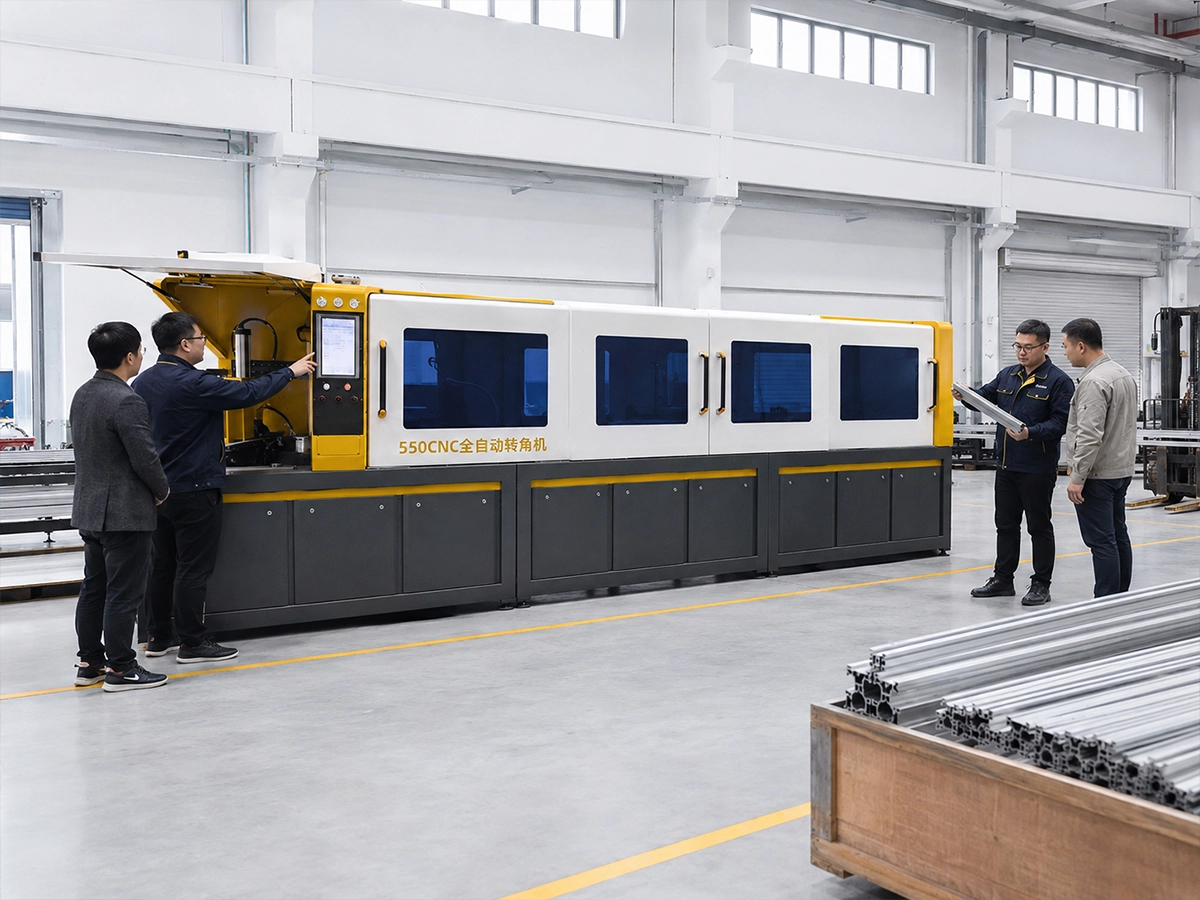
Send the supplier one controlled package: production brief, candidate configuration, current dimensioned plan, indexed photos, measurement sheet, utility information, delivery-route notes and issue log. Request a revised arrangement drawing and a written assumption list. The quote should name included infeed/outfeed equipment, services, installation interfaces, exclusions and the conditions that could change price or delivery. The buyer should name who can clear each hold point. Avoid a vague statement that “the site is suitable” when the evidence only supports a preliminary layout.
A useful comparison has three outcomes. Proceed with a conditional quote when the open items are small, named and do not determine the machine class. Pause configuration selection when an unknown dimension or utility could change the model or accessory route. Arrange on-site verification when a measurement, site constraint or conflicting record could make delivery, operation or authorized maintenance unworkable. Reopen the review if the machine option set, stock length, production mix or building layout changes.
For an RFQ, ask: Which exact drawing revision is being quoted? Which measurements were supplied by the buyer and which were verified by the supplier? What has been assumed about open doors, service work, stock flow and rigging? Which utilities and site works are excluded? Who must sign off the final location, connections and safeguarding? What evidence will close each unresolved item before dispatch or installation? Put the answers beside the price so two offers can be compared on the same basis.
Source and scope notes
The NIST MEP equipment pre-purchase guide prompts buyers to examine location, utility, safety and maintenance questions before acquisition. The Tormach pre-installation checklist is an example from another machine-tool maker of checking space, power and air against the actual equipment instructions. The UK HSE maintenance guidance supports planning work areas and responsibilities for maintenance. These sources inform the questions in this article; they are not Jiurun model specifications or approval of a particular site.
Video example: general Jiurun saw equipment
The following Jiurun Machinery channel clip shows general saw equipment and its feed line. It is a visual example only. It does not show the buyer’s site, a verified remote survey, a measured delivery route, a specific quoted material or model configuration, a customer installation, a trial cut, safety approval or performance result.
Send the evidence that will change the answer
For a JiurunCut saw inquiry, send your material and profile, target cuts, expected order mix, available floor plan and a few labelled photos of the proposed station and delivery route. State which dimensions and utilities are confirmed and which are still unknown. Jiurun can then discuss a suitable cutting route and the site information needed for a configuration-specific quote. Final site readiness, installation method and cutting acceptance remain separate decisions based on the actual equipment and site evidence.