
An LED aluminum housing saw trial is useful only when the buyer can see whether the cut extrusion still works with the approved cover and end cap. A straight, shiny sample is insufficient if the cover must be shortened again, the cap will not seat, or a visible lip is marked. This guide sets out a practical purchase test for factories cutting aluminum LED housings. It is about the saw and the cut member; electrical assembly, optical performance, sealing and fixture certification remain separate responsibilities.
Start with the approved housing system, not a generic extrusion
Ask the product or assembly owner for the exact extrusion drawing and revision, the intended cover and end-cap part numbers, the finish, and the accepted incoming stock condition. Record whether the factory buys an already finished profile or cuts stock before anodizing or coating. A trial made from another section can hide a contact problem at a groove or an unsupported fin.
The part set matters because a lighting housing is not a single length. KLUŚ, for example, lists aluminum extrusions separately from covers and wire-out end-cap options, and its PDS-T-BOK product information identifies a cover cut to profile length. Its PDS-4-PLUS information says equal cover and extrusion length depends on a dedicated end cap. These are examples of system-specific relationships, not dimensions or rules to copy into a JiurunCut quote. Use the buyer’s own approved parts and drawings to set the trial.

Separate the three length references
Put three labeled dimensions on the sample sheet: the cut aluminum profile length, the cut cover length, and the final assembled outside length if the cap adds or conceals length. Also identify the datum faces and which end is the reference end. Do not quietly substitute one of these values for another. A saw can meet its programmed profile length while the assembled light is still wrong because the cover and cap use a different reference.
The drawing owner should specify the allowable variation and measurement method for each dimension. Ask whether a cap seats flush, overlaps the extrusion, or intentionally stands proud. Ask whether the cover ends at the same plane or stops short. The answer is a product-specific approval, not a universal saw tolerance. Keep the acceptance sheet beside the profile drawing and the actual cap/cover sample so the supplier knows what is being assessed.
Protect the section features that perform the fit
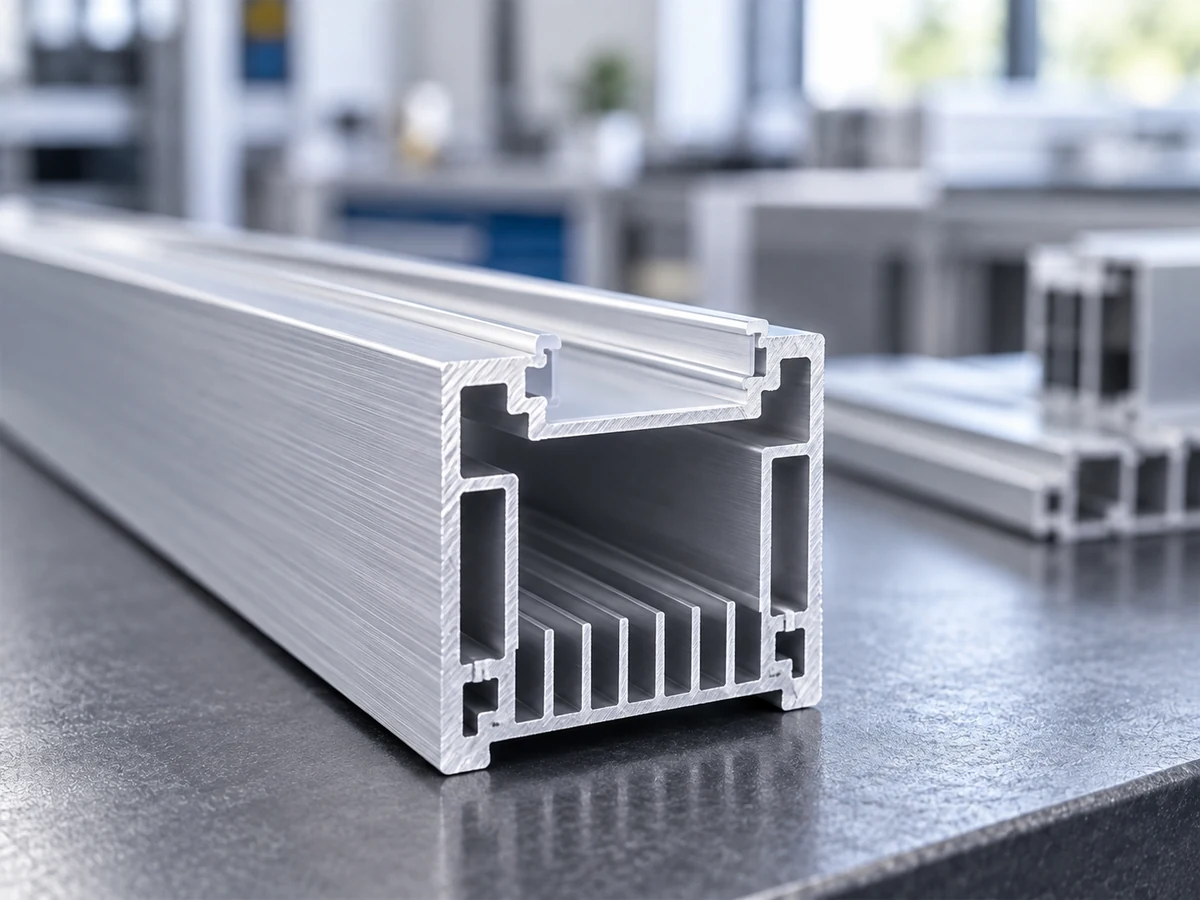
Identify the visible face, cover-retaining lips, end-cap locating features, internal channel, and any thin external fins on the particular section. Before the trial, agree which surfaces may contact clamps or supports and which are cosmetic. During the trial, note where the section can rock, twist, crush or leave the cut plane unsupported. Request a proposed fixture and support arrangement for that section and the actual stock length, then inspect the stopped sample after cutting.
A good review uses both end views and side views. Check for damage at the cover groove, a raised burr that interferes with seating, a chipped visible finish, or distortion of a thin lip. Do not infer fit from a photograph of an unassembled blank. Have the approved assembly owner try the real cover and cap on the retained sample, using that product’s accepted method, and record the result. The saw vendor can show the cut and fixture; the buyer’s product owner decides whether the assembly interface is acceptable.
Make the end-cap trial a controlled comparison
Use at least one approved straight housing family and, if the purchase covers several families, add the shortest, longest, thinnest-lipped and most visible-finish members that materially change the fixture or inspection. Do not multiply samples just to create a large count. Each sample should have a traceable section code, revision, stock lot or finish state, target cut length, end orientation, matching cap and cover identification, and the fixture/configuration used. Keep rejected and accepted results separate.
First inspect the incoming stock so a pre-existing scratch or bowed section is not assigned to the saw. Then record the cutting setup and retain the first-off sample and a small run of repeat pieces under the same agreed conditions. Measure against the approved references after the method is agreed; do not use the machine feed-position display as finished-part accuracy. The assembly owner should fit the actual cap and cover to the retained pieces. Note any secondary deburring, drilling, wiring opening or finishing operation and who owns it. A trial that silently relies on an unquoted downstream operation is not evidence of a complete saw-only supply.
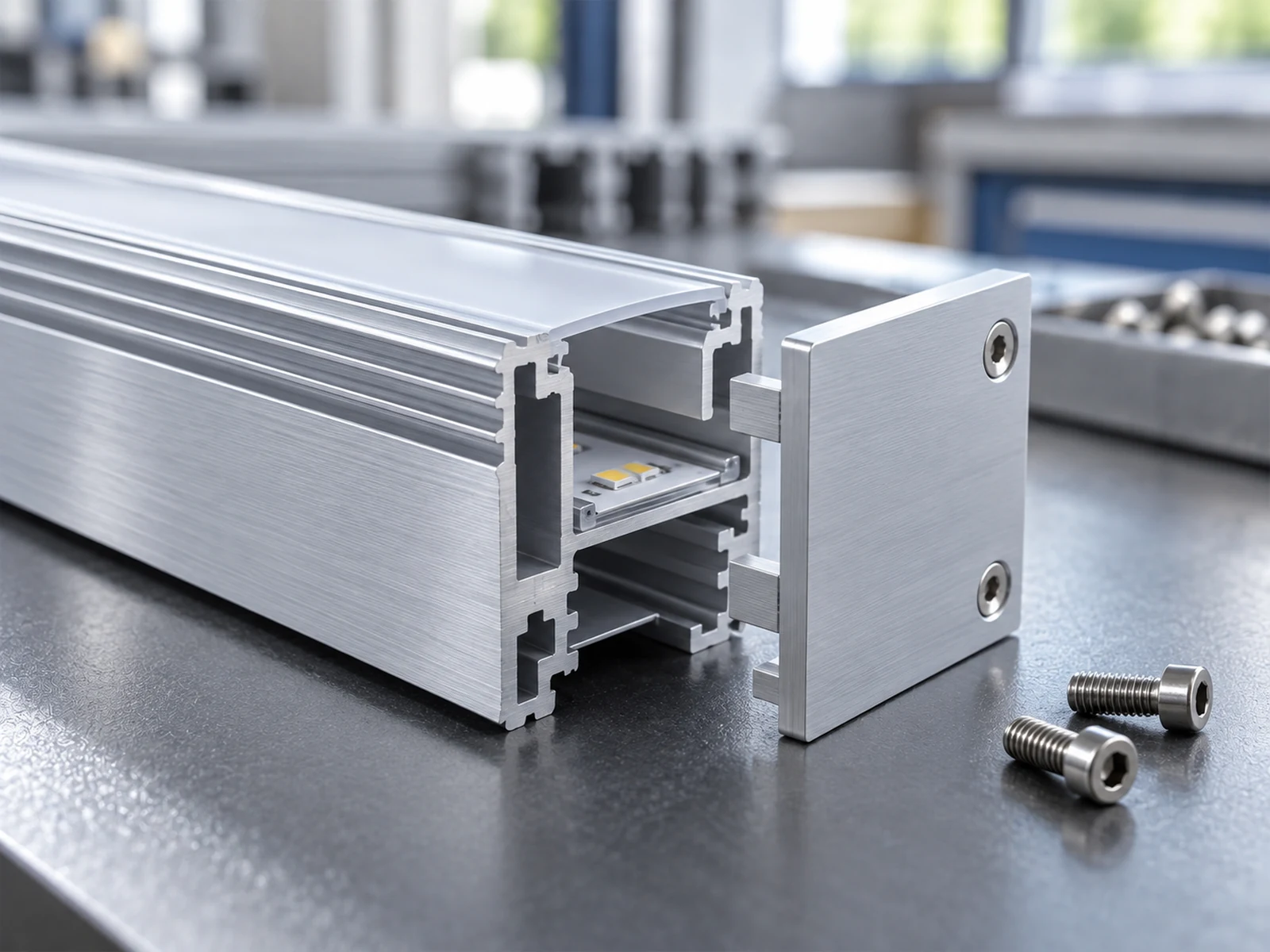
The image below illustrates separate components and a possible cap interface. The apparent fit in an illustration is not an acceptance result; the buyer must test its own approved parts.
What an LED aluminum housing saw trial can and cannot prove
A saw demonstration can show how a particular extrusion is supported and clamped, whether its cut end is accessible for inspection, how length and orientation are controlled, and whether a retained cut sample passes the buyer’s agreed checks. It cannot by itself establish cover retention, electrical safety, ingress protection, light output, thermal behavior, installation suitability or regulatory approval. Those depend on the complete fixture and its separately qualified components and processes.
The video below is a general Jiurun Machinery saw-equipment example from the owner’s YouTube channel. It is not a demonstration of the LED housing, end cap, cover, exact quoted model, customer, trial result, accuracy or performance described here. Use it to understand the general equipment context, then request a trial of the approved material and configuration.
Turn the trial into a purchase decision
Ask the supplier to quote the complete proposed station for the approved housing family: the offered saw and blade specification, actual support and clamping for each section, length reference, chip management, guarding, inspection access, changeover work, training, documents and after-sales items. Mark what is included, excluded, optional or assigned to the buyer. If the buyer will cut covers or drill caps elsewhere, keep those processes outside the saw claim and include their real cost and time in the make-or-buy comparison.
Compare this quote with bought-to-length or supplier-prepared housing kits at the same receiving stage. Account for stock purchasing length, end trim, sample rejection, cover/cap preparation, handling, inspection, changeovers and the remaining assembly route. A lower saw cycle time alone does not decide the investment if product families need different fixtures or if the cut samples fail assembly acceptance. Conversely, a repeatable approved set can justify in-house cutting when the whole route and resources are understood.
Copyable RFQ and acceptance record
- Product identity: housing section code and revision; drawing; stock condition and finish; approved cover and cap codes.
- Cut job: stock length range; profile target length and reference face; end orientation; expected family mix and changeover frequency.
- Assembly interface: cover length basis; cap seating reference; visible faces and protected grooves; any separate downstream operations.
- Trial set: named representative sections and actual matched parts; first-off and repeat pieces; recorded stock lot, fixture and offered machine configuration.
- Acceptance: agreed measurement method and limits; cut-end condition; real cap/cover fitting by the product owner; photographs and retained labeled samples.
- Quotation boundary: machine, blade, supports, clamps, chip handling, safeguards, documents, training and service scope; included and excluded work.
- Decision owner: person who releases the part drawing, person who approves assembly fit, and person who accepts the saw purchase.
If the supplier cannot identify the matching cover and cap, ask for a conditional quotation and a sample plan rather than a pass claim. If the sample fits only after an unquoted rework step, add that step to the comparison. If the bought-to-length route already delivers approved kits, compare its full handover with the same fully accepted stage of in-house production.
Questions buyers often ask
Can the saw trial use any LED extrusion with a similar outside size?
No. The groove, lip, finish, internal cavity and cap connection can differ. Use the approved section and its own matching accessories for acceptance; a substitute may only be a preliminary machine demonstration.
Does a correct profile length prove the cover and cap will fit?
No. Record profile length, cover length and assembled outside length separately. The relationship is set by the approved system and must be checked with actual components.
Can a supplier promise finished luminaire performance from a cut sample?
A cut sample is evidence about a defined saw operation and its measured part. Fixture electrical, optical, thermal, environmental and regulatory claims need their own complete-system evidence.
For a buyer inquiry, send the approved section drawing and revision, cover/cap identities, protected faces, length references, sample quantities and acceptance owner through the JiurunCut contact page. Related guides cover the LED housing blank specification, LED-profile miter corners, and the broader lighting-fixture saw purchase.