
An aluminum saw framework purchase agreement can simplify repeated equipment buying, but it should not blur the difference between common terms and a confirmed order for one machine. A buyer may expect several plants to use a common specification while actual models, options, site interfaces and delivery dates differ. A supplier may read a forecast as an opportunity rather than a commitment. The useful document is a map of what applies to every purchase and what must be approved again for each equipment release.
This is a procurement planning guide, not a template contract or a claim that Jiurun offers a framework program. The parties must decide whether an arrangement is available, what legal obligations it creates and how individual orders become binding under their signed terms. Ask qualified commercial and legal advisers to review those terms for the relevant jurisdiction before signature.
Build an aluminum saw framework purchase agreement around a real repeated need
List the plants, projects or business units expected to buy saws, the aluminum profiles and cut parts they actually handle, and the likely timing of each requirement. Identify the person who owns the standard machine requirement and the person who may approve a local release. A framework is useful when a recurring family of purchases shares enough scope to make a common baseline meaningful. One uncertain project can be quoted and ordered directly without inventing an agreement around it.
Separate a planning forecast from an authorized equipment order. A forecast helps a supplier discuss capacity, lead-time risk and probable option demand. It does not by itself identify a released machine, a committed quantity or a delivery date unless the written terms expressly make it so. Record the forecast version, assumptions, sites and review date; mark every equipment release with its own approval and confirmation status. The aluminum saw demand-scenarios guide helps test whether projected demand justifies the proposed machine mix.
Define a common base without pretending every machine is identical
Write a base schedule for the requirements that can actually remain common: documentation language, quotation format, change-control method, service contact route, spare-parts identification, training responsibility, warranty document reference and the way deviations are recorded. If a machine family is standardized, identify the approved model and revision, but keep an option matrix rather than assuming every release uses every accessory. The base should tell a buyer what to ask for, not replace the technical review of a particular saw.
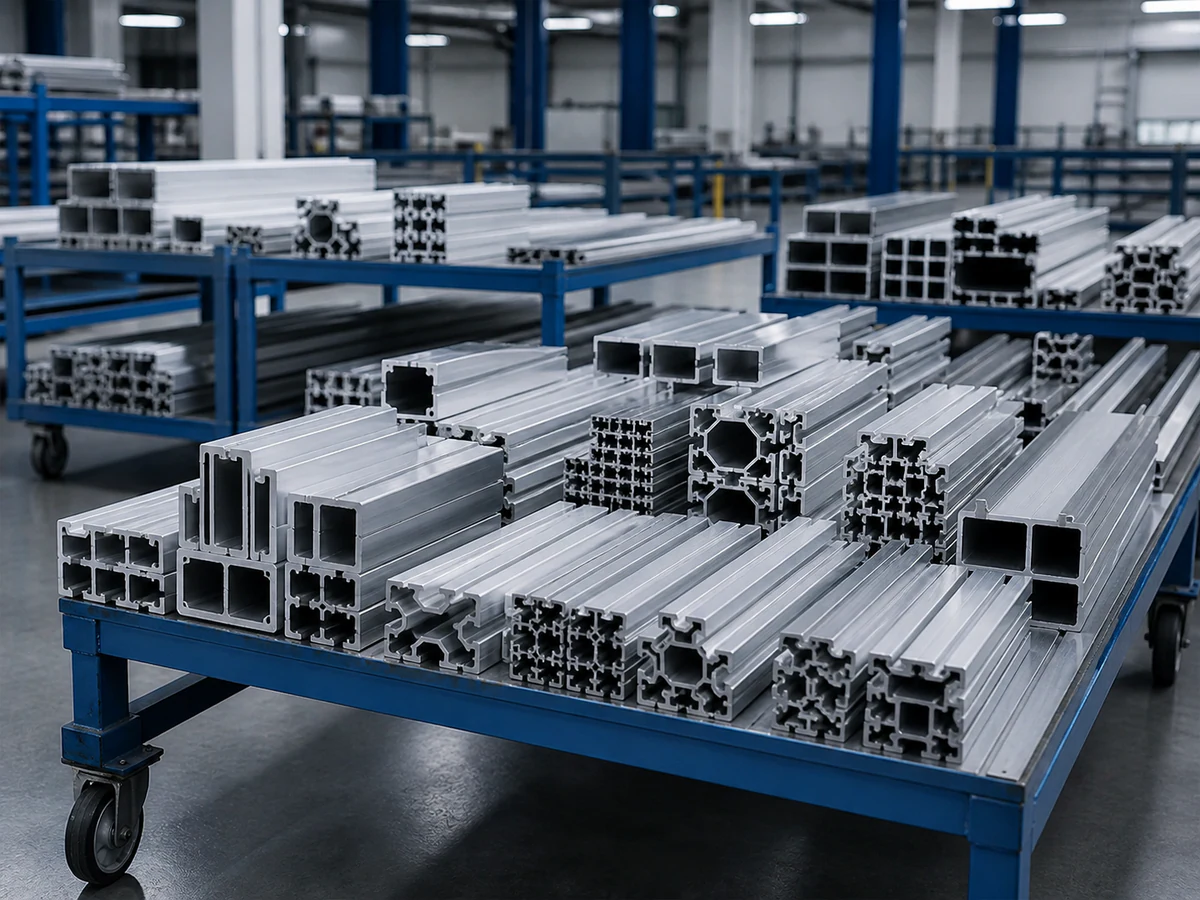
At each site, the released equipment still needs a part-level requirement: alloy and stock form, section dimensions, length and angle range, end condition, batch pattern, accepted output, loading and unloading route, guarding, extraction, power, floor space and downstream inspection. A catalog name or photograph cannot establish that the proposed configuration handles all of those conditions. Mark each field as common, locally selected or unresolved. Require the supplier to identify exclusions and interfaces in the actual release quotation.
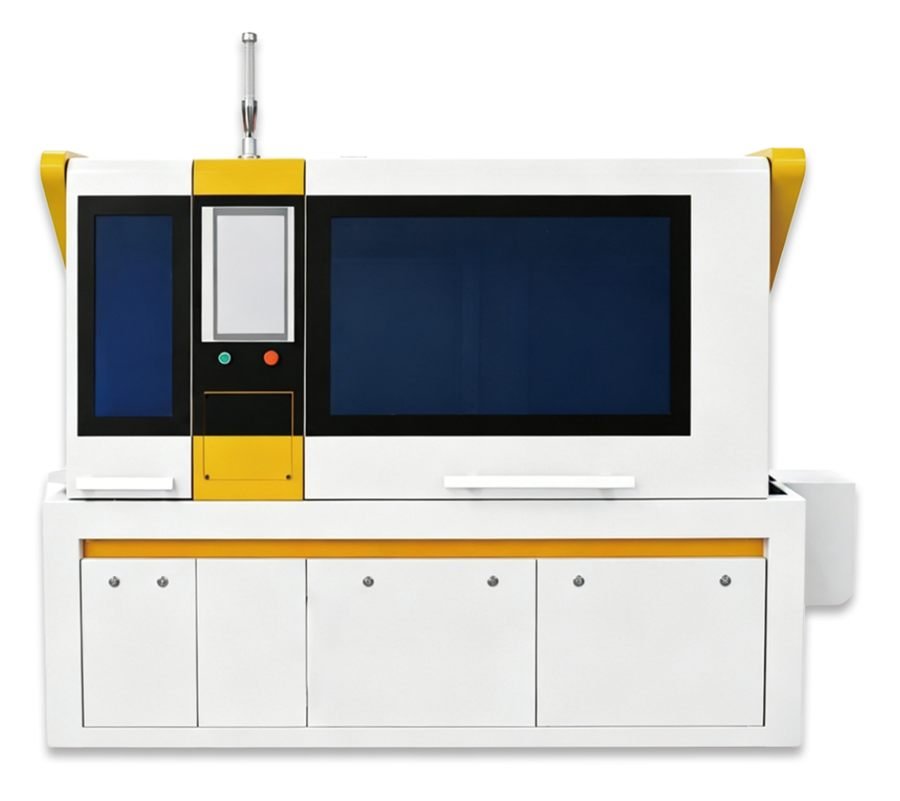
The machine picture below is an example of one automatic saw layout from the existing Jiurun media library. It is useful for discussing whether enclosure, loading and control interfaces belong in the standard or the local release. It does not identify a machine supplied under any framework, and its pictured appearance alone proves no capacity or acceptance result.
Make each equipment release a complete decision
A release record should name the buying entity, site, accountable technical owner, supplier, equipment identifier, approved specification revision, selected options and excluded items. Add the representative part drawings and sample plan, utilities and civil-work assumptions, required shipment and installation milestones, training, documentation, spare parts, acceptance protocol, price basis and payment milestones. Reference the applicable base agreement version. If the parties use a purchase order, call-off or another instrument, its effect is defined by their actual terms; do not assume a common label has the same legal meaning everywhere.
Compare a release quotation with the base schedule line by line. Has the supplier reserved the particular model and options, or merely indicated an expected family? Are delivery dates confirmed or still estimates? Which charges are common rates and which depend on site access, freight, commissioning, consumables or additional fixtures? Who must approve a deviation before the supplier builds or ships? A release should be accepted by people who understand both procurement authorization and the production part, not solely by whoever holds the master price list.
Number releases and keep a simple register: requested, technically reviewed, commercially reviewed, authorized, supplier-confirmed, in build, shipped, installed, acceptance open and accepted. Retain the date and evidence for each status. The register prevents an optimistic forecast or unsigned quotation from being counted as supplied capacity. It also makes it easier to see whether a delayed unit affects a particular plant or a group of orders.
Keep price, capacity and lead time conditional on the actual release
State how price is determined for each allowed configuration. A base discount or rate card is not a complete delivered price when options, freight, taxes, installation or exchange-rate treatment vary. Ask whether quoted rates have an effective period and what written process applies when that period ends. Compare total installed and accepted cost at the same receiving point. The aluminum saw landed-cost guide provides a consistent comparison basis.
Likewise, distinguish a supplier’s planning capacity from an allocated production slot. A forecast may support preparation, but only the actual supplier confirmation can show what was reserved for a release. Put decision dates, buyer-supplied drawings and samples, factory tests, freight, customs where applicable, site readiness and installation in one schedule. Flag which milestone is an estimate and which is a committed term. If several plants need machines during the same period, test whether their combined requested dates can be supported without relying on an unverified shared slot.
Do not quietly treat the framework as a minimum-volume purchase or the supplier’s promised inventory. Either obligation must be explicit in the signed documents if it exists. If a site cancels, postpones or changes a request, identify whether it is still a forecast, an authorized release, or an already confirmed order. Each status can have a different consequence under the actual agreement, so commercial review must precede any assumption about cost or flexibility.
Control changes at both levels
A base-level change may affect later releases without changing units already confirmed. A release-level change concerns a particular machine, accessory, site or due date. Give each change a written identifier, originator, old and proposed version, affected releases, technical effect, cost and schedule effect, supplier response and approver. Do not overwrite the baseline until the parties agree which orders inherit the new version. The purchase change-order guide addresses the separate problem of changing an already accepted machine order.
For example, a plant may ask to replace a standard outfeed arrangement because its receiving conveyor has a different height. That is a local interface question first. If every future plant needs the same option, the base schedule might later be revised. Neither route proves that previously confirmed units have changed. Keep each supplier acknowledgement and revised drawing tied to its actual release ID.
Accept each unit against its own released job
One successful factory demonstration cannot accept every later machine. Define the acceptance owner and evidence for each unit: approved configuration and serial number, delivered accessories, safety and utility checks, training and documents, representative stock and part drawings, first-piece measurement, output condition and open issues. State which checks happen before shipment, which at the site and which the buyer must complete with its own downstream process. A nominally identical model can arrive at a different site with different fixtures, software revisions or stock support.
Use a traceable exception list. Mark an issue closed only when its correction and retest meet the written criterion. Do not describe feeding-position repeatability as finished-part dimensional accuracy; the finished part must be measured under the agreed method. The image below illustrates a dimensional review of aluminum profiles, not an acceptance test for any release in this article.

Six questions before using a framework route
- Which future needs are forecasts, and which equipment units have already been authorized and confirmed?
- What common specification and commercial terms apply, and which model, options and site interfaces require a new decision?
- Who can issue and accept a release for each plant, and what document makes it effective?
- How are total delivered price, production slot and milestones confirmed for the particular unit?
- How will a base change or local deviation identify the releases it affects?
- What evidence will accept each saw independently against its own parts and receiving route?
If those answers cannot be kept in one current register, a series of clearly defined standalone orders may be easier to control. A framework should shorten repeat work without hiding unresolved configuration, price or acceptance questions. Review the arrangement periodically against actual releases and plant requirements rather than assuming the initial forecast remains accurate.
Equipment video: a general saw example
The following clip is from Jiurun Machinery’s YouTube channel and shows general saw equipment footage. It is only a visual example of an equipment layout. It does not show a framework purchase, a specific release or site configuration, customer order, trial cut, accepted unit or measured performance for this article.
To discuss a specific aluminum saw purchase, contact Jiurun with your part drawings, stock and cut requirements, number of planned sites, expected decision dates and local interfaces. Ask whether the supplier can support the proposed purchasing route, then request a configuration and acceptance scope for each actual unit. Do not infer that a standing agreement exists from this guide.
Sources and scope
- UK government framework guidance illustrates the distinction between a framework and later call-off contracts in its public-procurement context; it does not govern a private industrial purchase everywhere.
- NIST MEP equipment pre-purchase guide provides general questions on site, training, lifecycle and risk. Its guidance is not a Jiurun specification or contract term.
The buyer’s signed documents, applicable law and qualified advisers determine the actual commercial and legal effect. Every technical and delivery claim still needs the supplier’s written confirmation for the identified unit.