
An aluminum saw purchase change order is easy to misunderstand when a buyer and supplier already agree that a machine is needed but discover that the accepted quotation describes a different scope from the one the production team expects. A revised fixture, additional control signal, altered guarding, or different delivery sequence can affect engineering work, price, installation and acceptance. Treat the request as a proposed change to an identified baseline, then decide it in writing before either side treats it as included.
This guide is for buyers comparing a signed purchase order or accepted quotation with a later request. It is a purchasing control framework, not a claim that a particular Jiurun model includes any option shown here. The starting point is the actual offer, order, approved drawings and written clarifications for your project.
First identify the agreed baseline
Collect the dated offer and accepted order, equipment specification, selected options, part or profile drawings, material and cut-list assumptions, scope of tooling, layout and utility interfaces, documentation, training, shipping terms and acceptance plan. Mark each document’s revision and who accepted it. A buyer cannot evaluate a change reliably if the parties are comparing different versions of the same drawing.
Separate a new requirement from a correction of an omission or an interpretation dispute. For example, a line saying a component is supplied does not by itself establish how the complete machine is plumbed or controlled. Ask which original sentence, drawing or approved clarification created the obligation. If the evidence already includes the requirement, resolve it as baseline performance rather than adding an automatic charge. If the request adds scope, evaluate it as a change. If wording is ambiguous, settle its meaning and document the conclusion before costing work.
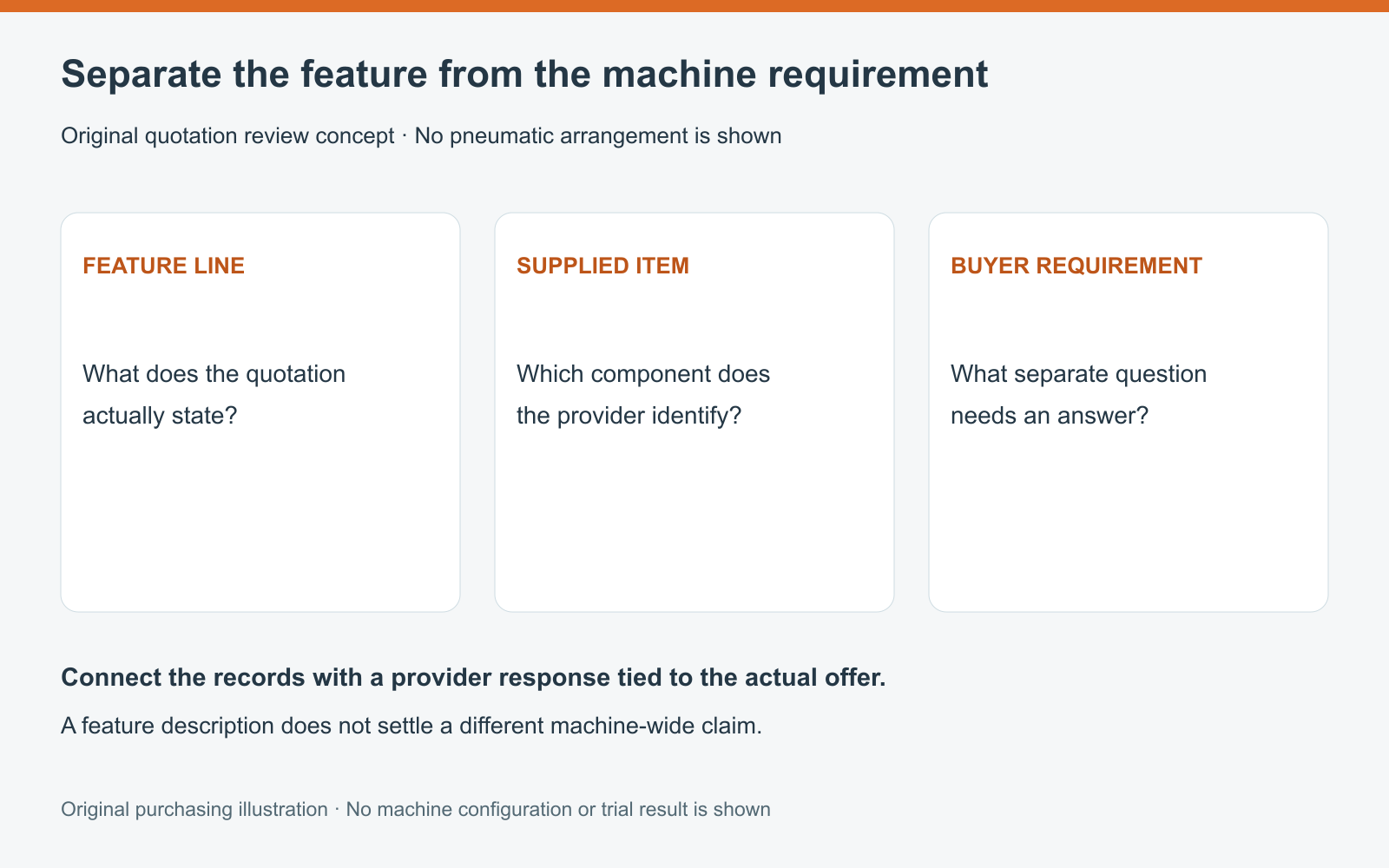
A useful baseline register has five fields: document, revision/date, requirement or exclusion, approving person and unresolved assumption. The register prevents a verbal discussion from quietly becoming a new contractual specification. Project Management Institute guidance describes a controlled baseline and recorded changes as central to configuration management; use that discipline here without assuming a universal legal form for every purchase.
Write the requested difference in testable terms
Give each proposed change its own identifier. State the current requirement, requested requirement, business reason, affected parts or processes, desired date and decision owner. Include drawings, tolerances and interface information when they actually govern the request. Avoid a vague line such as “improve automation”; it cannot be priced or accepted consistently.
If the request concerns a cutting result, define the output and measurement method. A feed-positioning claim and a finished-part dimensional requirement are different statements. State the profile geometry and material, cut-length range, expected batch mix, burr or finish criteria, measurement equipment and sampling plan. Do not infer finished-part accuracy from a catalog feed figure. If sample cutting is needed, agree on the sample, setup and pass criteria before interpreting a demonstration.
For equipment-related scope, record the physical and electrical interfaces. A new clamp or support may alter access, guarding or maintenance clearance. A signal to an upstream conveyor or downstream collector needs an I/O list, ownership boundary and fault behavior. A tooling revision may require a fresh drawing and lead time. Where safety or local installation rules apply, obtain a qualified review for that installation rather than assuming a generic photograph confirms compliance.
Assess the full effect before accepting a quote
Ask the supplier to return an impact statement that separates one-time engineering, purchased components, fabrication, software, testing, documentation, shipping and site work as applicable. The commercial response should show the incremental price or credit, currency, tax and freight treatment, payment milestone changes and quotation validity. A zero-price change can still alter delivery or acceptance. Conversely, a priced option may not affect the critical path if it can be implemented before an existing milestone. Ask for the reasoning, not only a total.
Map the schedule impact to named events: design freeze, drawing approval, procurement release, factory test, shipment, installation and site acceptance. Identify work already completed, parts already ordered and the latest decision date that preserves the current sequence. A proposed new delivery date should state the assumption that the buyer returns drawings, samples or approvals on time. If the supplier cannot yet quantify an effect, record a provisional range or a later decision gate instead of treating silence as no impact.
Also identify effects on training, spare parts, manuals, maintenance access and future consumables. These often determine whether a low initial change price remains economical in operation. Compare the changed machine against the buyer’s real production need, not against a list of attractive features. The aluminum saw RFQ clarification guide helps make assumptions explicit before an order; the same discipline applies when a requirement changes afterward.
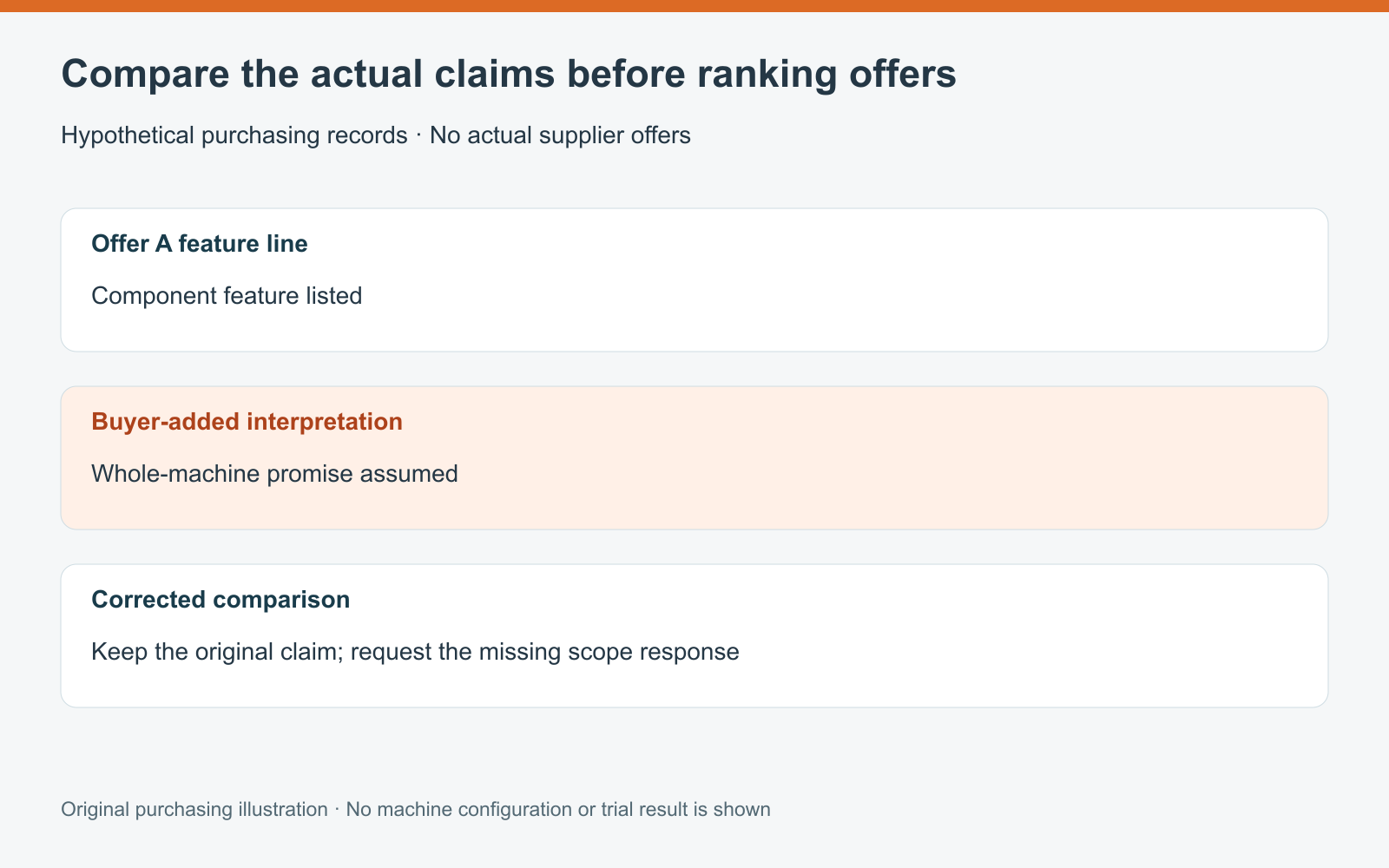
Aluminum saw purchase change order decision record
A compact decision record should show four states: requested, assessed, approved or rejected, and implemented and verified. Do not collapse “the supplier has reviewed it” into “the buyer has authorized it.” Name the individuals who can approve price, technical scope and delivery changes. Attach the revised documents and record both parties’ agreement under their normal purchasing process. The approved record should supersede or reference the affected baseline pages so that the shop floor, purchaser and acceptance team use one version.
For each change, the buyer can use the following decision questions:
- Need: Which production order, quality risk or site constraint makes the change necessary?
- Baseline: Which accepted requirement changes, and which items remain as agreed?
- Feasibility: What drawings, samples, interfaces or qualified reviews are still needed?
- Commercial impact: What is the incremental cost or credit, and who bears related freight or site work?
- Schedule: Which milestone moves, and what buyer response date is assumed?
- Acceptance: What observable result will close the change, and where will it be checked?
When several options are possible, compare them on the same matrix. One option may require a machine modification, another a fixture or upstream process adjustment, and a third may simply defer the feature. Record the tradeoff in throughput, operator work, maintenance and delivery, while keeping untested performance estimates labeled as estimates. The goal is a defensible purchase decision, not the largest option package.
Connect the change to acceptance evidence
Before implementation, decide whether the original factory acceptance test remains sufficient. A changed clamp, control handshake or cut program may require an added check. Define what will be observed, the sample or simulated input, who attends and what records will be retained. If the item can be verified only at the buyer’s site, distinguish factory completion from site acceptance and assign responsibility for utilities, material and personnel.
Update the final drawing, parts list, operating instructions and training scope when they are affected. A machine that physically incorporates a change but has old documentation creates trouble during installation and maintenance. Ask for a revision list at handover and retain the signed change record with the original purchase documents. PMI’s scope-management guidance similarly emphasizes documenting and approving changes against the baseline; it is a useful control principle, not a substitute for the terms of a particular sale.

Keep the demonstration in context
The video below is general Jiurun saw-equipment footage from the Jiurun Machinery YouTube channel. It helps a buyer visualize the kind of equipment being discussed. It does not show this article’s purchase change, a specified material or model configuration, a customer order, an acceptance trial, or any promised performance.
When to hold, approve or reject the request
Hold the request when the baseline is disputed, the output requirement cannot be measured, a safety interface lacks review, or the impact statement omits a material cost or milestone. Approve it when the production need is clear, the affected documents and price are agreed, delivery assumptions are credible, and acceptance can be checked. Reject or defer it when the benefit does not justify its cost or timing, or when another process change solves the underlying problem with less disruption. Record the reason in every case.
A change request is not automatically a defect claim, warranty issue or future upgrade. A defect is judged against the agreed baseline; a new capability is a change; and a later retrofit may have different engineering and service implications. If the boundary is contested, preserve the documents and resolve the commercial interpretation before ordering additional work. For wider system changes, see the custom aluminum saw system guide. For timing tradeoffs, use the procurement schedule guide.
Send a complete change request
Send the accepted order reference, current drawing revisions, a single marked-up description of the requested difference, affected profile and cut list, target production date, site interfaces, and proposed acceptance check. Ask the supplier to identify scope, exclusions, price, lead-time effect, document revisions and open assumptions in one response. Keep the request open until an authorized buyer approves the final record. If you are assessing a Jiurun saw purchase, contact Jiurun with those documents so the team can review the specific machine and requirements without guessing from a generic article.
Sources and scope
- Project Management Institute: configuration management and change control — general baseline and change-record principles.
- Project Management Institute: scope management — general documentation and approval principles.
All commercial, engineering and acceptance choices above are decision prompts. Check them against the actual accepted documents, applicable site requirements and qualified technical review for your project.