
Anodized aluminum color variation needs an agreed appearance reference and an accepted range for the actual project. A shared color name does not complete the requirement. Identify the material and finish, the representative samples, the faces viewed together and the review conditions.
For aluminum rails, panels and corner members, keep sample approval tied to what each sample represents. A sample that starts a discussion and a sample released as an order reference have different roles.
Before releasing the finish requirement
- Identify each material and finishing group.
- Record the approved appearance reference and its scope.
- Mark the visible faces and neighboring components.
- Keep acceptance separate from an explanation for a difference.
On this page
1. Keep material and finish with anodized aluminum color variation
The Aluminum Anodizers Council’s coating-specification overview explains that anodized appearance involves more than color depth. It identifies alloy, temper, gloss, surface structure and the coloring process as relevant factors, and calls for an acceptable range agreed for each project.
Its ordering and quotation checklist includes alloy, temper, desired finish, finished appearance, color and metal source among the inquiry information. Retain these identities when an offer or material group changes.
For the actual order, list the rail material, panel material and any separate corner component material. Ask the appointed anodizer to review the required appearance across those identified items.
If an alternative alloy or different incoming finish is proposed, keep it visible as a change. Ask whether the current approved samples cover that proposal or whether another review is needed.
Anodized aluminum color variation is not resolved by changing a quotation’s color description while leaving the supplied material unclear. Record the proposed combination of material and finish together.
If the finishing route itself is undecided, our anodizing versus powder coating guide covers that earlier selection. The powder-coated color reference has its own product and appearance definition; it does not automatically approve an anodized alternative.

2. Identify what the approved sample represents
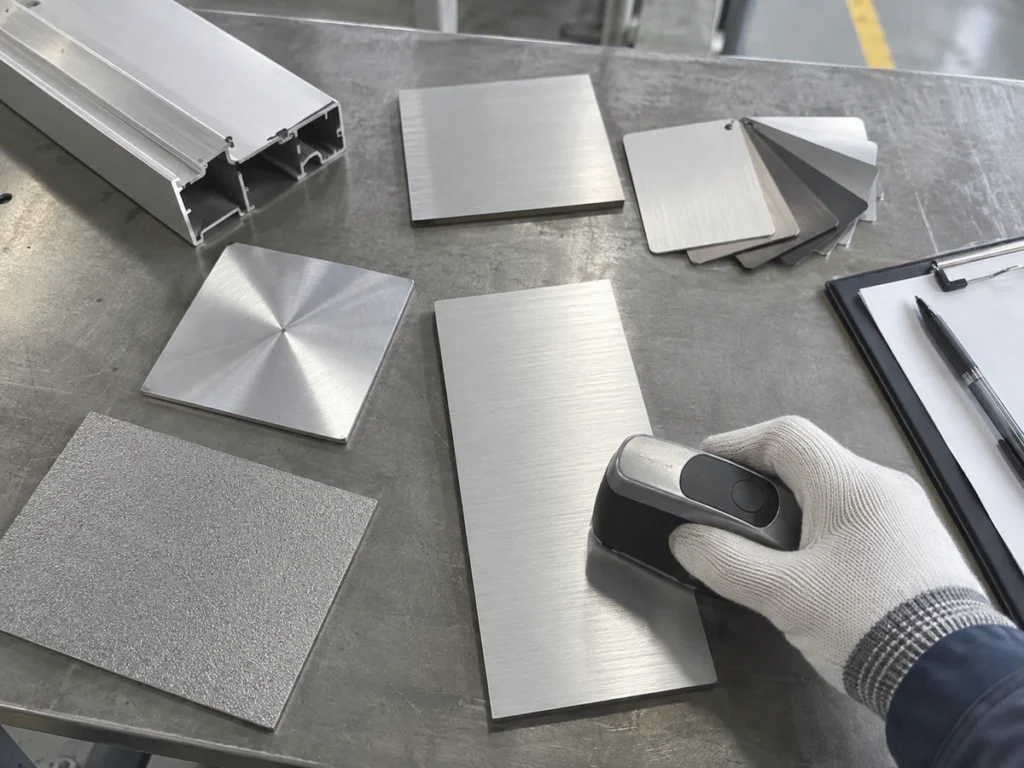
Give every reference sample a number and revision. Record its material, represented part or surface, finish description, approval status and responsible reviewer.
Ask the buyer and anodizer to agree how the accepted range will be represented. If boundary samples are used, identify their role explicitly. Keep them distinct from an exploratory set showing possible appearances.
A central reference and an accepted boundary serve different purposes. The receiving team needs to know which sample is the target, which illustrates a permitted boundary and which remains unapproved.
Document the applicable visual or instrumental review conditions with the specification owner. Retain any agreed color-difference method and limit. This guide defines no universal numerical color tolerance.
If a physical reference is replaced, damaged or superseded, record the event and the new approval. A replacement piece should not inherit approval merely because it sits in the old sample box.
Use photographs to communicate location and a concern. Keep the actual agreed reference and comparison method available for the acceptance decision. An image attached to a message does not supply the whole finish agreement.
When discussing anodized aluminum color variation, make the sample’s represented scope clear: one profile, a material group, a panel, or a complete assembly. Do not extend a narrow approval silently to a new component.
3. Review the faces the customer will see together
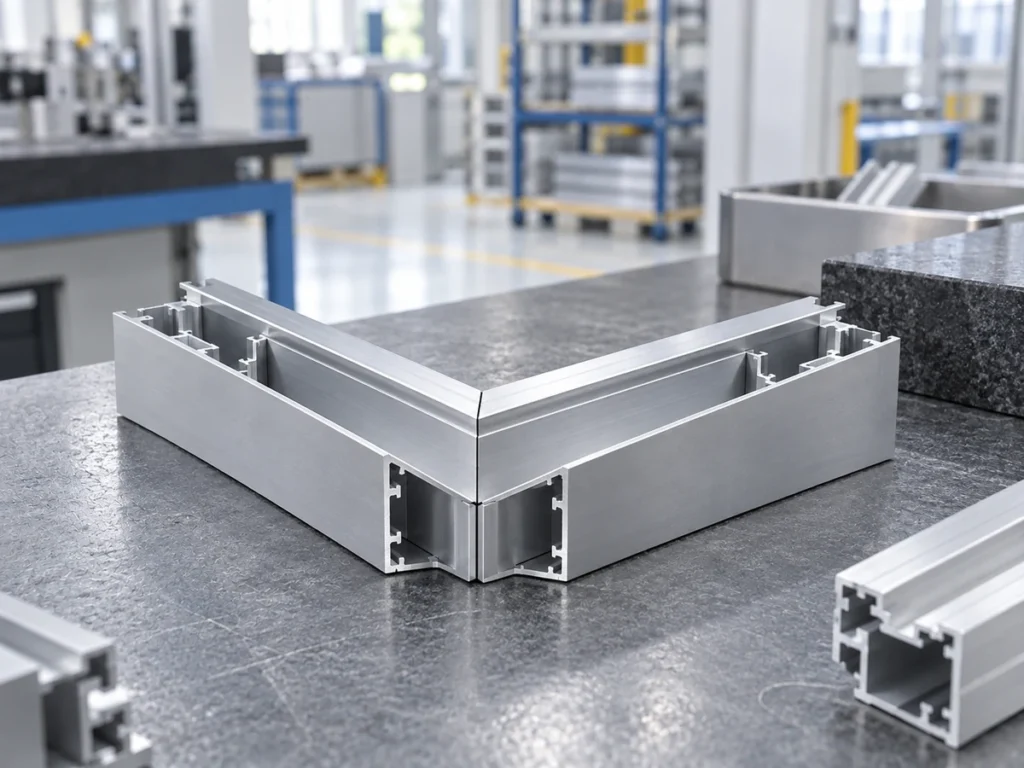
Mark the visible faces on the assembly drawing. Show where extruded rails meet panels and corner members. Identify whether appearance will be assessed as separate components, as an assembly, or both.
Keep each member’s orientation visible in the location record. Agree the viewing conditions before drawing a conclusion from pieces presented in different positions.
Ask the finisher how the proposed sample review addresses the actual neighboring surfaces. A sample for one rail does not document a panel that was absent from the review.
Record the expected delivery stage. If stock is anodized before sawing, identify the new cut-end requirement separately. The longitudinal face and a later-created end need their own defined treatment.
Keep agreed surface protection and identification through cutting and handling. Our visible-surface protection guide addresses that handover. Handling requirements help preserve the condition being reviewed; they do not prove a color match.
4. Separate investigation from acceptance
If a delivery appears different, record the affected parts, material group, finish reference and comparison conditions. Identify which approved sample and visible face were used in the review.
Ask the finishing supplier to examine the actual condition. Keep a proposed explanation separate from the disposition. An explanation for anodized aluminum color variation is not automatic permission to accept every difference.
Mark the affected group as pending until the responsible reviewer makes the agreed decision. Preserve the part and reference identities through any further sampling, replacement or approved deviation.
Keep appearance acceptance separate from thickness and seal-quality requirements. The anodizing seal-quality guide addresses its own evidence. A visually acceptable color does not close every coating requirement.
If the material or finish is revised after approval, link the new decision to the drawing and order revision. Tell the receiving team which sample set now applies.
A sample-approval case to make the scope clear
Imagine a fictional enclosure with extruded rails R and a sheet panel P. Sample A1 represents the proposed rail material and finish. The buyer approves A1 for R. Panel P was not included in that sample review.
The supplier later proposes sample B1 for the panel. Even if B1 is described with the same color name, its approval remains a separate open item. A1’s rail approval does not answer whether R and P meet the assembled appearance requirement.
| Record | Scope to preserve |
|---|---|
| A1 approved for R | The identified rail material and finish. |
| B1 proposed for P | The panel proposal awaiting review. |
| Assembly review | The agreed relationship between neighboring R and P faces. |
The next step is to review the proposed panel and the required neighboring appearance with the buyer and anodizer. Record the accepted references and range for the relevant assembly scope.
This example establishes no acceptable difference, process capability or finishing service. It shows how a missing scope decision can survive behind one repeated color name.
Does the same color name establish a match?
Identify the material, finish, approved reference, accepted range and comparison conditions.
Does a range sample approve any future material?
Keep the sample’s represented material and project scope visible. Review changes through the responsible parties.
Can a held part be used because the variation has an explanation?
Retain the agreed acceptance decision for that affected group. An investigation and a disposition are different records.
Prepare the aluminum cutting handover
Send JiurunCut the section drawing, cut list and visible-face map. Include the planned finishing stage and surface-contact requirements. Keep anodized aluminum color variation and final appearance approval with the appointed anodizer and specification owner.