
IP rating for aluminum enclosures should be specified for the identified enclosure configuration. A cut aluminum section, a loose lid or a photograph of a finished box does not establish the protection of the completed assembly. Begin with the required code, the exact supplied parts and the evidence that applies to them.
For a purchasing team, the useful question is simple: what does the quoted rating cover when this order arrives? Resolve that question before comparing prices for stock bodies, modified housings and complete enclosures.
On this page
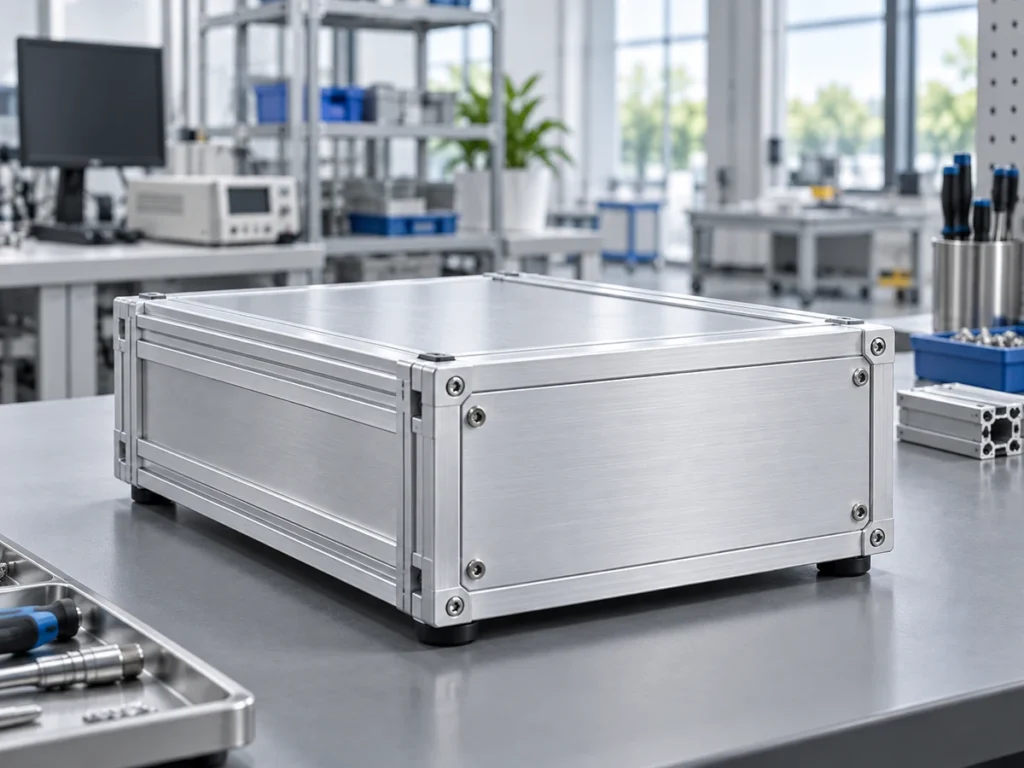
1. State the IP rating for aluminum enclosures precisely
Put the required code and applicable standard reference in the purchase requirement. Avoid using “waterproof aluminum box” as the only acceptance description. Ask the responsible designer to identify the required protection for the intended installation.
The IEC 60529 publication page identifies the standard as a classification of degrees of protection provided by enclosures for electrical equipment. The public scope is useful for identifying the reference; it is not a substitute for the applicable standard, test requirements or product documentation.
Keep other project requirements in their own fields. A purchase order may also need material identity, dimensions, finish, mounting details and equipment-specific approvals. Do not treat an IP designation as a complete specification for the product.
Separate the housing from the protected equipment
State whether the supplier provides an empty enclosure, a modified empty enclosure or an assembled product containing equipment. The acceptance scope can change between these stages. A report for a stock enclosure should not silently become a claim about a later equipment installation.
For a cut extrusion intended to become a housing, use the extruded-enclosure cutting guide to describe the member and end requirements. Keep enclosure protection evidence attached to the completed configuration that it actually covers.
2. Identify the body, lid and sealing configuration
List the exact body and cover references. Identify the required gasket and fastening hardware, including whether they are supplied fitted or loose. Record the product revision or drawing revision that governs the order.
Manufacturer options demonstrate why this detail matters. Hammond’s 1550 enclosure information distinguishes an ungasketed version from gasketed options. It also describes an upgraded gasket option and conditions for correct installation. These are statements about that product family, not ratings for every aluminum housing.
Ask the supplier to name the particular option being quoted and the documentation supporting its stated rating. Similar dimensions or a matching photograph do not establish that the same cover, gasket or assembly conditions apply.
Keep replacement parts identifiable
If the quotation includes spare seals or lids, list their approved references separately. The maintenance team should be able to obtain the specified replacement without choosing solely by approximate size or appearance.
Record proposed alternatives as changes requiring review. A supplier’s stock substitution should not be absorbed into a repeat order while the original configuration reference remains unchanged.
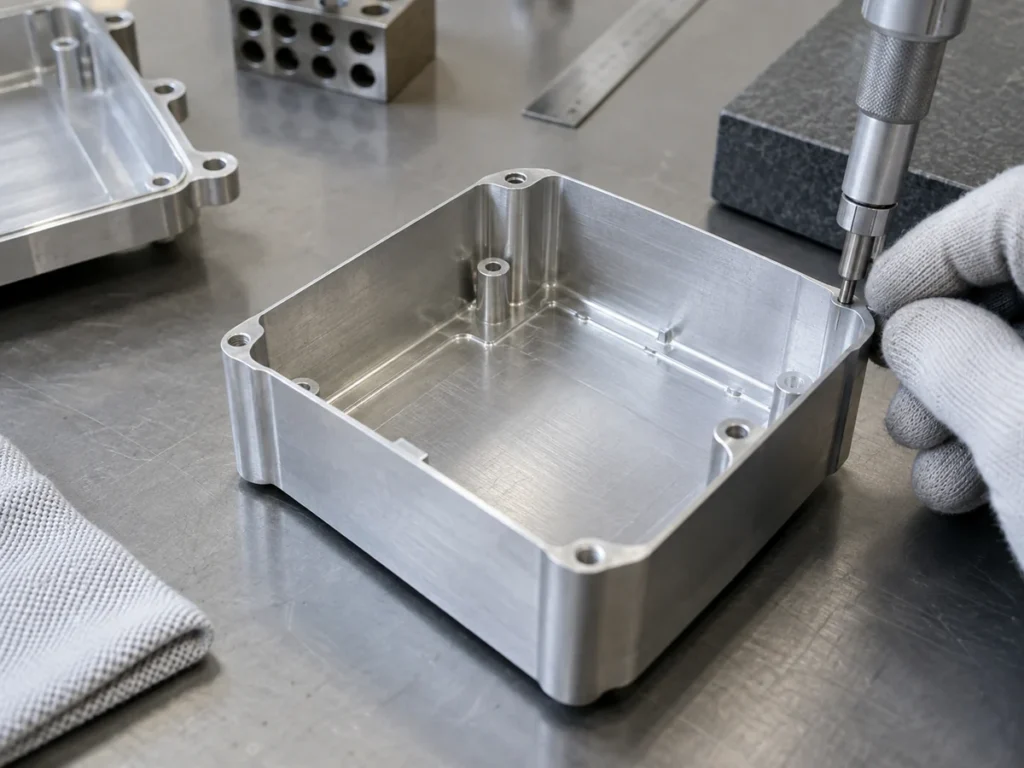
3. Review openings before the order is released
Send the complete opening drawing with the enclosure enquiry. Identify each cutout, connector opening, cable entry, vent or mounting penetration required by the project. Include the parts intended to close or occupy those openings.
Ask which modifications are covered by the enclosure supplier’s documentation and which need further review. A quotation for a standard empty body should not be assumed to cover a different body with added openings.
Hammond’s aluminum modification service describes factory holes and cutouts and notes that size changes are subject to approvals. That is a useful procurement prompt: obtain confirmation for the specific modification rather than extending a catalog claim yourself.
Send an updated drawing when an opening is added or moved. Record whether the change affects the supplied configuration, acceptance evidence or later assembly responsibilities. Keep the drawing revision visible on the order and inspection record.
Check the drawing handoff
For machined interfaces, specify the controlled features and the agreed dimensional inspection method. Use the hole-position drawing guide to organize datums and feature identities. Dimensional conformity and enclosure protection remain separate acceptance questions.
If processing and assembly are split between suppliers, name who approves the modification before work starts. This avoids an unfinished handoff in which the machining supplier follows a drawing while the assembler expects an unchanged catalog enclosure.
4. Define what the assembler receives
Write the delivery condition in plain terms. Does the order include an empty machined body, a complete kit or an assembled enclosure? Are sealing components fitted? Are any openings temporarily protected for shipping?
Request the applicable assembly instructions with the identified product. The actual manufacturer and responsible engineering team should define the installation conditions. Do not copy a fastener setting from an unrelated box of similar size.
Agree how controlled interfaces are protected during handling. The purchase requirement should identify the surfaces that need inspection at receipt and the action to take if damage or contamination is found.
When parts are delivered loose, connect them through a kit list. A lid and gasket placed in the same shipment still need a clear relationship to the intended body and assembly revision.
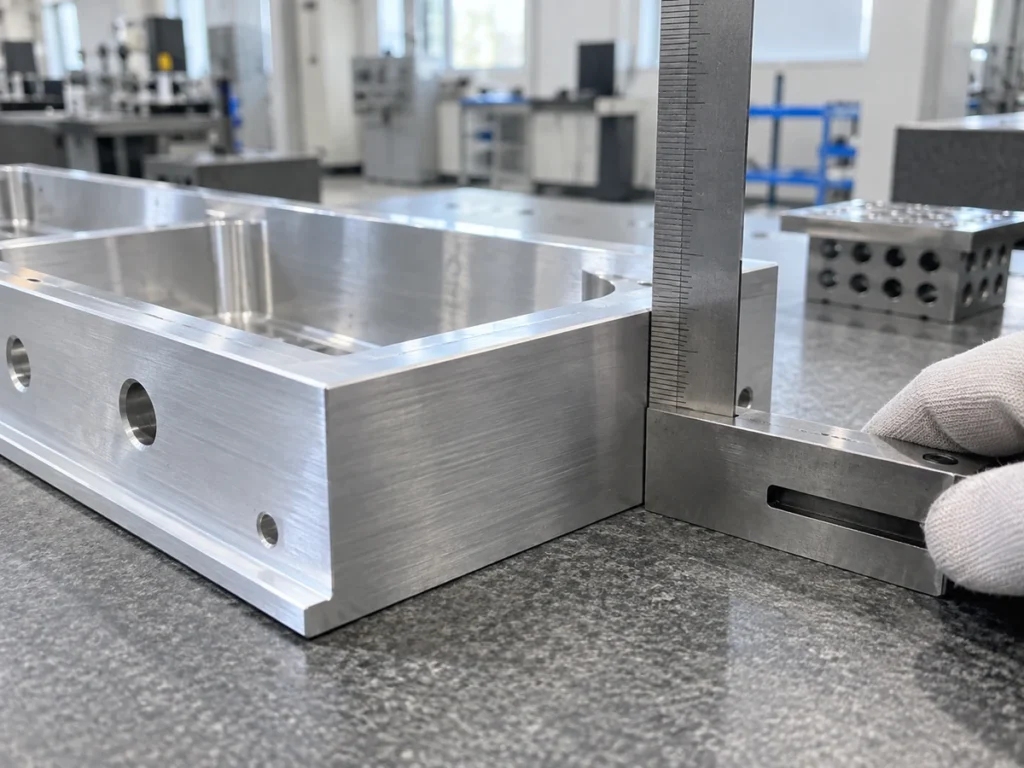
5. Match the protection evidence to the actual order
Ask for the document that supports the supplier’s claim, then check what it identifies. The record should make clear which product, configuration and conditions it covers. Clarify whether a statement describes design intent, testing or another form of documented assessment.
Review the match rather than collecting an unconnected certificate. The enclosure reference, cover, seal and approved modifications on the order should be traceable to the applicable evidence. Ask the supplier to resolve a mismatch before release.
A practical release sequence
- Requirement: confirm the specified protection code and project scope.
- Configuration: check the body, lid, sealing parts and hardware references.
- Changes: confirm the opening drawing and disposition of modifications.
- Handoff: identify who assembles and verifies the supplied parts.
- Record: retain the applicable evidence and order revision together.
If further verification is required, agree its scope with the responsible team. Do not invent a water exposure, test duration or acceptance limit from a general purchasing article. Use the applicable standard and approved product requirements.
Buyer questions
Does an aluminum enclosure automatically have an IP rating?
No. The material name does not establish the rating of the identified enclosure configuration. Ask for the supplier’s applicable product statement and supporting documentation.
Can I keep the same rating after machining extra openings?
Obtain confirmation for the modified configuration. Identify the new openings and installed components, then have the responsible supplier or engineering team determine the applicable evidence.
Is a loose gasket enough to approve the enclosure?
No. Identify the correct seal, body, cover and assembly requirements. The evidence must apply to the relevant configuration; the presence of a gasket by itself does not approve the assembled result.
Can a cutting inspection report establish ingress protection?
No. A report for cut length, end condition or hole dimensions covers those part requirements. It should not be presented as an enclosure protection test.
Prepare the aluminum housing cutting enquiry
Send the section drawing, material reference, finished length, datum end, quantities and secondary-operation requirements. State the delivery stage and identify any surfaces controlled by the enclosure design.
Contact JiurunCut to discuss the aluminum cutting stage. Keep enclosure selection, sealing, assembly and protection verification assigned to the responsible parties in the project scope.