
Compare aluminum thermal conductivity only after checking the material identity, temperature, units and data basis. Keep the alloy and condition attached to every value. Then ask the thermal designer whether the data is suitable for the actual component and operating requirement.
A material conductivity figure is one input to a cooling review. It does not establish the heat rejection or operating temperature of an assembled heat sink. Five data checks help procurement hand over a useful comparison.
Read the heading above the number
- Which material and condition does the value describe?
- At which temperature and in which units is it reported?
- Is it reference data, a product requirement or a measured sample result?
On this page
Aluminum thermal conductivity: identify the material
Retain the alloy designation and condition beside the reported value. Include the product description used by the data source, such as a particular sheet, extrusion or tested specimen. A number headed only “aluminum” leaves its material scope unresolved.
Distinguish commercially specified alloys from high-purity or research materials. Ask whether the cited data describes the stock in the order. A familiar metal name does not establish that the tested material and the purchased profile are equivalent.
Use the full designation from the approved drawing and material requirement. If a quotation proposes another alloy or condition, record it as a proposed change. Keep the thermal review connected to the mechanical, fabrication and finishing requirements.
The NIST Alloy Data overview describes thermophysical datasets with material purity, processing information, uncertainty and citations. Those fields show why material identity and the data’s origin belong in the comparison.
This database description does not certify a supplied extrusion or approve a material substitution. Use the actual order documents and responsible technical review for those decisions.
Connect the selected stock with the material-certificate review. Ask for the records required by the purchase order, while keeping a reference property table separate from a test report for the delivered material.
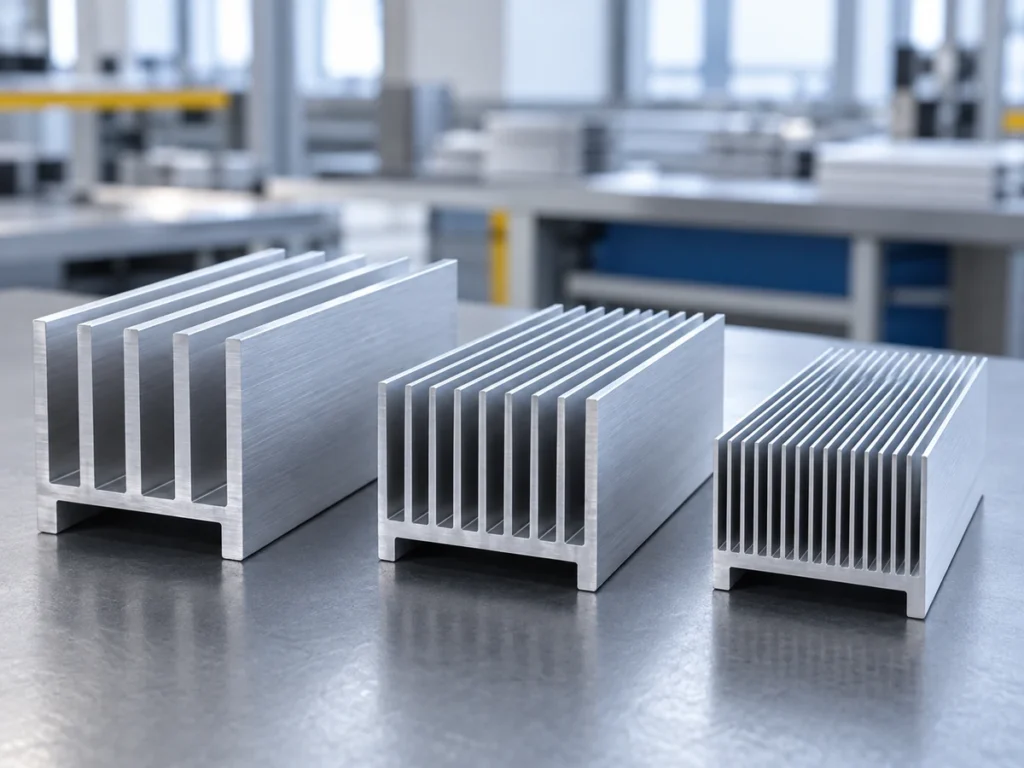
2. Keep temperature and valid range visible
Record the temperature associated with a single value. If the source supplies a curve or equation, retain its stated range and the temperature scale. Compare data at the conditions selected by the thermal reviewer.
A room-temperature entry and a value from a low-temperature reference are not a direct like-for-like comparison. Check the intended use before carrying either into the design record.
NIST’s archived 1100 aluminum page gives conductivity in W/(m-K), uses temperature in kelvin and states a range for its fitted relationship. It also warns that the page is no longer updated. It is a useful example of the scope information to retain, not a current specification for another alloy.
For a supplier’s curve, preserve the title, material description, temperature axis and notes. A cropped chart showing only the curve can lose the information needed to interpret it.
Ask the responsible reviewer to approve any interpolation or model input. Do not extend a reference equation beyond its stated range simply because the software will return a number.
If the required operating range is unclear, list it as an open engineering input. A purchasing comparison should show the missing condition rather than replace it with an assumed temperature.
3. Confirm the property and the complete units
Thermal conductivity describes material heat conduction and is commonly reported in W/(m·K). Retain the full unit expression. A column labelled only W or a value copied without its unit cannot be used reliably.
Keep thermal conductivity separate from thermal diffusivity, specific heat capacity and electrical conductivity. They are different properties, even when they appear together in an aluminum data sheet.
The public description of ASTM E1461’s flash method concerns thermal diffusivity. It explains that diffusivity results, together with related specific-heat and density values, can be used in many cases to derive thermal conductivity.
When a laboratory report gives a derived conductivity, ask which related inputs and conditions were used. Keep the reported result connected to the specimen and method. This article does not provide the full standard procedure or validate a particular calculation.
If suppliers use different unit systems, keep the original entries and have the comparison converted consistently through the approved calculation process. Record the converted units and retain enough information for another reviewer to reproduce the comparison.
A thermal-resistance result for a component or assembly also has its own definition and test scope. Do not place it in the same comparison column as a bulk material conductivity value.
4. Identify whether the data is typical, required or measured
Save the source title, revision or date and the notes attached to the property. State whether the supplier is quoting a typical reference, accepting a purchase requirement or reporting an actual specimen measurement.
A typical data-sheet value is useful background. It is not automatically a guaranteed minimum for every delivered part. If the project requires a controlled property, ask the responsible reviewer to define the accepted requirement and evidence.
For a measured result, identify the specimen, material condition, temperature and method. Request the relevant uncertainty and report details when they are needed for the design decision. Preserve the connection to the actual sample or material lot.
For a reference database or handbook, retain the underlying citation and applicable material description. Its usefulness depends on the match to the engineering question, not simply on the reputation of the website carrying it.
When two offers cite different data, first compare their scope fields. Ask each supplier to resolve missing alloy, condition, temperature or method information before ranking the values.
Do not turn a missing field into a claimed performance difference. The offers may describe different reference conditions, or one may be a typical entry while the other is a measured report.
5. Connect material data to the actual cooling component
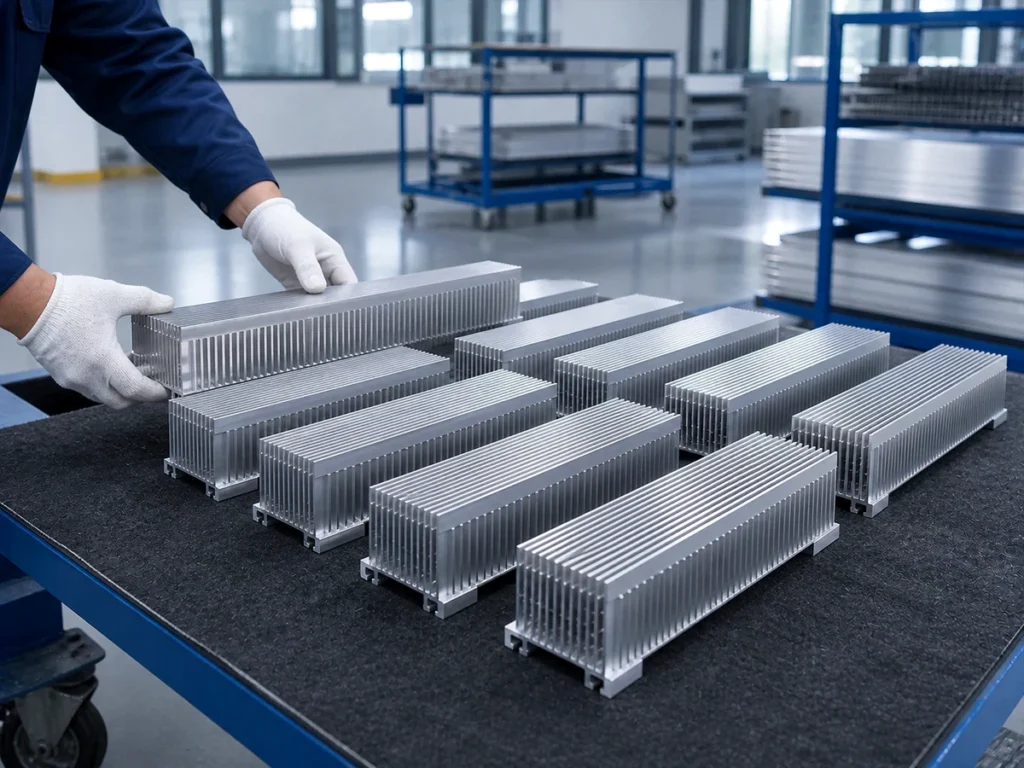
Provide the thermal designer with the component drawing and intended assembly. Include the material requirement, finished dimensions, interfaces and relevant operating conditions. Let that reviewer identify which thermal inputs and validation are needed.
A finned section has geometry as well as a material property. The complete cooling review needs the actual design and boundary conditions; a conductivity figure alone does not approve the selected shape.
Keep mounting interfaces, surface treatments and mating components visible in the engineering handover. If the order requires a thermal test, define the assembly configuration and acceptance criteria separately from the material-property record.
When comparing manufacturing routes, use the skived versus extruded heat-sink guide for route and drawing questions. The route name does not, by itself, establish cooling performance.
A proposed alloy or finish change should go through the affected-feature review. An unchanged outer envelope does not settle every material, contact or processing requirement.
A comparison record to prepare
Keep each candidate on its own identified line. A compact record should contain the following fields, with unresolved entries clearly marked rather than silently assumed.
| Data field | What to retain |
|---|---|
| Material | Alloy, condition and source specimen or product scope |
| Temperature | Reported condition and applicable data range |
| Property | Conductivity value, complete units and any derivation basis |
| Evidence | Source, revision, typical or measured status and reviewer decision |
Present the record with the component drawing and the open engineering questions. The reviewer can then decide whether the entries are comparable and suitable for the application.
Document the accepted input source separately from any production acceptance requirement. That distinction helps purchasing avoid promising a test or a guaranteed property that the quotation does not include.
When the material or source changes, retain the previous record and issue the updated review through the project’s revision process. The production team should be able to identify which approved material and drawing apply.
Cutting handover for cooling parts
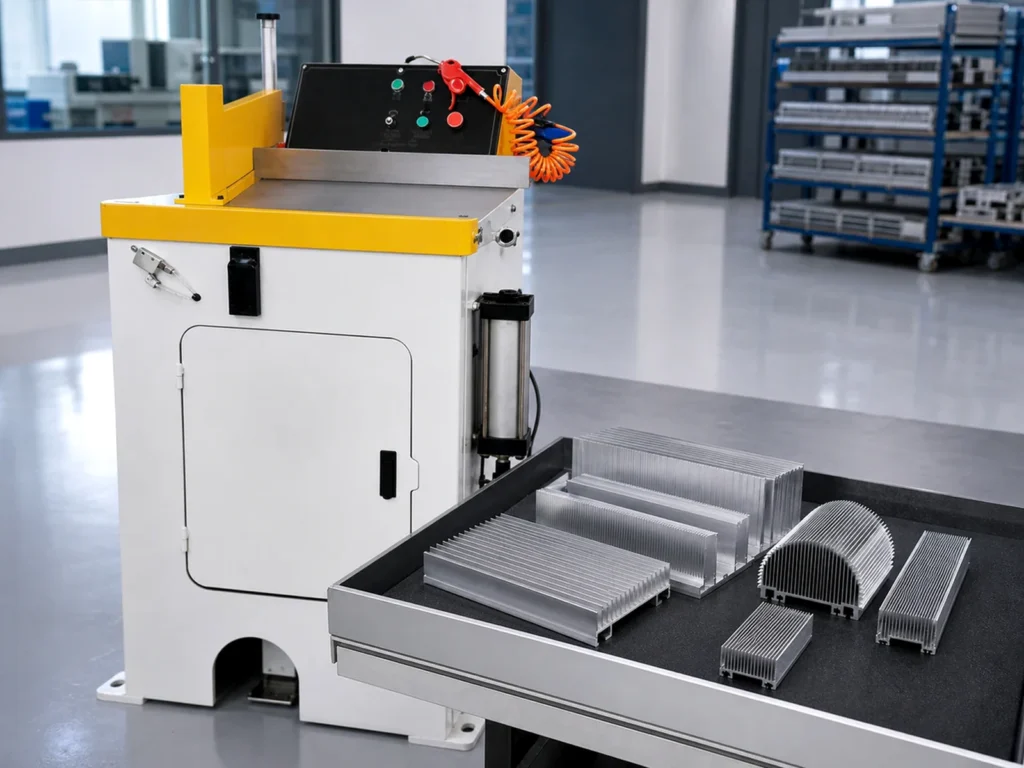
Send the approved section drawing, material identity, cut length and batch quantity to the cutting supplier. Identify the finished end datum and any downstream machining or assembly interface.
Mark surfaces that need protection and state the agreed end-edge condition. For thin fins, use the thin-fin cutting review to prepare the section and sample discussion.
Review cutting dimensions and handling separately from thermal validation. A representative cut sample can support the manufacturing evaluation without proving the component’s heat rejection.
Send JiurunCut your heat-sink profile and cutting requirements with the approved material and next-operation scope. Keep thermal design approval and any required laboratory testing with the agreed responsible team.
Buyer questions
Is one aluminum thermal conductivity value valid for every alloy?
No. Retain the material identity, condition, temperature and data basis for the value being used.
Is thermal diffusivity the same property?
No. Identify the reported property and its units; request the related inputs if conductivity was derived from a diffusivity result.
Does a typical value guarantee my delivered batch?
Define the actual purchase requirement and accepted evidence. A typical reference and a batch test have different scopes.
Can conductivity alone approve a heat sink?
The thermal review must address the actual component, interfaces, operating conditions and required validation.