
Aluminum T5 vs T6 is a material-condition question. The alloy number identifies the alloy; the temper suffix describes its processing condition. A quote for 6063-T5 and a quote for 6063-T6 therefore do not describe exactly the same material requirement, even when the profiles have matching outside dimensions.
For a buyer ordering cut parts, the useful question is whether the offered condition meets the approved part requirement. Start with the drawing and purchasing specification. Then keep the complete material designation through the stock order, cutting list and part records.
The short answer
- T5 and T6 describe different processing histories.
- A higher temper number is not a universal quality ranking.
- Matching section geometry does not establish material equivalence.
On this page
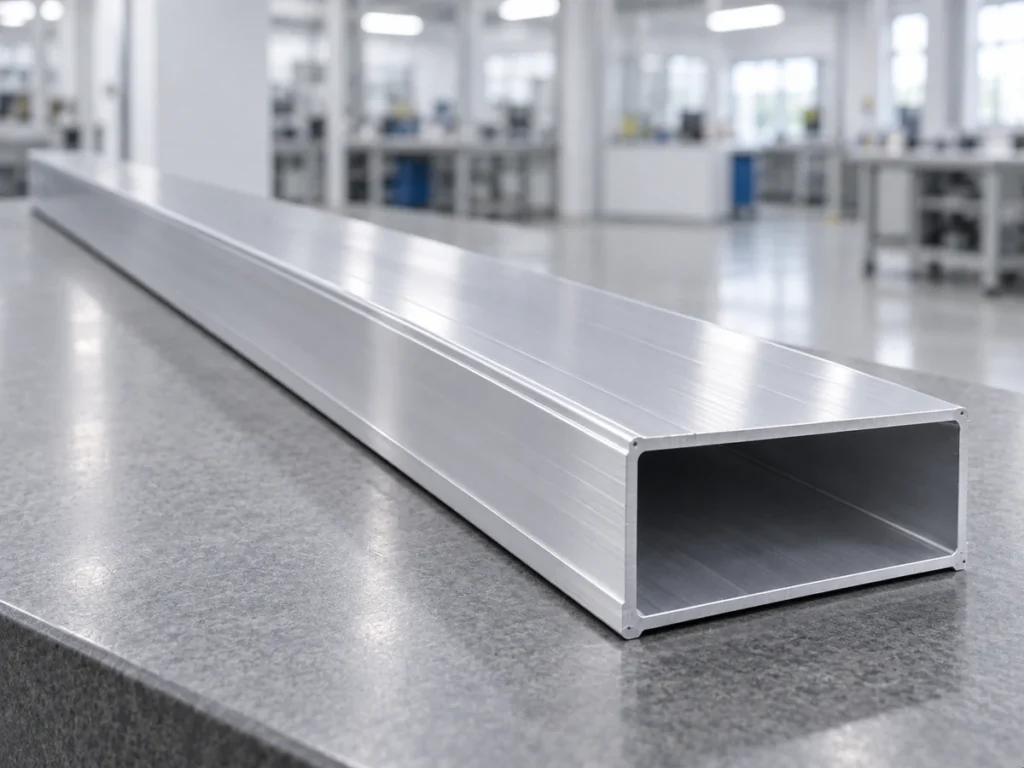
Aluminum T5 vs T6: what the labels mean
The Metals Service Center Institute temper guide explains the basic distinction: T5 involves cooling after elevated-temperature shaping followed by artificial aging. T6 includes a solution heat-treatment step followed by artificial aging.
| Designation | Basic processing meaning |
|---|---|
| T5 | Cooled after hot shaping, then artificially aged. |
| T6 | Solution heat treated, then artificially aged. |
These are descriptions of condition, not instructions for heat treating a part. They do not provide a furnace recipe, a holding time or an acceptance limit. The supplier’s applicable material specification and records are needed for the particular product being ordered.
Keep the distinction separate from product shape. A rectangular tube, a slotted extrusion and a solid bar can each have their own material requirements. Looking at the section tells you about geometry; it does not tell you which processing condition the supplier delivered.
Mistake 1: checking 6063 but overlooking the suffix
An inquiry that says only “6063 aluminum” leaves part of the requirement open. If the drawing specifies 6063-T5, copy the complete designation into the inquiry. If it specifies 6063-T6, do the same. Avoid shortening the material field just to make a purchasing description fit on one line.
The same principle applies when a quotation arrives. Compare the quoted alloy and temper with the requested alloy and temper. A match on the alloy number is only one part of that comparison. Record any difference as a clarification before accepting the offer.
Ask the supplier to identify the condition being offered and the documentation that will accompany it. Refer to the material-certificate review guide for connecting documents with delivered stock. A website photo or a general product-family description is not a substitute for the actual order identity.
Once stock enters the cutting workflow, keep that identity attached to the job. Two batches with the same profile shape can still have different material designations. If they are placed beside each other, a cutting list that names only the profile code may leave the operator without enough information to select the intended batch.
Mistake 2: treating T6 as an automatic upgrade
T6 is not a universal instruction to buy a better version of every T5 product. Suitability depends on the approved requirements for the particular part. Do not change a specified temper because one quotation describes another condition as stronger, more common or faster to obtain.
Ask what requirement is being compared. If a supplier provides property values, establish the alloy, product form, condition and specification to which those values apply. A figure copied from a different alloy or a different product form does not resolve the proposed substitution.
The 6061 versus 6063 guide addresses a different question: choosing between alloy identities for a cutting review. Keep that choice separate from the temper suffix. Changing both alloy and temper makes a quote comparison harder to understand unless each change is explicitly recorded.
For a requested alternative, describe the difference plainly and ask the responsible part reviewer to decide whether it is acceptable. Until that decision exists, label the alternative as an offer under review. Avoid turning a sales description into an engineering approval.
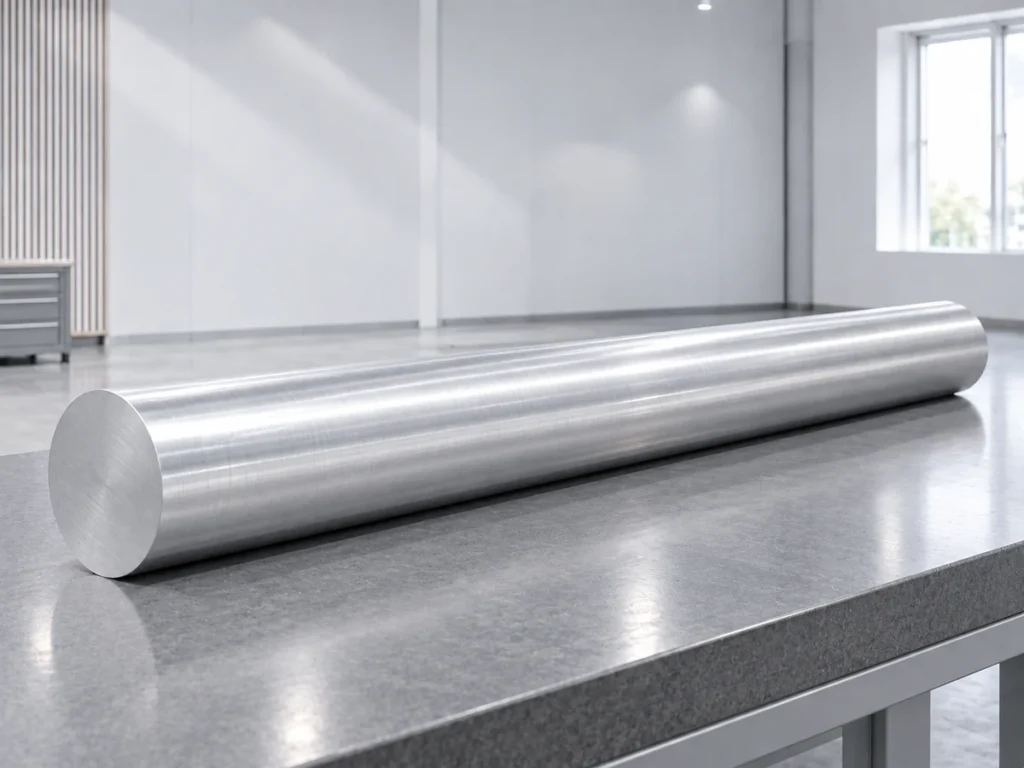
Mistake 3: dropping extra digits from the designation
Some material designations carry information beyond the basic T6 label. Copy the complete suffix rather than assuming that extra digits are optional. They can describe additional aspects of processing that matter to the specified product.
For example, Hydro’s 6082 alloy information describes T6511 as solution heat treated, stress relieved by stretching and artificially aged. Shortening that designation to T6 removes the explicit stress-relief information from the description.
This example explains why copying the full label is useful. It does not establish that every job needs T6511, or that one suffix can replace another without review. Use the designation and specification actually required for the part.
Check for accidental shortening at each handover: drawing to inquiry, inquiry to quotation, quotation to purchase order and purchase order to job label. A spreadsheet field should preserve the full designation rather than silently replacing it with a broad category such as “T6 stock.”
A fictional quote comparison: same profile, different condition
Imagine a drawing calls for profile P-21 in 6063-T5. Both offers name P-21, supply the same nominal cut length and quote the same quantity. Offer A identifies 6063-T5. Offer B identifies 6063-T6. This is a fictional purchasing example, not a customer order or a property comparison.
The quotes are easy to compare on quantity and length, but the material-condition difference remains unresolved. Record it as “requested T5; offered T6.” Ask whether Offer B is intended as an alternative, whether it can supply the requested condition and what documents support the offered stock.
If an alternative is approved, update the agreed requirement and keep the approval connected with the order. If it is not approved, the shared profile code does not make the offers interchangeable. This avoids a later argument about what “same aluminum profile” meant.
Use a similar approach if a quotation omits the temper entirely. Request clarification rather than filling the missing field from a previous order. A historical purchase can help locate records, but it does not define a new offer.
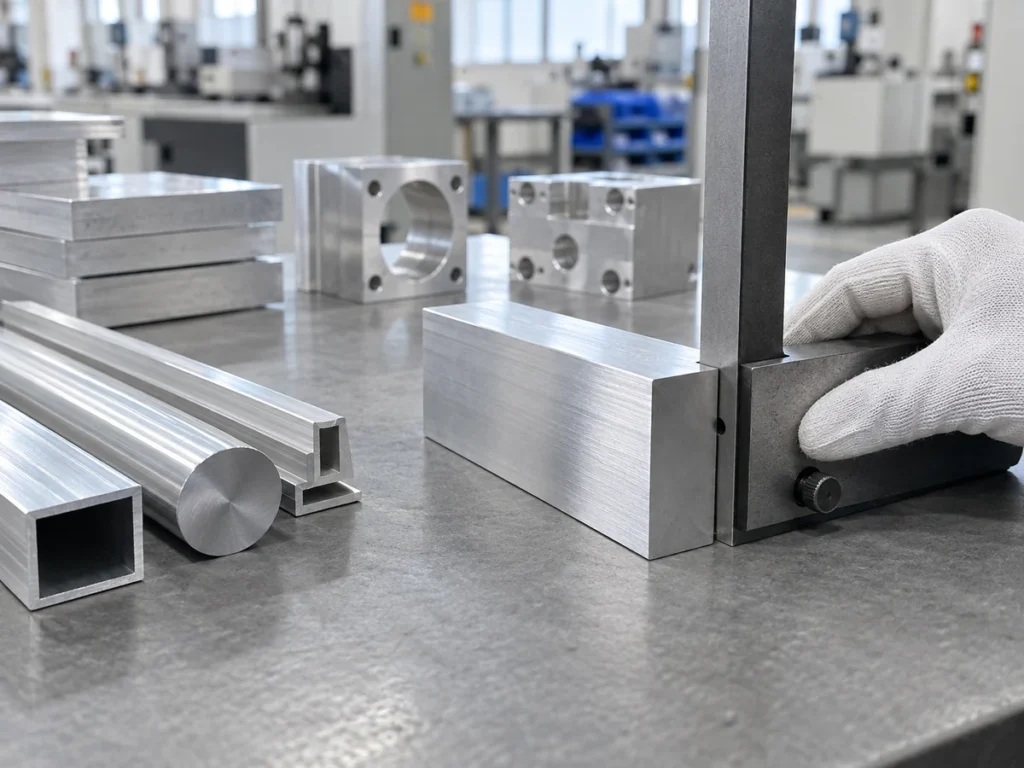
Keep the requirement intact through the cutting inquiry
In a machine inquiry, place the material designation beside the profile drawing and finished-part requirements. State the full alloy and temper, the stock form and the document revision. That gives the reviewer a clearer starting point than “T6 aluminum” alone.
Discuss cutting performance separately. The suffix does not establish a blade speed, feed setting, finished-part tolerance or guaranteed output for a particular machine. Evaluate the actual stock and job through the agreed review process instead of deriving machine settings from the temper number.
Before release, one person should be able to trace the same agreed designation from the purchase description to the identified stock being used. If the labels and documents disagree, resolve the identity first. A dimensional check after cutting will not reconstruct a missing material history.
Buyer questions
Can I identify T5 or T6 from a photograph?
No. Use supplier identification and the applicable material records. The photographs here illustrate different stock shapes; they do not document a verified temper.
Does cutting change a T5 label into T6?
A sawing operation does not establish that the required heat-treatment history has taken place. Preserve the supplied material identity and review any additional processing through the appropriate specification.
Should a quote include alloy and temper together?
Yes, when the part requirement specifies both. Include the complete designation so that the offered stock can be compared with the requested material without guessing.
Make the material field clear before comparing machines
Send JiurunCut the profile drawing and cutting requirements with the complete material designation. Identify any proposed stock alternative explicitly so the cutting review starts with the intended material.