
Aluminum cutting before welding should have a clear handover point. A cut-to-length blank, a prepared joint and an assembly ready for welding are different delivery stages. State which stage you need so the cutting team, the welding team and the purchaser review the same requirements.
Seven checks help organize that handover: material identity, joint drawing, length reference, edge condition, preparation responsibility, handling and release status. Use them to build a cutting brief for the approved fabrication plan. The joint design and welding procedure must come from the responsible engineering and welding team.
Define the delivery stage first
- Cut blank: identify the remaining preparation operations.
- Prepared part: record the joint requirements and completed checks.
- Ready for welding: confirm the required fit-up and preparation approval.
On this page
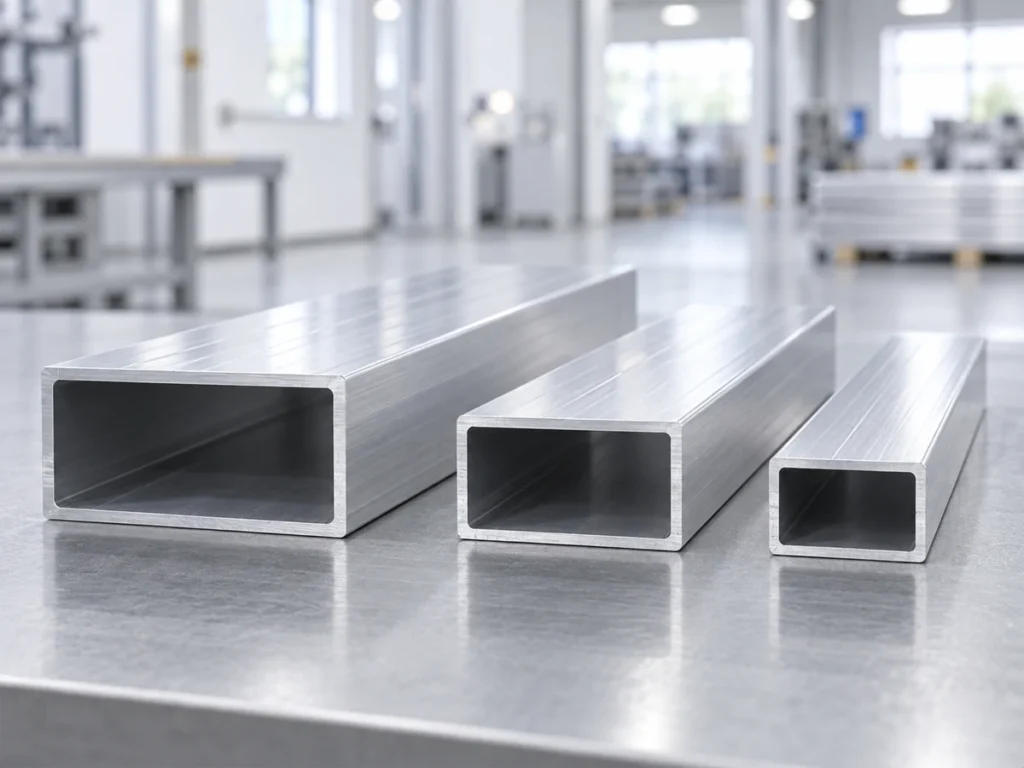
Plan aluminum cutting before welding in three stages
Start with the required condition of the part when it leaves the cutting operation. Does the next team expect only a sawn blank, or does the order include defined joint preparation? A broad request such as “ready for fabrication” can hide this difference.
A useful route has three checkpoints: information approved before cutting, part checks at the cutting stage and a documented handover to the next operation. Each checkpoint needs an owner and a clear record of unresolved work.
| Stage | Question to resolve |
|---|---|
| Before cutting | Which material and joint drawing govern the blank? |
| At cutting | Which dimensions and edge requirements apply at this stage? |
| At handover | What preparation remains, and who approves readiness? |
Before cutting: identity and joint information
1. Keep the material identity with the pieces
Record the specified alloy, temper and section identification, with the required supplier documentation. Preserve that identity when long stock becomes smaller blanks. Do not treat similar-looking sections as interchangeable material for a welded assembly.
Ask the responsible team to confirm the material selection for the fabrication. This guide does not decide weldability or the mechanical properties of the finished weldment. Our material-certificate guide explains how to keep stock documentation connected to the order.
2. Use the approved joint drawing
Provide the joint detail and its revision together with the component drawing. The cutting team needs to understand which faces meet, which cut ends belong to the joint and what preparation is specified before fit-up.
Keep bevel, gap and other joint requirements tied to the approved design and welding procedure. A saw-cut edge should not be assumed to meet an unspecified joint preparation. If the drawing and route sheet disagree, resolve the instruction before producing the affected blanks.
Also identify the completed assembly requirements separately from the blank requirements. A correctly cut component alone does not establish a qualified weld or an accepted final structure.
At cutting: dimensions and condition
3. Define the length reference and preparation stage
State whether the listed length applies to the sawn blank, to the part after joint preparation or to another defined stage. Identify the measuring reference and any approved allowance. If a later operation removes material, its effect belongs in the route and drawing review.
For angle-cut members, name the length convention and orientation. Keep left-hand and right-hand identities where they affect the joint. Our miter-length guide explains why a bare length value can be incomplete.
Do not add a guessed welding-shrinkage allowance to the cut list. Any compensation must come from the responsible fabrication plan and its approval. Keep the purchaser’s drawing requirement distinct from an undocumented shop adjustment.
4. Agree how edge condition will be reviewed
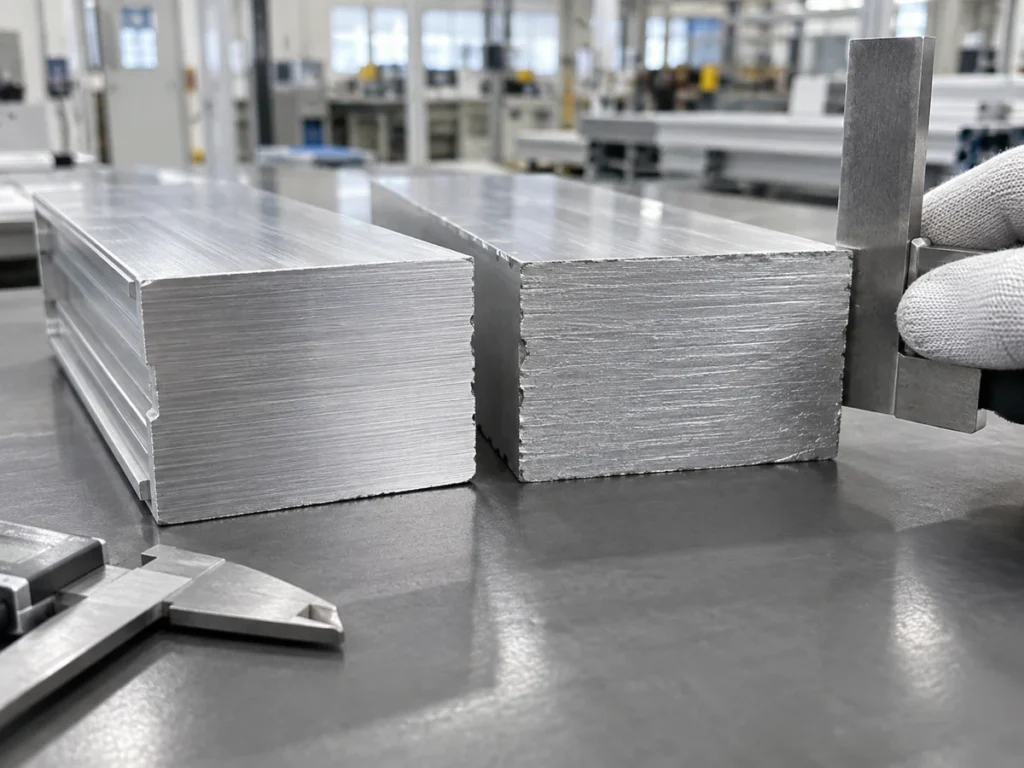
Specify the required checks at the cutting stage. These may include length, end orientation and defined edge-condition requirements. Describe how the team records observations and which conditions need review before the part moves onward.
A smooth-looking end face is not proof of a weld-ready surface. Miller’s aluminum preparation guidance explains why surface contamination, oxide and preparation condition matter before welding. Use that background to define the handover questions with your welding team; it does not qualify a sawn part by appearance.
At handover: preparation, handling and release
5. Assign preparation and residue control
Name the team responsible for the approved cleaning and joint-preparation operations. Record whether the cutting delivery includes those operations or whether they remain on the next team’s route. Avoid a handover in which both suppliers assume the other has completed them.
Ask how the cutting process and any associated products will be reviewed for the later welding operation. Lincoln Electric’s aluminum welding guide, section 4, discusses preparation and the need to address machining lubricant residue before welding.
The purchasing action is to document the approved route and responsible party. Do not switch the saw to dry cutting or select a cleaning chemical from a general article. Machine, tool and welding-process requirements need to be reconciled by the relevant specialists.
6. Protect the required condition during handling
Define storage, packing and transfer requirements for the prepared parts. Tell the next team which surfaces need protection and how piece identity remains available without interfering with the joint preparation.
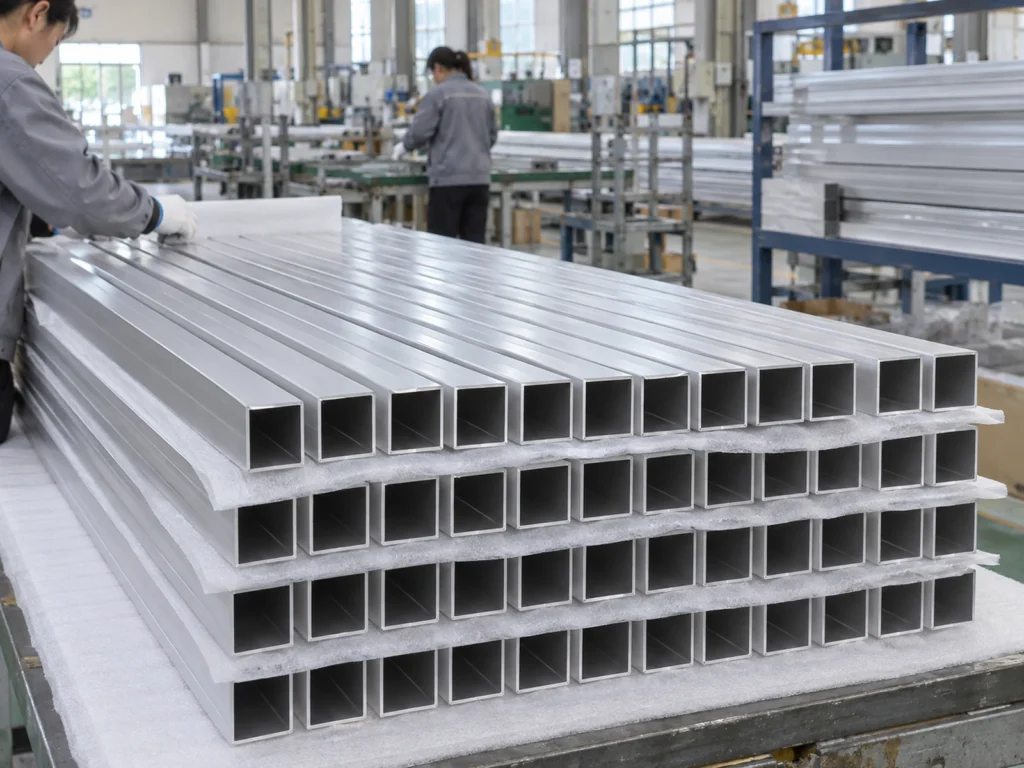
Protective sheets, films, labels and other packing materials also need consideration in the approved route. State what remains on the part, what must be removed and who verifies the condition at the next checkpoint. A wrapped batch is not automatically a batch ready for welding.
7. Make release status visible
Keep “cut,” “preparation pending,” “under review” and the agreed release status distinct. Link the status to the batch and component identity so an unfinished piece cannot silently enter the next operation.
For a first batch or a changed joint, agree the required review before production release. Record the actual results, the remaining questions and the approval owner. Cutting checks do not replace the welding team’s fit-up and process responsibilities.
An incomplete delivery instruction
Imagine a fictional order asking for “rectangular aluminum tubes cut to length, ready for welding.” The component drawing lists the finished part, but the order does not say who prepares the joint or when length is checked.
Two suppliers could interpret that instruction differently. One may price sawn blanks with preparation remaining; the other may include a separately defined preparation operation. Their offers cannot be compared fairly until the delivery stage is resolved.
A clearer instruction identifies the approved drawing and revision, the required blank dimensions, the included preparation operations, the inspection point and the handover owner. It also lists what remains for the receiving team. The example describes missing information, not a real customer job or a qualified welding procedure.
A clearer machine inquiry
For a saw review, provide the stock description, section drawing, cut lengths and angles, batch quantities and the defined cutting-stage checks. Explain how the parts enter the subsequent joint-preparation and welding route.
Send these details through Contact JiurunCut and request a review of the proposed cutting arrangement. A machine proposal should keep its cutting scope clear while your responsible team confirms the welding and finished-assembly requirements.
Buyer questions
Does a clean-looking cut prove the part is ready to weld?
No. Appearance does not establish the approved preparation, material identity or joint readiness. Use the required checks and release process for the actual fabrication.
Should the cut list include a universal shrinkage allowance?
No. Any compensation needs approval for the particular design and process. Do not add an arbitrary value to an otherwise approved component drawing.
Can the cutting supplier approve the complete welded assembly?
Only the agreed responsibilities and evidence define that approval. A cutting-machine review or a cut-part inspection does not establish the finished weldment’s qualification.