
Aluminum cutting WIP is the unfinished work you need to identify between cutting and the next agreed stages. WIP means work-in-process. A rack of cut pieces may contain parts waiting for drilling, inspection or a quality decision, so its total does not automatically describe usable output.
For a new machine review, map the complete part route as well as the saw operation. These four checks help buyers discuss where parts wait, what each count means and which handover needs attention before proposing more cutting capacity.
Keep three questions visible
- What stage has each part completed, and what must happen next?
- Which parts can move forward, and which need a decision?
- How long has the work waited, and who owns its next action?
On this page
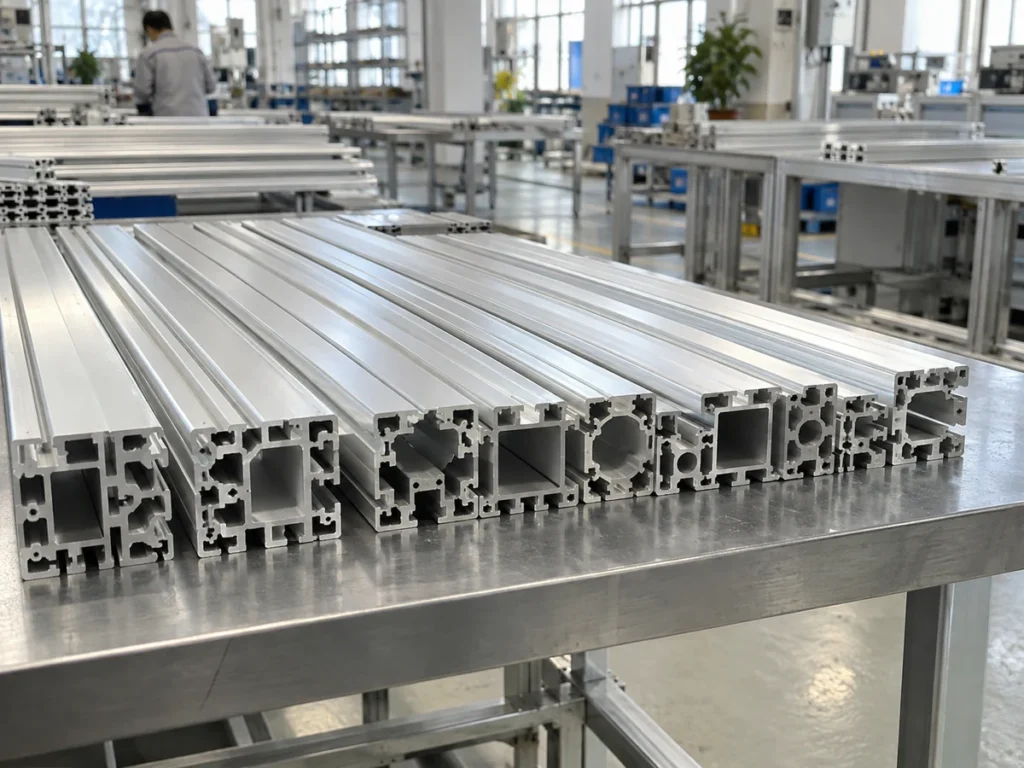
Check 1: define the aluminum cutting WIP boundary
Write the process route for the finished part. It may include stock preparation, sawing, additional machining, cleaning, inspection and packing. Identify where this particular WIP review starts and ends so everyone counts the same work.
For terminology, the Lean Enterprise Institute’s inventory definitions distinguish raw materials, work-in-process and finished goods by their position in the production route. Its WIP description concerns items between processing steps. This supports defining the stage before comparing inventory numbers.
For example, a member can be accepted for length after sawing while still requiring drilling. “Accepted at cutting” and “finished for assembly” refer to different handover points. Put the stage beside the status instead of using the word “complete” without explanation.
Separate untouched stock from pieces already entered into the reviewed route. Also separate completed parts waiting for dispatch if dispatch lies outside that route boundary. You can review those inventories alongside WIP, but retain their different meanings.
Agree the counting unit. Pieces, bars, pallets and kits are different quantities. If a mixed rack contains several part families, show each family and its unit rather than adding unlike units into one production total.
Check 2: separate status from physical quantity
Give each part group an identity connected to its drawing revision and batch record. Record its location, current stage, status and next required operation. A location label such as “rack 3” does not by itself say what the parts are allowed to do next.
Use statuses your team can act on. Examples include waiting for the next process, waiting for inspection, and held for a defined quality decision. A hold needs the reason and responsible owner, so it cannot be confused with an ordinary queue.
Count each physical piece once in a snapshot. If a held group is also located beside drilling, do not add it as both “drilling queue” and “quality hold.” Define a primary status for the count and retain the location and hold reason as separate fields.
Keep accepted quantities tied to the reviewed stage and feature requirements. A piece with a confirmed cutting length can still have unresolved holes, surface condition or assembly checks. Avoid using one successful measurement to label all remaining requirements complete.
The batch traceability guide helps preserve the part identity through these handovers. Identification becomes especially useful when similar lengths or mirrored variants occupy nearby racks.
A 150-piece WIP snapshot
Consider a fictional route that begins after sawing and ends when parts have completed the required downstream processing and release inspection. At one recorded time, 150 distinct unfinished pieces are present within that boundary.
| Primary status in this snapshot | Distinct unfinished pieces |
|---|---|
| Waiting for the required drilling operation. | 50 pieces. |
| Downstream processing completed; waiting for release inspection. | 30 pieces. |
| Held for a recorded quality decision before further processing. | 70 pieces. |
The snapshot total is 50 + 30 + 70 = 150 pieces. The groups are mutually exclusive for this count, and every piece remains unfinished under the stated boundary. Untouched raw bars and released finished parts outside the boundary are excluded.
This total does not say that 150 parts can be dispatched, that the saw produced them during one shift or that any particular machine has a stated capacity. It describes a fictional inventory position at one time, rather than a production rate.
If some of the held pieces later move into the drilling queue, update their primary status. Do not preserve the old count and add the moved pieces again. Retain a movement record if the team needs to understand how the snapshot changed.
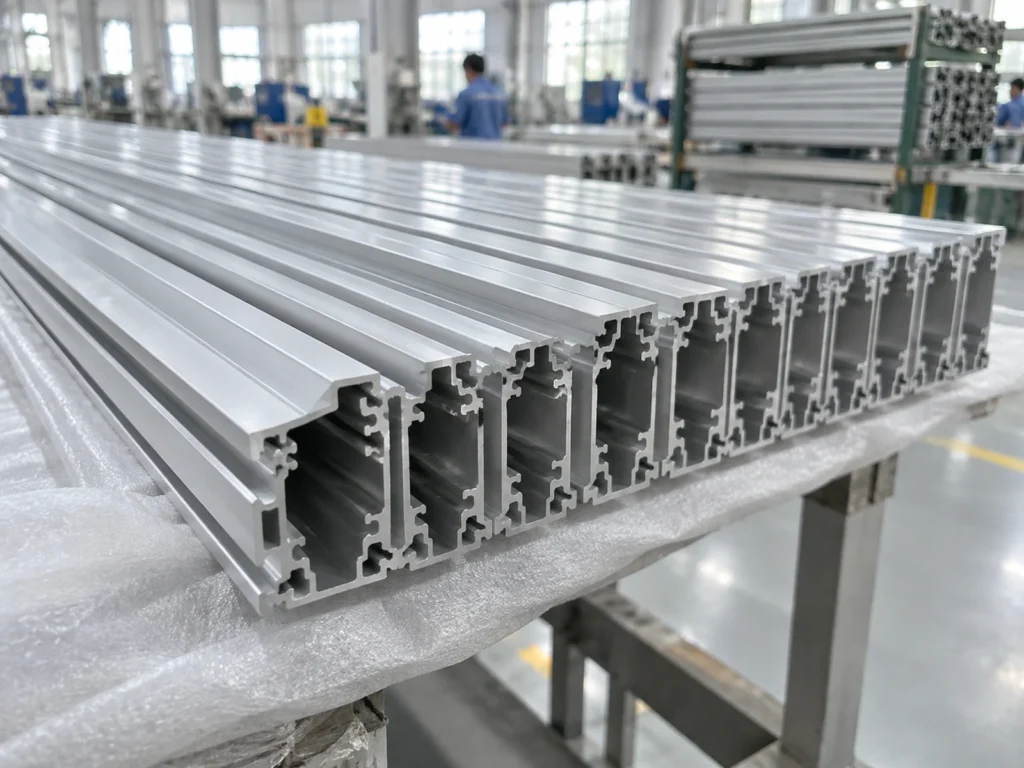
Check 3: record why work waits and how long it has waited
Add a recorded entry time or waiting start time to the relevant stage. State which event starts the clock. “Since cutting” and “since inspection request” measure different intervals, so keep that definition consistent when reviewing a queue.
At the same snapshot time, note the oldest waiting group as well as the quantity. A small overdue group needed by an assembly order can require attention even when another rack contains more pieces. Review the part demand and required sequence with the waiting information.
Assign a reason that can lead to a next action. Possible examples include a missing approved drawing, unavailable fixture, unresolved inspection result or scheduled downstream job. Confirm the actual reason rather than diagnosing it from a photograph of a crowded rack.
Give the next action an owner. A production planner may resolve the sequence, quality may review a held group, or engineering may clarify a feature. Keep the agreed decision route visible so operators do not have to guess how to release the parts.
Use the cutting lead-time guide when reviewing elapsed time across several stages. A fast sawing operation does not establish a short end-to-end route if work waits elsewhere.
Check 4: review the release to the next stage
Discuss how cut parts are handed over: part identities, quantities, status, orientation, protection and required records. Agree what the receiving operation needs before it can start. Review the material movement and sorting alongside the machine’s cutting operation.
Do not prescribe zero WIP or an arbitrary rack limit from this guide. The same Lean Enterprise Institute reference cautions that reducing inventory without addressing variability and process capability can disrupt delivery. Review the actual route, demand and process constraints before changing release quantities.
When assessing a proposed saw, ask what happens to the intended output next. More pieces at the cutting handover may still require an appropriate drilling, inspection or packing route. Use a representative job to review that connection rather than assuming that a larger saw solves every queue.
For kits, check whether the handover contains the required combination of members. Equal total piece counts can describe different assembly readiness when one variant is missing. The frame-kit guide explains the separate count of complete member sets.
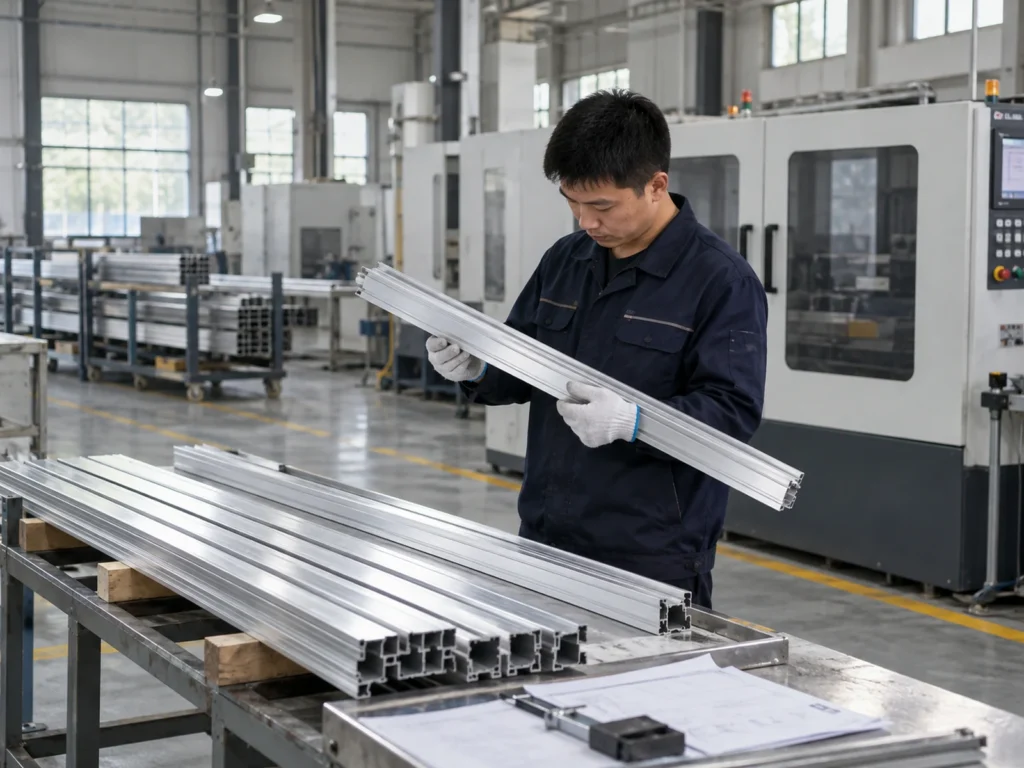
Prepare the machine and flow review
Bring a route sheet, representative profile drawings, cutting list, batch identities and a current WIP snapshot. Add the stage definitions, primary statuses, waiting reasons and owners. This gives the machine discussion a clear connection to the parts your next operation actually needs.
Separate observations from proposals. Record what was counted and when, then describe what change is being considered. Review its effect on the full route before adopting a new release sequence or capacity assumption.
For an equipment inquiry, send JiurunCut your profile and cutting requirements and explain the receiving operation. Confirm the proposed configuration and sample review scope. The machine inquiry does not establish a complete factory scheduling system or a guaranteed reduction in WIP.
Buyer questions about aluminum cutting WIP
Are all pieces near the saw unfinished work?
Check the route boundary and status. Nearby material may include untouched stock, unfinished pieces, held parts or released finished goods. Location alone does not classify the inventory.
Does a larger WIP count prove the saw is the bottleneck?
The count alone does not identify the cause. Review the stage, waiting reasons, timing and downstream requirements before selecting a process change or equipment proposal.
Can held pieces be included in the snapshot?
They can be included under a clearly defined boundary and primary status. Keep them distinguishable from pieces released to move forward, and avoid counting the same pieces twice.