
Aluminum saw blade size is a compatibility question, not just an outside-diameter choice. Obtain the approved blade specification for the exact machine and cutting application. Compare the cutting diameter, mounting interface, cutting width and body thickness, tooth design, permitted operating conditions and complete product identity before ordering a replacement.
A matching diameter alone does not establish an interchangeable blade. Use the machine and tool manufacturers’ documentation to confirm the complete fit.
Keep these documents together
- The exact machine identity and approved tooling requirements.
- The proposed blade’s full specification and product number.
- The actual profile drawing, material and cutting task.
On this page
Check the aluminum saw blade size at the cutting diameter
The cutting diameter describes the circle formed by the outer cutting points. Keep that dimension separate from the central bore and blade-body thickness. A quotation that gives only one diameter leaves other fit information unanswered.
LEUCO’s 188388 product sheet provides distinct entries for cutting-circle diameter, bore diameter, cutting width, body thickness, tooth count, hook angle and tooth geometry. This is an example of how a complete tool is identified. It does not establish that the listed product fits a JiurunCut saw.
Request the approved diameter for the delivered machine configuration. A diameter mentioned in the machine model name is not a complete tooling instruction. Retain the actual specification and document revision.
Do not use a larger blade diameter as a shortcut for approving a larger profile. Cutting capacity depends on the documented machine arrangement and the section’s position within its permitted envelope. Our cutting-capacity diagram guide explains that separate review.
If the existing blade has been serviced, distinguish its current condition from the approved new-tool specification. Identify the service record and ask the responsible supplier to confirm whether it remains within its documented use requirements.
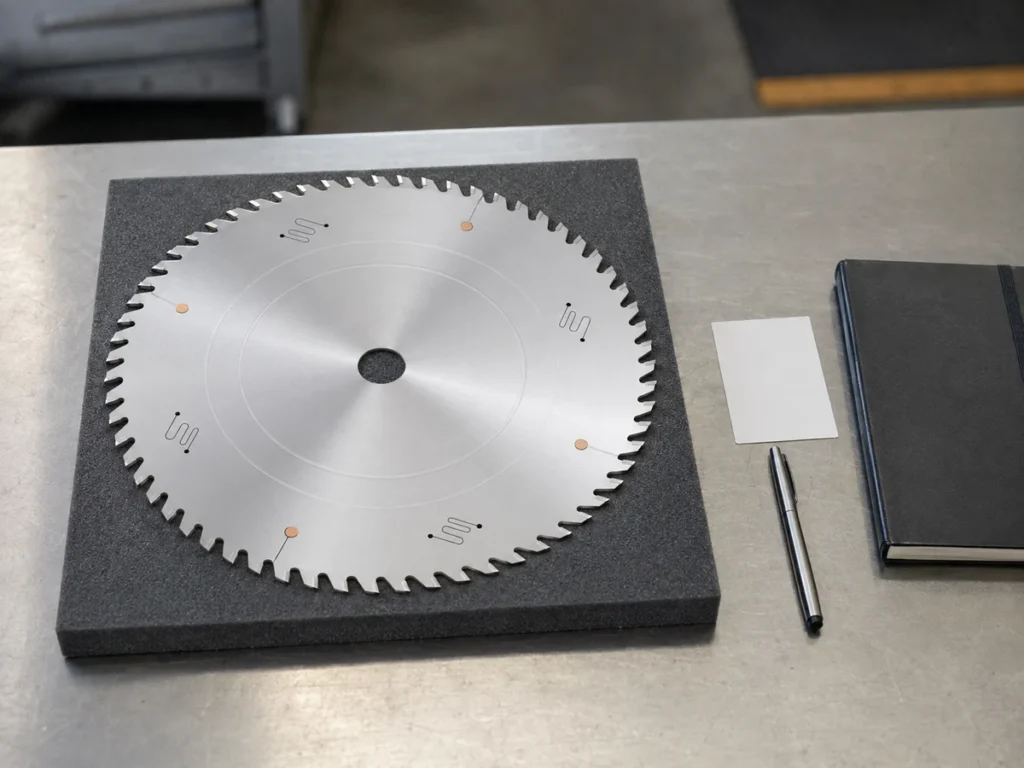
Check the bore and the complete mounting interface
The center hole is one part of the interface between the blade and machine. Record the specified bore and any additional mounting features from the approved tooling document. Keep dimensions and feature identities together.
Ask the supplier to confirm the complete interface for the exact machine. Relevant details may include documented pinholes, keyways or other features. Let the specification identify which features actually apply rather than adding them from a generic illustration.
A proposed blade should be reviewed against that interface as a complete product. Similar outside diameter and tooth appearance do not prove compatible mounting. A product photograph often cannot show all relevant dimensions.
If a supplier proposes an adapter, reduction sleeve or another interface change, request explicit compatibility confirmation from the responsible machine and tool manufacturers. A catalog accessory’s existence does not automatically approve it for this application.
This guide does not give mounting, alteration or replacement steps. Blade access, handling and installation belong to the manufacturer’s procedures and the site’s authorized personnel.
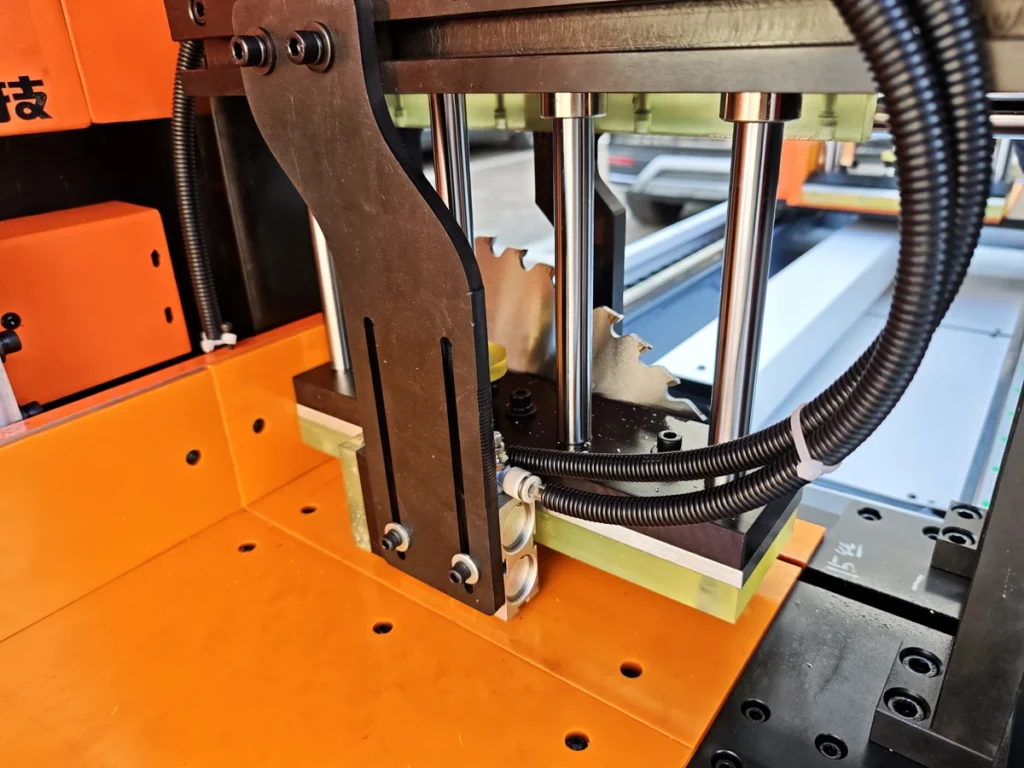
Check cutting width separately from body thickness
Keep the cutting width and blade-body thickness as separate fields. They describe different parts of the tool specification. A shorthand dimension string is only useful when its order and symbols are understood.
Ask for the manufacturer’s field definitions if the quote uses abbreviations. Different catalogs can use different labels for the same type of feature. Preserve the named field with its value instead of copying a bare number.
A replacement proposed with a different cutting width needs a review of the approved process and cut-list assumptions. Confirm the change with the responsible supplier before treating it as equivalent tooling.
Our blade cutting-width and kerf guide covers stock-length accounting. The tool’s nominal width and the actual material removed by a process should remain identifiable in the record.
A narrow-looking blade is not enough evidence for a material-saving claim. Compare the documented tool, the approved process and the relevant production results before estimating a change in accepted output or waste.
Check the tooth design against the actual cutting task
Tooth count is one specification field. Keep it with tooth geometry, hook angle, cutting material and the manufacturer’s stated application. Do not select a replacement by tooth count alone.
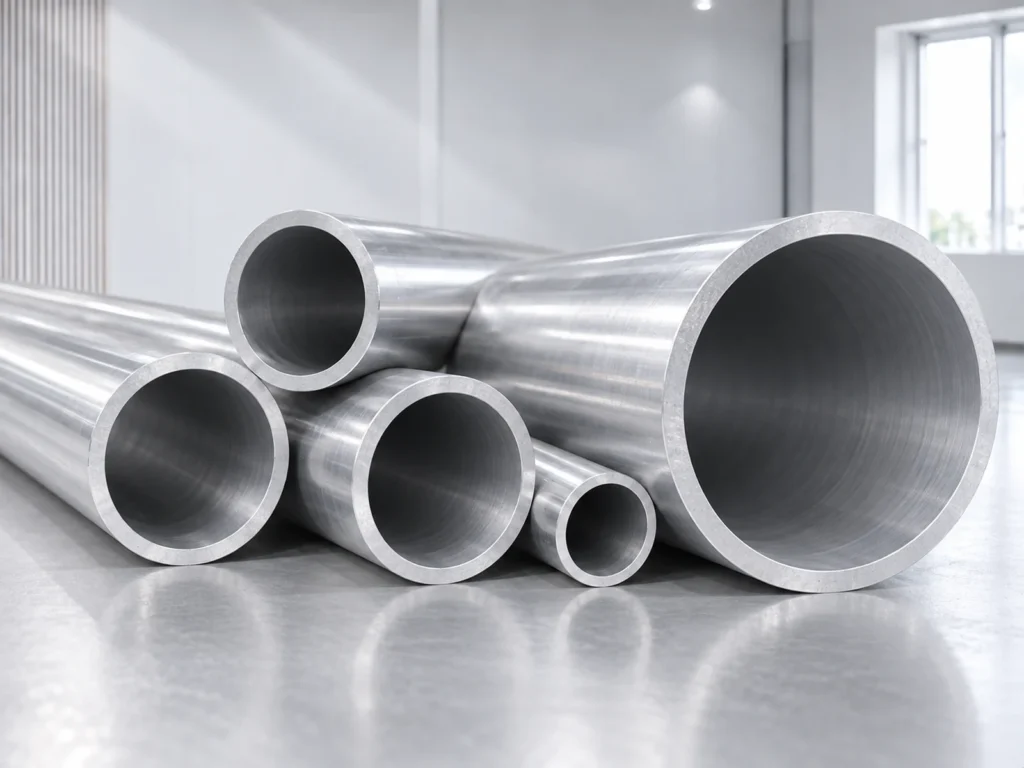
Give the tool supplier the actual section drawing and material condition. A solid bar, a thin-wall tube and a profile with multiple cavities present different workpiece geometry. Describing all three merely as “aluminum” omits information needed for the application review.
State the cutting task as well: square cuts, miter cuts, individual pieces or an approved multi-piece arrangement. Ask the supplier to review that task on the actual machine rather than recommending a universal tooth count.
Keep trial evidence tied to the tool and setup used. A satisfactory sample produced with one blade does not document every blade with the same diameter. Record the full tool identity when requesting a repeat review.
Check the documented operating conditions
Request the permitted conditions for the proposed tool and compare them with the machine’s documented operation. Keep speed-related statements clear about their quantity, units and purpose.
The Leitz Sawing Lexicon’s abbreviation list distinguishes rotational speed, maximum permissible rotational speed, cutting speed and feed speed. It also identifies cutting diameter, bore, cutting width and tooth count as separate fields. These labels help a buyer read tooling documents without treating unlike entries as interchangeable.
A maximum permitted rotational speed is a limit, not a recommended production setpoint. A stated machine speed and a proposed cutting condition also need their own documented context. Have the responsible supplier confirm the permitted combination.
Do not transfer a speed, feed or lubrication statement from another tool family or material. Retain the guidance for the actual machine, proposed tool and workpiece. This article does not prescribe an RPM or feed rate.
Where a specification is unclear, keep the review item open until the supplier supplies the required confirmation. A missing rating should remain visible in the purchase review rather than being filled from a similar product’s listing.
Check the product number before accepting a substitute
Close the order with the blade manufacturer, complete product number, approved specification, quantity and relevant documentation. Keep the compatibility confirmation with the quotation.
A statement such as “same size” is insufficient for a substitution. Ask the supplier to identify which fields match and which differ. Have the responsible technical team approve the proposed change before release.
For a serviced blade, retain its identity and service history separately from a new blade’s record. Our inspection and replacement guide covers condition review, while our blade-life record guide addresses use history.
Use a simple closeout note: the proposed product, the actual machine, the reviewed cutting application, any remaining differences, the approval owner and the document revision. This gives purchasing a clear basis for the order without asking it to resolve tooling compatibility from photographs.
For a JiurunCut inquiry, provide the machine identity if known, profile drawing, material and cutting task. Request a tooling-scope review with the machine proposal or replacement request.
Common blade-fit questions
Is a matching outside diameter enough?
No. The complete mounting interface, cutting width, tooth design, operating conditions and approved application also need to match the documented requirements.
Does a larger blade guarantee more cutting capacity?
No. The approved machine capacity and workpiece arrangement control that review. A tooling change requires manufacturer confirmation rather than an assumption based on diameter.
Does a higher tooth count always mean a better result?
No universal ranking follows from tooth count alone. Ask the responsible tool supplier to review the complete blade design, actual profile and cutting task.