
Aluminum cut to length can be bought as a material-processing service or produced with a saw at your own site. Compare both routes against the same accepted part, quantity and delivery requirement. The choice depends on the job mix, available resources and quoted scope, not simply the number of pieces ordered.
Start by defining what must reach the next operation. A cut blank, a finished member and an assembled kit describe different deliverables. Once that boundary is clear, the cost and responsibility comparison becomes easier to read.
Five sourcing checks
- Specify the same part and acceptance requirements for both routes.
- Account for changes, handling and the full work sequence.
- Use actual quotations and measured inputs before choosing.
On this page
1. Define the aluminum cut to length deliverable
Describe the material, section and finished cut requirement first. Include the profile or stock identity, alloy and temper where specified, drawing revision, units, length reference, end geometry and accepted quantity. Keep the intended next operation visible.
If the pieces will be machined later, identify them as blanks and state their approved incoming condition. If they go directly to assembly, define the applicable end and appearance requirements. “Cut to length” alone does not resolve those differences.
Use the same released requirements when comparing an external processing quotation with an internal cutting plan. Otherwise, a lower figure may refer to a simpler deliverable. One option might include inspection and packaging while the other stops after the saw.
Record acceptance separately from ordering quantity. A purchase of 100 pieces and a need for 100 accepted pieces use different bases unless the agreement clearly connects them. Identify the disposition of held pieces and the responsibility for resolving a shortage.
2. Check what a processing service includes
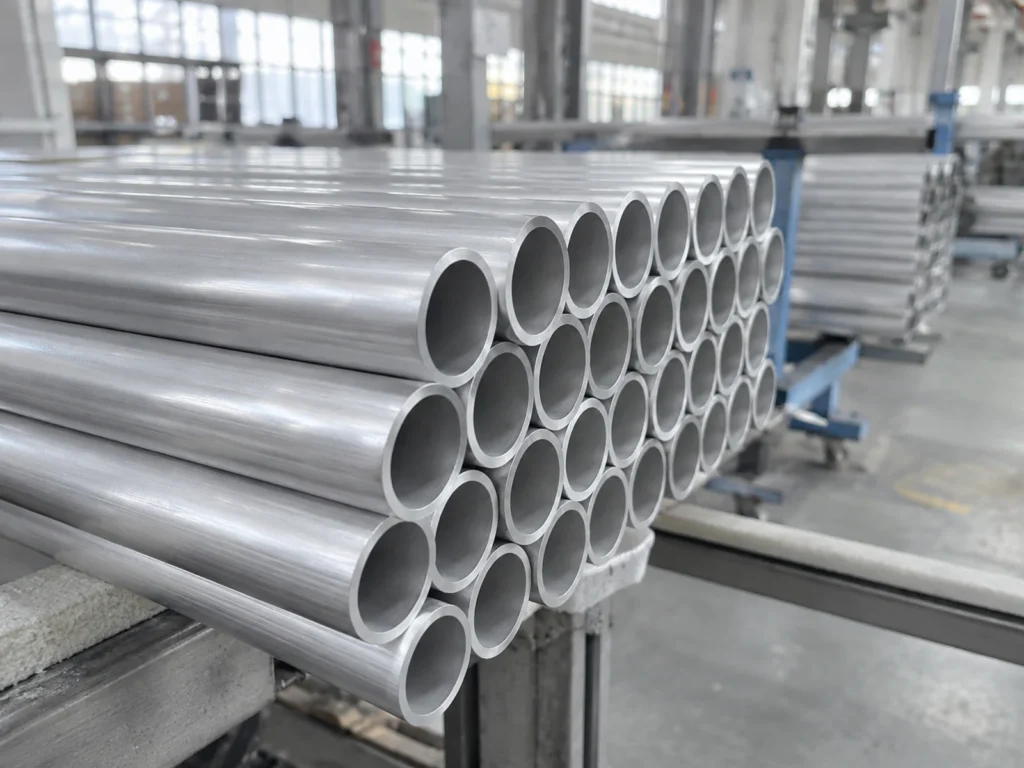
Ask whether the quotation supplies both material and cutting or covers cutting of customer-supplied stock. Identify who controls the material identity and who holds the supporting documents. Confirm the exact operation scope before comparing the quoted amount.
Hydro’s machining and fabrication overview lists sawing and other added-value activities for extruded profiles. These are distinct services. A buyer should specify which operations belong in the requested delivery rather than assume that ordering cut pieces includes later machining.
The same service phrase can also concern another product form. Thyssenkrupp Materials UK’s cutting page covers plate, bar and cut-to-size sheet or plate services. A plate-cutting offer does not automatically cover your extrusion’s end angles or handling requirements.
Request the agreed dimensional and edge conditions, quantity basis, identification, protection and packaging. Ask which checks are included and which supporting records will accompany the shipment. Keep optional services and unresolved requirements visible.
For customer-supplied stock, clarify how received quantities, unused material and rejected or held pieces will be recorded. A delivered-piece count does not by itself explain the disposition of every incoming length or remnant.
3. Include the work around an owned saw
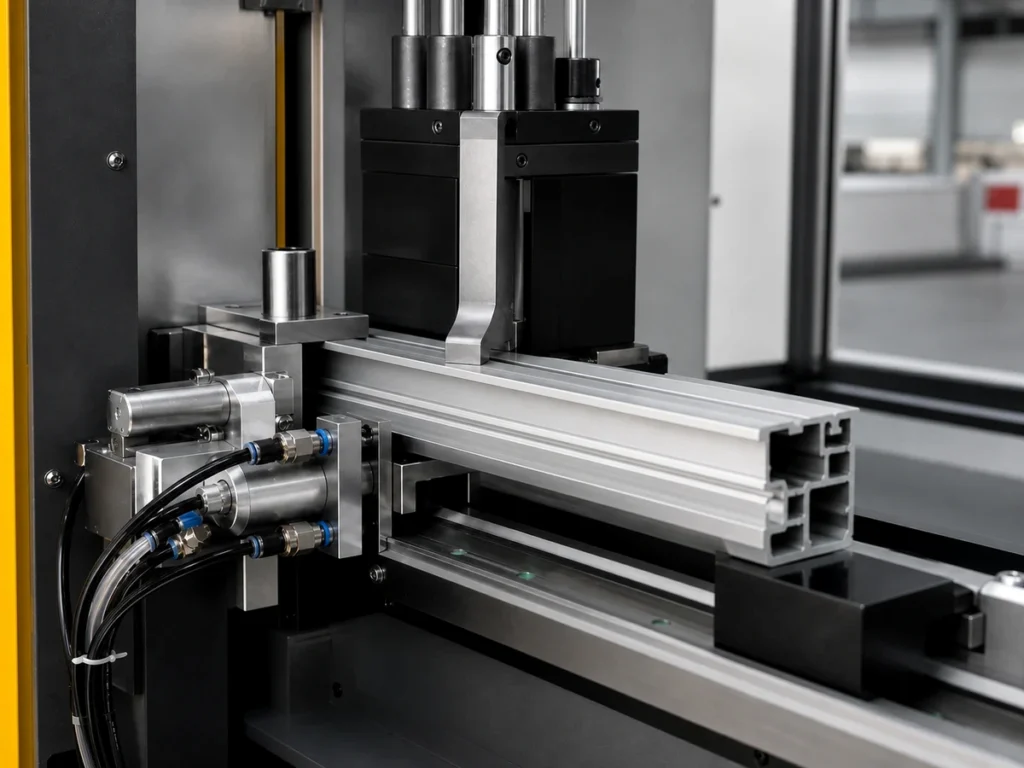
Buying a machine creates an equipment scope and an operating responsibility at your site. Review the actual sections, lengths, end geometry and job mix with the supplier. A machine label does not establish suitability for every part in the forecast.
Include receiving and storing stock, preparing the job, handling material, collecting pieces, checking them and moving them to the next operation. The saw’s cutting action is one step in that sequence. Use our cycle-time and batch-output guide to distinguish a cutting cycle from accepted production output.
Identify the people, space, utilities, tooling, care and support that the internal route requires. Use the selected configuration’s documentation. Our installation planning guide helps keep site readiness and equipment delivery connected.
Keep startup work separate from repeated production. Initial application review, training and acceptance activities should not disappear into an optimistic operating-cost assumption. Record which items the machine quotation includes and which need another responsible owner.
Also state what the saw does not complete. Later drilling, end machining, finishing or assembly still needs an approved process where required. Compare the internal route with an external offer at the same stage of completion.
4. Compare changes, order patterns and supply
A stable repeated part and a changing mix of lengths create different planning questions. Record the expected orders by part family and delivery period. Avoid turning a total annual piece count into an assumption that every job is identical.
For an external service, ask how revised drawings, split deliveries and urgent additions affect the quotation and confirmed schedule. Use the supplier’s actual response for the order. A general website lead-time statement is not a commitment for your specific material and operations.
For internal cutting, identify the preparation and review needed when the section, length or end geometry changes. Keep changeover, inspection and handling in the plan. Owning the saw does not guarantee immediate availability of suitable stock, personnel or an approved setup.
Consider a mixed route if it suits the documented requirements. For example, an internal line could serve a reviewed recurring job while a separate supplier quotation covers work outside that scope. This is a planning option, not a claim that a particular split is cheaper.
Keep substitute materials or revised sections subject to the responsible approval. A supply interruption should not silently change the released part. Retain the material identity and drawing revision through receiving, cutting and delivery.
5. Compare costs at the same accepted quantity
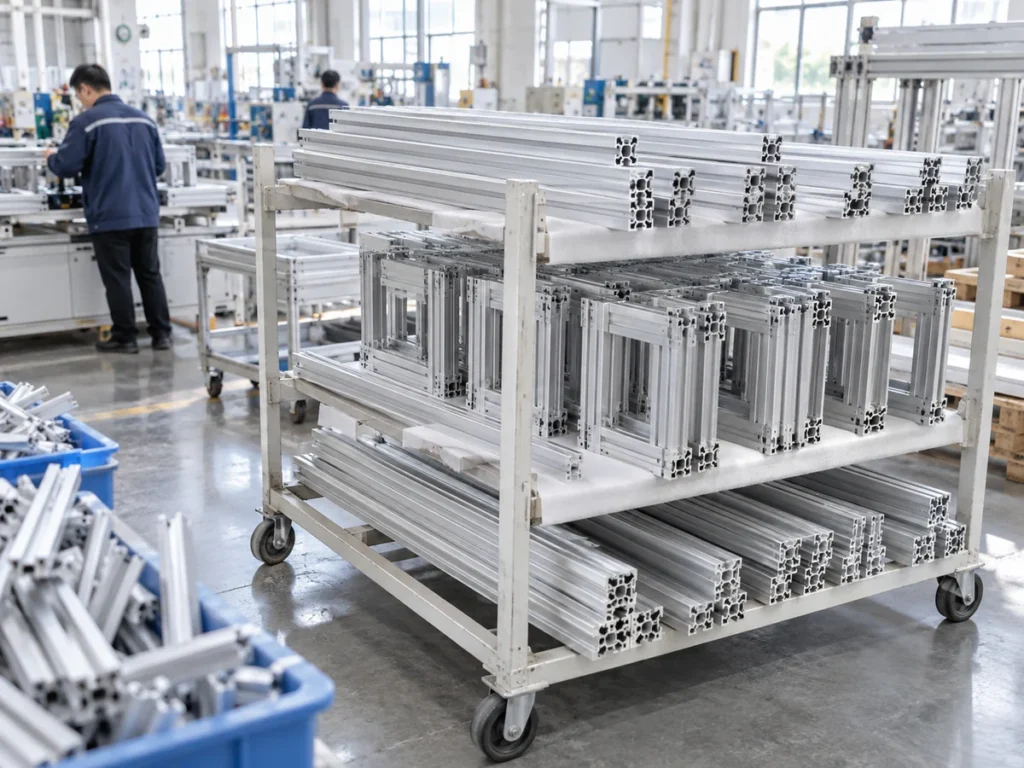
Use actual quotation items and recorded internal inputs. For the service route, include the requested material, processing, inspection, identification, packaging and delivery scope where applicable. For the internal route, include the corresponding stock and work costs plus the equipment-related items in your evaluation.
Keep the period consistent. Do not compare a one-time machine investment with the cost of a single shipment and describe the difference as recurring savings. Our machine payback guide explains how investment and annual net benefit use different inputs.
An invented counting example makes the comparison boundary clear. Route A delivers 100 pieces, but four remain held pending the agreed review. Route B has 100 released pieces. At that moment, the released quantities are 96 and 100, even though both production or shipping records show 100 pieces.
This example establishes no quality rate, supplier result or price. It shows why the status of pieces matters to a cost comparison. Update the record when the held pieces receive their disposition, and avoid mixing made, shipped and accepted quantities.
Use our cost-per-accepted-part guide to organize the denominator. Do not assume a scrap allowance, machine output or service rejection rate without evidence for the actual comparison.
Make the decision record short and usable
Finish with one readable record that answers the same questions for both routes. The following structure keeps the scope visible without turning the decision into a long list of unrelated machine features.
| Decision field | What to record for each route |
|---|---|
| Delivered part | Material, drawing, cut condition and completion stage |
| Accepted demand | Part identities, quantities and delivery periods |
| Included work | Processing, checks, handling, records and delivery |
| Cost basis | Quoted or measured inputs with a consistent period |
| Open items | Responsible owner and the evidence still required |
If an option depends on an unresolved application or supplier assumption, show it as open. A decision record is more useful when the purchasing team can distinguish confirmed scope from an expected benefit that has not yet been demonstrated.
Common questions
Is ordering cut material always cheaper than owning a saw?
No universal answer follows from the service name. Compare equivalent delivered parts, accepted quantities, periods and responsibilities using actual quotations and internal inputs. This guide gives no price or savings guarantee.
Does cut-to-length supply mean the part is ready for assembly?
Only when the agreed scope defines that condition. Cutting may deliver a blank for later work. State the required end, inspection, finishing and packaging scope rather than infer it from the phrase.
Can a machine quote replace a material-processing quote?
They purchase different things. The equipment quote needs to sit inside a complete internal production plan before the two routes can be compared at the same delivered-part boundary.
Review the internal cutting route with clear part inputs
Ask JiurunCut to review the machine requirement. Send the section drawings, lengths, end details, accepted quantities and job mix. Request a defined equipment scope and application review for that work.