
An aluminum sample cutting trial should test the decisions your quotation depends on. Choose representative parts, agree how they will be measured and record the fixture, feeding and collection setup. These five checks turn a demonstration into a useful buying decision with clear results and open questions.
Three things to remember
- Choose samples that represent the production mix, not only the easiest part.
- Agree acceptance criteria and measurement points before the trial.
- Record settings and part identity so the result can be repeated.
On this page
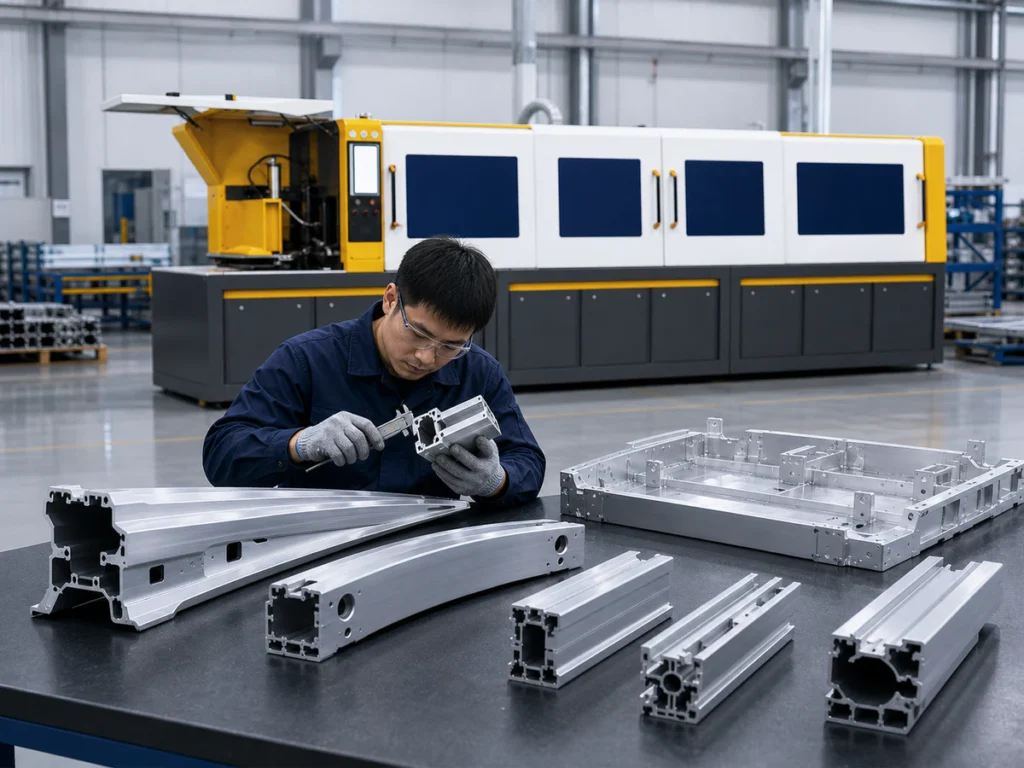
1. Choose a useful aluminum sample cutting set
Include a common production part and at least one part that challenges the proposed process. That may be a long stock length, a thin wall, an angled end or a visible surface. The aim is to test decisions the quotation depends on, not to create the largest possible sample collection.
Mark each sample with a drawing number and revision. If there are mirrored parts or several cross-sections, do not let one specimen stand in for all of them without agreement.
- Common profile and production volume
- Most demanding geometry or finish
- Length and angle extremes that affect equipment selection
Use a short trial record. Give each sample a part ID, drawing revision and position in the run. Record the setup, measurement result and any adjustment. Finish the aluminum sample cutting report with three lists: requirements met, requirements not met and requirements not tested. An attractive photo cannot replace those observations.
2. Set acceptance before the trial
State the finished length datum, angle reference, acceptable cut-face condition and any assembly fit check. Decide which tool and method will be used to measure the result. A sample cannot pass or fail a requirement that was never defined.
Avoid treating a catalogue accuracy number as the acceptance test for your part. The trial is about the measured finished component made from your material under a stated setup.
- Drawing revision and units
- Measurements and visual checks
- Who signs off the sample and records questions
3. Record the process as well as the result
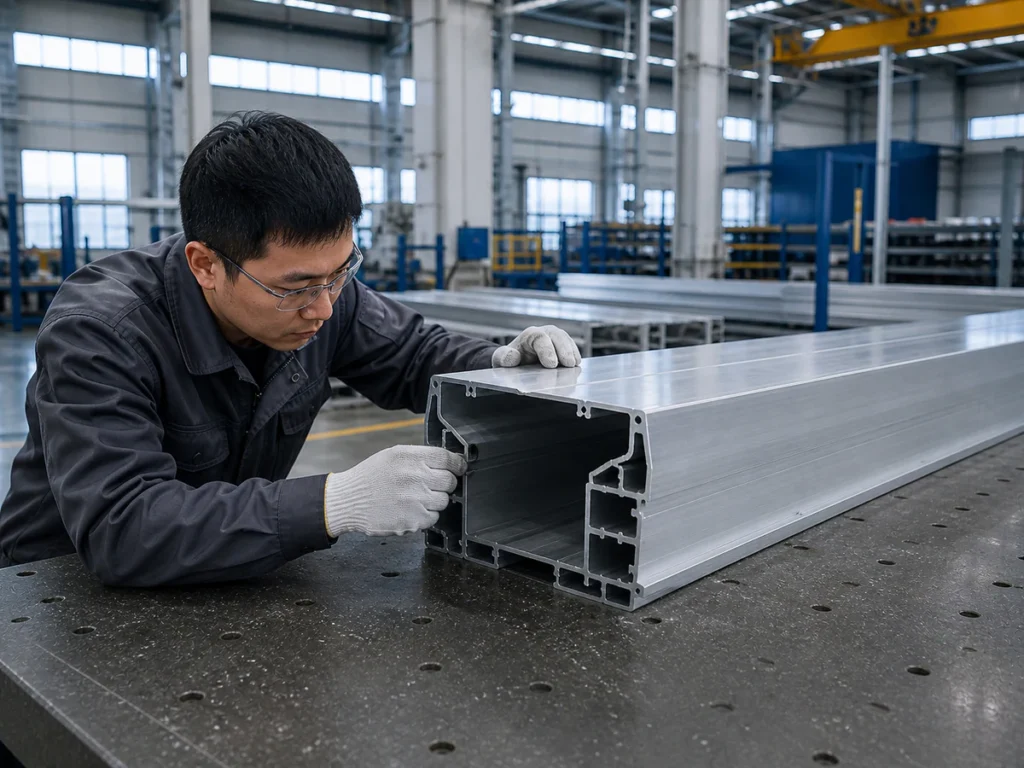
The supplier should identify the material, machine configuration, blade and fixture used for the demonstration. Note the feeding and collection arrangement and any manual step. If a special fixture is needed, confirm whether it is included in the commercial proposal.
For a repeating job, label the first and later parts separately. This helps distinguish a successful setup cut from a repeatable production approach.
- Machine and fixture configuration
- Operator actions
- Sequence and identity of sampled parts
Sample identity
Information to send: Drawing, profile, material and revision
Question to ask: Was the tested piece representative of production?
Setup
Information to send: Fixture, feeding and collection notes
Question to ask: Can the proposed quotation reproduce the arrangement?
Result
Information to send: Measurements, photos and observed defects
Question to ask: Which criteria passed, failed or remain untested?
4. Check handling and material use
Inspect the parts after they have been removed and handled, not only while still on the machine. Record scratches, dented edges and how the finished pieces remain identified.
If saving material is a buying reason, record starting stock, finished pieces, kerf, trim and final remnant as separate quantities. The tail-waste guide explains why a zero-tail label alone does not describe total yield.
5. Turn the trial into a decision
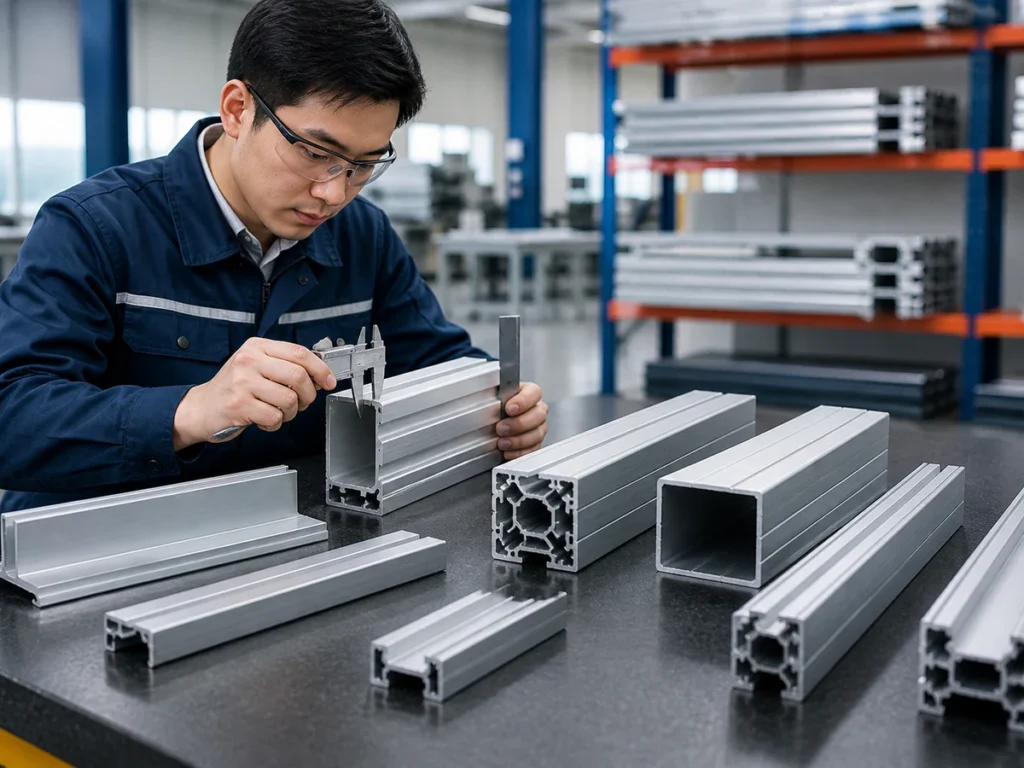
Summarize which requirements passed, which need adjustment and which were not tested. Do not convert an untested claim into an accepted capability. A short list of open questions makes the next engineering discussion more productive.
The machine-selection guide helps connect the sample result to the larger buying decision.
Common questions
Is one good sample enough to approve a machine?
It may start the review, but a repeated or mixed job may need several profiles and parts produced at different points in a run.
Should the supplier choose the sample?
Agree the sample set together. The buyer should identify the parts and risks that matter in actual production.
Can I request a trial before finalizing every specification?
Yes, provided unknown requirements are clearly marked. The trial cannot prove compliance with criteria that have not been defined.
Discuss your cutting requirements
Send the parts you want to include in an aluminum sample cutting trial and the checks that matter most. Add your drawings, length range, finish and batch pattern. We can discuss a representative sample set and an acceptance plan tied to the proposed equipment.
For machine operation examples, browse the Jiurun machinery video channel. Use a trial with your own part to confirm the proposed setup.
References and scope
This guide describes sample-trial planning. It does not report a completed JiurunCut test or certify a particular model. Recommendations require a review of your drawing, sample and production requirements.