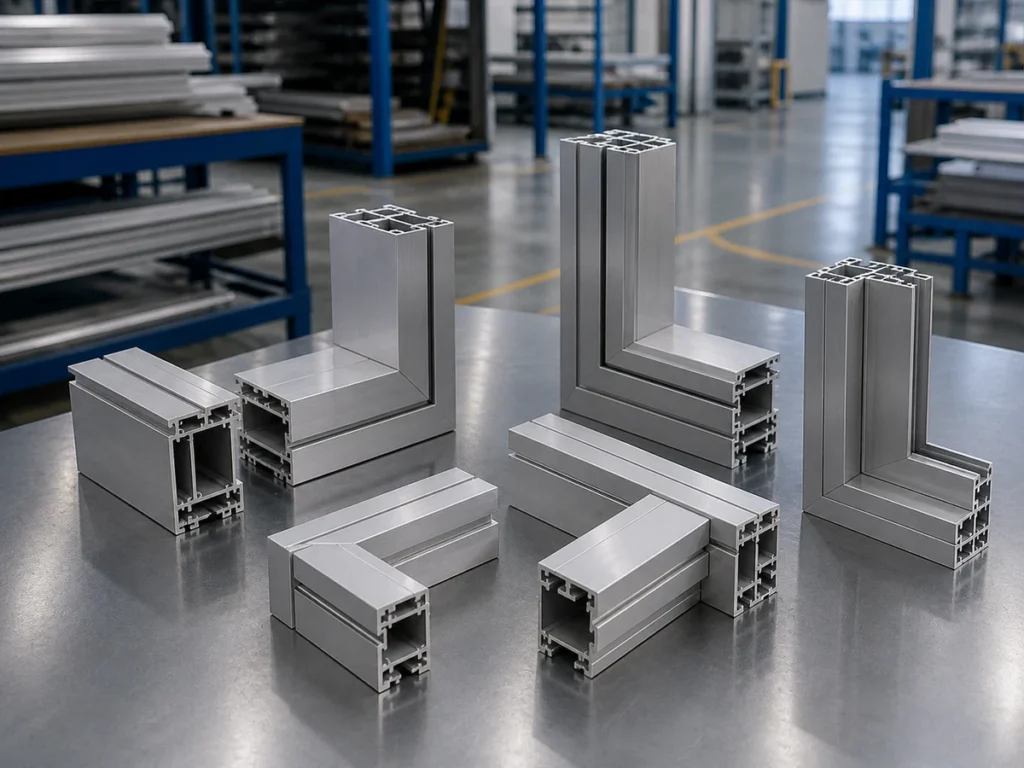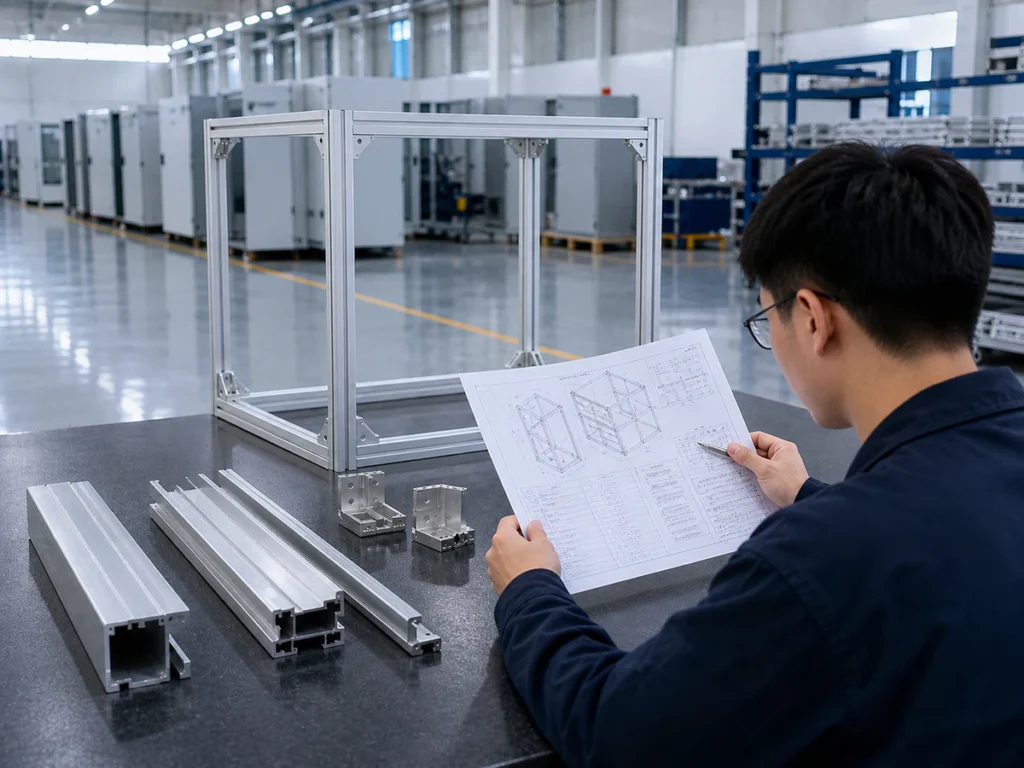
Curtain-wall cutting should connect each profile to its finished joint, length reference, angle, orientation and visible faces. Correct length alone may not establish a usable architectural member. Organize the project batch and inspect representative joints after handling, while keeping cutting acceptance separate from the structural, fire, water and other performance of the complete façade system.
Three things to remember
- Keep profile identity, orientation and joint requirements linked.
- Protect and inspect visible faces through the entire handling path.
- Treat sample cutting as a part check, not façade-system certification.
On this page
Why must the cut be linked to the joint?
An architectural member must fit the intended joint and retain its required appearance. Review the section, finished drawing, angles and visible faces together instead of treating every length as an isolated piece.
A datum is the face or edge used as the locating or measurement reference. Establish it on the drawing before comparing setup or inspection results.
This guide covers aluminum profile-cutting preparation. It does not assess or certify the complete façade's structural, fire, water or other system performance.
How should you identify the members in a project?
Separate mullions, generally the vertical members, from transoms, generally the horizontal members. Give these, pressure-plate-style profiles and special joint components stable profile and part references.
Connect each cross-section to its finished drawing. Keep differing orientations explicit even when two members have the same cut length.
A general glazed-façade photograph can show context, but it cannot replace the section and joint information needed to understand the actual cutting task.
Which surfaces must stay unmarked?
Mark visible faces before discussing the fixture, the arrangement used to support and hold the profile. Distinguish appearance surfaces from the locating reference and note any protective film or agreed handling condition.
Review contact along stock supports, guides, clamps and collection. Looking only at the saw head leaves part of the surface-protection question unanswered.
Use agreed appearance criteria and inspection conditions. “Looks good” is not a clear instruction when two teams may inspect differently.
How do length, angle and handedness belong together?
For an angled member, identify the long point, short point or other controlled dimension. Mark mirrored parts and show their relationship to the finished joint.
An angle number does not necessarily match the number shown on every machine display. Use the drawing convention and confirm how the proposed setup interprets it.
The miter cutting guide explains the differences between joint geometry, cut-face geometry and machine settings.
What does the complete batch need to explain?
List quantities by part, available stock lengths and the grouping needed by downstream work. A project can contain several sections, lengths and orientations.
Decide how members will be identified after cutting. An otherwise acceptable cut on the wrong handed part or in the wrong project group still causes a production problem.
Connect the cutting list to current drawings. The cut-list guide provides a practical column structure.
What belongs on a project-review checklist?
Keep these preparation and sample-review items with the project. Record unresolved questions so they do not need to be recreated from memory at each supplier discussion.
| Before the review | Before sample approval |
|---|---|
| Cross-section for each profile family | Correct drawing revision and part identity |
| Finished-part and joint drawing | Agreed length datum and angle check |
| Stock lengths and quantities | Cut-face and edge condition |
| Angle list and handedness | Visible-surface condition after handling |
| Marked visible faces | Representative joint or assembly relationship |
| Current production issue | Recorded result and unresolved items |
Use the drawing's tolerances, the allowed variations in finished dimensions. Keep dimensional limits, edge appearance and visible-surface acceptance clear rather than combining them into one general statement.
How can you compare machine directions without mixing data?
The supplied Jiurun brochure includes JR-550CNC-CORNER and JR-550Q in different angle-cutting directions. Their structures and published ranges are not interchangeable.
Keep each photograph with its own angle and capacity information. Confirm the actual section and orientation at the required cuts.
A side-by-side comparison helps navigation, but the proposal must still define the relevant supports, handling and inspection scope. The most automated direction is not automatically needed for every project.
What should a representative joint check establish?
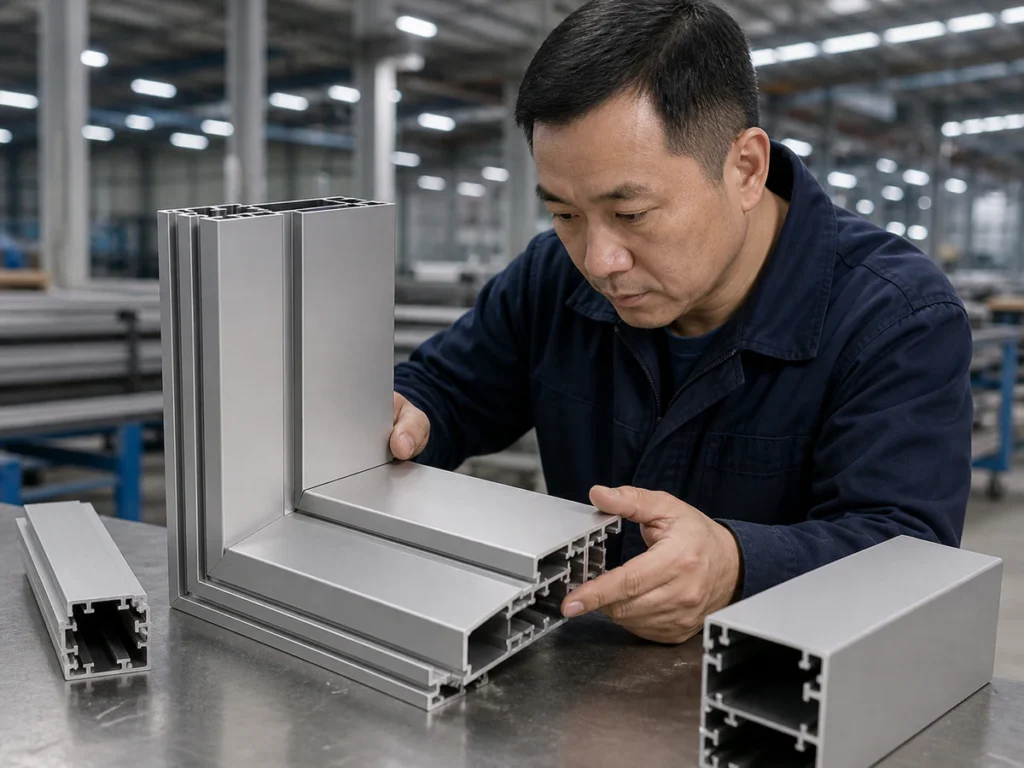
Examine the finished members and, where relevant, assemble a representative joint. Check mating surfaces, seam, angle, alignment and designated visible faces using the agreed method.

Record which sections and angles were tested. Mixed work may need more than one representative sample, with the sample plan agreed for the actual job.
A successful sample corner is evidence only for its stated cutting and part checks. It does not establish complete façade performance or replace system qualification.
How can you turn the checklist into a useful discussion?
Use the available section and joint drawings, length and angle list, quantities and surface notes. State the production issue: setup changes, damaged faces, unclear references, mixed parts or something else.
The curtain-wall cutting solution connects these topics to application planning. A clear profile or joint photo can start the conversation while controlled documents are prepared.
What else should you know?
Are straight lengths and angle-cut parts one review?
They can belong to one project, but identify their different requirements. Do not assume the same setup covers both.
Can a film alone guarantee surface protection?
No general guarantee should be inferred. Review contact, handling and the agreed sample result.
Is a successful cutting sample a façade certification?
No. It addresses the agreed cutting and part checks, not the full system's engineering or regulatory performance.
Sources & Scope
- Jiurun machinery brochure supplied by the owner. 九润画册 PDF physical pages 6–19. Machine categories and configuration identity only; not test results or an operating manual.