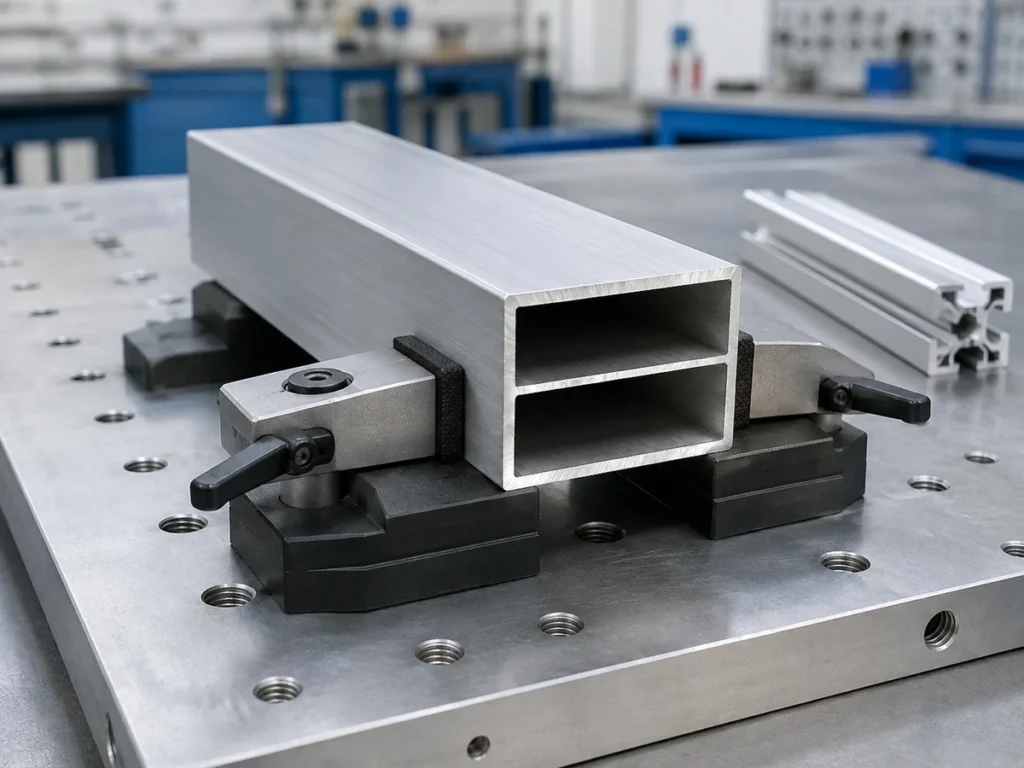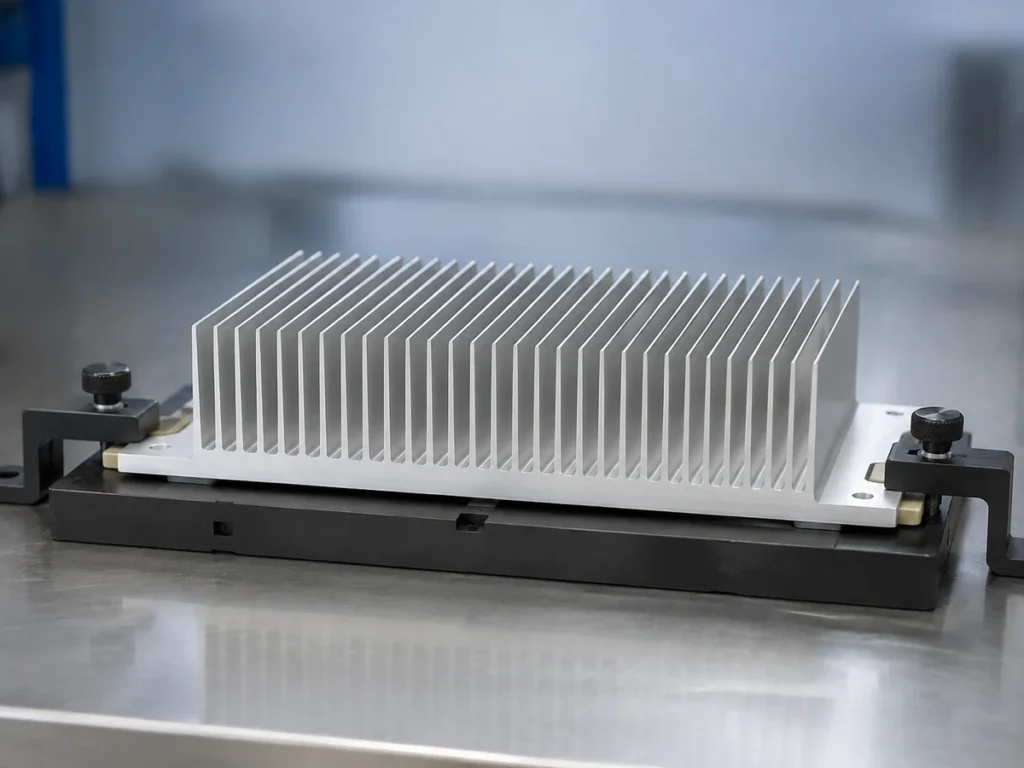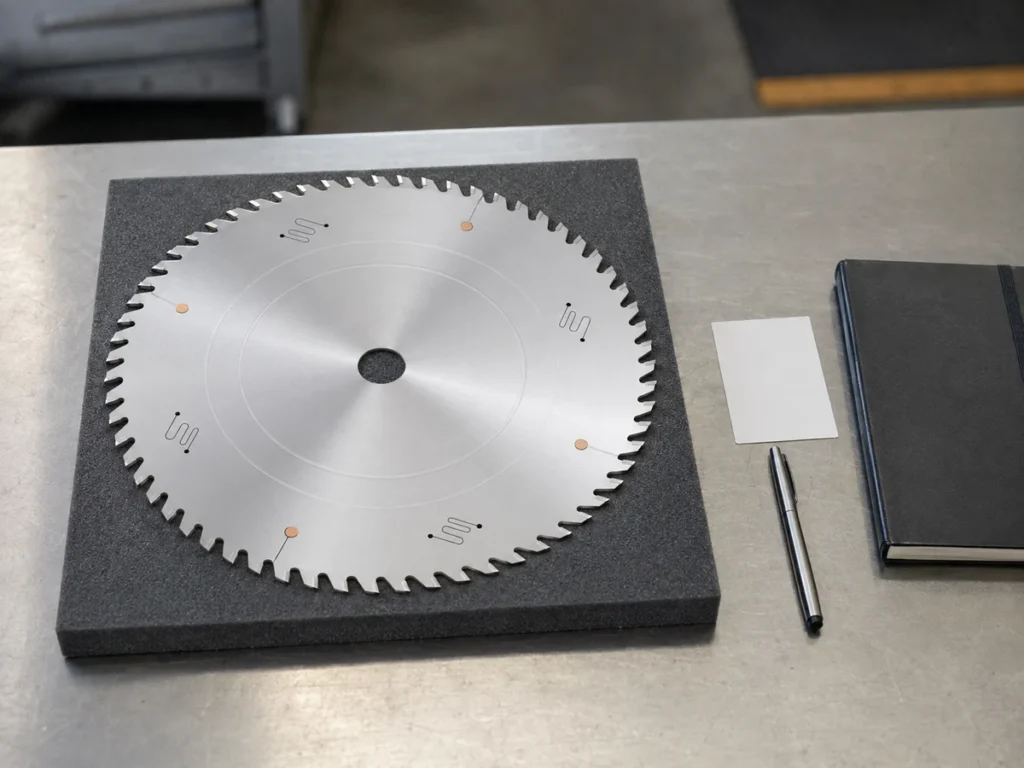
When burrs appear on an aluminum extrusion, record the affected edge, profile, material and recent changes before altering the process. A burr is unwanted material left at an edge; it should not be confused with damage from later handling. Review the approved blade, supports, holding arrangement and collection method together instead of guessing a universal speed or feed adjustment.
Three things to remember
- Define the acceptable edge condition and record where the defect appears.
- Look for a pattern across parts and recent setup or tool changes.
- Stop and escalate suspected tool damage, unstable holding or guarding concerns.
On this page
What should you record before changing anything?
Identify the edge, the section being cut and the material. Note when the result last met the requirement and what changed afterward.
Keep the approved tool, supports, holding, cutting setup and handling in the same investigation. A generic instruction to increase speed, reduce feed or change teeth does not account for your machine or application.
What counts as an unacceptable burr?
Agree where the edge is inspected, what condition is allowed and how it is measured or compared. Also state whether later finishing is part of the intended process; “burr-free” on its own can be interpreted differently.
Keep appearance separate from dimensions. A clean-looking part can still fail length or perpendicularity, which describes whether the cut face is square to the specified reference.
Take well-lit photographs of the complete section and the affected edge. Record the orientation so the photograph can be related to the same feature on the drawing.
Does the problem follow a pattern?
Compare a recorded sequence instead of selecting one bad piece. Note whether the condition appears on every part, after a profile change, after tooling service or only within one section family.
| Observation to record | Review questions—not a diagnosis |
|---|---|
| Burr concentrated on one region | Is that region supported and inspected consistently? |
| Quality changes after a tool change | Is the replacement the approved specification and correctly documented? |
| Only one profile family is affected | What differs in its geometry, contacts and cutting requirement? |
| Acceptable at the saw, marked after collection | Does the handling stage introduce contact or impact damage? |
| Dimensions and surface condition both change | Did the locating, clamping or overall setup also change? |
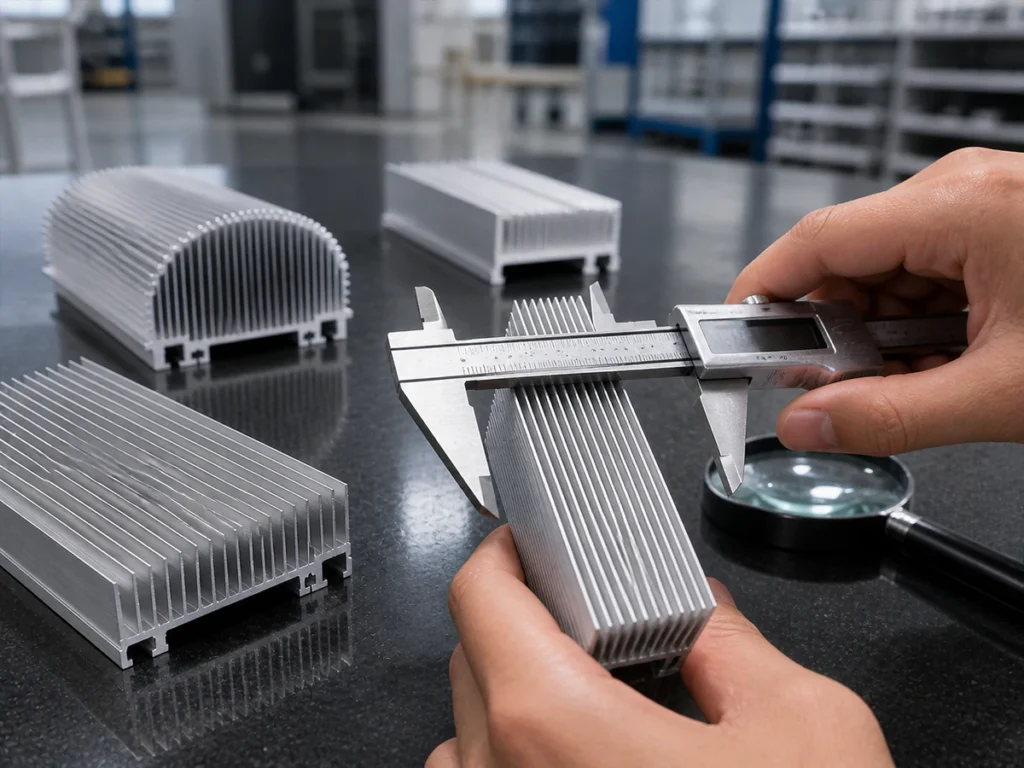
These observations guide the next inspection; they are not diagnoses. Never continue with a suspected unsafe tool or bypass a guard to obtain a closer view.
What should be checked about the blade?
Provide the blade identity, known service history, machine configuration and section being cut. “An aluminum blade” is not a complete application specification.
Freud's aluminum/PVC range discusses chip handling and blade stability. LEUCO describes particular profile applications and secure holding. These are examples of application-specific tooling, not approval of either manufacturer's blade for your Jiurun machine.
Authorized personnel should inspect compatibility and condition using the equipment's safe maintenance procedure. A new blade is not proof that every other cause has been removed.
Could the way the profile is held matter?
Identify the datum, the reference face or edge used to locate or measure the profile. A fixture is the arrangement of supports and clamps holding it in that position.
Mark thin walls, cavities, uneven areas, contact locations and faces that must remain unmarked. Check whether the setup still matches the approved profile family.
Document any fixture change and compare the affected sample with the drawing and setup record. Extra clamping force is not a general remedy for an unexplained edge condition, and a phone photograph cannot settle every cause.
Is the edge affected by cutting or by collection?
Record where a representative part was inspected, using the approved procedure. Compare that result with its condition after normal collection and transport.
An impact-damaged edge should not automatically be called a sawing burr. Marks, bending and burrs may require different review actions.
For heat sinks, include the fins after collection. For architectural profiles, inspect the customer-designated visible faces. The finished component is what must meet acceptance, not just the cut face.
How should a controlled investigation be run?
Agree an authorized test with the machine or tooling supplier. Keep material and inspection methods consistent, and record each permitted setup change and its result.
Use application-specific instructions for spindle speed, feed, lubricant and holding pressure. This guide does not prescribe any of those settings.
Stop and escalate abnormal vibration, suspected blade damage, loose holding or a guarding concern according to the site procedure. Completing a comparison chart is not a reason to keep cutting.
What evidence helps someone review the problem?
Bring together the drawing, material, full-section photograph, affected-edge close-up, sample sequence, blade reference and recent changes. Explain what makes the part unacceptable in your process.
The extrusion cutting guide follows the wider workflow. For finned parts, the heat-sink cutting guide adds the support and handling checks specific to that shape.
What else should you know?
Will a new blade always solve burrs?
No. Tool condition is one review area. Support, locating, setup and the part's handling history also need to be understood.
Can a photo confirm the cause?
A photo is useful evidence, but it usually does not establish the entire setup or cause. Pair it with the drawing and production record.
Should a supplier promise zero burrs without seeing the profile?
A meaningful proposal should define the acceptance condition and the application. Avoid treating an unrestricted promise as a sample-test result.
Sources & Scope
- Freud: LU5H blades for aluminium and PVC profiles. https://www.freudtools.com/worldwide/en/products/lu5h.html. An example of manufacturer attention to tooth geometry, evacuation and blade stability; not a universal performance guarantee.
- LEUCO: NF chop saw blades for aluminum profiles. https://www.leuco.com/EN/US/Circular_Saw_Blades/NF-Circular_Saw_Blades/NF-Chop_Saw_Blades_HW-_profiles_TR-F-K-easyFix. An example of application-specific blade design and secure workholding; not a Jiurun approved blade specification.
- OSHA: Control of Hazardous Energy overview. https://www.osha.gov/control-hazardous-energy/. General maintenance hazard explanation; local requirements and the specific machine procedure still apply.