
A low asking price for a used aluminum saw is meaningful only after the buyer knows which machine will arrive, what it can safely cut, and what it will cost to put into production. A listing photograph cannot answer those questions. A used aluminum saw inspection should connect the machine’s identity and service history to a witnessed cut on the buyer’s actual work, then price the remaining repairs, transport and commissioning against a comparable new-machine offer.
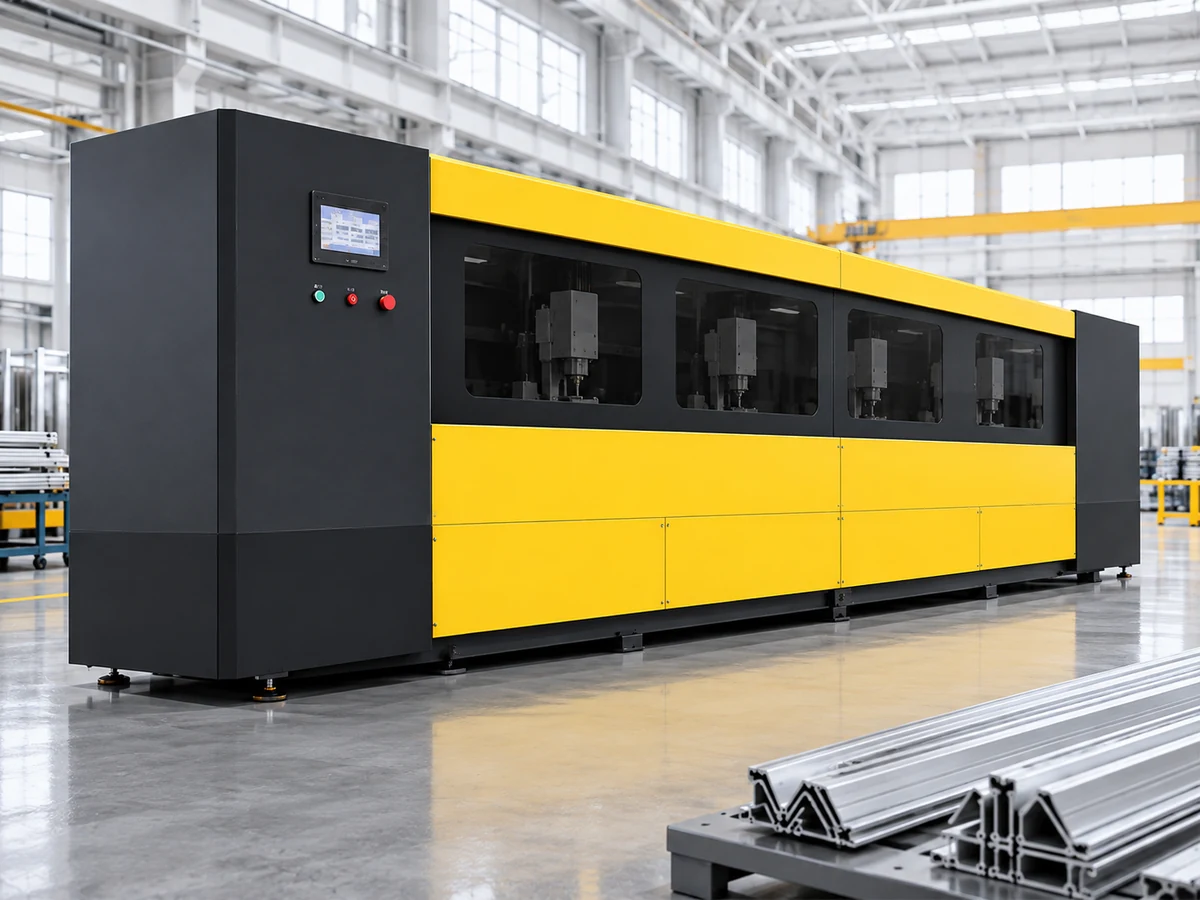
This guide is for a buyer considering a previously operated industrial aluminum cutting machine. A demonstration unit is a different buying situation; our demonstration-saw inspection guide addresses a displayed unit. Here, the seller may have years of production use, modifications or incomplete records to explain. No image or video in this article documents the condition of a particular used machine.
Used aluminum saw inspection starts with the exact machine
Ask for a clear photograph of the manufacturer’s identification plate and a written list of the model, serial number, build year if stated, electrical supply, controller, blade and feed configuration, and included loading or outfeed equipment. Match that list to the seller’s offer, manuals and the machine you actually inspect. A machine that looks like a catalog model may have a different revision or an approved retrofit. Do not assume a standard feature, cycle time or tolerance applies merely because the model family is familiar.
Request the ownership and maintenance record that the seller is permitted to share. Useful evidence includes service invoices, fault history, replacement-part numbers, blade and coolant practices, controller backups, and the dates and scope of any retrofit. An undocumented repair does not automatically make a machine unusable, but it shifts the burden to a direct inspection and a written explanation of what was changed. Record unknowns as unknowns, not as satisfactory checks.
Inspect the physical machine with a qualified person
Agree in advance who may open guarded areas, isolate energy and operate the saw. The inspection is not permission to bypass a guard or test a safety device by exposing anyone to a hazard. A qualified technician should assess the guard arrangement, interlocks, emergency stops and isolation points against the installed machine and the rules at the destination site. OSHA’s machine-guarding overview explains why safeguarding and control of hazardous energy are separate concerns; local requirements and the actual machine documentation determine the applicable procedure.
From a safe, stopped condition, document accessible evidence of wear, corrosion, repairs, leaks, loose covers, damaged cables and missing labels. Ask the technician to inspect blade mounting, clamps, guides, feed mechanism, bed support, outfeed and chip removal where the design permits. Do not infer internal condition from a freshly painted enclosure. Photograph the machine plate and the affected areas with the seller’s permission, and record any components that could not be inspected.
Witness a controlled cut on the work you intend to run
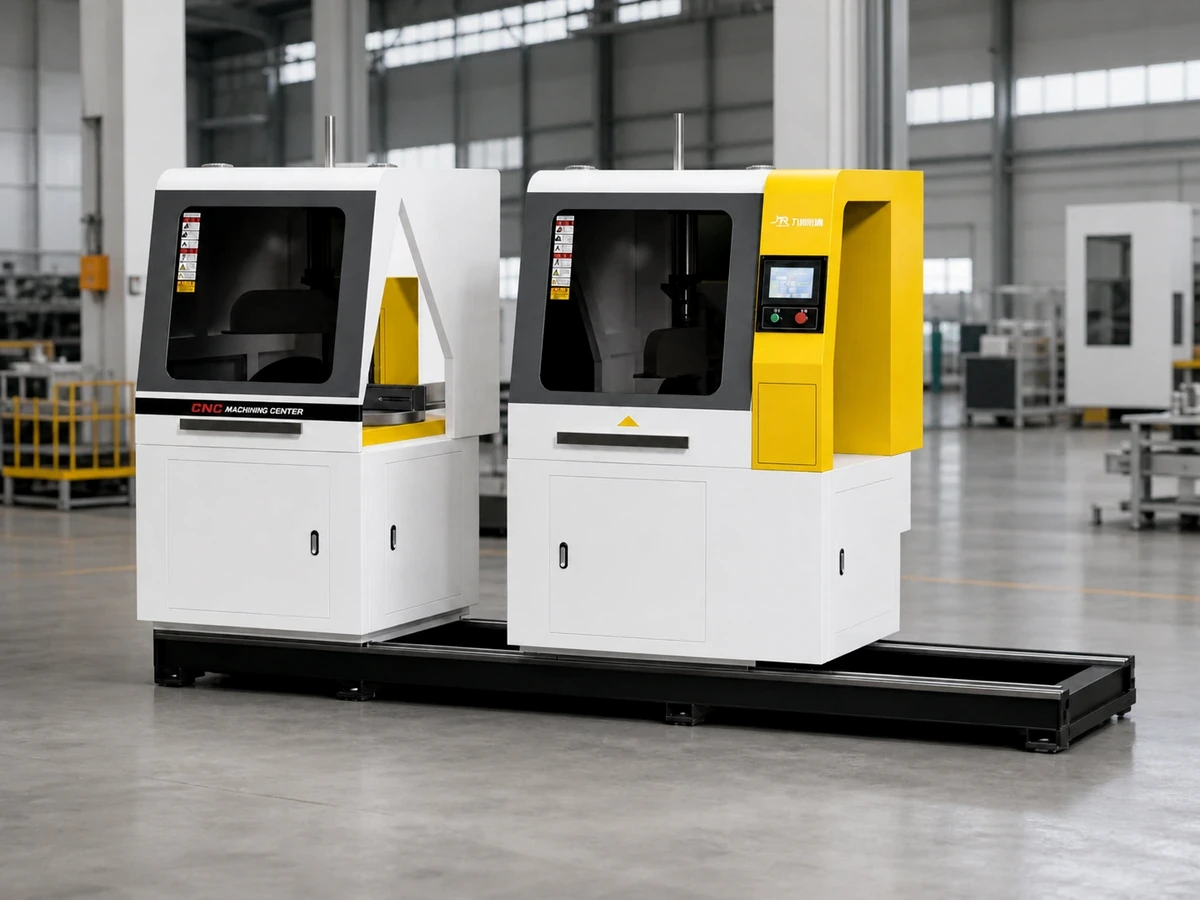
A seller’s video can show that the saw once moved and cut. It cannot establish the condition of the exact machine on the inspection day or its suitability for your product. Agree a witnessed test using representative aluminum alloy, section geometry, stock length, finished lengths and any required angle. Include the shortest and longest part that matters, plus a profile that is difficult to clamp or support. If a representative test is impossible, mark the purchase decision conditional rather than treating a generic sample as proof.
Before cutting, define the acceptance method: who sets the program, how the stock is supported, which measuring instrument and datum will be used, how many start-up and steady pieces will be measured, and what happens to rejects. Record actual cut length, angle where relevant, burr or edge condition, visible clamp marks, feed behavior and repeatability against the buyer’s drawing. Feeding-position claims must not be converted into finished-part accuracy claims. The final acceptance belongs to the agreed workpiece and measurement method, not a seller’s broad performance statement.
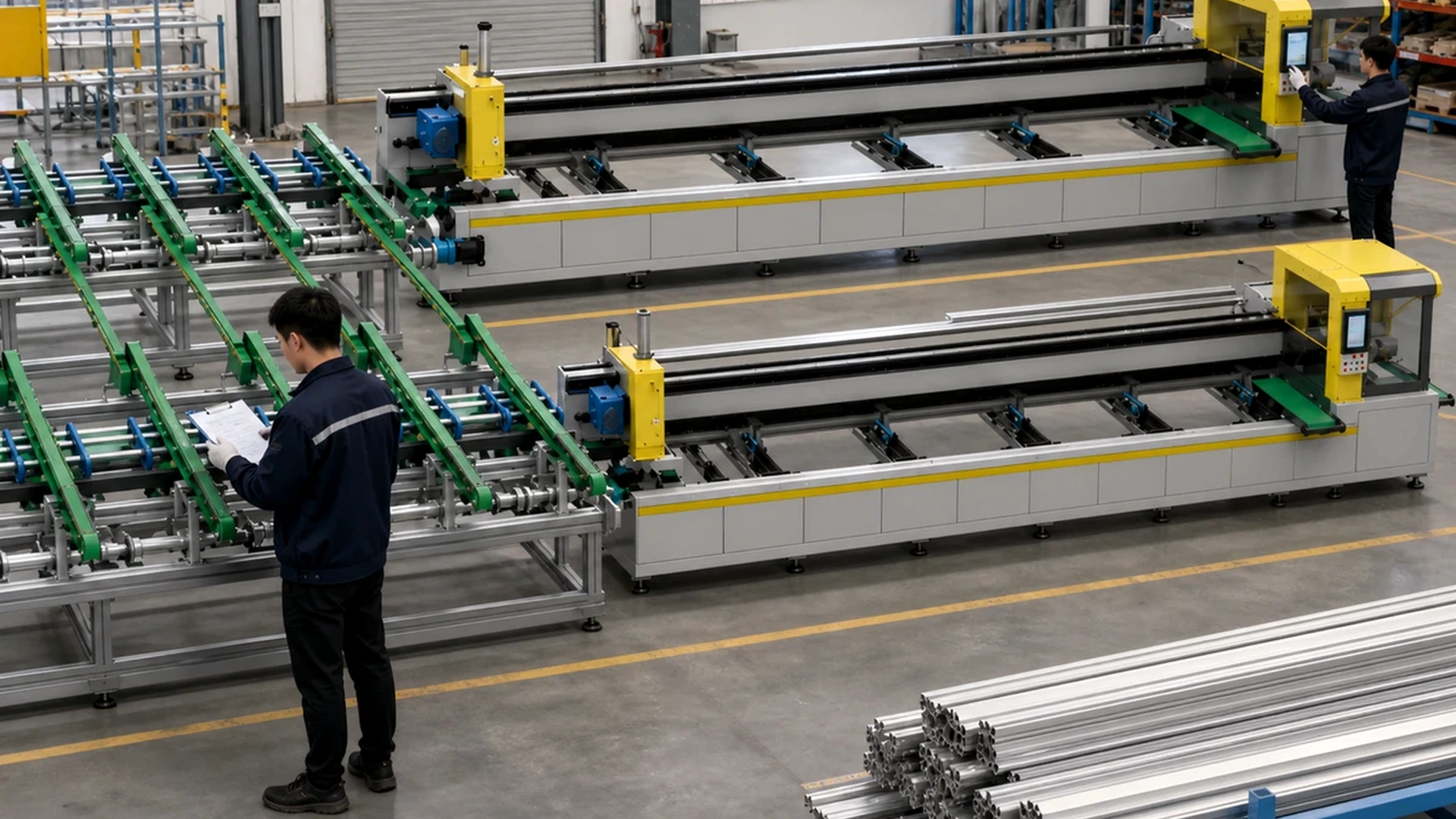
Observe startup, normal cycle, material change, fault recovery and shutdown with guards in place. Note unusual vibration, noises, coolant or lubrication delivery, chip accumulation and operator access. If a problem occurs, ask the seller to identify the cause and demonstrate the correction. A fresh blade or one successful easy cut should not conceal an unresolved feed or clamp fault.
Video from the Jiurun Machinery YouTube channel showing general aluminum-saw equipment. It does not show or verify the used unit, its service history, safety condition, customer work, representative trial cut or performance discussed here.

Price the work required to make it production-ready
Separate the machine price from the delivered, installed and accepted cost. List removal from the seller’s site, disconnection by qualified personnel, lifting, packing, freight, insurance, import documents if applicable, unloading, site utilities, installation, alignment, safety review, training and a repeat cut trial after transport. The used machine may need a new blade, spare parts, controller battery or backup, electrical work, guarding changes or an overhaul. Obtain written estimates and responsibility for each item before comparing it with a new saw at the same destination and acceptance point.
Ask the original manufacturer or a competent service provider what support remains for the exact serial number, including manuals, spare parts and software access. Do not assume an old controller or discontinued component can be repaired quickly. Saw makers themselves distinguish repair, retrofit and overhaul: Behringer describes repair, retrofits and works overhauls, and KASTO lists control, sensor, safety and mechanical modernization services. Those examples support asking for a scoped service quote; they do not verify any particular used aluminum saw or guarantee that a retrofit is available for it.
Compare the used offer and new offer on one decision sheet
| Decision field | Evidence to request |
|---|---|
| Exact machine | Plate, serial number, configuration and included accessories. |
| Condition | Qualified inspection report, open defects and maintenance history. |
| Cut result | Witnessed representative test, measured parts and agreed acceptance method. |
| Safety and support | Guarding review, manuals, parts availability and service route. |
| Delivered cost | Transport, installation, repairs, training and commissioning estimates. |
| Commercial risk | What is included, who corrects defects, payment milestones and remedy if acceptance fails. |
For the new quote, request the same scope: required part mix, loading and unloading route, acceptance sample, installation, training, service and spare support. A cheaper machine with a narrower included scope is not necessarily a cheaper production solution. If the used offer cannot document condition or support, price the uncertainty explicitly or decline it. Our total-cost guide helps compare the longer operating cost after initial acceptance.
Put unresolved points into the purchase agreement
The offer should identify the machine by serial number and list everything included: saw, blade, fixtures, conveyors, controller hardware, software access, manuals, backup media and spare parts. Record known defects and the promised remedy. State whether the sale is conditional on a witnessed test before shipment, a receiving inspection, or a post-installation acceptance test. Agree which party bears transport damage, missing components and failed commissioning work. Have the contract reviewed for the applicable jurisdiction; this article is a purchasing checklist, not a substitute for legal advice.
If the machine will be moved, agree the disconnection and reconnection records and a new performance check after installation. A good pre-shipment cut does not prove alignment and safety at the new site. Our transport requalification guide covers that separate gate. Keep the pre-shipment and post-installation evidence tied to the same serial number and test parts.
Questions to send before scheduling an inspection
- What are the model, serial number, installed options and original machine documentation?
- What production work has the machine done, and which maintenance, fault and retrofit records can we review?
- Which defects are known, and who will correct them before shipment or acceptance?
- Can we inspect the machine safely with a qualified technician and witness cuts on our representative stock?
- How will cut length, angle, edge condition and repeatability be measured and recorded?
- Which manuals, controller backups, spare parts and service contacts are transferable and available?
- Who pays for removal, transport, installation, repairs and a failed post-installation test?
Ask the seller to answer in writing and attach the machine-specific evidence. If critical records or safe inspection access are unavailable, pause the comparison until the risk is resolved or reflected in a clear commercial decision. To compare a fresh machine proposal for your actual aluminum parts, contact JiurunCut with the profile drawings, length range, output target and acceptance method.