
A trial saw blade is part of the test setup, not a neutral background detail. If the trial uses a different tool from the one included with the quoted aluminum saw, a clean sample cut may be difficult to reproduce after delivery. The buyer should answer two separate questions before treating a demonstration as an acceptance result: Which blade is approved for the offered machine and profile? Which blade, in what condition, actually produced the sample? A supplier-owned demonstration blade, a blade shipped with the machine, and a buyer-supplied production blade can be three different tools. The quotation and trial record must say which one is which.
Start with the exact work, not a generic blade label
Send the supplier a revision-controlled profile drawing, alloy and temper, wall thickness, stock length, finished lengths, angles, tolerance, visible-face requirement, expected batch sizes and the downstream inspection method. Identify any hollow chambers, ribs, thin fins or coated faces that change support and chip evacuation. Ask the supplier to propose the saw, fixture and blade as a working combination for that job. JiurunCut’s profile-cutting machine overview describes selection around section geometry, clamping and sample review; the final tool and process still need confirmation for the buyer’s drawing.
Separate a machine-capability trial from a delivered-process trial. A supplier may use a suitable shop blade to show that the saw can move, clamp and cut. That does not prove that the blade listed on the purchase order will make the same accepted parts. If the intended production blade is not available at the first demonstration, record that limitation and set a repeat test or an explicit conditional acceptance step. Do not let one attractive cut-face photograph stand in for a repeatable, documented setup.
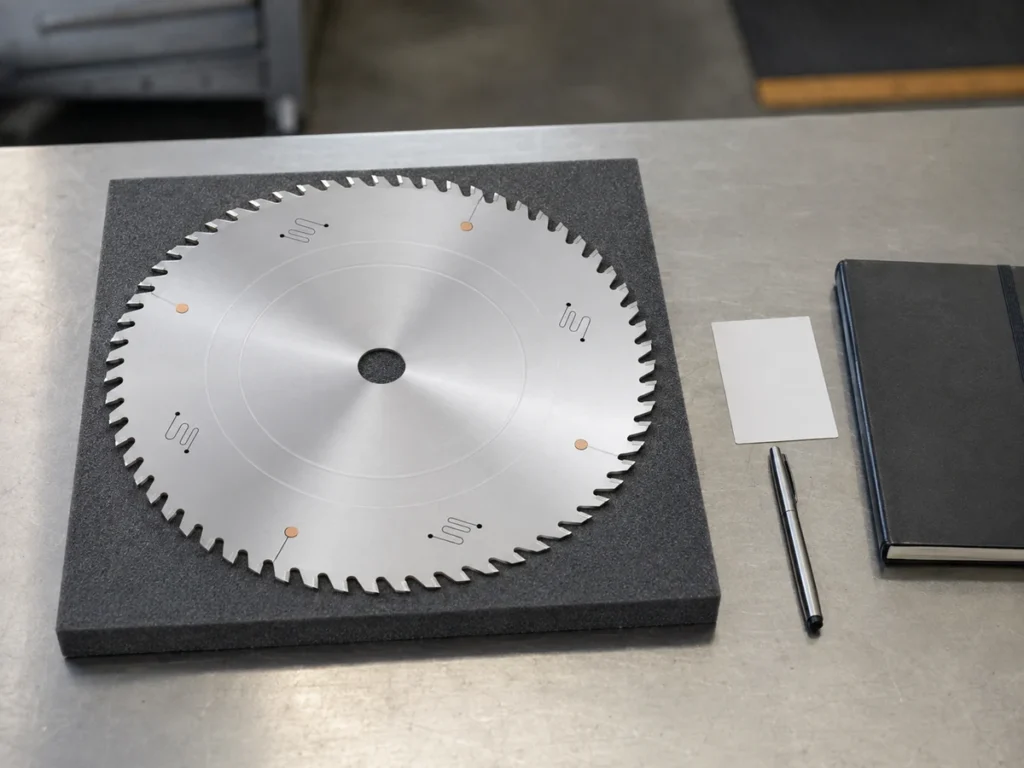
Build a trial saw blade identity sheet
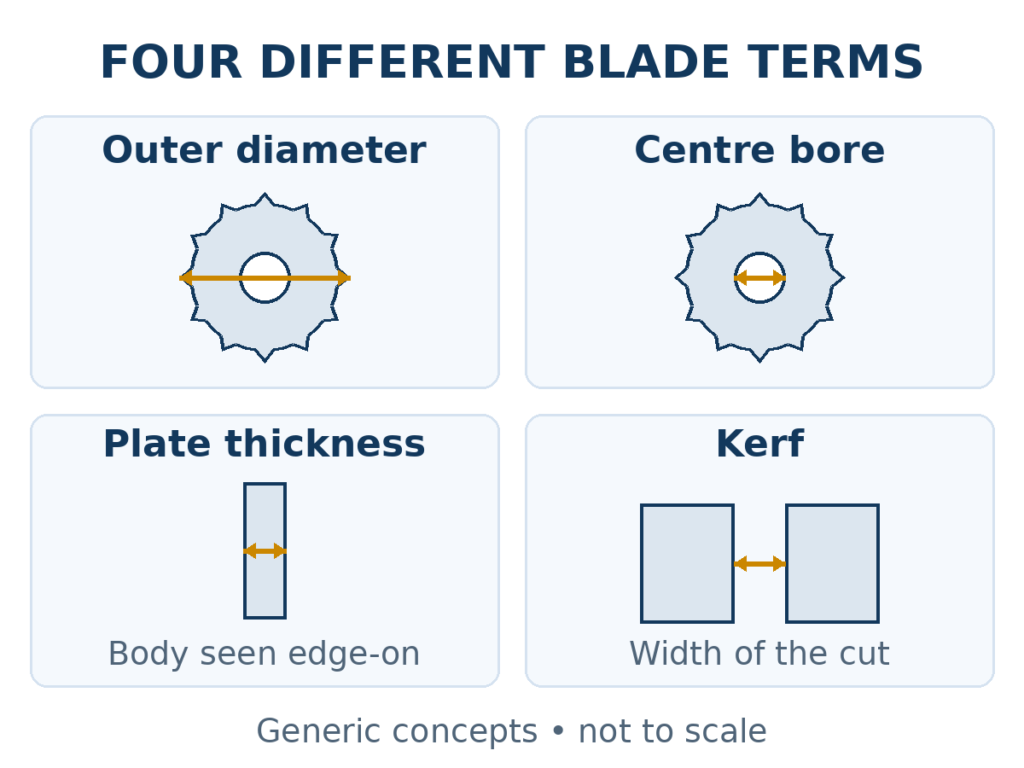
Record the actual maker and product code, outer diameter, center bore, any mounting or pin-hole pattern, kerf, blade-body thickness, tooth count and geometry, cutting-edge material, marked maximum operating speed, and any approved adapters. Add the machine model and serial identity, blade mounting documentation revision, and the fixture arrangement. A single outside diameter is not a complete compatibility description. Our separate blade-size checklist addresses fit; here the point is to bind the trial result to the exact tool and machine combination.
A manufacturer’s specification table can show why a complete product identity matters. For example, LEUCO’s aluminum-profile blade document distinguishes diameter, cutting width, body thickness, bore, tooth count, hook direction and product number across its own tools. It does not certify that any listed LEUCO blade fits a JiurunCut saw or a particular quote. Obtain the approved combination from the machine and tool suppliers rather than copying another maker’s numbers into an order.
Record condition as well as identity: new or previously used, known sharpening history, visible tooth damage or deposits, and the time or accepted-part count already accumulated where that information exists. Photograph the maker marking and the installed setup without bypassing guards. If the supplier changes or sharpens the blade between trial runs, that becomes a new test condition, not an invisible adjustment. Do not present a claimed blade life from one short demonstration; a life estimate needs a defined work mix and ongoing records.
Decide who provides, owns and replaces the blade
Write four separate lines in the quotation: the blade used for the factory trial, the blade included with the delivered saw, any additional production or spare blade, and the blade used for site acceptance. Each line should name the supplier, product identity, quantity, condition, cost and owner after the test. State who pays for shipment, damage or a replacement if the trial blade is unsuitable. If the buyer supplies a blade, agree when the supplier will receive it, how fit will be approved before installation, who may mount it, and what happens if it cannot safely be used.
Distinguish a trial tool loan from a purchased production tool. A supplier may reasonably use a shop blade for an early demonstration, but the purchase decision should not assume that tool is included. Conversely, a blade included in the machine price should not silently become the only spare. The separate blade-supply order guide helps separate standard and spare quantities; this trial plan specifies which tool generated the acceptance evidence.
Run a trial that can be repeated after delivery
Agree the test before the supplier cuts. Use the same identified profile family, stock condition, orientation, clamp contacts, program, blade identity and inspection datum that the purchase will rely on. List the lengths and angles, expected accepted quantity, sampling points and defect criteria. Include at least one length change or representative profile change when the production plan requires it. A useful sequence records first pieces, steady-state pieces, and pieces after a planned change; it does not select only the best end face for a photograph.
For each sampled part, record the finished length and angle against the agreed drawing method, the inspected cut face, burr condition, visible-face marks, and whether the part is accepted for its next operation. Keep the machine settings, blade identity, fixture and material lot with the result. Separate feed-position claims from finished-part measurements. If cycle time is part of the business case, time a representative sequence that includes loading, clamping, cutting, removal and inspection, and state what the timing excludes.

When the test ends, keep the signed setup sheet, part identifiers, measurement results, rejected pieces or reject count, photos of relevant surfaces, and the agreed disposition. If the supplier promises a later site test, specify whether the same tool must be shipped and in what condition. If a new blade will be used at installation, state that the site result will establish a new baseline. Do not quietly compare a new-blade factory cut with a worn-blade production run.
What if a substitute blade is used?
Sometimes the final blade is unavailable or the buyer has not yet chosen its approved product code. A substitute can still answer a limited question: can the machine, with that recorded blade and fixture, cut the sample at all? It cannot close a promise about the buyer’s specified blade, tooth design, kerf, cut-face finish, throughput or consumable cost. Mark the result as a configuration-specific demonstration. Before unconditional acceptance, either repeat the trial with the agreed blade or revise the quotation and acceptance plan to include the substitute as the production tool, subject to the machine maker’s approval.
If a supplier proposes a change after seeing poor results, record the reason and the new configuration. A different blade, altered clamp, changed support or adjusted cutting setting may be the correct engineering solution, but the first failed condition and the later successful condition should remain distinguishable. Ask which elements will be delivered, which operator settings will be handed over, and whether the revised tool changes recurring cost or service lead time. Our blade-life measurement guide treats wear as a production record rather than an unsupported promise from a single test.
Keep the demonstration safe and commercially complete
The machine and blade suppliers should approve the tooling and mounting interface before any powered test. Have trained personnel install and inspect the blade using the machine’s procedure, with guards and interlocks in their intended state. A buyer can witness the process and inspect stopped-machine evidence and finished parts without entering the guarded cutting zone. Do not request an unsafe close view of the rotating blade as proof of capability.
Compare quotes on the same deliverable scope. One price may include a production blade, initial setup and witnessed sample cut; another may exclude the tool, setup labor, additional spare and site retest. Put those lines beside the machine price, freight and lead time. Confirm who owns the rejected and accepted trial samples, who keeps the test blade, and what written evidence accompanies the machine. If the promised cut relies on a blade the buyer cannot readily source or maintain, include its replacement route in the decision.
RFQ wording to close the blade-trial gap
“Please identify the exact blade proposed for the factory demonstration, the blade included with the delivered aluminum saw, any spare blade and the blade planned for site acceptance. For each, provide the manufacturer and product identity, machine-fit approval, condition, quantity, owner and price. Run the agreed representative profile and cut-list trial, record the actual blade and setup used, and report finished-part measurements and acceptance results. If the trial uses a substitute blade, mark which conclusions remain provisional and what repeat test or order change will close them.”
Send the drawing revision, material description, stock and finished lengths, angle requirements, tolerances, visible-face criteria, batch mix and acceptance method with that request. An RFQ that names the tool and the test can compare real production proposals rather than similar-looking sample photographs.
Video: a general equipment example
The JiurunCut video below shows general JR-510CNC-3A-1S equipment and aluminum-profile handling/cutting views. It is an equipment-flow example only. It does not show or verify the blade used for the test discussed here, a buyer’s material, the quoted configuration, a customer trial, finished-part accuracy, blade life or output rate. Watch the JiurunCut video on YouTube.
Decision rule before placing the order
Accept a blade-dependent sample result only when the actual tool is identified, approved for the offered machine, documented with the material and setup, and connected to measured accepted parts. Keep trial-only tools and delivered tools separate in the purchase documents. If that chain is incomplete, request the missing blade record or a repeat trial before making the result a contractual acceptance basis. Send JiurunCut your drawing and cut list to discuss a configuration and a sample-cutting plan for your work.