
Tonneau cover aluminum side rail cutting is a member-making task inside a vehicle-specific assembly. A saw can make a rail blank to a released length and end shape, but the finished cover still depends on the rail profile, clamps, latch or rolling mechanism, seals and drainage. A buyer who asks only for “two aluminum rails” may get clean ends that cannot accept the intended cover or mounting hardware.
This guide is for cover manufacturers and component buyers comparing an industrial aluminum saw, not for modifying a fitted retail cover. Work from the cover maker’s approved drawings and installation instructions. BAK Industries’ Revolver X2 rolling cover and Pace Edwards’ UltraGroove retractable cover illustrate why the rail interfaces vary; their details are examples of those systems, not universal dimensions or Jiurun machine specifications.
Identify the cover mechanism before specifying the rail
A rolling, folding or retractable tonneau cover can use side rails in different ways. In the BAK Revolver X2 installation guide, the cover rolls between clamped rails and its rear latches engage locking levers at the tailgate. The guide calls for a fit check and free rolling between the rails. Pace Edwards’ UltraGroove, by contrast, describes integrated T-slots in its side rails, a retracting canister, specialty end caps, seals and drain tubes. These are distinct product architectures. A side rail is not interchangeable merely because two extrusion envelopes look similar.
Start the RFQ with the exact cover family, vehicle application, drawing revision and left/right member numbers. Ask whether the rail carries a cover edge, a latch track, a T-slot accessory path, a seal, a drain channel or several of these at once. Note which functions are built into the extrusion and which are supplied by separate hardware. If the part is an OEM or aftermarket component, obtain the design owner’s permitted manufacturing route before quoting a cut blank.

Keep the section, handed orientation and cut end separate
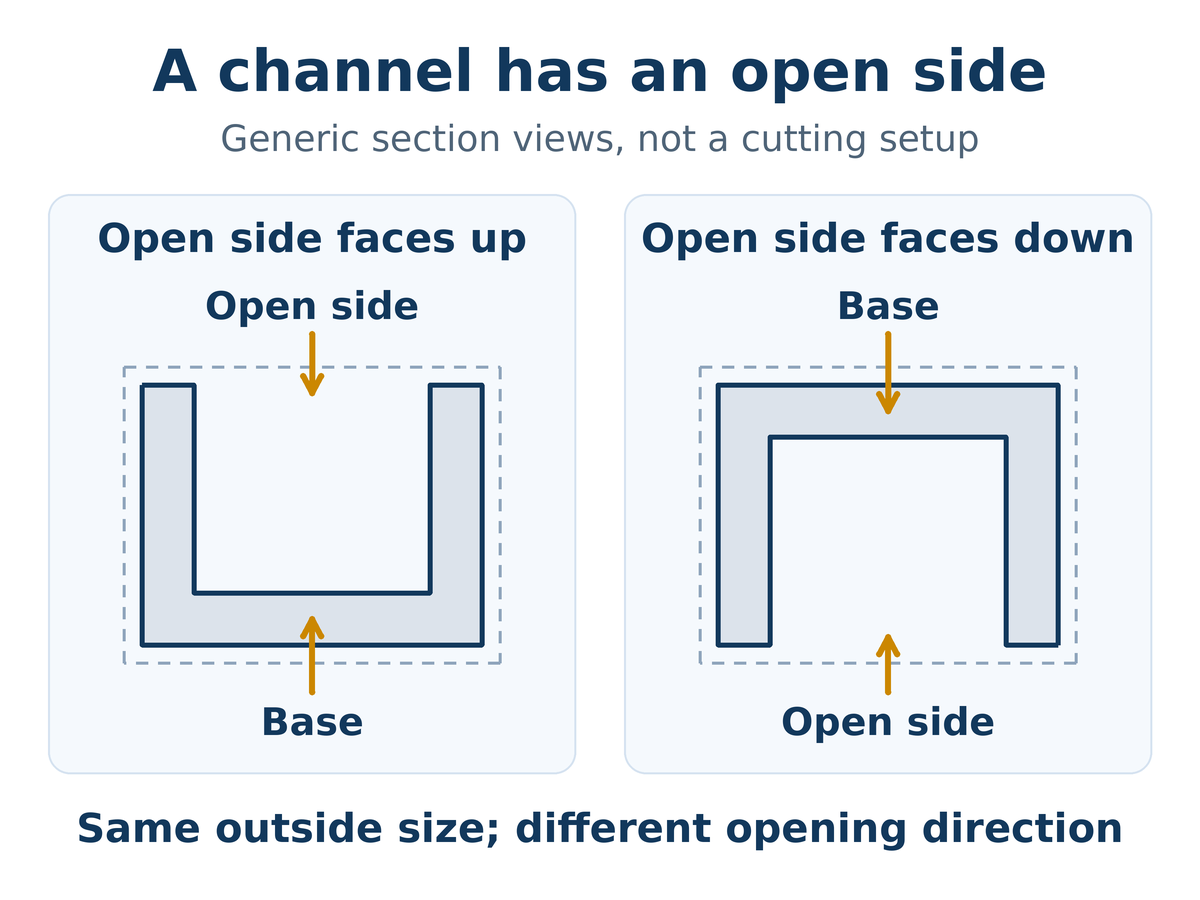
The section drawing must show every open channel, thin lip, T-slot, seal seat and contact face that matters to the cover. Mark the rail’s vehicle-facing, outboard, top and cover-facing sides. Then specify each end independently: a square cut, angled cut, relieved end, preformed end-cap interface or an end that is not to be saw-cut after extrusion. Do not assume a saw can create a drainage outlet, latch recess or bolt slot merely because it can cut the rail to length. Those features need their own operation or a separately quoted machine configuration.
Define handed parts explicitly. Mirroring a left rail is not always the same as rotating a right rail, particularly where drainage, a seal channel or a T-slot is asymmetric. The drawing package should show the reference face and end A/end B. A first-off part should be checked against the mating cover and actual clamps or end caps, not against a catalog silhouette alone.
Release the rail length from the cover fit, not a nominal bed label
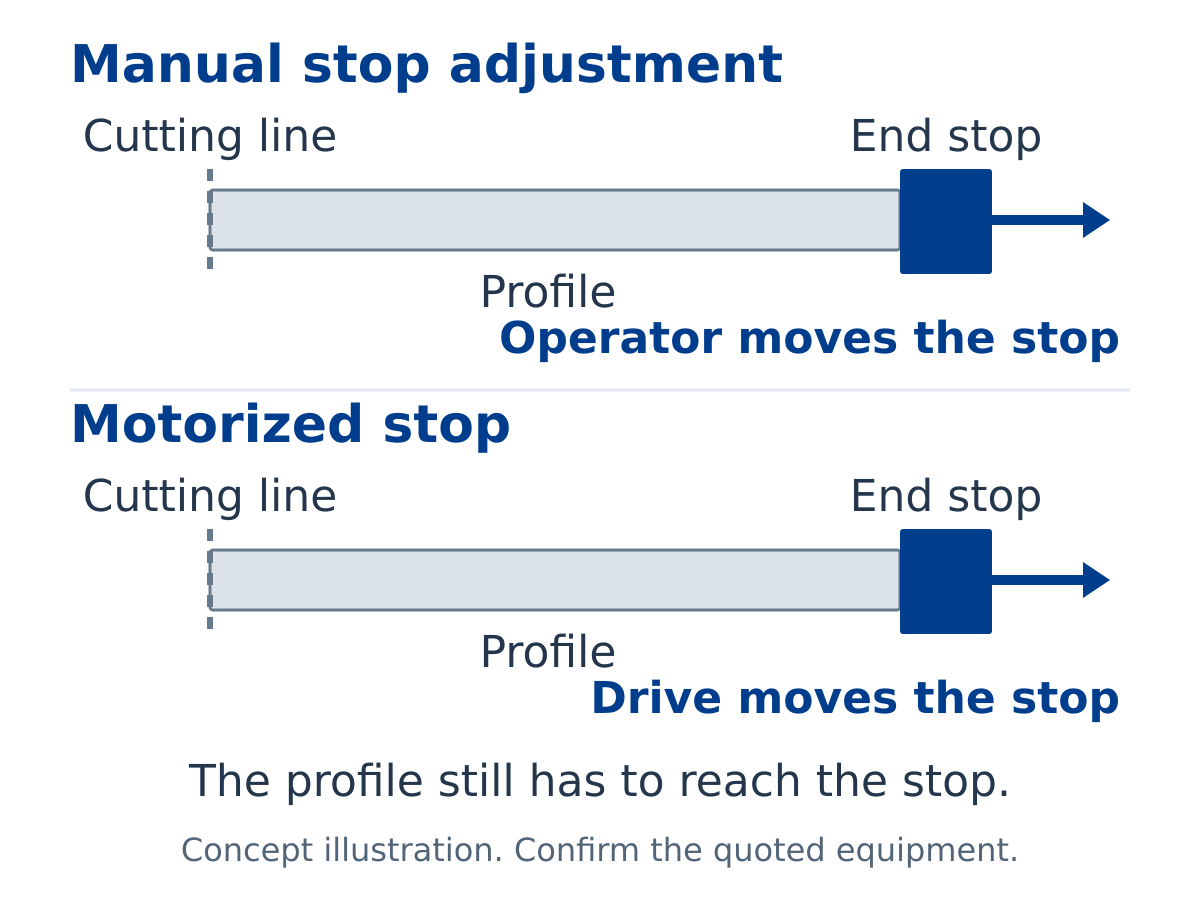
A truck model and a nominal bed length do not by themselves define a saw stop. The final rail length may depend on the cover assembly, front hardware, tailgate-end engagement, end caps and the design owner’s installation datum. Request a dimensioned cut-member schedule for the exact vehicle-specific kit. State whether the controlled measurement runs from a machined end, a cap shoulder, a latch reference or another named face. Record the permitted end geometry and inspection method alongside it.
In the BAK installation example, rail alignment and the gap around the cover are checked after the rails are clamped. That is an installation fit check, not a published universal cut tolerance. It should lead the manufacturer to define its own manufacturing acceptance dimensions and a separate final-assembly acceptance check. A rail that measures correctly on a bench may still fail fit if the wrong datum, left/right hand or hardware pack was used.
Protect the rail functions during a saw trial
Send representative lengths of the real extrusion rather than a substitute solid bar. A rail with an open side, thin seal lip or T-slot can react differently to clamp pressure and support. Ask the saw supplier to document which face contacts the fixture, where the clamp bears, how the stock is supported before and after the blade, and how a handed part is identified. Visible surfaces and seal seats should be protected according to the design owner’s finish requirements. A trial should include several consecutive parts, not a single attractive sample.
Measure the released cut length and end squareness or angle at the specified datum. Inspect burrs, lip deformation, channel damage, finish marks and whether end hardware still seats. Then perform a controlled dry fit with the intended cover, clamps, seals and end pieces. The dry fit checks assembly compatibility; it does not establish water resistance, cargo security, vehicle suitability or safe road use. Those claims require the cover maker’s own validation process.
Separate cutting from holes, seals, drains and installation
A circular saw may deliver cut-to-length rail blanks. It does not automatically drill a clamp hole, mill a latch relief, add an end cap, install a seal, form a drain path or align a cover on a truck. Pace Edwards’ UltraGroove description includes T-slot accessories, end caps and drain tubes; BAK’s installation instructions include rail clamping and latch checks. These downstream elements belong in the manufacturing route and acceptance plan, but should not be attributed to the saw merely because the rail begins as an extrusion.
Break the quotation into deliverables: raw cut blanks, deburred rails, further-machined rails, packed left/right kits and installed systems. Specify who supplies stock and who owns scrap, rework and fit verification. If the rail arrives coated or anodized, agree where cosmetic faces are inspected and how a cut end is protected for packing. If the design owner supplies predrilled or prefinished stock, establish whether a cut would remove a critical end feature before proceeding.
What to put in a tonneau cover aluminum side rail cutting RFQ
Give each candidate saw supplier the same packet so that quoted capacity and trial results describe the same task:
- Cover and vehicle application, drawing revision, approved rail part numbers and left/right quantities.
- Actual extrusion section drawings or stock samples, including channels, lips, T-slots, seal interfaces and visible finish faces.
- Cut length and end geometry for each part, named datum, orientation and inspection points.
- Stock length, material and finish, planned batch size, handling constraints and acceptable cut-end condition.
- Separate lists for drilling, milling, seals, drainage, caps, clamps, latches, packing and final fit checks.
- A first-off and consecutive-piece trial plan using the actual rail and mating hardware.
Ask suppliers to mark each line included, optional or excluded. A quotation for clean rail blanks may be the correct answer if another station handles the special features. An offer that vaguely says “complete tonneau rail production” without a route and inspection plan is harder to compare. For an early inquiry before the CAD package is released, our aluminum saw inquiry guide explains which unknowns to identify; the industrial profile cutting overview places saw work in the wider process.
Related aluminum-profile cutting video
The Jiurun video below shows an aluminum profile feeding and cutting equipment scene. It is a related process illustration. It does not show a tonneau side rail, a vehicle-specific kit, the quoted fixture, a latch or seal test, or verified results for this application.
Make the purchase decision against the released rail kit
A useful decision is whether the proposed saw setup can repeatably make the approved left and right rail blanks while preserving their functional channels and finish. The cover maker must still validate hardware engagement, assembly fit, sealing and vehicle use. Once the drawing, stock and acceptance checks are available, send Jiurun the rail package and trial material to discuss the cut station and clearly identify work assigned to other operations.
Source notes
BAK Industries’ Revolver X2 installation sheet supports the manufacturer-specific rail, latch and fit-check examples. RealTruck’s Pace Edwards UltraGroove product information describes that system’s T-slot rails, end caps, seals and drainage. These examples show why the interfaces must be specified; they are not Jiurun machine specifications or instructions to alter a finished cover.