
You can start an aluminum saw inquiry while your CAD drawing is still being prepared. Jiurun’s inquiry form starts with your name or company and WhatsApp or phone number. Part information and drawings are optional at that first step. Explain what you want to cut and share the photos, sketch or part list you already have.
Table of Contents
1. Use photos to show the parts you mean
A clear photo can help identify the kind of profile you are discussing. If available, show the actual stock section and a finished cut member. Include both ends when their shapes differ.
Explain which piece is the incoming material and which is the finished part you want. If you only have a similar example, say how your own part differs. This keeps the discussion tied to your intended work.
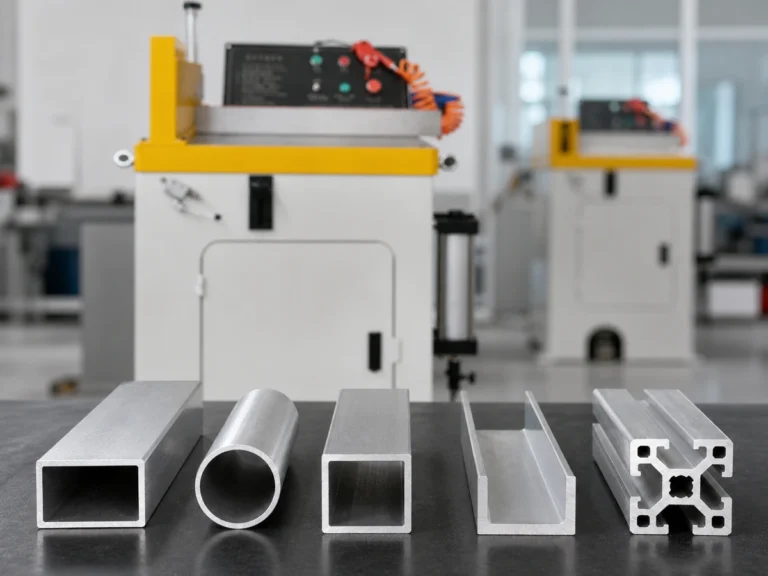
For an aluminum saw inquiry, a photo gives a visual starting point. Keep any known dimensions or material details in the accompanying message, and mark what still needs to be confirmed.
Your drawing can follow later
Tell Jiurun what you need to cut and which information is already available. You can begin the discussion now.
2. Use a simple sketch to explain the finished shape
A hand sketch can show which piece you mean, which way its ends face and where a known length is measured. Label the views and the endpoints clearly enough for someone else to follow.
Use the dimensions and end requirements you actually know. If an angle, material designation or length reference is still undecided, mark it as unknown and explain who will confirm it.
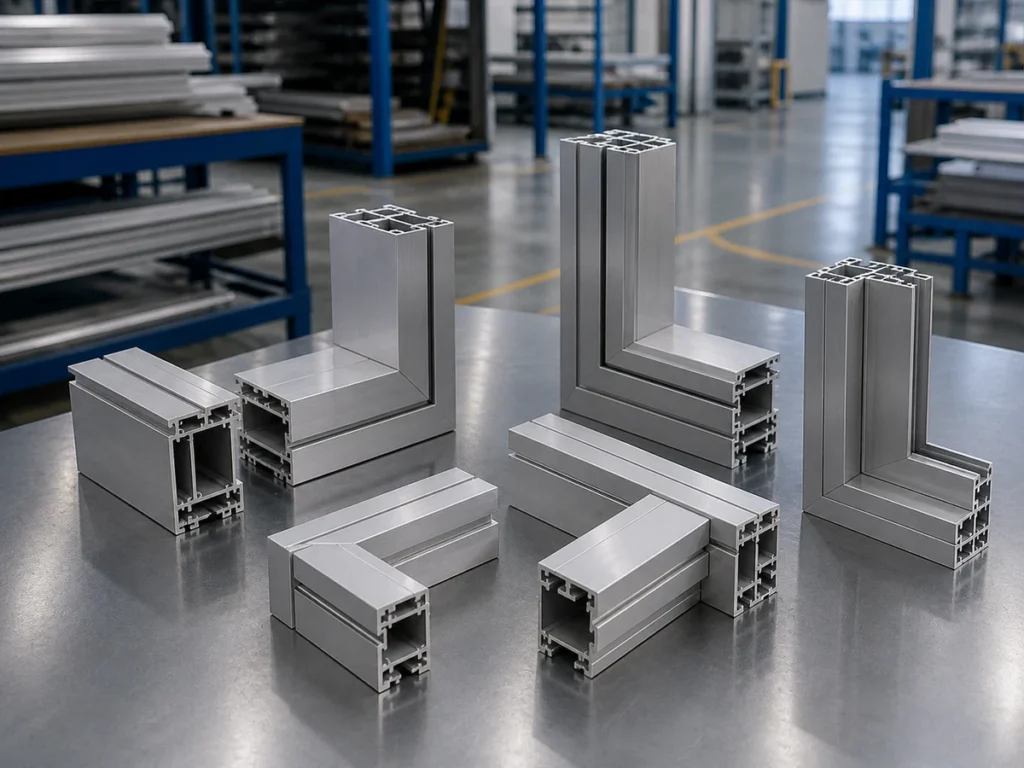
When a dimensioned drawing becomes available for your aluminum saw inquiry, keep it connected to the same part name. Tell the supplier which version should be used for the machine proposal.
3. Use a part list to explain your normal orders
If you cut more than one member, a short part list can show the work mix. Give each part a clear name or code and connect that name to its photo or sketch.
In your aluminum saw inquiry, describe the normal quantities and whether the end shapes change between parts. For frame work, explain whether the pieces belong to one frame or several different assemblies.
Our frame-member collection guide discusses repeated part groups and named frame sets. That context helps explain what your workshop needs after the pieces are cut.
Send what is ready and explain what is missing
Use the inquiry section below to share your contact details. Add the part information you have, or explain what can be sent later.
A practical first aluminum saw inquiry message
An aluminum saw inquiry can begin with a short, organized message instead of a complete CAD package. The template below separates confirmed information from items still being prepared. It is an example to adapt, not a completed customer order or a machine specification.
Subject: Aluminum saw inquiry — drawings to follow
- Company and contact: [Company, contact name and preferred contact method]
- Cutting job: [Describe the incoming aluminum stock and the finished members]
- Available evidence: [Attach named photos, a sketch or the current part list]
- Material: [Confirmed alloy and temper, or “not confirmed”]
- Dimensions: [Known section size, stock length and finished length; include units]
- Ends: [Straight or angled, with a sketch showing the length reference]
- Work mix: [Typical parts and quantities; distinguish estimates from measured records]
- Current problem: [Explain loading, cutting, changeover or finished-part issues]
- Information to follow: [What is missing, who will confirm it and which drawing revision will follow]
- Requested next step: [Ask what is needed before a configuration proposal or cutting trial]
For your aluminum saw inquiry, name attachments so the supplier can connect each image to a part. For example, “Part A — stock end” and “Part A — finished member” are clearer than a collection of unnamed files. Show a ruler or a marked dimension where useful, but do not treat the apparent size in a photograph as a verified measurement.
If you know the desired finished length, state where it is measured. A sketch of angled ends should identify the two reference points. If those points are undecided, mark them as pending instead of supplying a guessed tolerance. The purpose of this first message is to explain the requirement clearly enough to identify the next evidence needed.
For an aluminum saw inquiry, check that the photo, sketch and part list describe the same version of each member. For example, a photo may show the part currently made in your workshop, while the sketch shows a proposed change. Label them “current part” and “required part” rather than leaving the supplier to decide which one is the target. Explain the changed feature in words, even if the drawing is not ready. This helps keep the initial discussion about the intended result.
If two attachments disagree, identify the disagreement before requesting a proposal. A length in an old part list should not silently replace a dimension on a newer sketch. Write down which information is confirmed and which requires review by your engineering team. Where the final answer is still pending, ask the supplier to list the assumption used for the preliminary discussion. Keep that assumption attached to the named part so it can be revisited when the drawing arrives.
Use one stated unit system for the dimensions in your message. If existing documents use different units, label each document clearly and ask for the dimensional reference to be agreed before comparing configurations. Also distinguish the size of the incoming section from the length of a finished member. For an angled member, mark the face or edge used as the length reference. A simple annotated sketch is more useful than a number without its measurement points.
Describe your current workflow in a short sequence: how stock is brought to the saw, how the operator identifies the next member, and what happens to the finished pieces. Mention whether orders are usually repeated batches or frequently changing part groups. Use an actual recent order as an illustration when you can share it, and separate observed output from a future production target. An output target by itself does not show the changeovers, handling steps or part mix that a proposal must address.
Before sending your aluminum saw inquiry, make a small attachment index. List the part code, file name, date or revision, and the question that the file helps answer. Send a follow-up under the same part code when the CAD drawing becomes available. Ask Jiurun to summarize the remaining questions and the documents needed for the next review. You can then confirm those items with the person responsible for the part design, instead of treating the first exchange as final approval.
What must be confirmed before choosing a configuration?
Starting an aluminum saw inquiry without CAD does not mean that photos alone approve a machine configuration. Before comparing proposals, connect the final drawing, material designation, required lengths and end geometry to the same named parts. Ask which requirements the proposed setup covers and which remain subject to sample review.
Keep raw stock length, finished length and feeding requirements separate. Also describe how stock arrives at the saw and how cut pieces will be collected. A machine photograph or model name cannot establish that every loading or cutting requirement is included in the quotation.
When your CAD file becomes available, send its revision and say whether it replaces the earlier sketch. Ask the supplier to identify the version used in the proposed configuration. This gives both sides a clear reference for the next discussion without treating preliminary information as final acceptance criteria.
Ready to begin? Use the inquiry section below for your aluminum saw inquiry, attach what is available and label the remaining information as pending. Jiurun can then discuss the actual cutting job and the information needed next.
Agree on the next information needed
In your aluminum saw inquiry, tell Jiurun the cutting problem you want to solve. It may involve repeated straight cuts, changing angled ends or different members in the same order. Explain your present method so the equipment discussion has a clear purpose.
Ask what information is needed next to review the actual parts and proposed configuration. If the material designation is unknown, our alloy and temper inquiry guide explains how to begin without guessing it.

Watch: Jiurun angle-saw demonstration
Use this machine reference when discussing the parts and cutting work you have in mind.
Start your aluminum saw inquiry with Jiurun
Share your contact details, explain the cutting job and say what information is still being prepared. Ask for the next step in reviewing your parts.
Machine context: Jiurun brochure, physical PDF page 13, through Catalog & Downloads. The actual part requirements and equipment functions should be clear in the proposed configuration.