
Table tennis table aluminum frame cutting is a defined member job, not a claim that every table tennis table has an aluminum apron. A buyer should first identify the approved aluminum pieces actually retained for cutting: a perimeter apron, a support rail, a leg or a separate chassis member. The play surface, hinges, casters, net hardware and complete table may follow different supply routes. A table’s outside dimension is not a saw length for any one member.
This guide helps table makers and component suppliers compare prepared aluminum cut kits with in-house saw cutting. It does not design a table, approve folding safety, set a playing-surface or bounce standard, or certify an assembled product. The released product drawing and its owner control all of those decisions.
First verify which parts are aluminum
Product examples show why a material check must precede the quotation. STIGA’s Aluminum Midsize identifies an aluminum frame. STIGA’s Vapor describes an aluminum/composite top supported by a tubular steel apron. STIGA’s Paragon describes an aluminum chassis reinforced with steel support braces. These are different published product architectures, not Jiurun customer projects or evidence of the reader’s construction. Do not infer an aluminum saw job from the word “aluminum” in a tabletop description.
Mark each line in the buyer’s own bill of materials as retained saw-cut aluminum, other in-house work, bought component or complete assembly. If the approved apron is steel, there may be no aluminum apron cut to quote. If the aluminum is only a chassis component, quote that component rather than inventing perimeter rails. A table may also arrive with complete top halves; in that case the buyer should confirm whether any separate replacement or production blank remains.
| Delivery stage | Cutting quotation can cover | Approval outside the saw cut |
|---|---|---|
| Complete table or top half | Only separately released service or production blanks, if any | Play surface, fold mechanism, stability and finished product |
| Prepared aluminum member kit | Named profile pieces, ends, quantities, identification and agreed cut inspection | Hinges, connectors, coating and assembly unless separately specified |
| Long profiles cut in-house | Stock family, support, locating, changeover and representative trial | Upstream extrusion and all downstream work beyond the approved cut stage |
Seven checks for a table tennis table aluminum frame cutting RFQ
1. Release the exact member schedule
List every aluminum member by part number and drawing revision. Distinguish top-half perimeter aprons from underframe braces, leg pieces and chassis rails. For each, state section drawing, alloy or temper if controlled, stock condition, visible face, finish state, quantity per top half and batch volume. Identify left/right or near/far variants if their ends or holes differ. A description such as “one aluminum table frame” does not say which extrusions are to be cut.
Ask who supplies the panel, hinges and joining hardware. If a vendor supplies a complete framed panel, do not count its hidden members as the factory’s cutting demand. If a factory retains only one edge rail while buying the other parts ready-made, the saw trial should represent that one rail rather than a hypothetical complete kit.
2. Separate panel size, frame outside and member length
A tabletop drawing can carry several dimensions that look similar but serve different purposes: panel width, frame outside, clear opening, rail centerline and individual cut length. A mitered rail may use a long-point datum, while a square-cut rail joining a connector may use a shoulder-to-shoulder datum. Ask the designer to mark the reference end and measurement method on every cut-part drawing. Do not convert the advertised overall table size into stock lengths by subtraction without a released joint drawing.
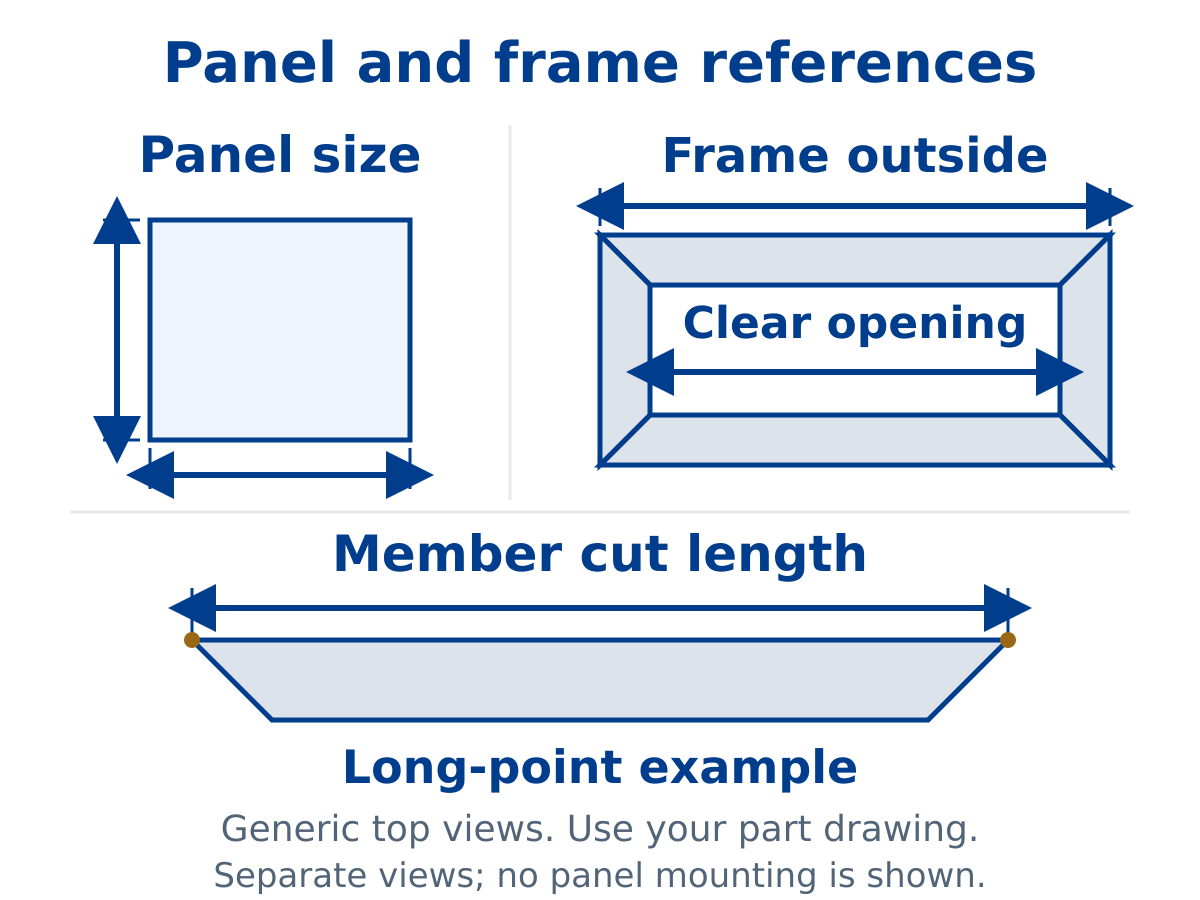
Record whether the line item is one straight blank, a paired miter, or an already prepared member with holes or inserts. Define the cut tolerance on the actual reference, including how both ends will be checked. A nominal outside dimension and a cut tolerance are not interchangeable. If the framed panel is purchased, the panel supplier owns its finished envelope; the saw supplier may only own separately ordered blanks.
3. Specify the corner and joining route
The approved design may use mitered corners, square ends against corner blocks, a welded perimeter or an entirely different construction. Provide the connector or mating-part drawing. For a miter, identify long and short points and the visible face. For a square end, identify the seating shoulder and any clearance for a block. A clean cut end alone does not establish corner fit, connector retention or finished-table strength.
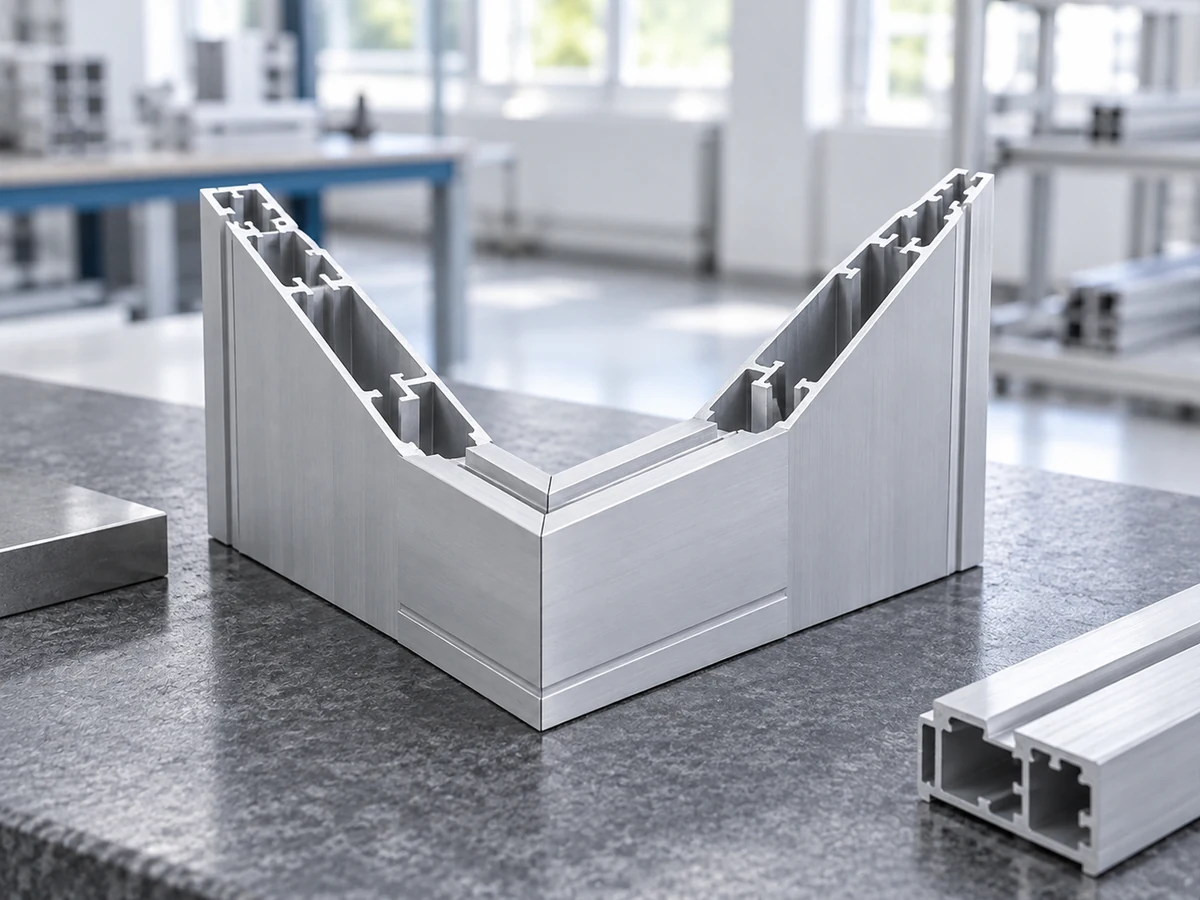
When drilling, milling, welding, bonding or coating follows sawing, name the process owner and handoff stage. The buyer should specify whether trial acceptance stops at a labeled cut blank or includes a later assembly check performed by the product team. Do not silently add post-cut work to a machine-only quotation.
4. Keep folding hardware and top halves in the scope map
Folding tables contain interfaces beyond the apron: hinge and pivot locations, leg stowage, panel edges, latches and transport hardware. The saw may prepare a straight aluminum blank, but it does not prove that these interfaces clear each other as a top half moves. Provide the hinge-side versus free-edge identity and indicate which faces must remain unmarred. If a cut member later receives holes, identify the drilling datum and whether the cut end is its reference.
For a two-half table, ask whether both halves share a single member schedule or are mirrored. A set that looks symmetric in a product photograph can still require different cut orientation or labeling. Submit the actual released variant map. A frame trial must not be presented as a folding-safety or playability approval.
5. Trial the real profile family and finish state
Supply representative long stock, not only short loose samples. Show the true cross-section, wall thickness, finish and any protective film. Identify the face that contacts the tabletop or remains visible. Ask the saw supplier to describe support, locating and clamping for the profile without marking critical faces or distorting a thin wall. The largest, smallest and most awkwardly held member may require different handling even when they share a material name.
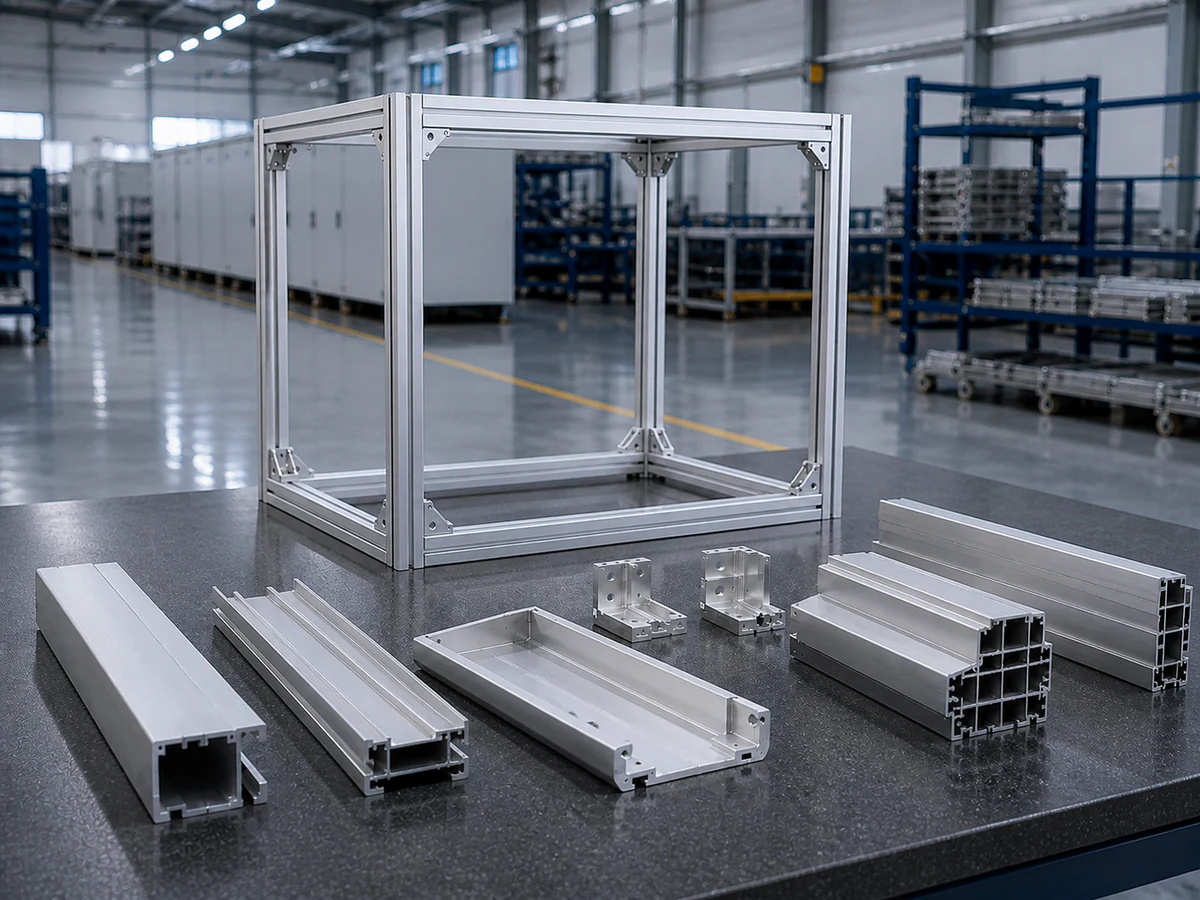
Compare a first-off sample with one cut after a normal member changeover. Check length against the specified datum, end angle or squareness as released, visible-face marks, burr condition and part identity. The product owner should inspect fit using the actual mating panel and connectors if assembly fit is part of acceptance. The acceptance method must be agreed before a trial; a saw speed claim cannot substitute for that evidence.
6. Set the accepted kit and inspection record
A cut kit should arrive with enough identity for assembly: part number, revision, top-half designation, orientation, quantity and finish condition. Agree whether the supplier labels each piece, bundles by top half, separates rejected pieces, protects the visible faces and documents first-off inspection. Inspect a later sample too if the order includes multiple stock lengths or setup changes. Photographs should depict the actual approved sample only when used as proof; generic media on this page is illustration.
Decide where the saw supplier’s responsibility ends. It may confirm measured cut blanks against an agreed drawing. It cannot certify panel flatness, bounce, fold stability, latching, finished-table safety or product compliance. Those remain with the table designer and appropriate reviewers.
7. Compare quotations at the same output stage
A complete framed top half, a prepared cut-member kit and an in-house saw are different purchases. For a prepared kit, compare stock preparation, cut quantity, inspection, scrap or rejected-part allowance, labeling, finish protection and delivery. For in-house cutting, include actual section family, fixtures, operator handling, changeover, first-off checks and downstream joining. Compare cost per accepted, identified member kit at a stated volume, rather than raw saw strokes against a delivered assembled panel.
Ask each bidder to list exclusions: panel supply, connectors, drilling, finishing, assembly, packaging and product approval. A lower unit price can be misleading if it omits an operation the buyer must still perform. Request a representative trial on the buyer’s own stock and revision before committing to a saw configuration.
What table tennis table aluminum frame cutting buyers can learn from the saw demonstration
Jiurun makes industrial circular-saw cutting equipment for aluminum and other non-ferrous profiles. The video below shows general Jiurun aluminum cutting equipment in operation. It does not show a table tennis frame, this article’s material, a selected model configuration, a customer trial or a verified table-performance result. Use it to discuss cutting workflow, then require a separate trial on the released member set.
Copy this table tennis table aluminum frame cutting RFQ checklist
- Approved table architecture and drawing revision; confirm which components are actually aluminum.
- Exact retained apron, chassis, brace or leg member list with part numbers and quantities per top half.
- Section drawings, material and finish state, stock lengths, visible faces and protected edges.
- For each member: length datum, end form, orientation, tolerance and inspection method.
- Mating panel, corner connector and hinge references, with downstream operations and owners identified.
- Representative longest, shortest and hardest-to-hold stock for first-off and changeover samples.
- Accepted cut-kit labeling, bundling, rejects, packaging, volume and quotation exclusions.
For a broader folding-product purchasing route, see our folding table saw-scope guide. For a wider furniture material split, see our furniture manufacturing guide. To discuss the aluminum members of a table tennis table, send the released section drawings, cut schedule and actual sample stock through the JiurunCut inquiry form. We can review a suitable cutting process for those parts; the product owner retains responsibility for the complete table.