
Stepper vs servo motors should be compared at the required movement, speed and load. For an aluminum saw’s positioning axis, ask for the identified motor, driver, feedback and transmission. The motor category alone does not establish finished-part accuracy or production output.
This guide helps procurement teams read two motion-system offers without treating a holding-torque number, an encoder label or an empty-axis demonstration as a complete machine result.
Read the offer in this order
- Name the axis and job sequence.
- Review torque at the required speed.
- Identify feedback and supported controls.
- Check the complete machine with representative parts.
On this page
What stepper vs servo motors describes
Oriental Motor’s technical comparison describes typical stepper systems as operating without position feedback, while servo systems use feedback to control position, speed or torque. It also explains that an overloaded open-loop stepper can lose synchronism.
This is not a rule that every stepper has no feedback. The manufacturer also supplies closed-loop stepper systems with rotor-position sensing. Its product description identifies matched drivers and model-specific control behavior.
Ask the machine supplier to name the actual arrangement. Is it open-loop stepper control, a specified closed-loop stepper package or a servo system? Keep the motor and driver identities with that answer.
Do not choose the axis from a category ranking such as “servo is always better.” The required motion, installed mechanism and accepted part result should drive the comparison. A different technology can be suitable only after its application requirements are reviewed.
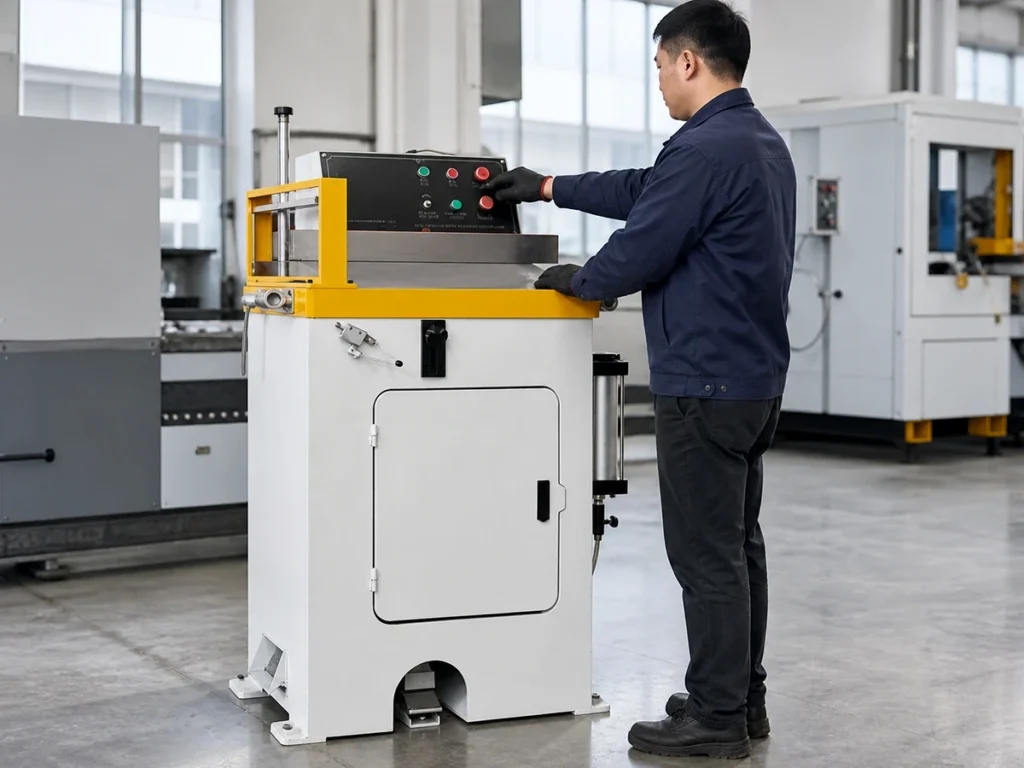
Which axis does the quotation describe?
Name the movement before comparing motors. Material positioning, blade drive and clamping are different functions. A servo statement about the feeder should not be copied into the blade-drive specification.
Give the supplier the material section, stock condition, controlled lengths and representative job sequence. State whether the work consists of repeated short moves, a mixed-length batch or another approved pattern.
Ask how the motor moves the material through the installed transmission. Identify the relevant gearing or motion mechanism and where the axis reference is established. Keep the explanation tied to the quoted configuration.
Use the electric versus pneumatic positioning guide for the broader actuator choice. Here, the comparison concerns the motor-control package within an identified electric arrangement.
What torque is available at the required speed?
Oriental Motor’s comparison describes good low-speed torque for steppers and a decline in torque at higher speeds. It contrasts that characteristic with servo performance at higher speed and recommends reading speed–torque curves.
Request the curve for the proposed motor and driver combination, with its stated conditions. Ask the supplier how the required movement, acceleration and load were reviewed against that information.
A holding-torque entry and a torque value at a named running speed describe different operating points. Do not compare them as though both were available during the same material movement.
Ask the supplier to distinguish continuous and temporary operating limits where the chosen package specifies them. Keep the proposed move sequence and waiting periods visible. A brief fast move does not establish performance across an entire production shift.
The motor duty guide addresses the operating pattern separately. Do not assign a universal duty percentage to all stepper or servo installations from a general comparison article.
What does the feedback measure?
Ask where feedback is obtained and what value the machine makes available. A motor-shaft position, a commanded position and a measured finished length are different records. Name each one correctly.
If closed-loop control is offered, have the supplier explain the supported monitoring and response for that package. Oriental Motor’s closed-loop stepper description includes rotor sensing and an alarm for a continuing overload condition. That behavior belongs to the identified product, not every motor labeled “closed loop.”
Request the actual machine’s documented startup, reference and recovery workflow. Have the supplier demonstrate approved actions where required. This guide supplies no instructions to interrupt power, bypass controls or modify drive settings.
For the separate definition of position signals, read absolute versus incremental encoders. An encoder category does not replace a review of the motor, driver and complete movement.
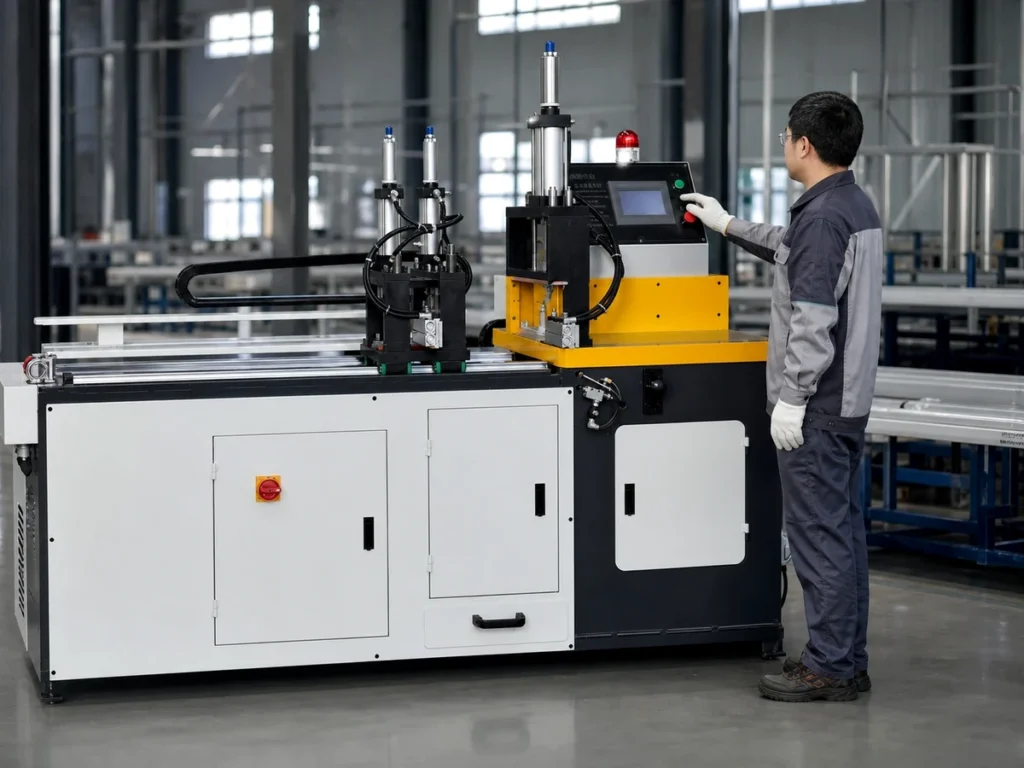
A fictional quotation comparison
Imagine offer A lists “stepper, 4 N·m holding torque.” Offer B lists “servo, 2 N·m at 600 rpm.” These are invented document entries, not catalog ratings, JiurunCut specifications or a recommended axis size.
| Quotation entry | Information to request |
|---|---|
| A: holding torque | Available running torque at the required movement conditions. |
| B: torque at 600 rpm | Applicable curve, driver conditions and operating limits. |
| Both offers | The same axis, transmission, load sequence and acceptance scope. |
It would be incorrect to select A simply because four is larger than two. The entries describe different conditions. Give both suppliers the same job and ask for comparable application evidence.
Also compare inclusions: driver, feedback, transmission, controller functions and commissioning support. A motor-only price and an installed-axis price are different purchasing packages.
How to review the complete task
Use representative aluminum stock and a released drawing. Identify the finished-length reference, section orientation, quantities and inspection method. Record the machine configuration used in the trial.
Ask for a sequence that reflects the intended job, including position changes and the relevant handling. An empty-axis movement can show motion; it does not document the cut quality or accepted quantity for your material.
Keep the trial’s movement record and finished-part results separately named. If output matters, define the observed full cycle and count conforming parts under the agreed review. Do not derive production output from a motor’s maximum speed.
Use the factory acceptance checklist to organize the evidence. A component datasheet supports the configuration record but cannot replace the finished-task checks.
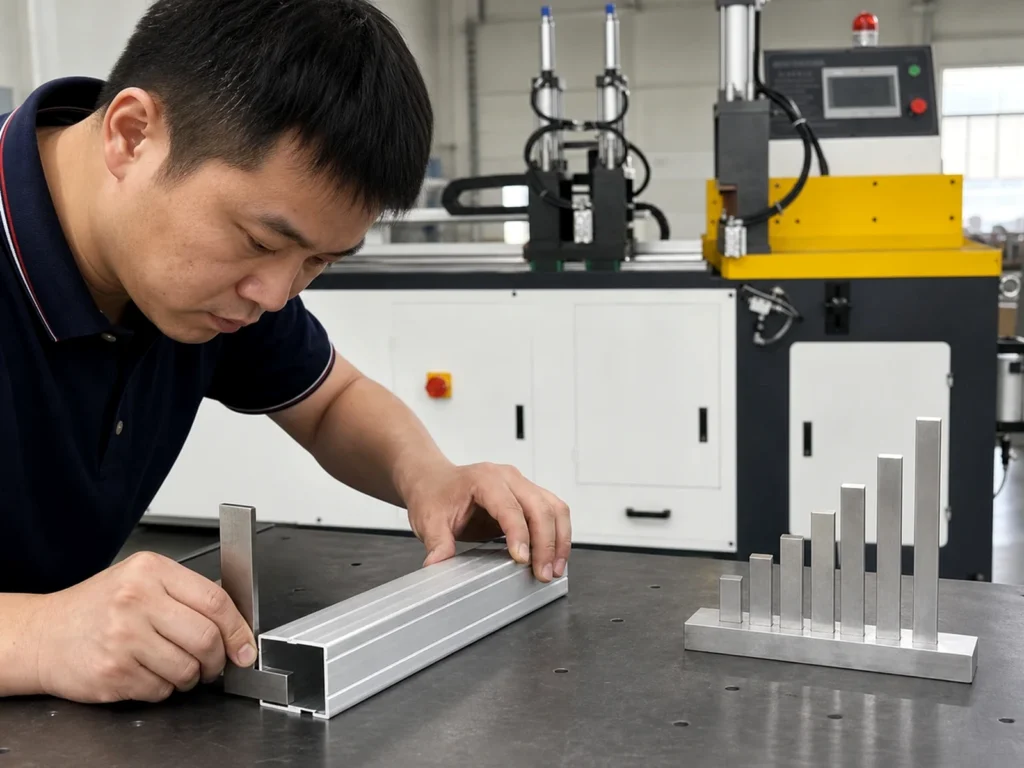
What belongs in the support package?
Ask who supplies the approved configuration records, operating documents and service support. Identify the motor, driver and any required software or interfaces by their actual offered versions.
Have the supplier explain the process for a later component replacement. A similar housing or power label does not establish that a replacement preserves the approved controls and behavior.
Keep commissioning and maintenance responsibilities in the offer. Routine settings and recovery actions should come from the machine’s approved documentation and authorized support team.
Send JiurunCut your section drawing and representative cut list to discuss the positioning requirement. Ask for a configuration-specific explanation and sample review, then compare the evidence against the same purchasing scope.
Buyer questions
Are all stepper systems open-loop?
No. Identified closed-loop stepper packages exist. Ask for the actual motor, driver and feedback arrangement.
Does a servo guarantee finished-length accuracy?
Assess the completed cutting task and agreed part inspection. The motor category does not establish the supplied part result.
Can holding torque be compared directly with running torque?
Compare values at the same defined conditions and review the appropriate curve. The fictional entries above do not provide that comparison.
Does closed-loop mean every machine fault is detected?
Request the supported monitoring functions for the complete offered system. Do not extend one component’s feedback behavior into a blanket machine guarantee.