
Solar rail splice bar cutting is easy to misquote when a buyer sends a saw supplier a photograph of a short connector and asks for a price per piece. The photograph may show a finished, system-qualified splice, while the proposed saw can only produce a cut blank from an approved extrusion. Those are different deliverables. A useful request for quotation (RFQ) starts by naming the rail family, the supply stage and the exact faces that the cutting process must preserve.
This guide is for manufacturers and purchasing teams deciding whether an aluminum circular saw belongs in a released splice-bar production route. It is not a guide to selecting a roof-mounting system, making structural or electrical design decisions, or modifying a proprietary connector. Follow the approved system drawings and the connector supplier’s instructions for the actual installation.
1. Solar rail splice bar cutting: name the deliverable
Ask whether the purchase order calls for a complete approved splice, an extrusion blank that will undergo other work, or only cut-to-length rail. A completed connector may include locating features, bonding components, surface treatment, packaging and system-specific identification. A saw trial on an aluminum blank cannot prove those other features or the connector’s installed performance.
Two manufacturer examples show why the supply stage matters. IronRidge describes its BOSS splice as a system-specific, tool-free connector with an integrated bonding spring for its XR rail families. Unirac’s SOLARMOUNT guide identifies its rail splice as a preassembled component with bonding hardware. These are examples of finished system parts, not evidence that either manufacturer makes the part by cutting generic extrusion stock or that one system’s splice fits another.

2. Freeze the rail and splice family
A quote based on “aluminum rail splice” leaves a critical fit question unanswered. The rail’s slot, hollow cavity or external shape determines what can mate with it; finish and connector hardware may also vary by system. Request the approved drawing revision, rail profile ID, connector ID, incoming material condition and the responsible owner of each. If the buyer cannot provide those, quote only a feasibility review, not production of an interchangeable connector.
Keep the cut blank and the finished connector on separate lines. For a legitimate blank route, the drawing must define a physical extrusion section that is actually intended to be saw cut, together with any later drilling, tapping, deburring, surface finishing, hardware insertion and inspection. For a finished connector purchase, ask the authorized supplier for the exact released part. A shared alloy name or a similar-looking section does not establish fit, bonding or system approval.
3. Specify the length datum and end condition
For an approved saw-cut blank, identify which end is the datum, where length is measured, and whether the cut is square or has a drawing-defined angle. Give the permitted length and end-face deviations from the released part drawing, not an assumed machine catalogue figure. State whether burr limits apply to the entry edge, exit edge, internal slot or all three. If a stop tab or inserted component is added downstream, the blank length may differ from the finished connector’s overall envelope.
Put the rail cuts on a different cut list from the connector blanks. A long rail segment, a short connector body and a completed splice assembly may all appear in one bill of materials, but they have different datums, clamping risks and receiving checks. Mixing them into one “pieces per hour” assumption conceals changeovers and downstream work.

4. Separate a join from an expansion detail
Do not infer a field joint from a cut-piece drawing alone. The approved solar mounting system may distinguish an ordinary rail join from an expansion or thermal-break detail. The connector supplier’s documentation governs the allowed location, gap, hardware and bonding route. The saw supplier’s relevant task is narrower: hold the released rail or blank end geometry so a separate, authorized assembly check can be performed.
For example, IronRidge describes a system-specific BOSS expansion-joint arrangement on its product page, while Unirac gives a separate splice and thermal-break section in its SOLARMOUNT documentation. These instructions are not universal dimensions or procedures. Do not copy a gap, torque, splice length or electrical detail from one brand into another brand’s RFQ. Instead, attach the exact system instruction and record which party owns the final joint review.
5. Trial the actual stock and the receiving route
Short connector blanks may be awkward to support or retrieve even when the machine easily processes long rail stock. Send actual approved incoming sections in the state expected in production: mill or finished surface, relevant batch variation and realistic short-part quantities. Ask the supplier to identify the clamping contact, minimum manageable blank, feed and discharge path, and how cut pieces avoid dents, scratches or mixed identities. A trial with a different generic profile only demonstrates that profile’s handling.
At first-off review, compare the sample to the released blank drawing at the stated datum. Check end-face condition, slot or cavity distortion, surface marks, burrs and batch labels. Then route the sample to the authorized downstream process or mating check. Record each result separately: a passed cut measurement is not a passed finished-connector qualification or installed solar-system approval.
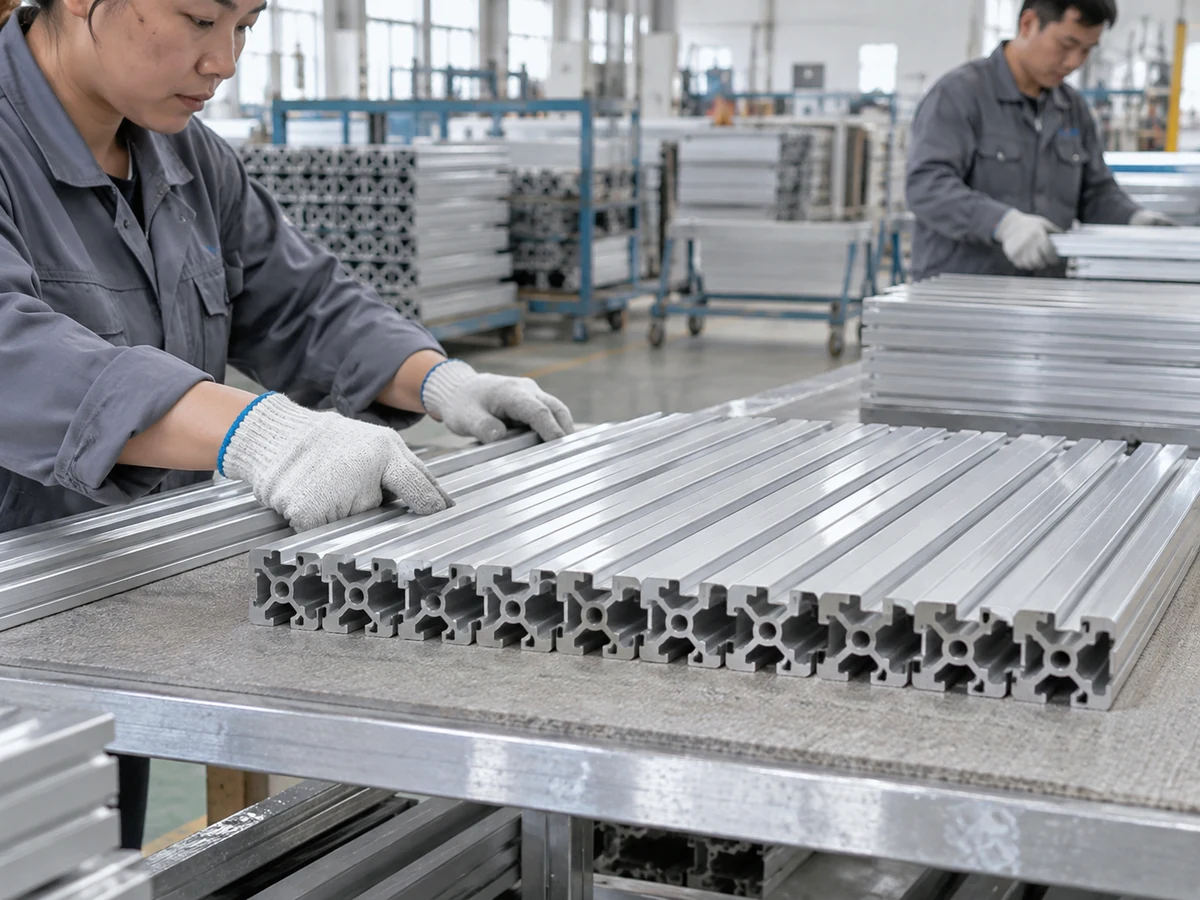
6. Compare quotes at the same accepted stage
A cheap per-cut price is not a comparable delivered-part price if one quote includes only a sawn blank and another includes bought finished splices. For each route, list the accepted output: bare cut blanks, processed connector bodies, approved finished connectors, or rail-and-connector kits. Add the necessary stock procurement, setup, changeover, secondary processing, finish protection, identification, scrap, inspection, packaging and bought hardware. Evaluate each quote at the same stage and period.
If the connector is proprietary or arrives as a certified system component, the best purchasing decision may be to buy that finished part and use the saw only for eligible rail lengths or unrelated approved blanks. Conversely, if the owner has a released extrusion-blank drawing and a defined downstream qualification route, a saw RFQ can be meaningful. The deciding evidence is the drawing and acceptance boundary, not the superficial similarity of two small aluminum sections.
What to send in the RFQ
- Approved system, rail and connector part IDs, drawing revisions, and ownership of any qualification.
- Supply stage for each line: long rail cut, splice body blank, prepared part or finished approved connector.
- Incoming section drawing, alloy and finish state, stock length, batch range and annual quantity by part family.
- Blank length datum, end geometry, edge/burr limits and specified inspection method from the released drawing.
- Other operations and hardware excluded from the saw quote, plus the downstream receiver and acceptance handoff.
- Representative stock, first-off quantity, changeover mix, short-part discharge and surface-protection expectations.
For the broader rail-and-component purchasing decision, see our solar mounting saw supply-route guide. For a drawing-based discussion of an eligible aluminum cut blank, contact Jiurun with the approved section, quantity mix and acceptance plan. We can discuss cutting scope without claiming that a cut blank is a qualified solar connector.
Related Jiurun equipment video
The Jiurun channel video below shows a general aluminum-profile saw and feed scene. It is included to illustrate equipment handling only; it does not show the solar splice, approved rail system, finished connector, customer test, model configuration or performance described here.