
An aluminum saw for solar mounting manufacturing should be selected for the work your factory retains between incoming material and the mounting components it supplies. Long rails, shorter profile members and blanks for further processing can create different cutting tasks. Purchased finished clamps, fasteners and assemblies create different delivery dependencies. Define these boundaries before comparing machines.
The useful equipment decision starts with approved mounting-system drawings and representative factory orders. Installed solar capacity, module dimensions and a photograph of a completed array do not specify the stock that enters the saw or the accepted members that leave it. This guide connects the proposed cutting station to the manufacturer’s material supply, component routes, order mix and delivery format. It does not provide roof design, loading calculations or installation instructions.
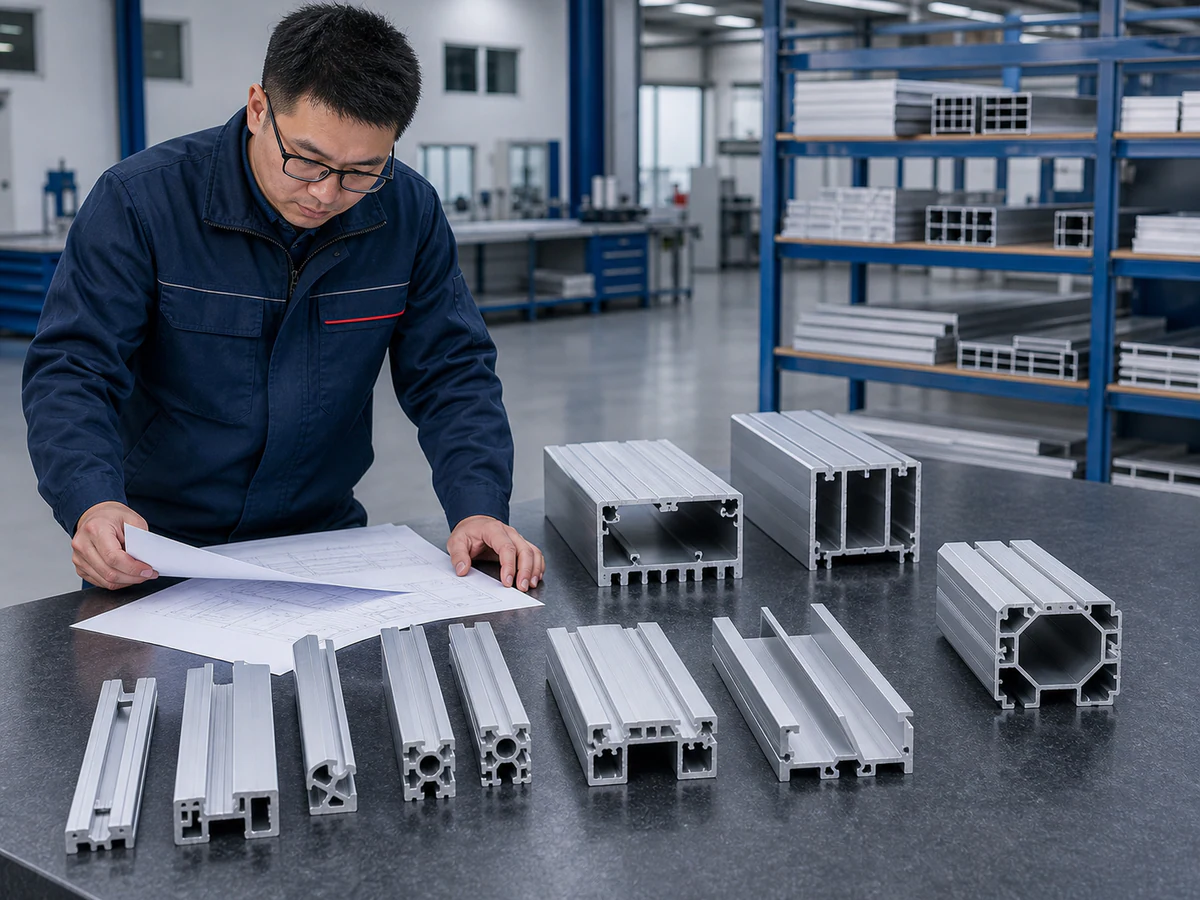
Define the retained scope of an aluminum saw for solar mounting manufacturing
Identify which products your factory supplies: standard-length rails, project-length members, blanks sent to a later operation, finished components or packaged mounting kits. These outputs are not interchangeable. A business purchasing finished small components while cutting long rails needs a different proposal from one retaining rail cutting and small-component blank production.
For application context, Hydro’s solar mounting profiles page lists rails and racking profiles, module frames, clamps, brackets and fastener interfaces among solar-related aluminum applications. This range is a reason to separate the actual components in an inquiry. It does not establish that every listed component starts as saw-cut stock or that a particular JiurunCut machine can manufacture all of them.
Separate mounting-system manufacture from photovoltaic module-frame manufacture. A module frame and a rail supporting a module can be supplied by different businesses and have different drawings. If your factory actually retains both, identify them as separate reviewed families. If it retains only mounting rails, do not include module-frame volume in the cutting workload.
Keep steel parts, bought fasteners, sheet processing and unrelated electrical components outside an aluminum extrusion cutting proposal unless a separate scope has been expressly reviewed. Aluminum visible in an installed solar project is not evidence of what your own factory must cut. The make-or-buy record establishes that question.
Choose the factory delivery format before comparing capacity
A standard-length rail supplier can base an inquiry on the actual rail families and lengths it produces for stock. The accepted output is identified rails released to inventory or dispatch. Its quotation should address the normal stock supply and replenishment pattern rather than assuming that every batch is a unique installation kit.
A project-cut member supplier starts from released project requirements. The same section may appear in several lengths and quantities. Its cutting proposal needs the actual order mix, change between jobs and member identification required at dispatch. The number of solar modules in a project does not replace the approved member schedule.
A component manufacturer may cut small blanks and send them to further processing. Specify what the following process receives. A blank that still needs holes, machining, forming or assembly is not a finished clamp or connector. Show which operations the saw purchase includes and which equipment or supplier provides the remaining work.
A kit supplier must coordinate retained aluminum members with purchased components. A complete mounting kit may wait for fasteners or finished brackets even when all its rails have passed inspection. Compare accepted cutting output separately from complete-kit release, while retaining the dependency in production and dispatch planning.
| Delivery format | Retained cutting task | Evidence needed in the proposal |
|---|---|---|
| Stock rail supply | Released rail families and standard lengths | Incoming stock, section contact and replenishment cases |
| Project-cut members | Approved lengths and member quantities for released orders | Length changes, identification and order handoff |
| Blanks for further processing | Specified unfinished component blanks | Receiving-operation references and acceptance |
| Mounting kits | Retained members within the complete kit scope | Accepted member counts and separate purchased-item dependencies |
Turn the approved system into a manufacturing list
Use the mounting-system owner’s released component drawings and parts list. Record each retained member’s identifier, section, material, cut reference, end condition and quantity. Connect this record to the factory order and revision. The equipment supplier should review the cutting input and requested output, not reconstruct a project design from a general installation image.
Module dimensions and installed row length may be relevant to the system designer, but they are not universal rail cut dimensions. Joining arrangements, interruptions and approved component interfaces can change the manufacturing list. Have the responsible designer resolve the required member geometry before using it in an equipment inquiry.
Distinguish a cut member from a completed assembly. An assembly’s outside span can include a connector, bracket or purchased item that is not part of the raw rail length. Identify the endpoints defining the cut. Where a rail needs an end detail or later hole operation, make that requirement visible without assuming the saw provides it.
The solar mounting rail cutting plan can support the member-level order record. The machine purchase also needs the retained production range and delivery boundary. A clear plan for one rail set does not, by itself, settle a proposal covering several rail families and small-component blanks.
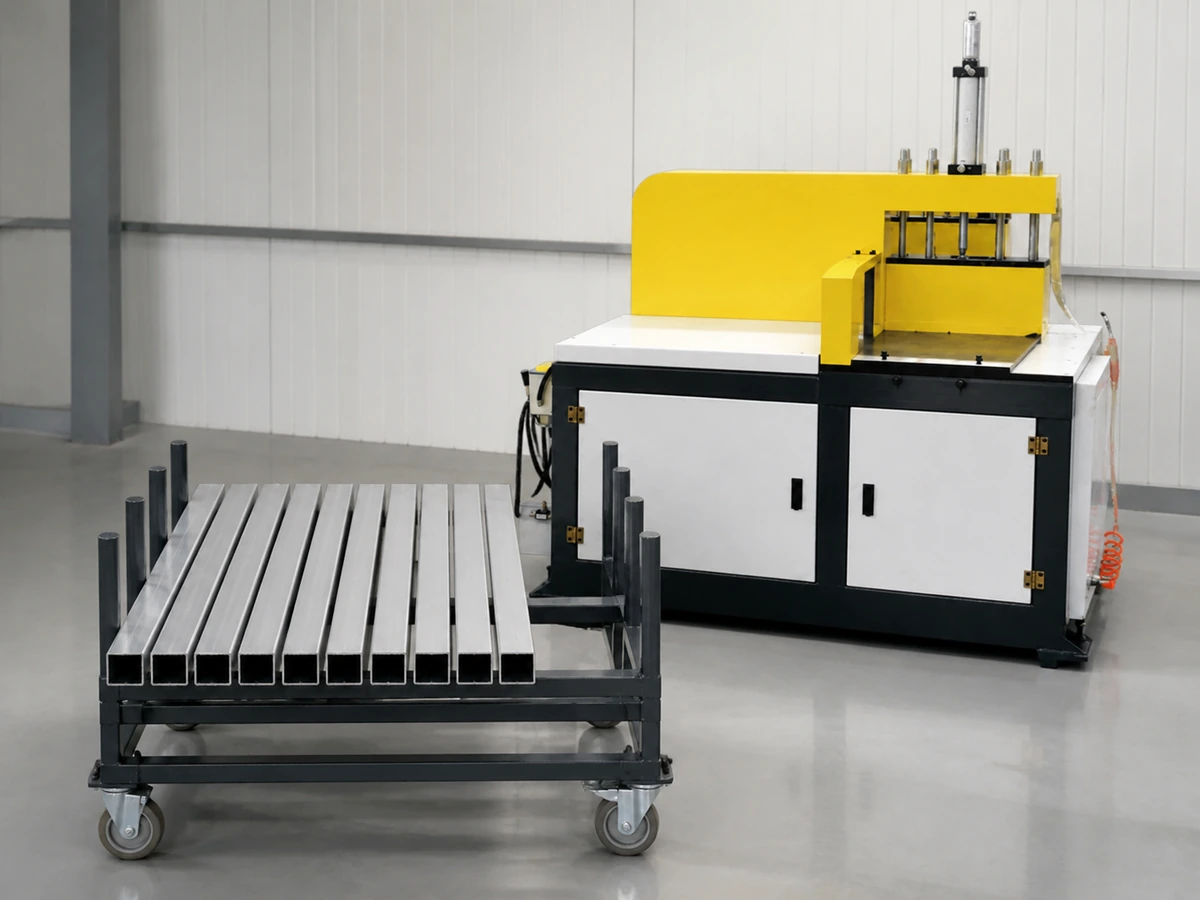
Review long rails and short blanks as separate cases
Give the supplier actual stock lengths, section drawings and the requested cut ranges. A long rail and a short blank can share a material designation while presenting different support, holding, transfer and collection questions. Do not treat successful cutting of one convenient sample as acceptance of the complete range.
For rail sections, show the opening, grooves, walls, ribs and the proposed stock orientation. Identify relevant contact surfaces and any restrictions established by the component drawing or finish requirement. Two sections with similar outside dimensions can have different contact situations. Ask the supplier to explain how the offered arrangement addresses the actual samples.
For small-component blanks, identify the incoming extrusion and the following operation. Review how the offered configuration would hold and collect the requested pieces, subject to the supplier’s actual scope and sample evidence. Do not infer a minimum finished length, a remnant limit or automatic separation function from the word automatic.
If the factory expects one machine to cover both long rails and short blanks, ask which working arrangements change between them and which reviewed cases remain unresolved. Compare the complete mixed task with alternatives that place the short blank operation elsewhere. This is a purchasing comparison, not an assumption that one machine must be the best choice.
Match finish and material supply to the cutting route
State whether incoming stock is unfinished or already has its specified surface treatment. Include the actual material designation, supplier record and production-stock photographs. Specify the appearance and dimensional acceptance basis applicable to the cut members. General descriptions such as solar grade or outdoor aluminum are not substitutes for the actual stock specification.
Keep finish order explicit. A route that cuts unfinished stock before later treatment has different receiving and identification conditions from one cutting already-treated members. Confirm where the required finish is applied and which process accepts the sawn ends. Do not promise corrosion performance or approve a changed manufacturing route through a machine quotation.
Where identical-looking rails come from different sections, finishes or material batches, retain the identification needed by the manufacturing order. The saw’s operating function and the factory’s traceability method are separate questions. Ask what identification features are included in the proposal, and record the buyer’s remaining responsibilities.
Describe how the factory supplies stock to the station and transfers accepted members onward. Bundled arrivals, buyer-prepared individual stock and any expressly offered loading arrangement should be distinguished. Record supports, loading, collection and inspection inclusions in comparable quotations. Do not assume that all handling equipment accompanies the quoted saw.
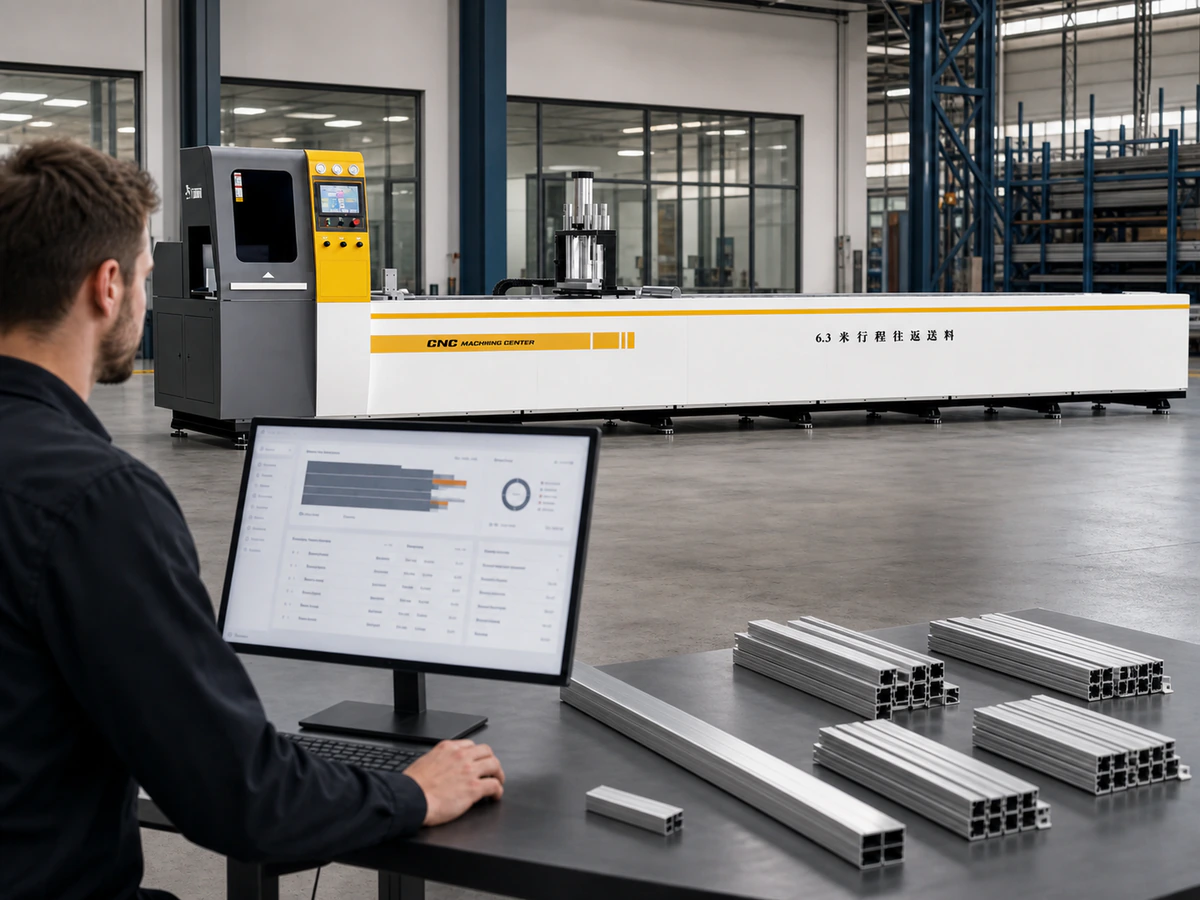
Compare a representative production mix
Choose actual jobs that expose the purchase decision: a recurring rail family, an order with several rail lengths and a retained blank family with a different next operation, where applicable. Give the supplier the order quantities and change sequence. Annual shipment totals can provide business context but cannot describe the work of a cutting station on their own.
In a hypothetical comparison, one order may require forty-eight long rails while another requires ninety-six short blanks for later processing. The larger piece count does not establish the larger cutting workload, material demand or complete production capacity. These invented counts demonstrate why the actual section, length, handling and change requirements belong in the comparison; they are not machine output figures.
Review preparation, stock loading, any configuration changes, cutting, inspection, identification and transfer included in the proposed route. Separate an observed cutting cycle from accepted order output. If the quotation offers length entry, positioning or feeding functions, ask for the actual model and configuration, and verify how they apply to the reviewed jobs.
Compare a rail-focused station with a broader station only after those boundaries are clear. An extra function has purchasing value when it addresses retained work and passes the agreed review. It should not be credited for a component family the factory buys finished or for a task still excluded by the supplier.
Make dispatch readiness visible without overstating saw output
State what counts as completed cutting work. Identified and accepted rails, inspected blanks and material waiting for review should have distinct status in the factory record. Counting every piece near the collection point as accepted output obscures the actual delivery condition.
For project kits, report the availability of each retained member family and the separate purchased items. A kit can remain incomplete because of a connector or fastener delivery. A rail batch can remain held because its revision or inspection is unresolved. Keep those causes visible rather than combining them into a single unsupported saw-capacity figure.
If project orders change after members are cut, use the factory’s approved change and disposition process. The saw purchase should support the agreed identification and handling boundary; it does not decide whether material from a changed project can be used in another system. Preserve the responsible person’s release decision.
Use a trial that answers the unresolved buying questions
Select samples from the real retained families. Include a rail section that tests the proposed contact arrangement and a materially different blank case if the inquiry includes one. Use actual production-stock condition and approved drawings. An easy generic bar may show that a machine runs, but it does not settle the full mounting-component proposal.
The sample cutting trial checklist helps record the stock, requested member, model and configuration used, measured results and open items. Distinguish the buyer’s acceptance requirement from the supplier’s achieved result. Retain observed end and surface conditions as well as the dimensions relevant to the receiving operation.
Ask how a demonstrated arrangement relates to the actual quotation. If a reviewed case uses different supports or an option that is absent from the offer, record that difference before accepting the proposal. Preserve exclusions and additional samples needed for other sections or ranges. Do not turn one successful sample into a guarantee for every mounting system.
Keep mounting-system approval separate from equipment acceptance
Accepting a saw does not approve an installed mounting structure. Roof suitability, system loading, electrical bonding, regional conformity and installation requirements remain with the appropriate system design and project responsibilities. A cut trial provides evidence for the reviewed manufacturing task; it cannot establish those unrelated approvals.
Use the JiurunCut aluminum cutting equipment range to start a model discussion, then request the actual proposed configuration and evidence for your members. Published feeding repeatability must not be treated as finished-part accuracy for the solar profiles in your inquiry. No particular finish, structural rating or project approval is established by an equipment photograph.
See JiurunCut cutting equipment in operation
This JiurunCut equipment video provides inquiry context. It is not a trial of the proposed solar mounting members or approval of a mounting system. Agree the actual stock, quoted configuration and acceptance evidence for your retained work.
Prepare a complete solar mounting manufacturing inquiry
For an aluminum saw for solar mounting manufacturing, provide the delivery-format and make-or-buy record, released rail and component drawings, incoming material and finish condition, actual stock and cut dimensions, order mix and receiving-operation requirements. Identify purchased components separately and explain how accepted cutting work connects to dispatch.
Contact JiurunCut with your solar mounting member cutting requirements and request a proposed model and configuration, included handling and support scope, exclusions and a trial plan for the unresolved cases. This gives the buyer a comparable complete production proposal tied to the work the factory actually makes.