
Servo press station frame cutting starts with an approved member boundary. A servo press station cannot be specified by its aluminum frame alone. The press supplier selects the actuator, drive and measurement package; the machine builder releases the load path, mounting interface, tooling and safety concept. A saw supplier can quote only the approved aluminum members that belong in that design. This guide turns that boundary into a usable cutting RFQ so a buyer does not confuse a clean cut list with a qualified press.
The distinction matters when a workcell changes from a manual bench to a controlled pressing operation. Bosch Rexroth describes a pressing subsystem that combines an electromechanical cylinder, servo motor, drive, optional force sensor and software. Promess describes stand-alone work stations with a press stand and a selected electromechanical press or other motion system. These examples show why a frame-member order needs an integrator’s released interface rather than an assumed actuator capacity or performance claim.
1. Define the servo press station frame cutting boundary
First identify what the frame kit actually supports. Is it a base under a four-post press, a perimeter around a bought press stand, a guard support, or a fixture table adjacent to the pressing zone? These are different member lists. Ask the OEM or integrator to mark each member on an assembly drawing and state whether its ends remain saw-cut or receive later drilling, milling, plates or joining. A quotation for raw cut members must not silently include a press stand, ram guide, tooling, guard, electrical cabinet or certified workstation.
Record one owner for each interface: press supplier for its module, integrator for structure and load path, fixture designer for the workholding stack, and saw supplier for the specified cut blanks. If a buyer has only a concept layout, request a released drawing before claiming that the member kit is production ready. A concept can still support a budgetary conversation if every dimension and exclusion is labeled provisional.
2. Identify the actual profile and datum for every member
List section shape, nominal size, alloy or temper if specified, finish condition, drawing revision and quantity for every part number. A square tube, T-slot extrusion and solid bar may share an overall dimension while requiring different clamping, support and inspection approaches. Mark the face or slot used as the cutting datum. Do not assume that the outer profile width is the functional reference for a press module’s mounting plane.
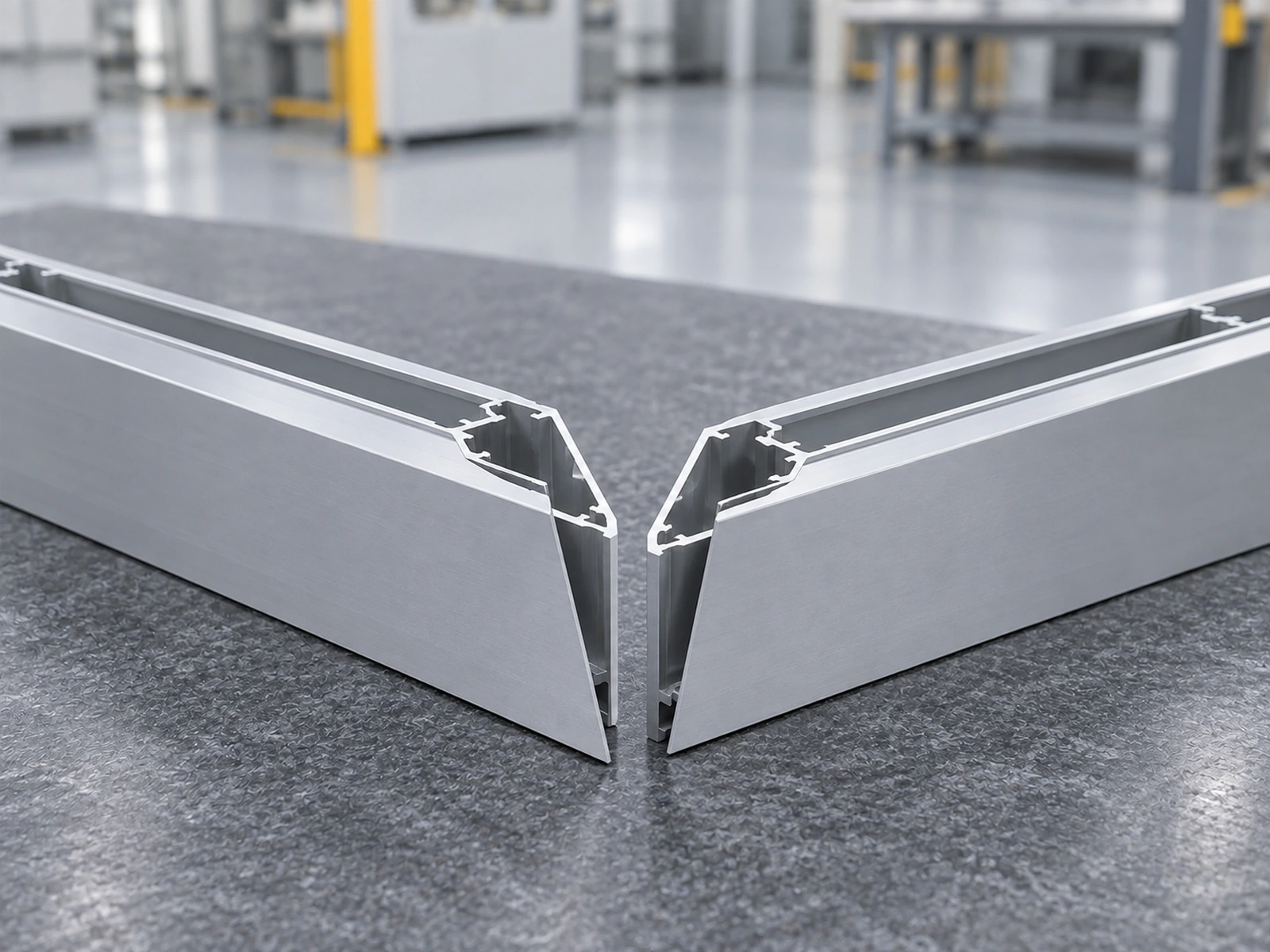
Separate overall cut length from hole pitch, machined mounting faces and final assembled height. The latter features require their own processes and receiving checks. For angled or mitered ends, show the angle convention, long-point or short-point dimension and handedness. If a drawing uses a single generic part number for mirrored members, ask whether the pieces are truly interchangeable after assembly.
3. Keep force and alignment decisions with the machine builder
Pressing forces, reaction forces and off-center loading affect the whole station. The integrator must establish the structural path from actuator through tooling and workpiece into the base, along with allowable deflection and mounting requirements. A saw supplier should not infer a safe frame size from a photograph or from the nominal force of a press module. The Bosch Rexroth subsystem page describes modules with different force and stroke options, but those figures do not define this customer’s frame or Jiurun equipment capability.
For a quote, the actionable question is whether the approved design calls for straight blanks only or a coordinated kit of members with identified ends and revisions. If the assembly depends on machined reference planes, specify who makes and inspects those planes after cutting. A cut-end squareness observation cannot establish ram-to-tool alignment or final press performance.
4. Mark all interfaces that change the cut list
Ask the integrator for a drawing that locates the actuator mount, fixture access, guarding envelope, cable routes and maintenance openings. The saw RFQ does not need confidential process recipes, but it does need the member identity and end condition where those interfaces change the saw work. For example, an opening for part loading may create short side members rather than one continuous rail; a removable guard may need a different member revision from a fixed frame rail.
Distinguish a purchased press stand from aluminum members around it. Promess’s work-station literature lists C-frame and four-post arrangements. Those are supplier system choices, not evidence that aluminum extrusion alone is suitable for a press load path. If the frame is merely an accessory or guard support, state that explicitly. The safe purchasing question is what the approved drawing asks the saw shop to cut, not whether a generic extrusion appears heavy enough.
5. Quote a complete member kit instead of a sample length
Build the quote around one accepted station revision. Include each unique member, quantity per station, batch quantity, requested cut length and end treatment. Add stock allowance, scrap handling, marking or bagging if the buyer needs those services. Ask whether the supplied stock is buyer-owned or vendor-sourced and whether the same extrusion lot must remain together. A single sample bar can show cutability; it cannot prove the labor and yield for a mixed-length kit.
Where variants share a base but differ in guards or fixture supports, provide a matrix by station family and revision. This avoids two common accounting mistakes: charging a common rail twice and omitting low-volume variant members. If the RFQ includes later machining or assembly, request separate line items so the cut-only comparison remains visible. For a broader early inquiry without a drawing, the aluminum saw inquiry checklist can help structure the missing inputs.
6. Specify checks at the cut-blank receiving stage
Define inspection for what the saw supplier actually delivers: part-number count, length, end-angle convention, visible burr condition, handling damage and any surface protection called out on the drawing. Agree on the measuring reference and sample frequency before comparing quotes. Do not turn a general catalog positioning or feed repeatability figure into a finished station tolerance. If the receiver needs a tighter assembled datum, the integrator must allocate tolerances across cutting, machining and joining.
A first-piece check can compare one member from each setup against the released drawing, including orientation and marking. A kit-level check then confirms that the correct mix is present. Keep both records traceable to part revision and stock lot where requested. Missing or ambiguous drawings should become an open item, not a pass result. The buyer can request photos of labeled kits for logistics, but photos alone do not replace dimensional acceptance.
7. Separate cut-kit acceptance from press commissioning
A properly received set of frame blanks still requires machining if specified, assembly, press installation, guarding, electrical work and process commissioning. The press builder must validate alignment, control logic, force-displacement monitoring, tooling and safety for the actual application. Bosch Rexroth’s material describes process evaluation as part of its pressing subsystem; that does not make the saw vendor responsible for the customer’s press process data.
Write two acceptance lines in the purchase record. One closes the saw-cut member kit against approved drawings and receiving criteria. The other remains with the machine integrator for the completed work station. If the first line fails, record the affected part numbers and rework path. If the second line fails, investigate the full system before attributing the outcome to cut length. This separation makes both supplier comparisons and later corrective action more useful.
A compact RFQ packet buyers can send
| Item | What to provide | Decision it enables |
|---|---|---|
| Released station drawing | Revision, member balloons and explicit cut-only scope | Which parts belong in the quote |
| Profile schedule | Section, stock condition, finish, end datum and length | Setup and measurement approach |
| Variant matrix | Members and quantity per approved station family | Kit completeness and comparable price |
| Receiving plan | Length/angle references, visual condition, marking and sample rule | Cut-blank acceptance |
| Exclusions | Machining, joining, actuator, guarding, wiring and final press tests | Clear handoff to integrator |
Before placing an order, ask the integrator to sign off the member schedule and the cut-stage acceptance criteria. Then invite a saw supplier to quote the actual stock and batch mix. A buyer comparing frame kits for other automated equipment can also review the rotary indexing table base-frame RFQ guide; its motion-system handoff is separate from press load-path approval.
Related equipment video
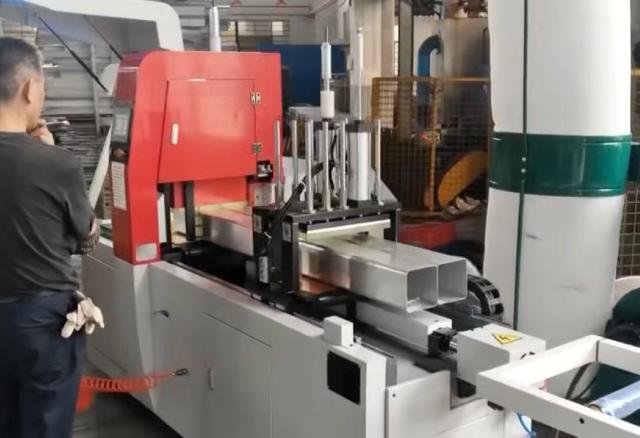
The following video from Jiurun Machinery’s own channel shows an aluminum cutting equipment example. It is a process illustration only. It does not show a servo press station or prove this article’s material, member tolerances, configuration, customer result or press performance.
Discuss an approved cut list
If your team has released frame-member drawings, send the revision, profile schedule, quantity mix and cut-stage inspection requirements through the JiurunCut contact page. Ask for a saw-cut member discussion, and identify any dimensions or downstream operations that remain for your integrator to approve. The quote should reflect the supplied stock and real production mix rather than an assumed complete press station.
Sources for the subsystem boundary: Bosch Rexroth Smart Function Kit Pressing and Promess Electric Press Work Station brochure. These describe their own equipment, not Jiurun saw specifications.