
Aluminum extrusion call-off orders let a buyer release material against an agreed supply arrangement as demand becomes firm. The difficult choice is what the supplier should hold between the forecast and each release: full-length profiles, cut components, or complete kits. The answer changes where the saw sits, who carries work in progress, what can still be changed, and what the receiving team can identify. An attractive price per piece is incomplete until those responsibilities are stated.
This guide is for a buyer with an approved profile and a recurring need for cut members. It compares procurement routes rather than prescribing a stock level, contract clause, or machine setting. Suppliers do offer different combinations of extrusion stockholding, cutting, fabrication, and call-off service. For example, thyssenkrupp Materials UK describes stockholding and cut-to-length or kitted supply, while Vision Profiles describes stocked, pre-kitted extrusion released by call-off. Those are examples of possible service scope, not a promise that every supplier offers the same terms.
For aluminum extrusion call-off orders, identify the receiving unit first
A rolling forecast is a planning signal; a firm call-off is the instruction to supply a defined quantity by an agreed date. Both sides should name the unit in which that quantity is expressed. A release for ten full bars is different from a release for ten accepted members, and a release for ten kits may require several member types plus bought-in fittings. A shared spreadsheet can look balanced while those physical units differ.
For every profile family, attach the approved drawing or revision, alloy and temper from the customer’s actual specification, finish and protective handling requirement, cut-list revision, member identity, length criterion and quantity unit. If a kit has several member lines, define the kit bill of materials and the permitted substitution or shortage rule. The buyer should distinguish its own forecast from the supplier’s material purchase authority and from authorization to cut. A change to a forecast must not silently rewrite already cut inventory.
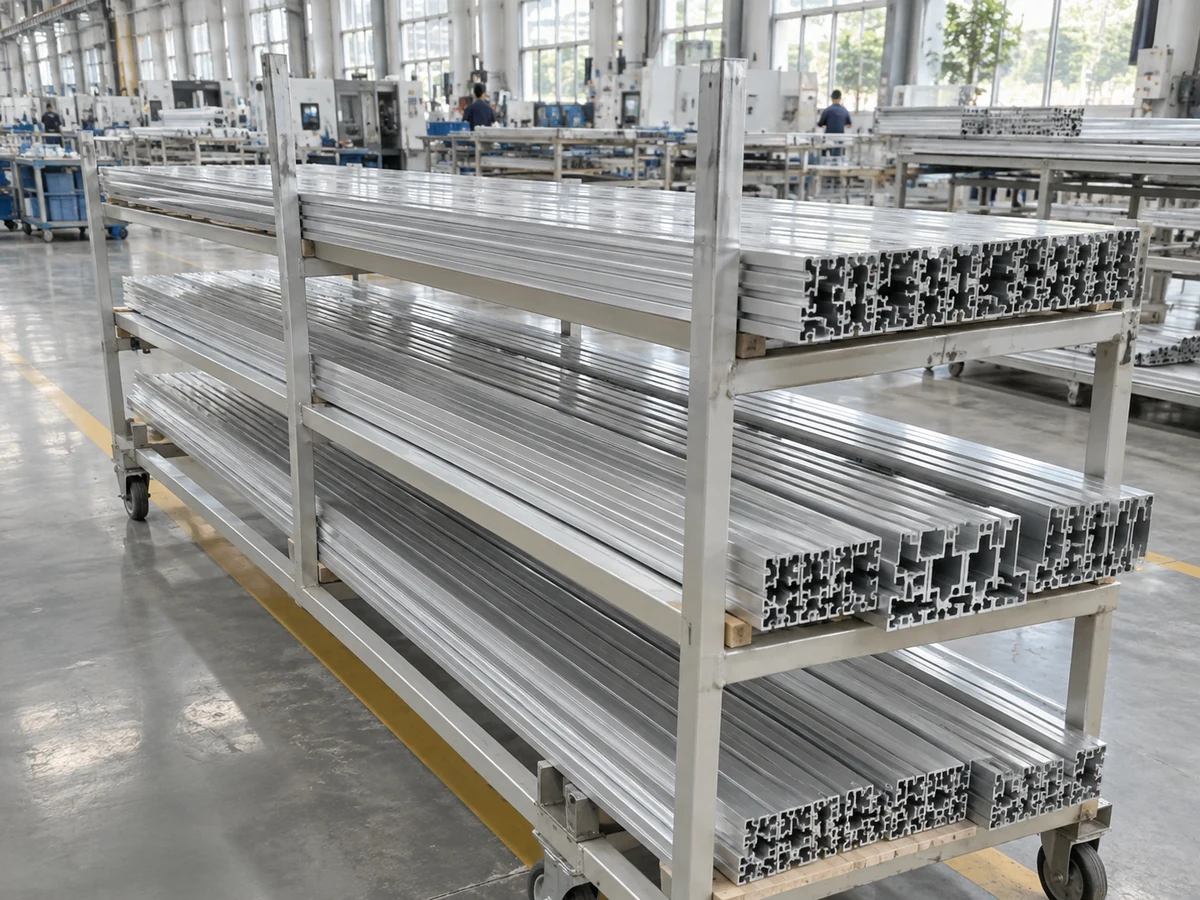
Compare three holding points before comparing unit prices
1. Supplier holds long bars and cuts after each firm release
This route keeps the profile uncut until the buyer confirms member quantities and cut-list revision. It can absorb changes in the mix of lengths when the same stock profile serves several members. The buyer still needs to know whether the supplier bought those bars specifically for the programme, who owns the committed balance, and what happens when a profile revision makes stock unusable. The released order must allow time for stock retrieval, cutting, inspection, packing and dispatch. Ask the supplier which of those steps determines the quoted lead time.
2. Supplier holds pre-cut members or finished kits
Pre-cut inventory can shorten the steps after release, especially when the member mix is stable. It also fixes dimensions and revision earlier. The buyer should ask when the supplier may cut against a forecast, how many members may be held, how old stock is identified, and what happens if demand falls or a drawing changes. A kit is more than a set of cut lengths: its exact contents, pack identity, missing-item treatment and receiving unit must be defined. A quotation for stocked cut members is not automatically a quotation for assembled or labeled kits.
3. Buyer holds bars and cuts in-house after release
Here the buyer controls the timing of the cut and can combine available stock with the current production schedule. It also retains the storage, traceability, machine, labor, blade, inspection, packing and leftover-material work. This route is meaningful only if the buyer’s saw and handling process can cut the actual profile family and the released member mix. A saw’s brochure capacity does not by itself establish accepted part quality or a reliable dispatch date; use a representative production trial and the customer’s acceptance criteria.
Put the cut commitment on the calendar
Draw a simple line from forecast to firm release, cut authorization, completion, inspection, packing, shipment and receipt. At each point, record who can change the quantity and drawing revision, and what has already become physical inventory. The decision is not merely whether a supplier has space to hold metal. It is whether the buyer values flexibility before cutting more than the lead-time benefit of having components ready.
Ask for a release ledger with the opening balance, incoming stock, authorized cuts, acceptable finished units, shipped units, rejected or held units, and closing balance. Keep those balances in their proper units: bars, metres, members and kits are not interchangeable without an agreed conversion and cut plan. Include a lot or batch identifier where the actual specification and traceability plan require one. The supplier’s reporting frequency should match how often the buyer issues or changes releases, with an agreed exception process for a mismatch.
Set a specific rule for surplus at the end of the programme. If the supplier bought profile stock for the buyer, determine the owner of uncut bars, work in progress and already accepted but unreleased parts. State how each category will be returned, consumed under a final release, credited, or otherwise resolved. The separate question of outsourced cutting offcuts and quote credit should have its own terms; a general call-off balance does not prove who owns or gets credit for cutting residue.
Build a like-for-like RFQ comparison
Give every bidder the same profile drawing, cut list, revision status, forecast and proposed firm-release cadence. Request at least three quotation lines: supplier-held long bars cut after release, supplier-held pre-cut members or kits, and delivered long bars for buyer-side cutting if that route is genuinely feasible. A supplier may quote only the routes it can support; do not assume one company’s service menu is an industry standard.
| Decision item | Supplier-held long bars | Supplier-held pre-cut members or kits | Buyer-held bars, in-house cutting |
|---|---|---|---|
| Point of cut commitment | After firm release | Before release under agreed authority | Buyer production order |
| Change exposure | Uncut profile and purchase commitment | Profile plus cut-member or kit inventory | Buyer’s uncut profile and local schedule |
| Post-release work | Retrieve, cut, inspect, pack and ship | Identify, inspect or complete kit, pack and ship | Retrieve, cut, inspect and feed the next operation |
| Evidence to request | Stock balance, release and cut record | Part or kit balance, revision and pack record | Material issue, cut, inspection and receiving record |
Price the same accepted receiving unit and delivery point. Separate extrusion purchase, stockholding charge, cutting or fabrication, kit preparation, protective packing, delivery, inventory reporting and any minimum or cancellation commitment. If one bid says “per kit” and another “per metre,” request a reconciliation using the same approved member quantities. Mark freight, taxes and currency consistently according to the buyer’s purchasing process. Do not multiply an indicative forecast by a price and call it a confirmed total.
For the in-house route, compare the incremental saw and handling requirement with the actual retained workload. Count the scheduled family changes, retrieval, setup checks, blade service, inspection, packing and work-in-process space. Batch size affects setup work and finished-part inventory, but it does not decide the location of the call-off stock on its own. If a supplier quotes a pre-cut route, ask what volume or frozen horizon permits that price and what changes when the buyer releases less than forecast.
Define receipt and exception handling before a trial
Run a small trial release using real documents, not just a demonstration cut. Send the approved revision and member list; have the supplier acknowledge the unit and date; reconcile the stock and finished-part balance; then inspect the arriving members or kit against the buyer’s actual receiving criteria. Check that the label, packing list, member identity, revision and quantity describe the same physical shipment. Record short, extra, damaged, held and substituted items separately. A passing saw cut is only one part of a successful call-off handover.
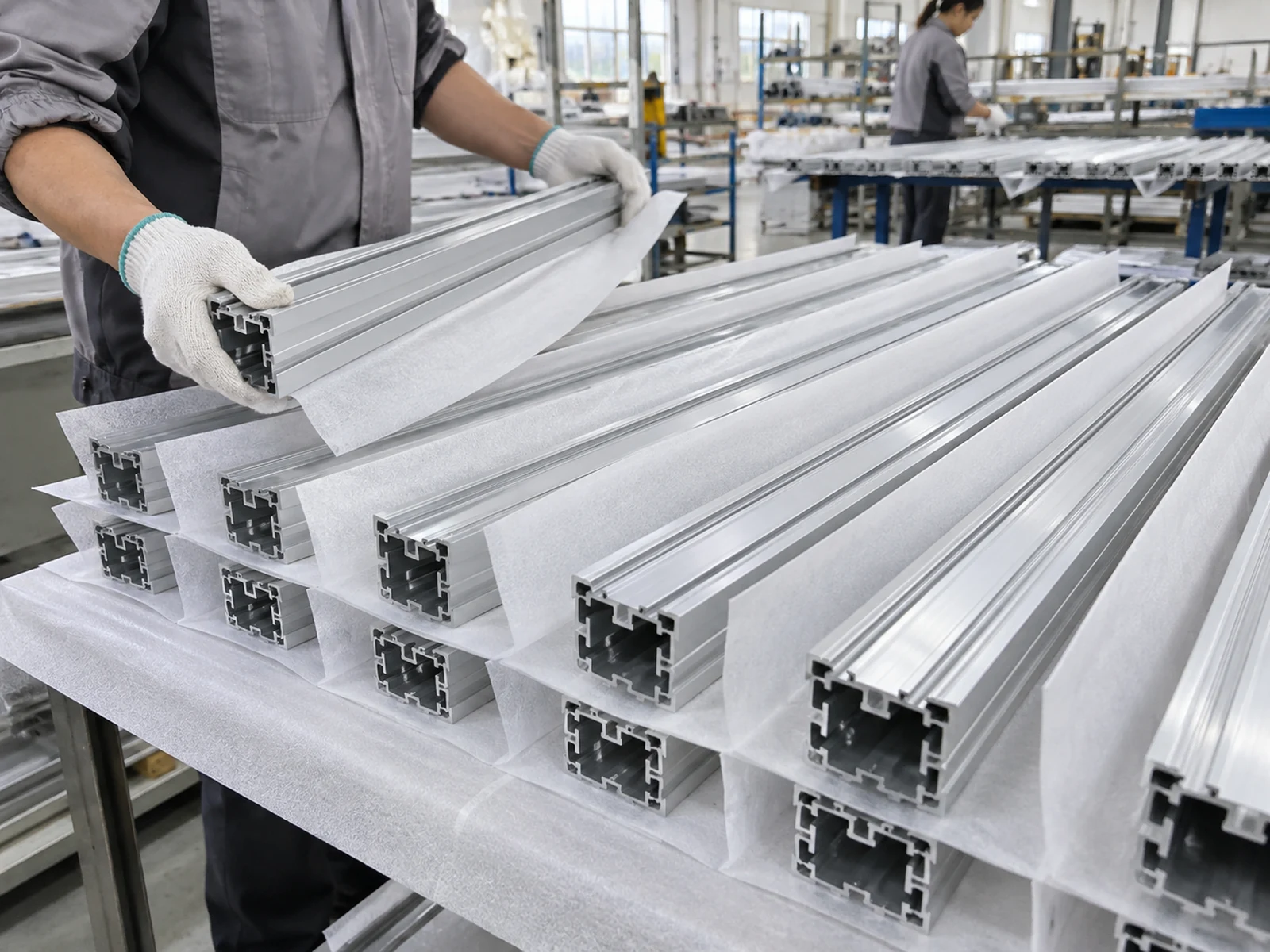
Agree who corrects the ledger after a rejected member, whether replacement consumes the same release, and how urgent changes are accepted. Define a date or event at which a forecast becomes firm enough for buying or cutting, together with an escalation route when that point is missed. If a supplier holds already cut stock, inspect how it segregates revisions and how an old version is blocked from shipment. If the buyer cuts in-house, apply the same discipline to its own rack and cut-job instructions.
Ask for the evidence that matches the chosen route
A buyer can ask each bidder to return a short route map: where the profile is held, who owns it, who may authorize a cut, which accepted unit is priced, what balance is reported, and what must happen before dispatch. Ask for one trial release with a beginning and ending balance, the actual part or kit labels, and a list of exceptions. If the supplier cannot yet confirm a route, mark it as an assumption in the RFQ rather than treating it as a capability claim.
Watch a general equipment example: The following video from Jiurun Machinery’s YouTube channel shows an aluminum cutting machine and ordinary material handling. It is a general process illustration only. It does not prove this article’s stock ownership, call-off terms, buyer or supplier arrangement, alloy, machine configuration, trial cut, quantity, cut quality, or performance.
A good decision keeps both the material and the promise visible. Hold long profiles when cut-list flexibility is valuable and post-release processing can fit the required lead time. Consider pre-cut stock or kits when the approved mix is stable enough to justify earlier commitment and the supplier can identify each release cleanly. Keep cutting in-house when the buyer wants that control and can substantiate the complete process cost and receiving result. In every route, approve the same part or kit definition before comparing price.
Next step: Send JiurunCut the approved extrusion drawings, profile dimensions, cut-list revisions, expected release pattern and representative stock samples if evaluating an in-house cutting route. We can discuss a suitable saw and a practical sample-cut review against your stated criteria. Purchasing terms for supplier stockholding and call-off supply must be agreed with the relevant supplier and buyer.