
A roof rack crossbar cutting quote can hide three different length decisions: the aluminum bar blank, the soft strip that closes its top T-track, and the space left for feet and end caps. They may be supplied by different shops. Thule’s published instructions for named load-bar families explicitly tell installers to cut a rubber strip to the bar length and press or slide it into the top track. That instruction is about the strip, not permission to shorten a completed commercial load bar. An OEM making its own crossbar needs a released drawing and assembly route before asking a saw vendor to prove a cut.
This guide addresses the aluminum blank and its handoff to approved inserts, feet and end caps. It does not approve modifying a Thule product, set a vehicle fit, establish a load rating or replace a roof-rack maker’s installation instructions. If the job is to fit a purchased rack to a vehicle, use the manufacturer’s compatible bar and fit kit rather than infer a new bar length from a generic saw trial.
Do not turn one roof-bar dimension into three cut lengths
In a Thule WingBar Evo and related load-bar instruction sheet, the top rubber strip is cut to the exact bar length for the listed families; the sheet then specifies how the strip is split, pressed or slid into the top T-slot. Another step slides feet into slots on the underside of the bar and presses end caps into the ends. Its AeroBlade directions also treat an under-bar cover strip separately, cutting it to fit between a foot and the inside of an end cap. These are product-family assembly directions, not universal deductions for an aluminum saw stop.
For an OEM quotation, make a part schedule with a distinct identifier and released length for the metal crossbar, each top insert, any underside cover and each end fitting. Record which length is measured between bare aluminum end faces and which is measured after the cap or foot is installed. An installer’s nominal rack width, a vehicle roof width and a soft-strip length are not interchangeable saw dimensions. Ask the design owner to show the stop face and tolerance on the bar drawing instead of subtracting an assumed cap allowance.
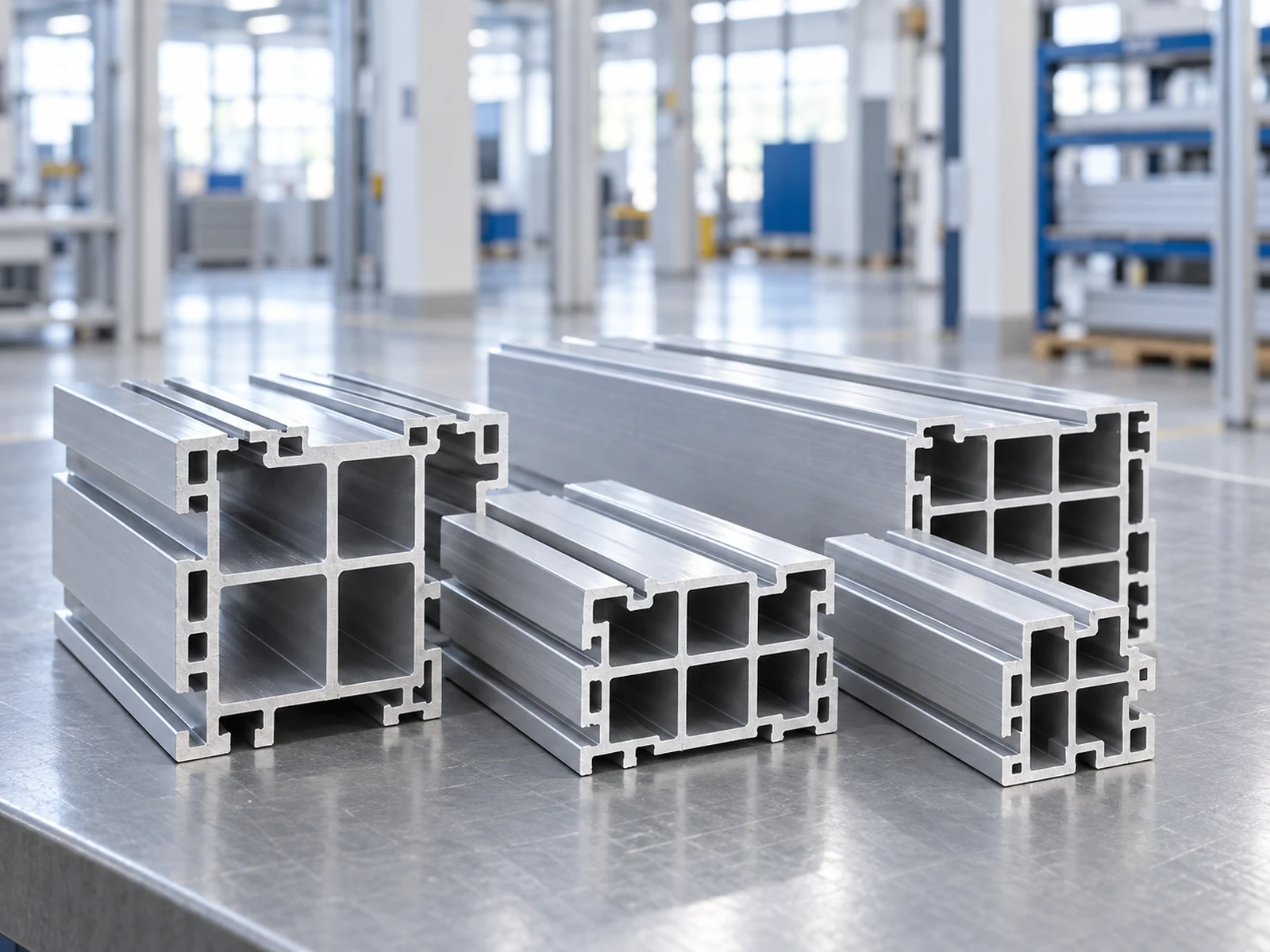
The sections above are examples of profile geometry only. A roof-bar T-track may have a different lip, undercut or cap retention feature. Bring the actual section drawing and a physical sample to the trial. If a supplied profile has an asymmetric top and bottom, mark the feed orientation on the drawing. A sample can meet the bare length while an unintended rotation puts the insert channel or foot slot on the wrong side of the assembly.
Can the strip, foot and cap still enter the cut section?
A saw vendor can measure the aluminum blank, but a length measurement cannot establish that the T-track is usable. At the cut end, inspect the track opening, retaining lips and any small chamber that receives an end-cap feature. A raised burr, squeezed lip or swarf in the slot may stop an insert from seating or a foot from sliding. The acceptable edge condition should come from the OEM drawing and mating-part trial, not from an attractive end photograph.
Build a witnessed assembly check around the released parts. First, identify the extruded section and its top-face direction. Second, check the cut length and end condition against the metal drawing. Third, have the assembler install the specified strip by the method in the actual product instructions, then fit the approved feet and end caps. Record where entry is blocked, where a strip lifts and whether a cap fully seats. A failure can originate in the wrong insert, wrong part revision, the cut end or the assembly sequence; it is not automatically a saw-length fault.
Before specifying extra machining, ask how the OEM intends to access the track. Thule’s WingBar Evo product description names a pivoting SwingBlade end cap and a QuickAccess upper T-track for accessory installation. The earlier installation step about preparing the rubber strip and the later ability to fit an accessory without removing or cutting that strip describe different operations. Copying either statement to a different bar design would be an unsupported shortcut. Release the insertion direction, cap access and strip treatment for the exact product being made.
Keep soft-strip preparation out of the saw acceptance test
The top insert is a soft component with its own cutting and fitting method. A metal saw trial should not quietly include cutting rubber, splitting an insert or proving its retention. List those as downstream operations unless the quotation expressly covers them. If a bar and insert arrive from different suppliers, define who trims the strip, who checks its seated condition and who handles replacement when the supplied strip is the wrong revision.
Compare sample evidence at the same scope. The saw supplier can show the released extrusion, blade and clamp setup, bar length data, visible track-lip condition and labeled sample ends. The assembly owner can then use the actual insert, feet and end caps to establish fit. The complete roof-rack maker must decide whether the system meets its vehicle compatibility, strength and road-use requirements. A saw vendor’s workshop video cannot substitute for that system approval.
What a roof rack crossbar cutting trial should show
Present the proposed bar section at its production stock length, not a convenient short offcut. Ask the machine supplier to show where the profile is supported, where the clamp contacts it and how the finished end is discharged without damaging the track lips. Record the face used as the length datum and the top-side orientation. If the section is thin or hollow, compare the incoming section and the cut sample for local distortion before attempting an insert-fit witness.

The Jiurun Machinery video below shows a related aluminum profile feeding and cutting operation. Use it to frame questions about support, orientation and discharge for the released crossbar section. It does not show a roof rack, a T-track strip, an end cap, a vehicle fit test or load-capacity evidence.
For a roof rack crossbar cutting purchase comparison, request one labeled bar blank from each proposed setup, with its cut reference and inspection record. Hand those blanks to the rack design owner for the same strip, foot and cap trial. If one blank fails, preserve it and record whether the failure is at the top track, the underside slot or the end-cap chamber. The repair route then has an owner: adjust the saw process for a damaged cut end, correct an assembly component or revise the released drawing. Do not approve an untested change to a finished commercial rack.
To discuss a JiurunCut saw trial, send the released aluminum crossbar section and length drawing, representative stock, approved insert and cap references, and the operation split between saw vendor and assembler. The broader roof-rack manufacturing supply-route guide helps place this specific track and insert check in the full member list.