
You may be able to keep your roller tables when replacing an aluminum saw. Ask the supplier to review the actual tables with the proposed machine: what they support, how the profile enters and leaves, and whether they also measure or drive the material. Agree which tables will be retained before the equipment scope is finalized.
Three things to remember
- Identify support, measuring and powered functions separately.
- Compare the surfaces carrying your profile through the proposed saw.
- Name the retained and newly supplied equipment in the quotation.
Want to keep your existing tables?
Send a photo of the saw and tables, plus the profile you cut. Tell us what you would like to keep.
On this page
Show what your existing tables do
Roller tables may carry stock, establish a length with a stop, or move material using a powered drive. Explain every function you currently use. An unpowered table with a measuring stop still has a length-setting role to discuss.
Label the incoming-stock and finished-part roller tables in your photos. Include the maker or model if known, table length, usable roller width, working height and available load information. Note whether each table is freestanding or attached to the old saw.
For a powered conveyor, measuring device or shared controls, request confirmation from the responsible manufacturers and qualified personnel that the proposed combination is suitable. Include guarding and safe access in that review. Our loading and feeding guide explains the different handling tasks.
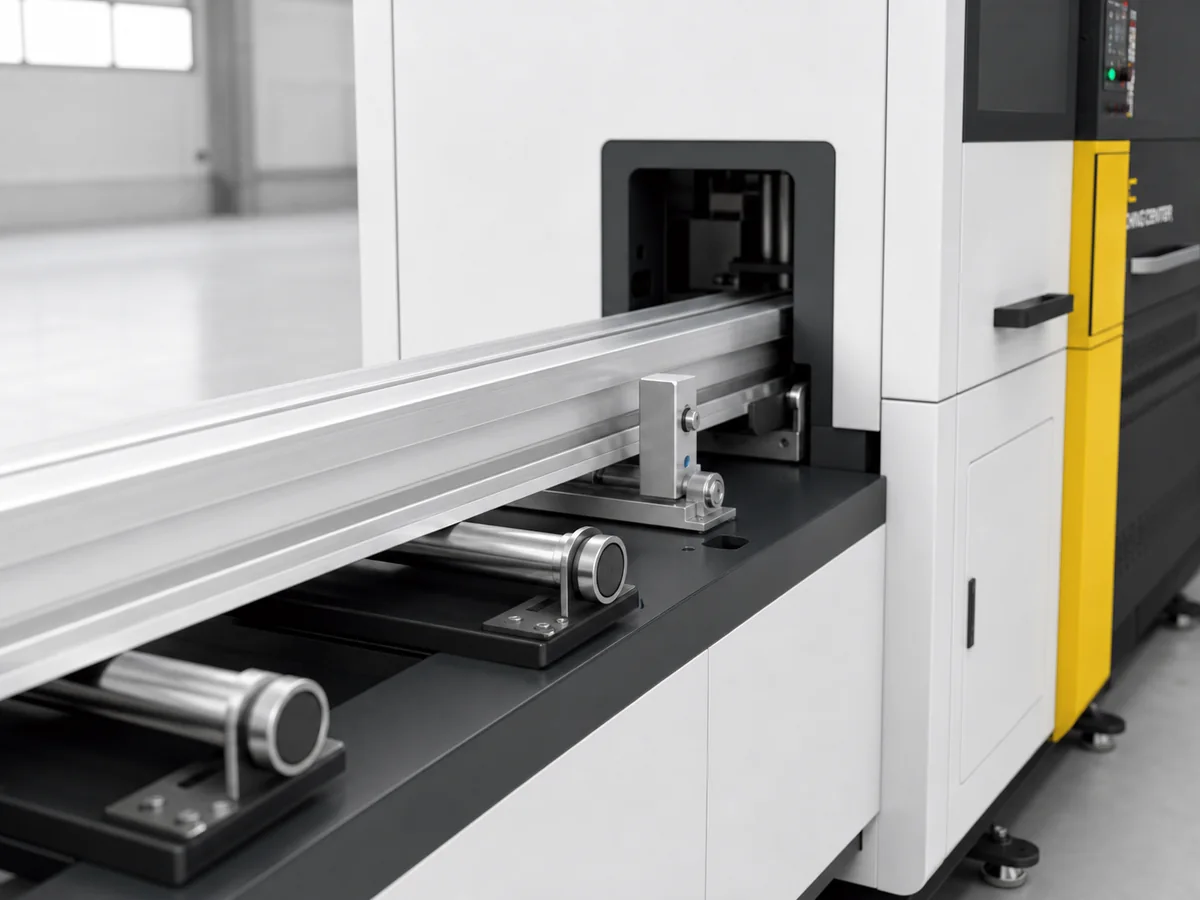
Compare the surfaces supporting your profile
The support plane is the level formed by the surfaces carrying the profile. Ask the supplier to compare your roller tables’ working surface with the proposed machine’s material-support surface. The machine’s overall enclosure height cannot answer this question.
Show the actual cross-section and which way it rests on the tables. A broad flat section, open channel and profile with delicate fins present different contact points. Mark customer-visible faces and describe any existing scratches or rocking.
- Which surfaces will carry the profile as it reaches the feeder and clamps?
- Does the proposed orientation use the same supporting face as the current setup?
- Are the roller width, spacing, condition and stated load capacity suitable for that material?
- How will contact surfaces protect an anodized or coated finish?
Ask for the proposed arrangement to be confirmed. Any changes to tables, connections or safety equipment should follow the responsible manufacturers’ approved plan.
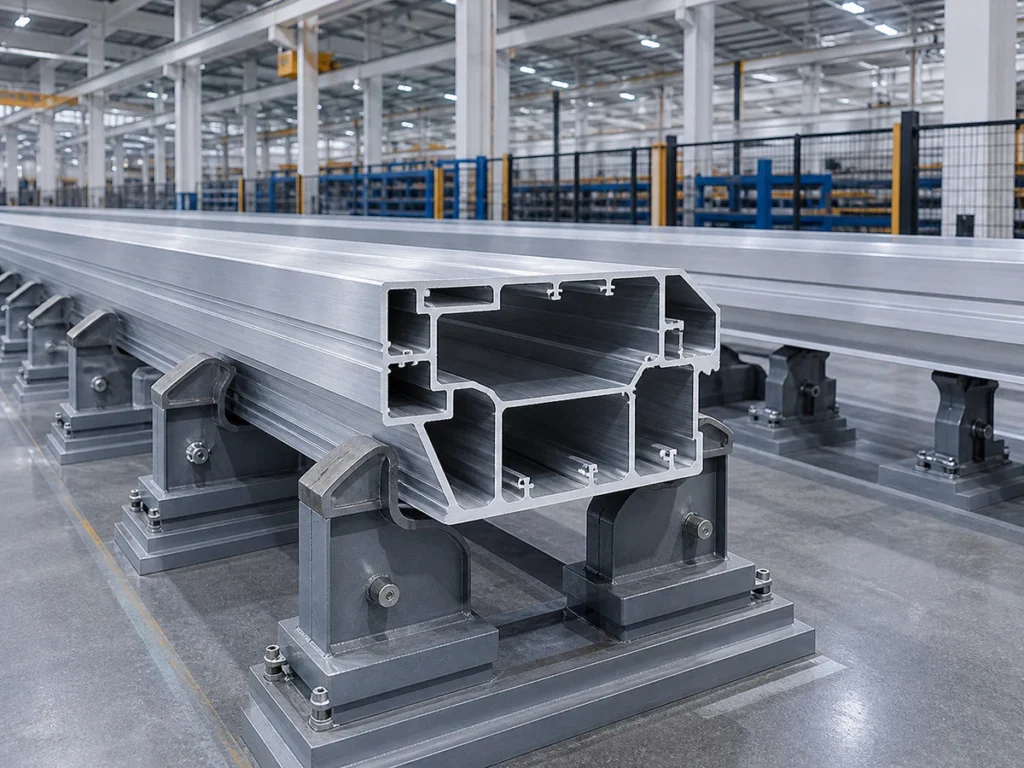
Follow the incoming stock and finished pieces
Take a wide photo showing both ends of the existing saw station. Add the incoming stock length, typical finished lengths and how you collect the pieces. Show where the remaining stock or final remnant goes.
Ask the supplier to relate those photos to the proposed saw layout. Include the support near the machine entry and exit, access for loading, and the place where cut pieces are received. Short finished parts may need a different collection arrangement from the table that supports long incoming bars.
A useful reuse decision explains who loads the stock, what advances it, and how parts are collected with the retained equipment.
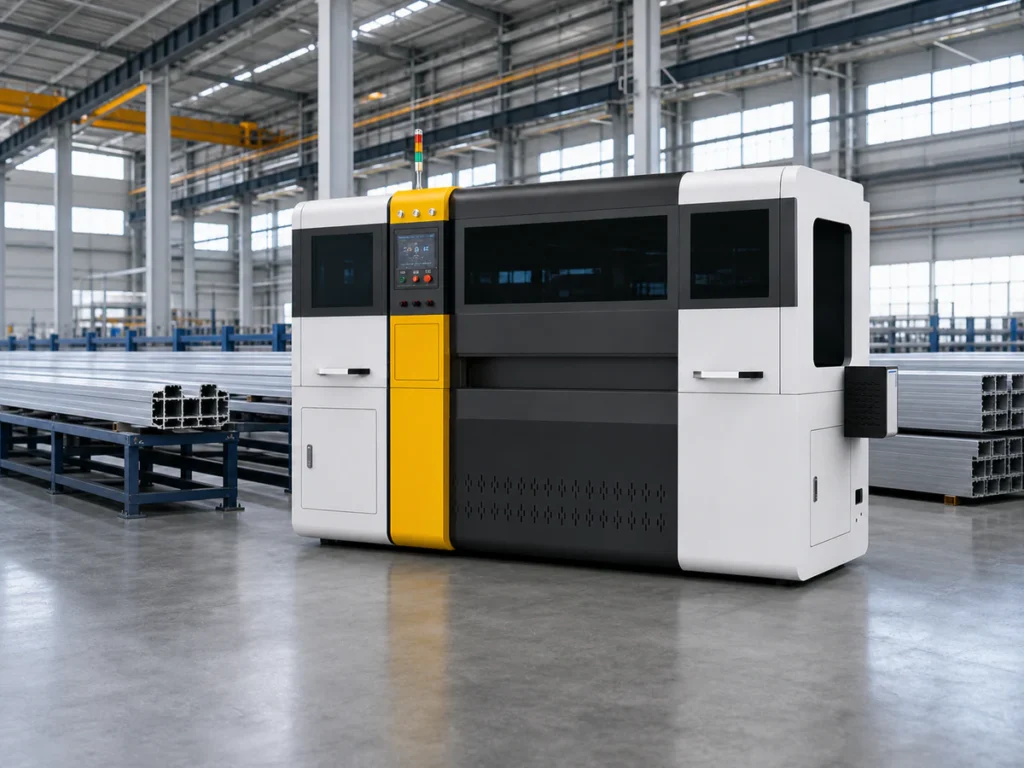
Watch: JR-650CNC-3A-1S feeding configuration reference
JR-650CNC-3A-1S feeding-layout reference from the Jiurun machinery channel. Use it to discuss the proposed material route; compatibility with existing tables must be confirmed for the quoted configuration.
Show us the current material route
Start with your photos and the equipment you hope to retain. Add table dimensions or drawings when available.
Two common reuse discussions
These examples are illustrative buying situations, not completed installations.
Keeping unpowered infeed tables
A workshop feeds straight aluminum bars from freestanding rollers and wants a CNC saw for repeat lengths. It sends table details and profile photos. The supplier reviews the support plane, contact faces and entry route, then identifies whether the tables can remain and what additional support is required.
Keeping a powered table and measuring stop
Another buyer uses a driven conveyor and a length stop with the old saw. The replacement has its own positioning system. The buyer asks the responsible suppliers to define each device’s role and confirm the combined arrangement, including controls and guarding, before deciding which equipment to retain.
Make reuse of roller tables clear in the quotation
Ask for a written equipment list that identifies:
- Retained equipment: the specific site-owned roller tables and the functions they will perform.
- New equipment: the supports, feeding and collection equipment included with the saw.
- Approved adaptations: any proposed work, who supplies it and who confirms the complete arrangement.
- Services and checks: installation, commissioning and agreed material-handling checks, with their scope and charges.
The Jiurun catalog’s JR-455CNC entry lists customizable infeed and outfeed rack lengths. It supplies no working height or blanket approval for existing tables. Review the CNC aluminum cutting machine route with your table information so the quotation describes your project.
If reuse is still pending, ask what information is missing and whether new supports are quoted as an alternative. The broader aluminum saw replacement guide covers the rest of the purchase.
Roller table reuse: buyer questions
Is matching the table height enough?
Height is one part of the review. Include the profile’s contact faces, support condition, entry and exit route, load information and any measuring or powered function.
Can I begin with photos?
Yes. Send wide views of the station and close views of the tables and profile. Mark unknown dimensions as pending so they can be clarified.
Sources and scope
Machine context: JR-455CNC in the Jiurun machinery catalog, physical page 7 (printed page 6), and the CNC cutting product page. The video is a separate JR-650CNC-3A-1S configuration reference. Ask about current availability and confirm the offered configuration in the quotation. This is buyer-planning guidance. For UK projects, HSE’s modified-machinery guidance addresses changes affecting an assembly’s operation or safety. Confirm the requirements applicable to your site with qualified responsible parties.
Discuss your replacement saw and existing tables
Send the photos and profile information you have. We can discuss the proposed machine and which retained or new supports to include in the quotation.