
Parcel box aluminum frame cutting begins with a frame-and-panel assembly, not simply a list of bars at nominal length. A cutting buyer needs to identify which profiles are actually released for the box, how each cut end meets a corner or panel, and which party accepts the assembled kit. This guide turns those questions into a saw trial and RFQ for approved aluminum frame members.
A useful independent example is MiniTec’s description of a Tindox parcel box: it describes an aluminum modular-profile frame with separate HPL wall panels. That example establishes a real application for aluminum profiles; it does not establish Jiurun as its supplier, the section used in another box, or the suitability of any particular saw.
Start the parcel box aluminum frame cutting RFQ with the released member set
Ask the product owner for a current drawing, revision, bill of materials, and a cut list that names every aluminum member. The cut list should distinguish vertical posts, top and bottom rails, cross members, and any separate door or access-frame pieces actually present in that design. Record profile identification, finish condition, stock length, required quantity, and the drawing datum for each member. Do not convert the outside box dimensions into saw lengths without the approved joint and panel details.
Separate three supply stages in the quotation. The first is a square-cut blank. The second is a prepared member after any separately specified holes, end machining, or finish work. The third is a labeled, accepted frame kit. A saw supplier can be evaluated for the first stage without implying it will make the finished parcel box, electronic option, lock, panel, or mounting system.
Which interface decides the cut length?
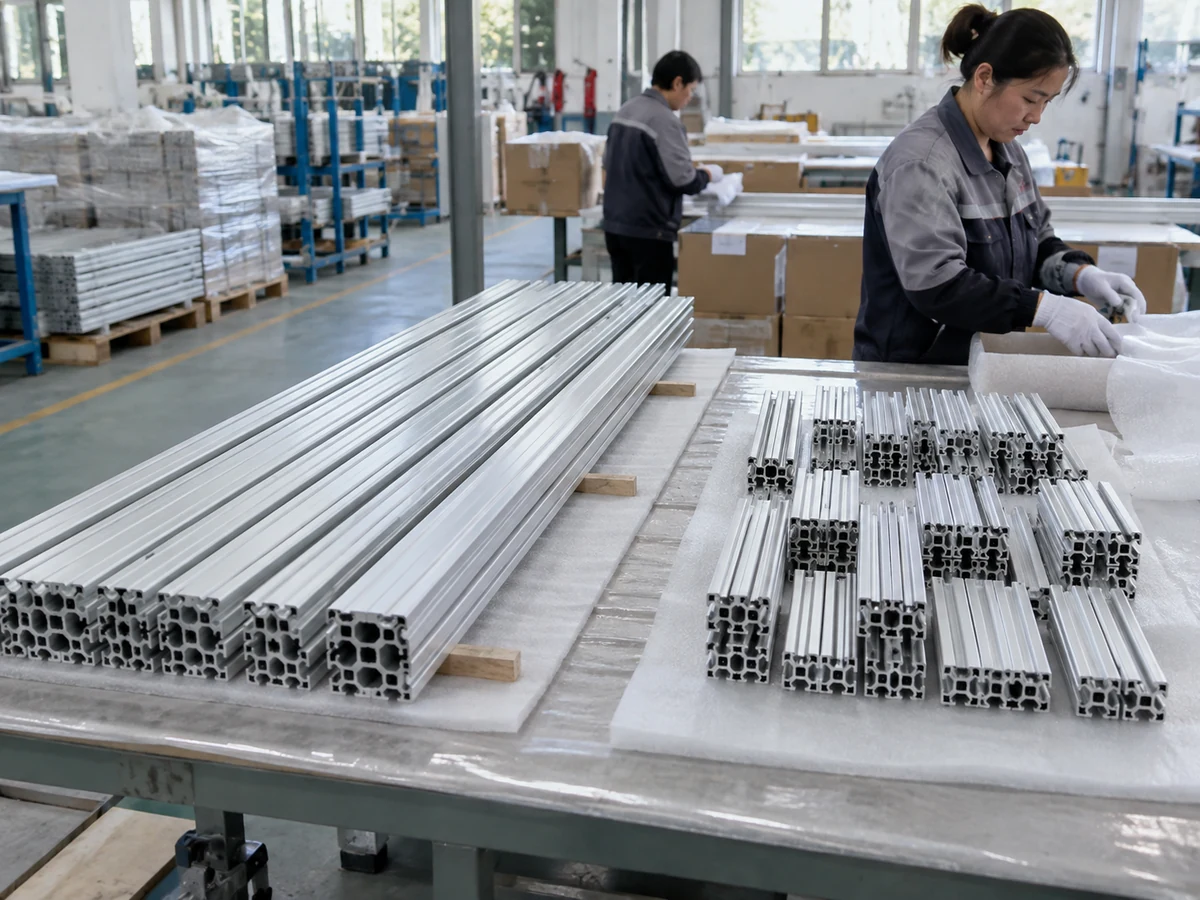
In parcel box aluminum frame cutting, each member needs the joint that controls its end position. A rail may stop against a connector, meet a post face, enter a prepared joint, or leave a panel opening. These are different length definitions even if the extrusion cross section looks similar. Put the reference face and end condition on the part record so that a first-off measurement has a clear datum.
The panel interface deserves its own review. Identify whether a wall panel sits in a profile groove, against a face, or on separate hardware. Establish who owns panel size and clearance, and whether a panel can be installed after the frame is assembled. If the panel is HPL, metal, or another material, use the actual released panel specification; the cutting inquiry should not infer its thickness from a marketing image. The saw trial checks cut members. Panel fit is accepted by the box integrator using the approved panel and connector set.
Ask the saw trial to show contact, support, and first-off fit
Provide physical samples of every profile family in scope, including the shortest and longest approved members. Ask the equipment supplier to identify the proposed clamp contact face, the material support path, and the stop or measurement datum used for each family. Thin flanges, open slots, and protective finishes can change the handling question. The trial should make these visible rather than assume one setup applies to all sections.
Request a first-off set that can be traced to member ID, stock lot, drawing revision, orientation, and cut sequence. Inspect the approved critical lengths and end conditions using the measurement method agreed before cutting. Check for burrs, visible damage, and any specified coating protection. Then dry-fit the relevant corner and panel interface with the buyer’s actual approved connector and panel samples. A clean end-face photo alone cannot prove a box opening, weather seal, lock engagement, or field performance.
Keep the frame kit traceable after cutting
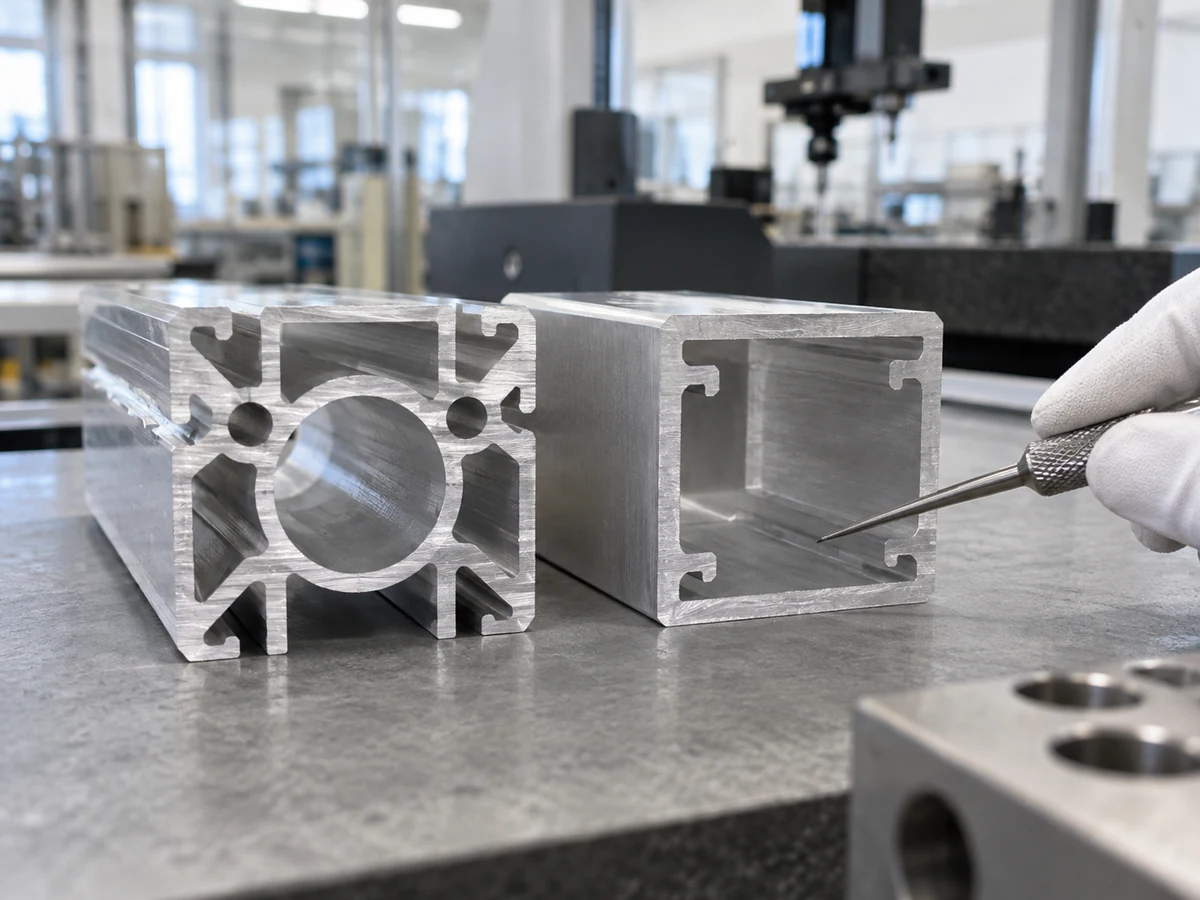
After parcel box aluminum frame cutting, agree a practical label for each accepted bundle: project or box family, drawing revision, profile code, member ID, quantity, and inspection status. Protect visible faces and separate lengths that could be confused during assembly. Define whether the supplier packs loose members, a matched set per box, or an assembled frame. A quoted piece price for blanks cannot be compared directly with a kit price that includes sorting, protection, and documentation.
List the remaining work explicitly. Depending on the approved design, it may include corner preparation, fastener installation, panel cutting, locks, electronics, finishes, site fixing, or weather testing. These are scope and acceptance questions for the responsible parties. They should not be silently assigned to the saw or inferred from a cutting demonstration.
Parcel box frame saw RFQ checklist
- Released definition: drawings, revisions, BOM, profile codes, finish, and the precise members retained for saw cutting.
- Member datums: reference face, end type, angle if any, drawing length, quantity, and allowable acceptance range supplied by the designer.
- Interface samples: actual connector, panel, and any end preparation needed to judge first-off fit.
- Input portfolio: longest and shortest approved stock and member lengths, plus every materially different profile family.
- Trial evidence: setup photographs, first-off measurements, end condition review, and a controlled dry fit recorded against the approved revision.
- Output stage: loose blanks, prepared members, labeled kit, or assembled frame, with exclusions stated.
- Commercial comparison: accepted pieces or kits per period, changeover and handling assumptions, consumables, protection, inspection, and residual stock ownership.
For broader frame-stock support questions, see our industrial workbench frame saw trial. For access to end-installed hardware before a frame closes, see the T-slot hardware access guide. Those guides address related process decisions; the released parcel-box drawings remain the governing documents for this RFQ.
General equipment illustration
The video below is from Jiurun Machinery’s own channel and shows a general saw equipment example. It does not show this parcel-box frame, its material, a customer order, an approved setup, or verified fit or cutting performance for this application.
Frequently asked questions
Can an outside box dimension be used as the rail cut length?
No. The joint, reference face, panel arrangement, and approved drawing determine a rail’s cut length. Request the member-level cut list.
Does a first-off cut prove the parcel box is ready for service?
No. First-off evidence can support the agreed cut-part checks. The product owner or integrator separately accepts assembly, panels, locks, electronics, installation, and any required service performance.
What should the buyer send Jiurun for a useful saw discussion?
Send released member drawings and quantities, profile samples, stock and finish details, the accepted output stage, and the measurements and fit checks required at the saw boundary. Contact JiurunCut to discuss a trial against those specific inputs.