
An industrial workbench frame saw trial should answer a narrow purchasing question: can the offered cutting station prepare the approved aluminum member kit so the bench assembler can identify each part, inspect its cut ends, and fit the top and accessories without hiding rework? A single attractive cut does not establish that result. The trial needs a released frame drawing, a realistic mix of rails, legs and uprights, and an agreed receiving check. This guide sets out the evidence to request before comparing machines.
This is a cutting-station acceptance plan, not a design specification for a workbench. The bench builder remains responsible for structural capacity, height adjustment, electrical or ESD provisions, ergonomics, and final workstation approval. If the earlier decision is whether to buy completed benches or retain frame cutting in-house, read our industrial workbench manufacturing saw purchase guide first.
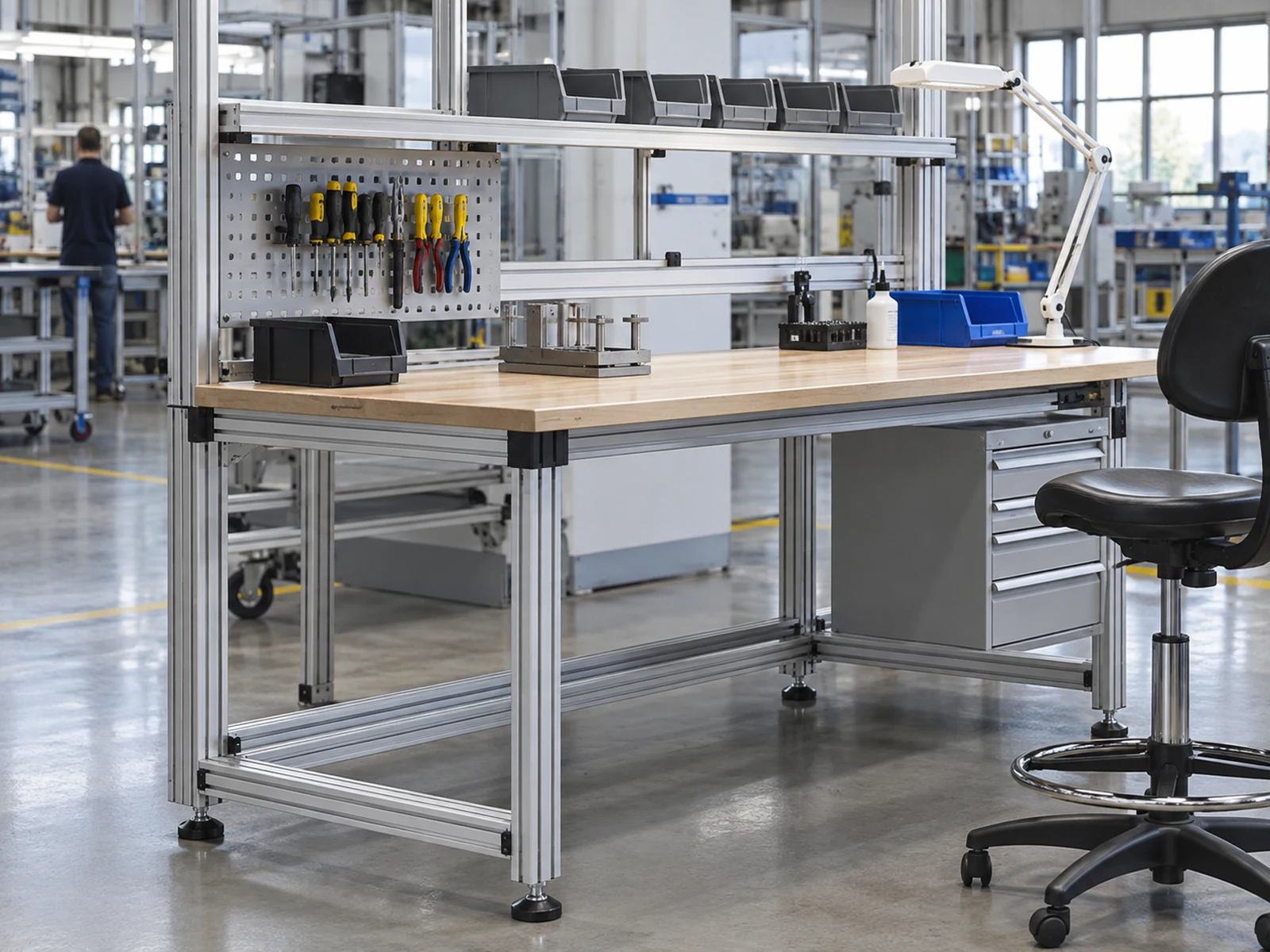
Define the member kit before booking the demo
Start with one approved bench family and one deliberately different variant, such as a station with a rear upright or a different depth. Give the supplier the controlled bill of materials and drawing revisions for the members the proposed saw will actually cut. Separate aluminum extrusion stock from bought worktops, brackets, feet, trays, lights, height-adjustment hardware and preassembled modules. Do not ask a saw quotation to absorb unrelated fabrication or assembly operations by implication.
For every retained member, record its section identifier, material and incoming condition, stock length, cut-length datum, required end condition, quantity per bench, visible-face protection, and next operation. Mark which rails are left/right, front/rear, or upper/lower if they differ. A tabletop dimension is not automatically a rail cut length: the joint and connector design determine the released member reference. Likewise, a controller feed-position figure is not a finished-part measurement.
- Base rails and crossmembers: identify the drawing face from which length is measured, the relevant joining face, and how the resulting pair is kept together.
- Legs and uprights: show the approved profile orientation, the end intended for a foot or bracket, and any later machining that remains outside the saw station.
- Variant members: include the shortest retained cut, the longest supported stock, and the changeover sequence that matters to the real order mix.
Manufacturers such as item publish workstation examples with parts lists and variants, while Bosch Rexroth describes modular manual-production systems that combine workstations and material supply. Those examples explain why a bench family may contain more than one member set; they are not evidence that a particular Jiurun machine has cut any of these systems. Use your own released drawings for the trial.
Watch stock support, clamping and discharge as one route
At the demo, confirm the machine is the configuration actually being quoted. Identify its blade, clamping and locating arrangement, infeed support, outfeed handling, and any manual step. Observe how a long rail enters the station, where it is supported, which face is located, and whether clamping touches a visible or mating surface. Record the stock’s actual section and condition. If the supplier switches to an easier section or a different support arrangement, treat that run as a separate demonstration.
After each cut, track the member through discharge. Can an operator distinguish a front rail from a rear rail and keep a pair with its bench order? Where do short pieces land, and how are rejected or test pieces separated? An acceptable blade cut can still become an unusable kit if members are mixed, scratched or counted incorrectly after the cut. Ask who supplies the trays, labels or support devices that the trial needed.
Inspect the cut end against the approved assembly interface
Select inspection points from the drawing before the blade starts. Measure finished length from the stated datum with an agreed method and record the actual values against the drawing limits. Check the cut face, burrs, wall deformation, and damage to any slot or visible face needed by the next station. A clean-looking sample photograph is useful for communication, but it cannot substitute for the inspection record. If deburring or secondary machining is required, name the responsible station and its cost rather than crediting that work to the saw.
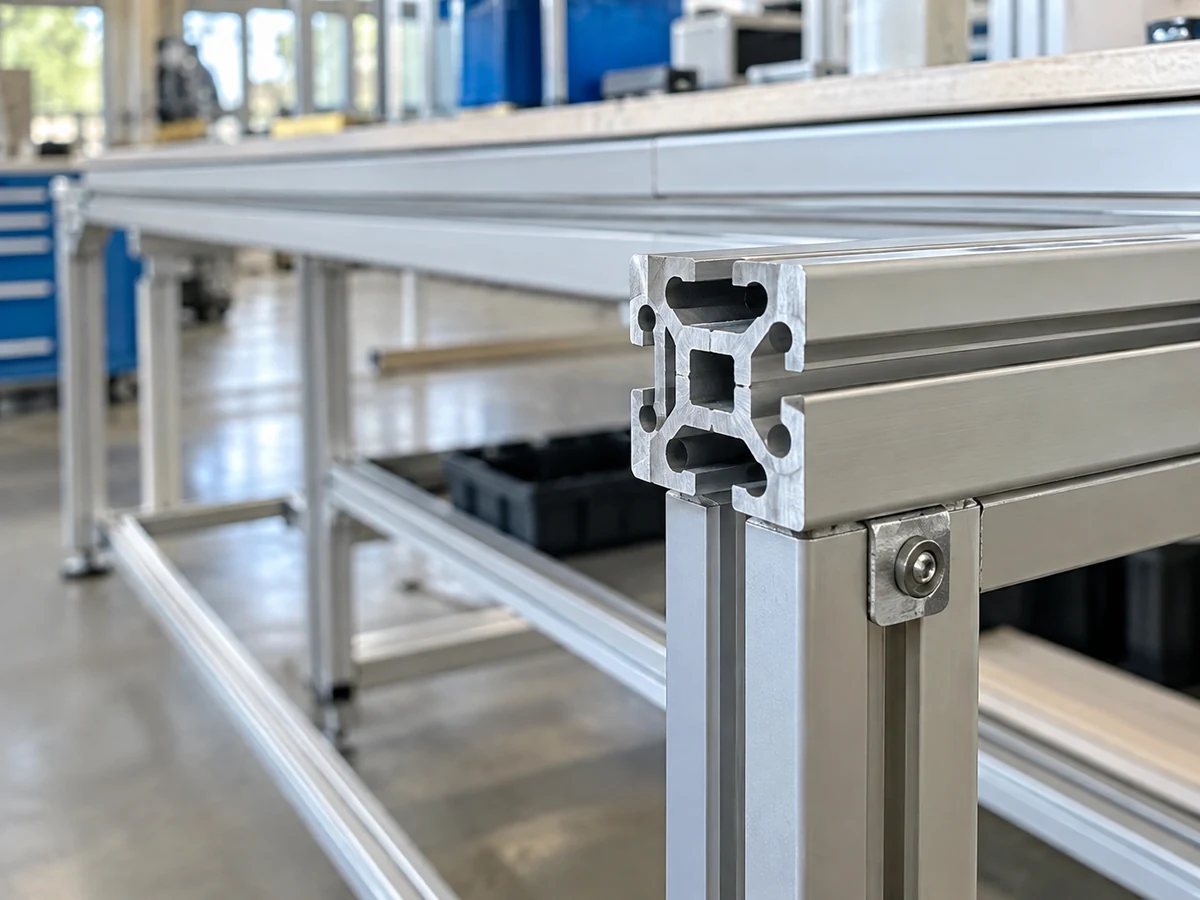
Do not collapse all ends into one acceptance line. A rail end that is hidden by a bracket, a leg end that meets a leveling foot, and a visible upright end can require different downstream checks. Keep each part ID with its drawing revision, measured result, operator or inspector, and disposition. If a sample fails, record whether the cause is the drawing, incoming profile, support, clamping, blade condition, setup, or a downstream requirement, then agree the retest condition.
Dry-assemble a representative frame and fit the top
The decisive check is often a small, representative assembly rather than another isolated cut. Use the actual specified connectors and the cut members from the trial. Assemble the base frame, locate the legs and an upright if applicable, and offer the approved top and accessory interface to the frame. Observe whether the prepared members can be identified, seated and aligned without unplanned trimming, re-sorting or substitution. Record any fit problem separately from any design issue discovered in the approved kit.
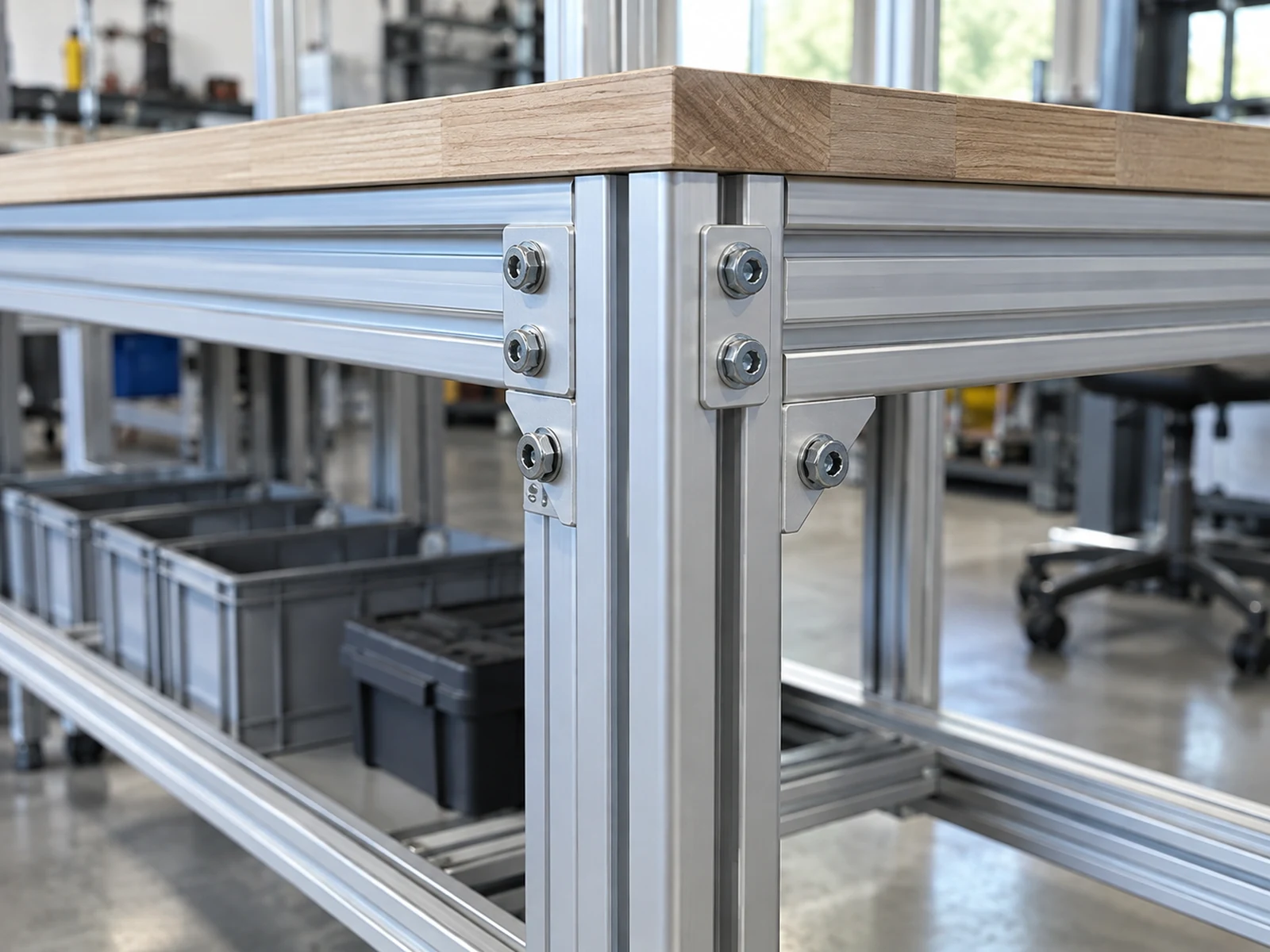
A dry assembly does not establish safe load capacity, stability, ESD function, adjustment performance or ergonomic suitability. It only reveals whether the saw-produced member set can reach the receiving stage in the agreed form. Any remaining drilling, fastening, top fabrication, wiring or system qualification needs a separate owner and acceptance route.
Industrial workbench frame saw trial record and changeover
A supplier may make the first piece under careful setup and still struggle with the production mix. Agree a run that moves from the base bench to the variant and back. Log each profile or length change, stop and setup step, first-piece approval, rejected startup piece, and the time boundary used for the comparison. Do not extrapolate a whole-station rate from one short straight cut. Ask for the same sequence on the exact offered machine configuration, or list what remains unverified.
- Configuration: machine, blade, clamp, support, discharge and measurement devices used, with quoted inclusions and exclusions.
- Material and identity: stock ID, section, material, drawing revision, member position, quantities and accepted kit boundary.
- Results: inspected finished dimensions, end-condition findings, assembly observations, rejects, rework and retest status.
- Commercial comparison: installation needs, operator handling, tooling, consumables, training, service and the remaining operations required to deliver an accepted member kit.
Use that record to compare offers at the same receiving point. One offer may include support and part handling while another prices only the saw head. One may demonstrate a particular profile but exclude the upright or short rail in the real mix. Put such gaps in the RFQ and acceptance plan before treating a lower machine price as a lower cost per accepted bench kit.
What should a passing workbench frame saw trial release?
A pass should name the specific approved drawings, stock state, trial members, measurement method, quoted equipment configuration and accepted receiving stage. It should state the excluded variants and downstream work. It is not an unconditional promise about every future bench, finished-product qualification, or a substitute for the manufacturer’s own workstation design review.
If you are preparing a supplier discussion, send Jiurun Machinery the released rail, leg and upright drawings; real stock samples; connector and top-interface information; expected member mix; and the inspection limits that matter at assembly. Ask for a written sample matrix and configuration list, then compare the results against your own receiving criteria. You can send a drawing or inquiry once those inputs are ready.
General Jiurun saw footage, not a workbench trial
The following video comes from Jiurun Machinery’s YouTube channel and shows general aluminum-saw equipment operation. It does not show the workbench members, a customer, the quoted model or configuration, an actual trial, measured cut quality, or the performance described in this guide. The buyer’s own material and drawing-controlled test remains the evidence for this purchase decision.
General Jiurun Machinery equipment footage only. It is not a workbench sample cut or evidence for this article’s material, model, configuration, customer, trial or performance.