
Pallet dispenser guard frame cutting is a narrow purchasing task inside a much larger machine project. An automatic dispenser separates empty pallets from a stack and passes them to a conveyor or another line station. Its lift, forks, stack support, controls and interlocks have a different duty from a passive aluminum guard or sensor-support member. A useful saw quotation therefore starts with released part drawings and a boundary around the aluminum cut kit, not a photograph of a complete dispenser.
The distinction is practical. PRS describes a pallet dispenser with powered stack infeed and pallet outfeed conveyors, air-powered forks and a guarded machine. A CCI pallet-dispenser data sheet describes a different electromechanical arrangement with stacking arms and a main frame. These are examples from other manufacturers, not Jiurun products or approved bills of material. They show why the word “dispenser” does not identify which parts, if any, should be cut from aluminum extrusion.

Separate stack-support structure from the guard kit
Begin with the machine builder’s general arrangement and stack-loading sequence. Identify the full pallet stack envelope, the mechanism holding the upper pallets, the single-pallet exit path and the upstream and downstream conveyors. Mark each structure that supports the stack, transmits fork or lifting forces, or locates the conveyor. Those load-bearing structures need design ownership and acceptance by the dispenser builder. Do not assume a visible extrusion frame is suitable for them.
Now mark the nonmoving perimeter guard, access-panel frame, cable or sensor support, and any passive sign or operator-interface support. Each can be considered for an aluminum cut-blank RFQ only if a released drawing identifies its material and section. If the builder buys a complete guard assembly, an individual saw-cut member may not be a separate procurement item. If a guard is supplied as loose members, the quotation must still exclude panels, hinges, locks, interlocks, fasteners and final system validation unless separately specified.
A useful boundary table has four columns: assembly zone, part owner, supply stage and acceptance owner. For example, the dispenser builder may own the fork frame; a conveyor vendor may own a transfer bed; an integrator may own a freestanding perimeter; and the saw supplier may deliver only cut aluminum posts. Keep these responsibilities visible when comparing prices. Our palletizer member-kit guide addresses a different machine and should not be treated as a shared bill of materials.
Release a drawing-controlled cut-member schedule
Give every candidate member its own part number and revision. Record the extrusion section drawing, specified alloy and temper, incoming stock condition, cut length, length datum, end form, quantity per dispenser, left or right hand, visible faces and downstream process. Include the assembly position: front access post, rear panel rail, conveyor-side perimeter or control-support upright. A machine footprint is not a cut list. Two similar lengths may have different slot orientations or connector ends.
Identify whether the supplier is buying bar stock, cutting buyer-supplied stock, or quoting both. State the available bar length and any permitted offcut reuse; do not assume every remnant can become another guard rail. If a purchased fitting covers the end, show which face remains visible and which end still needs a burr check. If holes, threads, gasket channels or brackets are added later, name the responsible operation and the allowance, if any, required on the blank drawing.
For a transparent-panel guard, a cut frame can influence panel fit and access clearance, but it does not prove containment or safe access. Record the specified mating panel and connector interface for receiving inspection. The machine builder should approve the complete guard geometry, opening, reach distances, interlock behavior and applicable safety requirements before the blank schedule is released. A saw supplier should not infer these from a generic frame image.
Choose stock form from the actual section
A square or rectangular hollow section may be one approved stock form for a passive perimeter or support. A T-slot extrusion, channel, flat or proprietary guard profile may be another. Select from the drawing, not from a standard “aluminum frame” label. Wall thickness, internal cavities, open slots and asymmetric faces change where a bar can be located and clamped. The same outside dimensions can hide different cutting and assembly conditions.
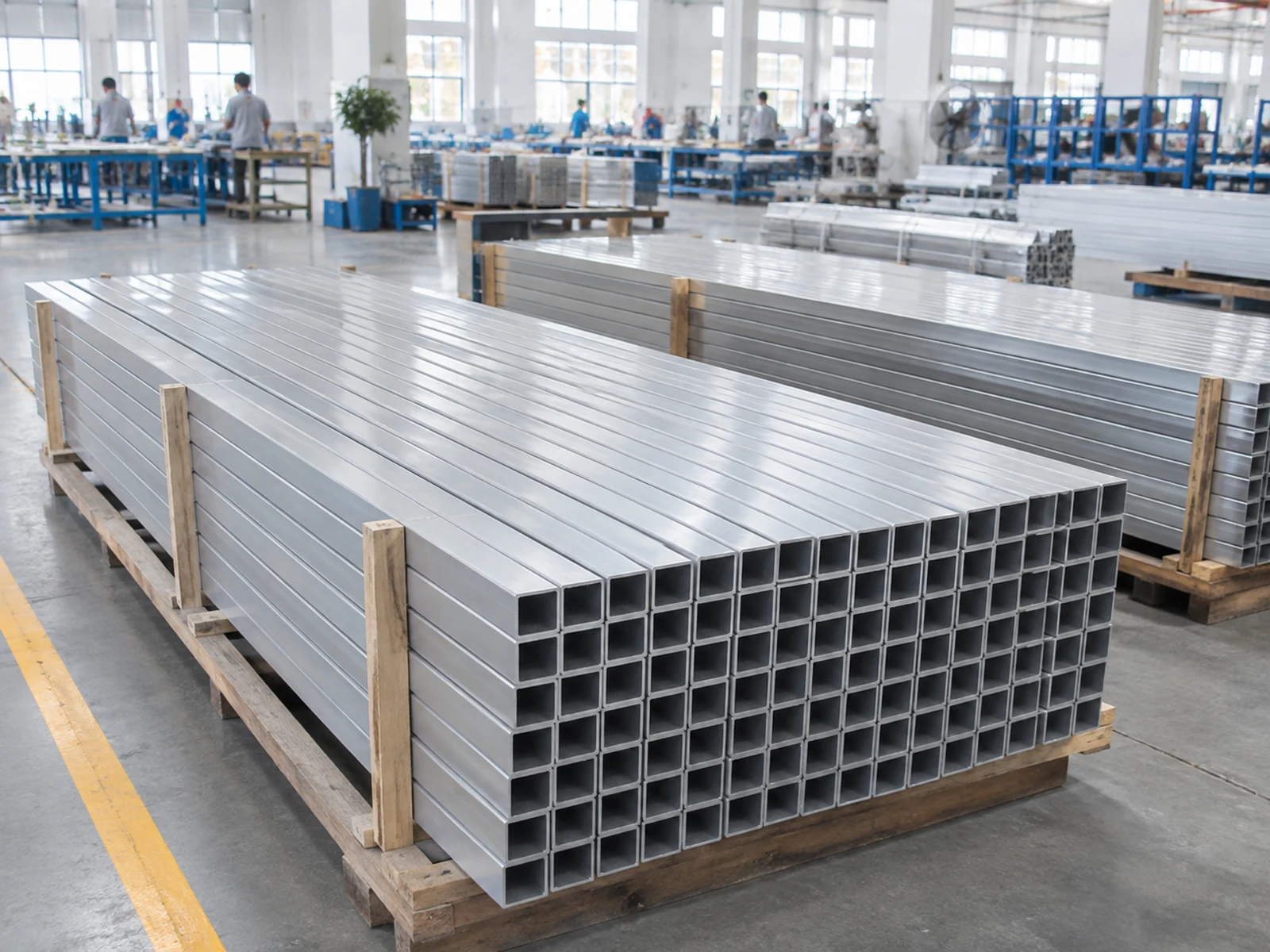
Ask for a physical sample or accurate section drawing before choosing a clamp. Check the long rail, the shortest member and any thin-wall or open-side variant. Record the orientation that preserves a visible face and the side that must be supported near the blade. If the cut member will later receive a connector, specify the end condition in measurable terms. Finished length, end angle and visible-mark criteria should come from the released part, not a generic saw catalogue tolerance.
Plan the trial around the hard members
Trial selection should cover the worst credible member in each distinct section family. A long guard rail tests support and handling; a short spacer tests holding and offcut control; an asymmetric or thin-wall profile tests orientation and clamp contact. Do not qualify a full kit by cutting one easy square tube. Give the saw supplier the drawing revision, real stock and first-off inspection method before asking for a machine recommendation.
During setup, confirm where the bar rests, where pressure is applied and where the finished piece lands. Keep people clear of moving feed and blade areas, using the machine’s approved operating procedures. The related saw image below shows a loading and clamping area; it does not prescribe a model for the dispenser kit or demonstrate a trial on its stock.

First-off acceptance should identify the length datum, measuring instrument, end form, burr location, distortion and contact marks. Record the result against a part and stock lot. A controller feed-position value is not a finished-part measurement. Repeat checks after changing a stop, section, clamp or blade setup as the approved control plan requires. If the part fails, separate stock variation, support, clamp contact, cutting and later handling as possible causes instead of treating every bad fit as a saw accuracy issue.
Define the receiving and assembly handoff
Deliver members grouped by zone and revision rather than mixing similar-looking rails. A guard kit might include several uprights, cross rails and a control-support member; a machine build may also have steel stack structure and bought conveyor parts. The packing list should let the receiver count each aluminum line separately. Protect designated visible faces and critical ends during handling. Our saw output traceability guide covers the job-to-bundle handoff in more detail.
At receiving, the assembler should compare marks, lengths and end orientations against the current schedule before fitting panels or drilling holes. A change in pallet size, stack height, loading side or conveyor direction may change some guard dimensions, but it does not automatically change every cut member. Identify the affected part numbers and disposition of already-cut stock. The builder remains responsible for assembly fit, machine guarding, stack stability and line commissioning.
Compare bids at one supply stage
Ask bidders to price the same drawing set, quantity and delivery stage. A cut-blank price may cover stock, sawing, inspection, marking and packing. A prepared-member price may add holes, threads or finish. A complete guard price includes bought panels, hardware, assembly and separate validation. Do not compare these as if they are interchangeable. Request explicit exclusions for fork support, lift and grip mechanisms, conveyor drives, controls, interlocks and machine performance.
The lowest bar-cut price may create more receiving work if parts arrive mixed or unidentified. Conversely, a complete assembly quote may include work the buyer already performs. Evaluate the accepted output, inspection evidence, change handling and shipping format. A precise cut does not show that an aluminum member is structurally suitable for a pallet stack; only the authorized design and its testing can establish that.
Pallet dispenser guard frame cutting: eight RFQ questions
- Which released parts are aluminum cut blanks, and which belong to the load-bearing dispenser or conveyor?
- Who owns the guard, stack-support, transfer and control drawings?
- What section, alloy, temper, datum, length, end form and quantity apply to each aluminum member?
- Which faces and slots must retain a defined orientation?
- Which long, short or thin-wall sections belong in a representative saw trial?
- What first-off and lot-traceability evidence releases each part family?
- Are panels, hinges, interlocks, secondary machining and finish excluded or separately priced?
- Does acceptance occur at loose blanks, prepared members or a complete validated guard?
Related equipment video
The following clip from the Jiurun Machinery channel shows a general aluminum saw process. It does not show this pallet dispenser, its approved stock, a proposed model configuration, a customer job, a witnessed trial or verified performance.
Need a quote for an approved aluminum guard-member kit? Send the released drawings, part schedule and representative extrusion through our contact page. We can discuss cutting and checking the named blanks while the dispenser builder retains the stack mechanism, guarding design and complete-machine acceptance.