
Outsourced aluminum cutting capacity reservation can look settled long before production is actually scheduled. A buyer can have a twelve-week forecast, a supplier who says “we have capacity,” and a production date that still moves when the purchase order arrives. Those statements describe different commitments. For outsourced aluminum cut parts, capacity reservation needs a named process, a time window, a quantity range, and a rule for what happens when drawings, material, or demand change. This guide helps buyers separate planning information from an executable cutting slot and decide what evidence to request before promising a delivery date downstream.
Why a forecast is not a reserved cutting slot
A forecast helps a cutting supplier plan labor, material, fixtures, and machine time. It may be updated or cancelled. A firm purchase order authorizes work under the parties’ agreed terms, but a purchase order alone does not prove that the required machine, tooling, operator, and inspection window are available. A reserved slot is the supplier’s written allocation of a defined operation during a defined period, subject to stated release conditions. The legal effect of any forecast, reservation, or order depends on the actual contract; buyers should not infer it from an informal email.
The practical question is: what exactly can the supplier start, and when? A promise about overall factory capacity is weaker than a commitment to a particular cutting route for a particular profile family. Long profiles, short repeat cuts, angled ends, and parts requiring careful surface protection may compete for different resources. The buyer should ask for the constrained step, not a generic percentage of spare capacity.
Three commitment levels to distinguish
| Level | What it helps the buyer plan | What still needs confirmation |
|---|---|---|
| Rolling forecast | Expected profile family, approximate volumes, and likely call-off timing | No assumption that stock, tooling, inspection, or machine time is held |
| Written slot reservation | A defined cutting window and agreed release deadline | Conditions, quantity tolerance, change rules, material arrival, and recovery if the slot is missed |
| Released firm order | Authorized quantity, drawing revision, delivery and acceptance terms | Supplier acknowledgement of the actual route and achievable dispatch date |
Documenting an outsourced aluminum cutting capacity reservation in writing lets both parties distinguish a planning signal from a held slot. Ask the supplier to label each line in its plan. A weekly forecast should not quietly turn into a non-cancellable order. Equally, a buyer should not treat an unconfirmed forecast as an insured place in the queue. If a reservation fee, material commitment, or cancellation charge applies, record it in the commercial agreement and have the responsible people review it.
Define the work that the slot actually covers
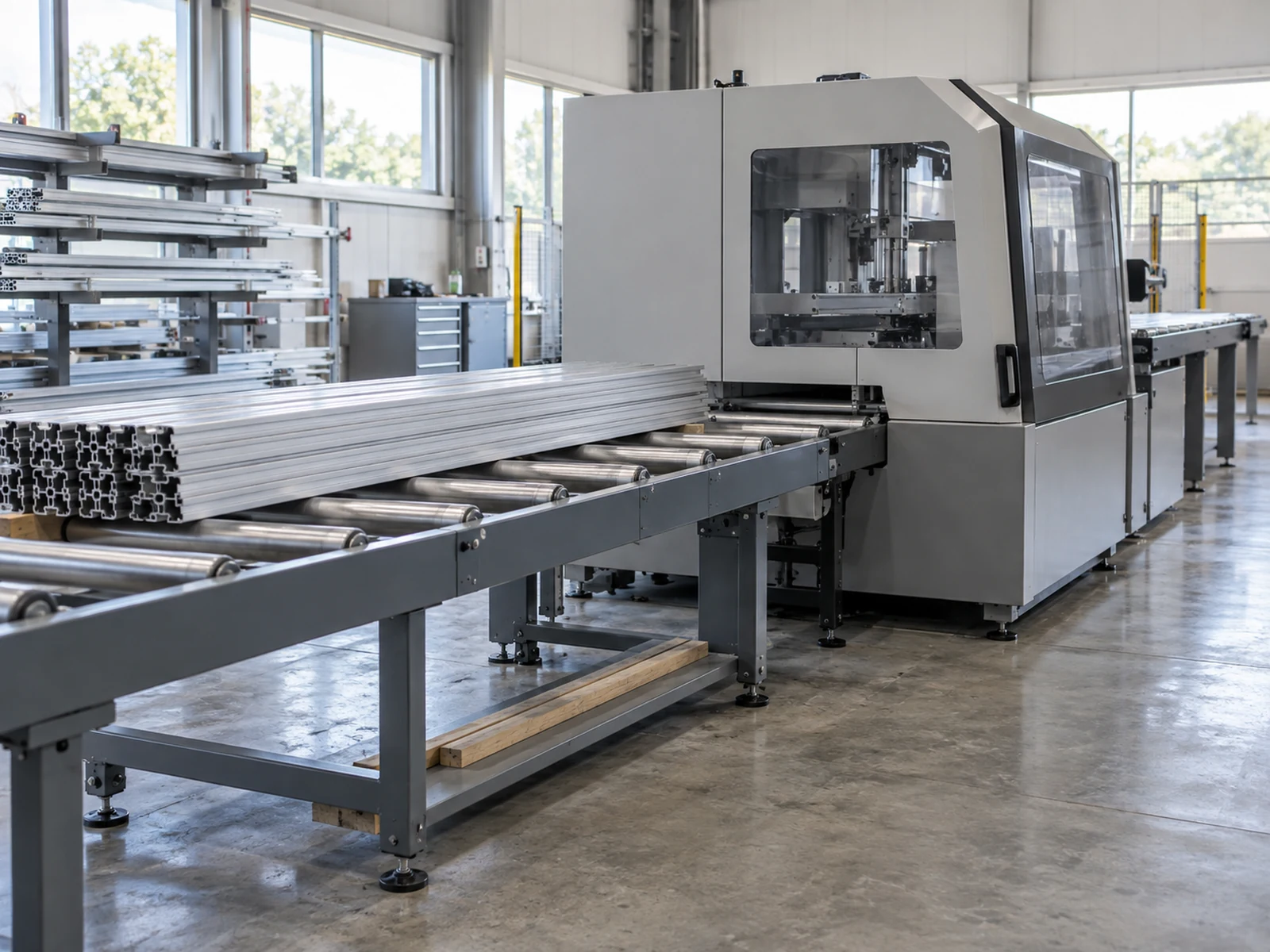
Outsourced aluminum cutting capacity reservation is useful only when the reservation matches the work being purchased. Send the profile drawing and current revision, alloy and temper if specified, incoming length and condition, cut-length and angle requirements, expected lot size, packaging standard, and the inspection method for the features that matter. Identify whether the supplier is responsible only for sawing or also for deburring, washing, marking, kitting, and delivery. Those downstream tasks can become the bottleneck even if the saw is free.
Request a simple route map: incoming material check, cutting setup, first-piece approval, production, in-process checks, final review, protective packing, and dispatch. Ask which steps are internal and which are subcontracted. The supplier can then state which resource is being held, whether the slot includes setup and first-piece time, and whether another customer’s urgent order can displace it. A throughput estimate from an unrelated profile should not be used as a delivery guarantee for this one.
Write release conditions before the first call-off
Before accepting an outsourced aluminum cutting capacity reservation, compare the supplier acknowledgement with the actual route. A workable reservation states the latest date for a firm call-off and the data required at that point. Typical prerequisites include the approved drawing revision, accepted reference sample or agreed first-piece criteria, confirmed incoming material, purchase order, and delivery address. If the buyer supplies extrusion, identify who checks quantity and condition on arrival. If the supplier purchases stock, specify how material availability and price changes are handled. Treat an incomplete release as an explicit exception, not a silent assumption that the original date still holds.
Set a change window. For example, the parties can agree which quantity or mix changes are allowed before the cutting slot is frozen; the exact values must be negotiated for the job. Specify whether a revision change triggers new setup, a fresh sample, or a revised delivery commitment. Separate “forecast updated” from “order released” in the shared schedule. A small change to the profile or cut list can have more effect than a larger change in quantity.
How to verify an outsourced aluminum cutting capacity reservation
- Supplier acknowledgement: the order number, profile family, drawing revision, quantities, and agreed dispatch date.
- Capacity statement: the operation or resource held, slot start and end, setup allowance, and what the slot excludes.
- Material readiness: whether extrusion is received, ordered, or still awaiting confirmation; identify the party responsible for delay.
- Quality gate: first-piece criteria, who approves it, and how nonconforming output will be isolated and replaced.
- Progress signal: an agreed milestone before the ship date, such as material received or first piece accepted, with a named contact for escalation.
This is a request for process evidence, not for a photograph of an idle machine. A machine can be visible and still be unavailable for the required profile, fixture, operator, or inspection plan. Where the delivery risk is material, ask for a short written reservation acknowledgement and a dated update at the release gate. The buyer can then align its own assembly plan with the supplier’s real commitments.
Build a first-lot gate into the reservation
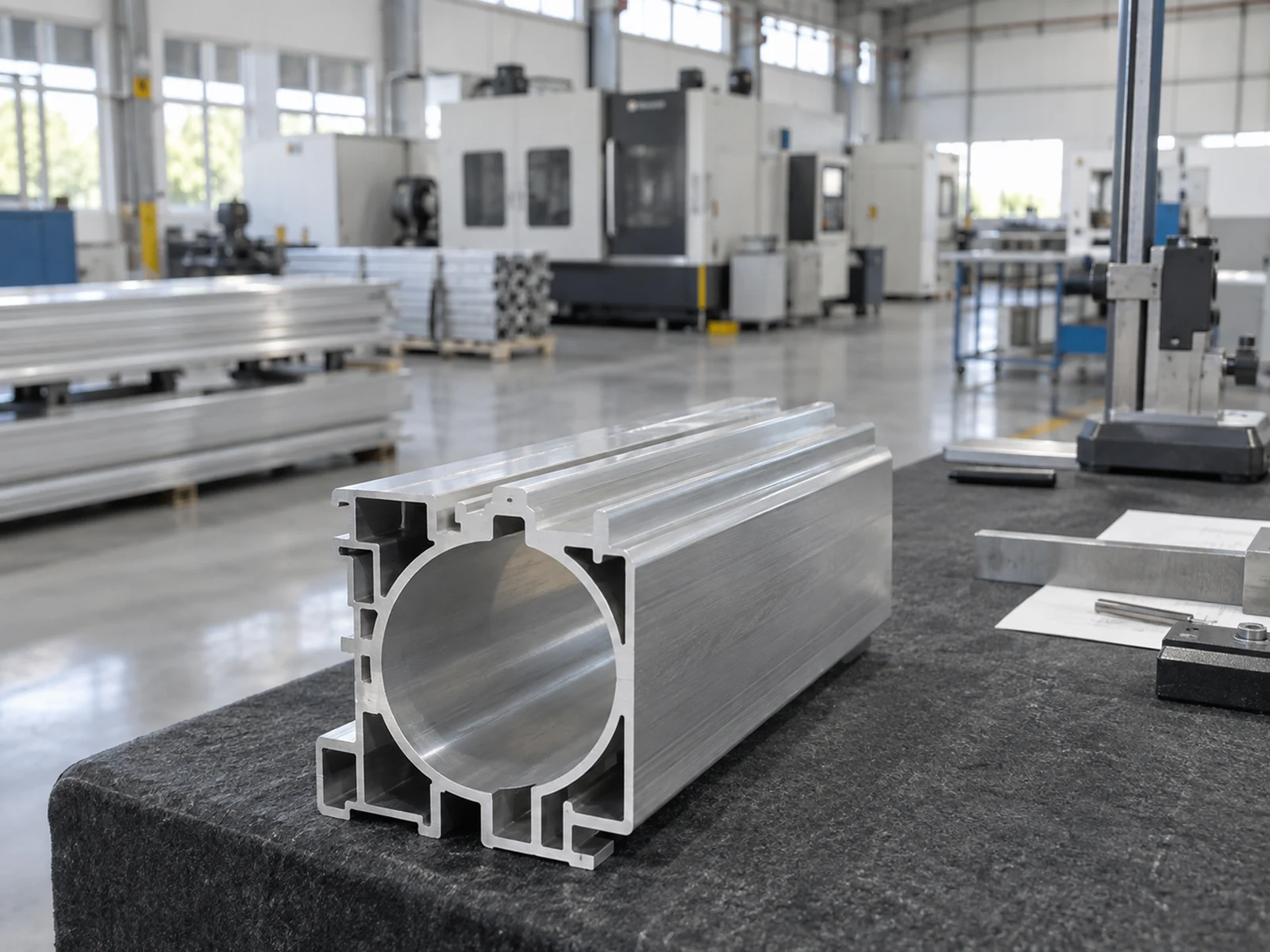
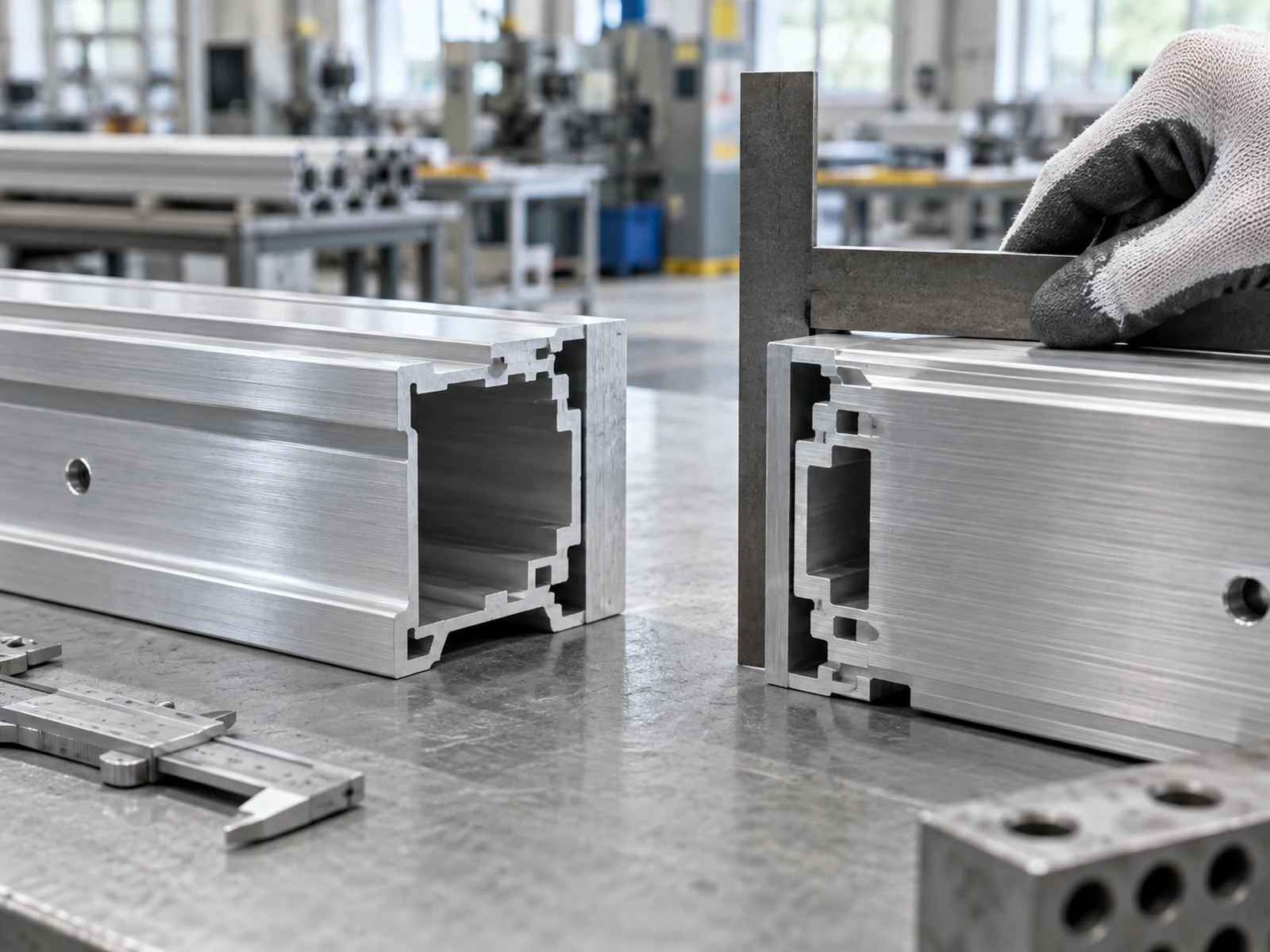
An outsourced aluminum cutting capacity reservation has value only if the first accepted lot can be produced in the available window. Capacity and conforming output are different questions. For a new or changed aluminum profile, reserve time for first-piece review before the whole lot is cut. Define which drawing dimensions, end conditions, burr limits, surface areas, and pack presentation will be checked. Record the measurement method and acceptance authority. A feed-positioning specification on a saw does not establish finished-part length accuracy; the finished pieces must be assessed against the drawing and agreed inspection plan.
If the first piece fails, agree whether the supplier may adjust within the same slot, whether the lot is held, and who approves restart. Keep parts from the affected setup or revision identifiable. A reservation that covers machine time but leaves no allowance for review and recovery may make the published dispatch date fragile. For a supplier site change or different cutting route, use a specific requalification gate; our site-change verification guide explains the evidence to compare before release.
What if the forecast changes or the supplier misses the slot?
When an outsourced aluminum cutting capacity reservation must change, agree on a decision path before the disruption. When demand falls, determine whether reserved capacity expires, rolls forward, or carries a charge. When demand rises, ask for the additional quantity’s confirmed date rather than assuming the original slot expands. If incoming extrusion or an approved drawing arrives late, identify which date will be recalculated. If the supplier misses a milestone, ask for a revised capacity plan that names the constraint and the earliest recoverable lot, not an unsupported promise to “catch up.”
Split recovery into three options: protect the highest-priority parts within the existing route; re-sequence lots with buyer approval; or qualify a second cutting route. A second route should not be treated as interchangeable until tooling, sample, inspection, and packing conditions are checked. Keep the revised promise tied to quantities and drawing revisions. This gives purchasing and production a defensible basis for deciding whether to expedite, reschedule assembly, or draw from approved stock.
General equipment example
A buyer’s one-page reservation request
Before committing a delivery date to your customer, ask the cutting supplier to answer these questions in one page: Which profile and revision are covered? What quantity range and delivery window are being held? Which operations, setups, and first-piece review are included? What release deadline and material conditions apply? What changes can be accommodated without a new date? When will the supplier report the next milestone, and who owns an exception? If any answer remains open, describe the date internally as provisional.
For an outsourced aluminum cutting capacity reservation, the goal is a traceable commitment that purchasing, quality, and production can all use. Send JiurunCut the profile drawing, expected lot mix, current supplier route, and target delivery window if you would like to discuss a cutting process and the questions your team should validate before placing an order. Any proposed capability or lead time should be confirmed for the actual material, configuration, drawing, and inspection requirements before release. Contact the team.
Further reading
- NIST MEP: supply-chain risk management strategies for small manufacturers — demand planning, supplier visibility, and capacity risk.
- NIST MEP: supply-chain resources — forecasting, operations planning, and supplier performance context.