
Outsourced aluminum cut-part safety stock can protect an assembly schedule, but only when the buyer and cutting supplier agree exactly what is being held and what event starts replenishment. A photograph of bars on a rack, an annual forecast, or a verbal promise to keep some parts available does not establish an available buffer. The purchase decision is whether to fund and govern a defined quantity of accepted, traceable finished cut parts, with a release method that still works when demand or a drawing changes.
This guide is for buyers who have already chosen to source cut aluminum profiles externally and need a repeatable buffer agreement. It addresses stock definition, trigger logic, evidence, commercial ownership, and an exit route. It does not assume that any particular supplier, saw model, or customer has achieved the quantities in the examples.
First define the stock unit: material, cut piece, or accepted kit
A supplier can hold long extrusion stock and still need time to cut, inspect, sort, and pack each release. It can hold cut pieces that are not yet accepted against the current drawing. It can also hold complete, accepted kits ready for a call-off. Those are different promises. Put the part number and revision, alloy and temper, profile section, cut length and angle, visible-face protection, tolerance and inspection rule, quantity unit, packaging, and storage location on the same schedule as the buffer target.
For a mixed kit, identify the limiting member. A rack with 100 rails and only 40 matching brackets may support 40 kits, not 100. State whether the buffer is counted in individual pieces, complete kits, or production days. Do not translate between them without the bill of materials and a current demand rate. If buyers need a ready-to-assemble kit, ask for a kit-level available-to-promise count rather than a gross piece count.

If this basic choice is still open, the separate guide on production-batch versus delivery-release minimums helps distinguish a cutting run from the number of parts shipped on one call-off. A minimum order is a commercial floor; it is not the same as a safety-stock target.
Outsourced aluminum cut-part safety stock: set the target from a risk window
The buffer should cover a defined exposure: the time from a valid replenishment signal to newly accepted replacement parts becoming available, plus any agreed contingency. Document the planning demand used for that window, the observed range of consumption, the replenishment steps, and the review date. If both demand and supplier lead time vary, record the uncertainty instead of copying another product’s fixed percentage. The same number of pieces may be generous for a slow-moving spare and inadequate for a line that consumes the part every shift.
A practical opening discussion uses three quantities: the target on-hand accepted stock, the reorder or replenishment trigger, and the maximum exposure the buyer is prepared to own. For illustration only, if planning consumption is 20 accepted pieces per day, a six-day replenishment path corresponds to 120 pieces of expected use before replacement. A buyer could discuss an additional contingency based on demand variation and consequence of a shortage. That arithmetic is a planning example, not a recommended Jiurun capability, universal safety-stock formula, or promise of six-day cutting lead time. Replace every input with evidence from the actual part and supplier.
Ask what happened on the longest recent replenishment, not only the average one. Was raw material already on site? Was a profile family sharing tooling or clamping? Did inspection or customer approval hold the lot? Did transit or customs matter? The trigger must occur early enough for the entire replacement path. If a supplier can cut quickly but cannot obtain the extrusion for weeks, an accepted-piece buffer may need a separate raw-material commitment.
Define a replenishment trigger that cannot be mistaken for a forecast
Forecasts help capacity planning, but a forecast revision is not automatically authority to cut or ship. Identify the event that releases work: a purchase-order line, portal call-off, approved email, consumption scan, or agreed electronic signal. State who can issue it, when the supplier acknowledges it, the required response, and the date from which lead time starts. Use one part revision and one unambiguous unit on every signal.
The trigger may be a periodic review or a consumption-based threshold. In a consumption-based arrangement, the buyer and supplier should reconcile opening accepted stock, released quantity, rejected or quarantined quantity, replenished accepted quantity, and closing available stock. A visual Kanban card or digital equivalent can signal that more parts are needed; it cannot by itself prove a physical count. The NIST Manufacturing Extension Partnership description of Kanban explains the demand-driven replenishment principle. Apply it only after specifying who maintains the record and how discrepancies are corrected.
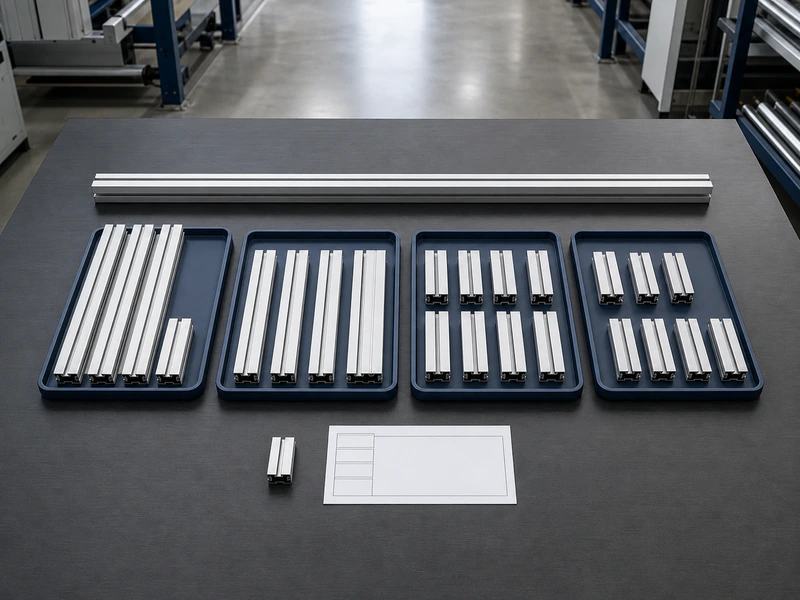
A useful exception rule is as important as the normal trigger. If available stock reaches the trigger but a drawing revision is pending, should the supplier continue the old revision, pause, or seek written authorization for a limited bridge lot? If a release would exceed the agreed buffer, does it become a separate expedited order? If a count is disputed, which physical inspection and document set takes priority? Agree these answers before an urgent shipment forces them.
Require evidence of available stock, not a single headline number
Ask for a dated stock statement by part number, revision, lot or batch reference, location, and status. Separate accepted and available pieces from work in process, in inspection, quarantined, allocated to another order, or in transit. The stock statement should reconcile with releases and new accepted receipts. If the supplier is holding complete kits, request a kit count and identify any missing component. A photo can help locate a rack; it cannot establish acceptance, ownership, or a reservation against another customer’s demand.
Define the physical-count cadence and tolerances for discrepancies. The buyer may want an initial count, recurring cycle counts, and a count on ownership transfer or contract close. Specify whether the buyer can audit remotely through dated records or on site, and who pays for resolving a mismatch. Lot identification matters when a cut-face concern, extrusion defect, or changed drawing affects only part of the buffer. The inspection record should point to the agreed acceptance criteria, not a generic claim of precision.
NIST MEP includes increasing safety stock among supply-chain risk responses and emphasizes supplier metrics and inventory visibility. That supports treating a buffer as a controlled risk measure. It does not validate any specific cutting supplier, quantity, or service level.
Price the stock you might never call off
Ask the supplier to separate the cost of material, cutting and inspection, packaging, storage, financing, insurance, and release freight. State when title and risk of loss pass, when an invoice is raised, how long the supplier must hold the stock, and who pays if it becomes obsolete. A buyer-funded finished-part buffer ties up money earlier than purchasing each release; a supplier-funded buffer may appear cheaper upfront but be reflected in piece price or a commitment. Compare total cost over the likely demand range, including excess and obsolete stock.
Set a cancellation and revision rule. If the buyer changes a drawing, who owns already-cut pieces that meet the old approved revision? Is rework technically permitted, and who approves it? If demand drops, is there a capped buyout, a gradual drawdown, or a negotiated disposal process? Avoid an indefinite obligation described only as “supplier will keep stock.” Define a term, a review date, an ownership ceiling, and a way to reduce the buffer after demand falls.
In the quotation, ask for both a normal replenishment lead time and the limits of an expedited route. Do not use an expedited promise as the basis for the standard buffer unless capacity and raw stock are specifically reserved. Confirm whether inspection and packing are included in the quoted time. A cutting machine’s feed-position specification would not establish finished-part accuracy or shipment readiness.
Match the buffer to the cutting workflow
For repeating cut parts, production may be organized by profile family, setup, available stock length, and inspection batch. A safety-stock agreement should specify whether each replenishment run can combine parts, how the supplier prevents revision mixing, and which cut-face or handling requirements remain mandatory. For protective film or visible surfaces, check whether long storage affects packing, labels, or inspection access. The buyer’s acceptance rule governs; a general machine photo cannot answer these part-specific questions.

The video below is a general equipment view from Jiurun Machinery’s YouTube channel. It shows an aluminum saw in operation. It is not footage of the part, material, stock arrangement, supplier agreement, customer, model configuration, trial, or performance discussed in this article.
Use a short pilot before committing to a long term
Choose one stable part family and agree the initial accepted count, trigger, replenishment path, record format, and escalation contacts. During the pilot, log each release date, quantity, stock balance before and after, replenishment acceptance date, shortages, count discrepancies, and drawing changes. Review whether the trigger fired early enough and whether the physical count matched the statement. Expand only after the process works, not because the first stocking photo looks reassuring.
A buyer can compare three routes: accepted finished-part stock for high-consequence, repeat demand; reserved raw extrusion plus scheduled cutting where mix changes often; or ordinary purchase orders where demand is irregular and a fixed buffer would go stale. The lowest quoted price per cut piece may not be the lowest cost once holding, disposal, shortages, and administration are included. The best route is the one whose evidence, risk allocation, and release rule your team can actually operate.
RFQ checklist for an outsourced cut-part buffer
- Which drawing revision, part numbers, and acceptance criteria define a countable good piece or complete kit?
- What are the target, trigger, minimum and maximum accepted-stock quantities, and who may change them?
- Which signal authorizes cutting, replenishment, release, and shipment?
- What is the measured end-to-end replenishment path, including raw stock, cutting, inspection, packing, and transport?
- How will available, quarantined, allocated, and in-transit quantities appear in a dated stock statement?
- Who owns and insures the stock, when is it invoiced, and what happens to obsolete pieces?
- How are revision changes, shortages, disputed counts, expedited releases, and contract exit handled?
If the buffer depends on an in-house or supplier cutting cell that is still being specified, send the profile and finished-part drawings, tolerance and visible-surface requirements, expected range of releases, and proposed stock policy to JiurunCut for an engineering discussion. We can discuss what cutting configuration should be evaluated for those inputs; the buffer level and commercial commitment still need to be agreed with the actual part supplier.