
An operable louver blade must rotate after it is installed. That changes what a cutting-machine enquiry needs to prove: a repeatable blank that meets its drawing is useful, but its cut ends have to leave the system’s pivot-cap and linkage interfaces as the approved design requires. For operable louver blade cutting, start with the movement path and work backward to the saw trial.
This is a saw-scope guide for buyers of cut aluminum members. Pivot caps, frame routing, seals and the control bar may be supplied or assembled elsewhere. The system designer’s current drawings, not a general louver photograph or a machine brochure, set the dimensions and clearances.

The system drawing for operable louver blade cutting
In Knotwood’s operable-louver system, a pivot cap goes on each end of a blade and a control bar links the blades for simultaneous rotation. Its installation description calls for checking free rotation as blades go into the frame. That is one manufacturer’s arrangement, not a universal blade profile or a Jiurun machine specification.
Ask the system owner to identify the blade extrusion, pivot-cap part, frame opening and linkage on the same drawing revision. Mark the visible face and both blade ends. If the end treatment is asymmetric, the cut list needs a left/right convention. A nominal opening width alone does not establish the finished blank length or tell the saw operator which face should meet the stop.
The existing general louver-blade cutting guide helps separate blade, frame and support members. An operable system adds a second question: which end features and assembly steps allow that specific blade to rotate?
Separate saw-controlled dimensions from assembly-controlled checks
An operable louver blade cutting RFQ marks where each acceptance decision is made. The buyer can use this split to prevent a clean cut face from being mistaken for proof of a complete moving louver.
| Decision | Evidence to send or request | Who confirms it |
|---|---|---|
| Finished blade blank | Approved section and length datum, end orientation, tolerance, stock and finish condition | Designer defines; cutting supplier checks the blank against the released drawing |
| Pivot-cap interface | Cap drawing or physical sample, insertion/fastening method and any end preparation outside sawing | System owner defines; the relevant process owner checks the interface |
| Rotation in the frame | One assembled bay with specified frame, caps and linkage, then a movement check | System assembler or responsible test owner |
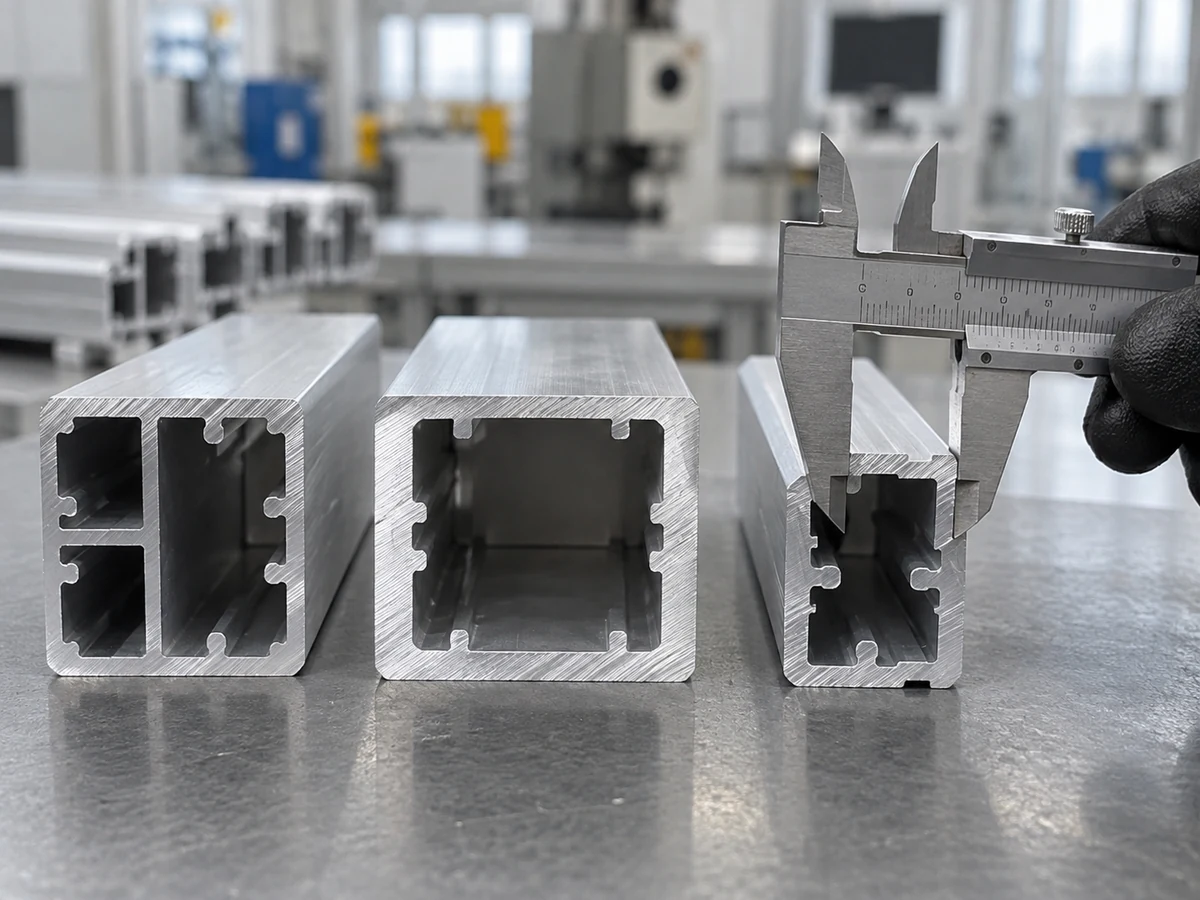
Where the drawing does not yet say whether a cap needs a saw-cut end, a secondary machining feature or a post-cut operation, leave that boundary open in the quotation. Do not assume that saw length alone will locate a pivot. Request the actual cap and section before agreeing to a production rate or an acceptance tolerance.
Use a sample sequence that isolates the saw’s contribution
First, confirm the stock section and the approved blade drawing revision. Record which face is supported and which end is the length datum. Then cut a small, traceable sample set using the proposed support and clamping arrangement. Measure the agreed blank dimensions and inspect for burrs, distortion and finish damage at the relevant ends. Keep rejected and accepted samples identified so a later assembly issue can be traced back to the correct setup.
Next, hand those blanks to the system owner with the matching caps and frame parts. Fit and cycle the assembly under the system owner’s procedure. Western Ventilation’s handling and installation instructions warn against bending or twisting blades, frames and linkage, and against fasteners interfering with operation. Those instructions apply to its products; they illustrate why free movement belongs in the assembled-system check, beyond a saw-only dimensional report.
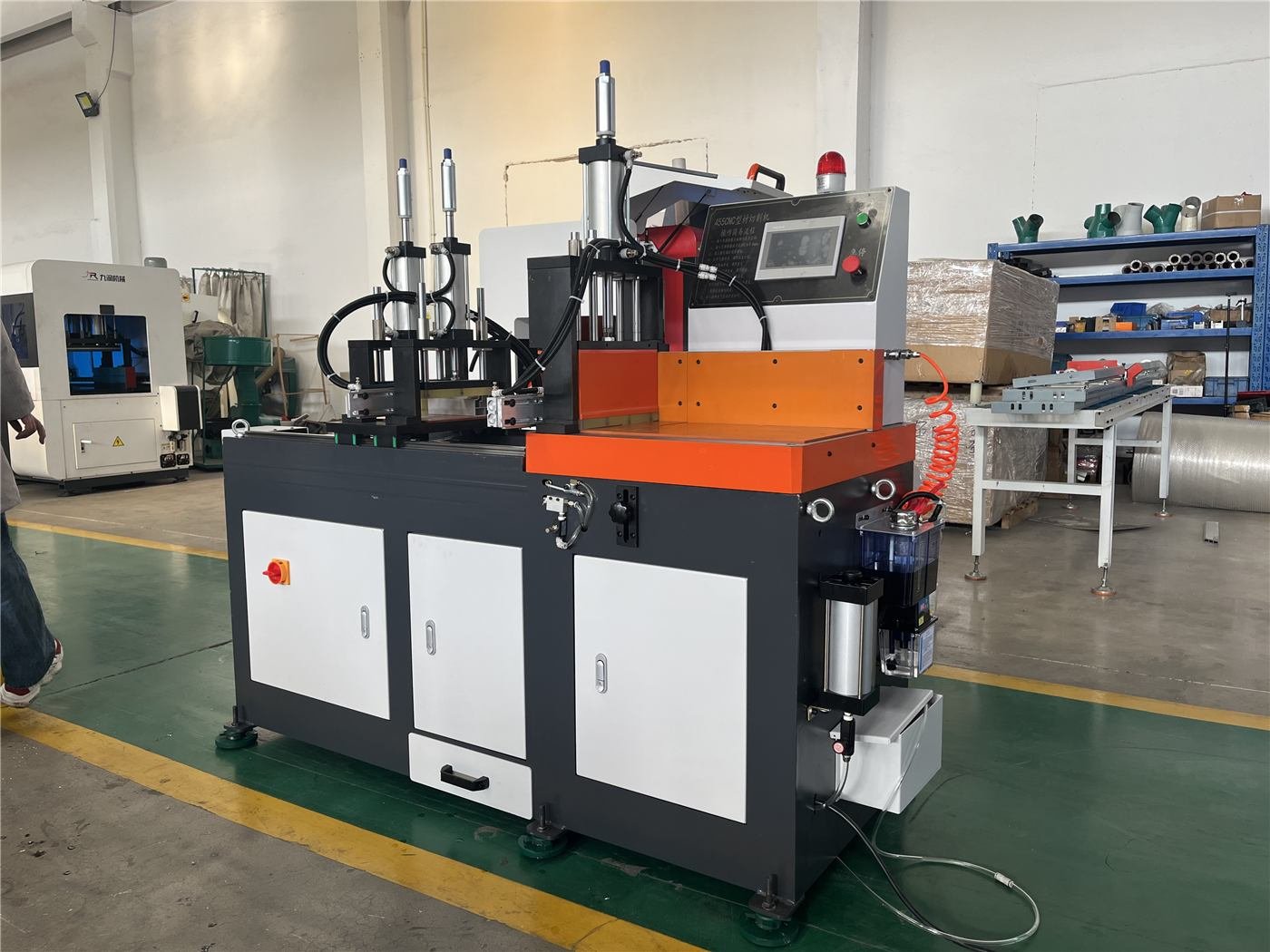
The following Jiurun channel video shows a general aluminum-profile cutting machine and its feed area. Use it to discuss access, stock support and sample-trial logistics with the supplier. It does not demonstrate this louver system, prove pivot fit or establish the machine configuration for your order.
What to put in the enquiry before choosing a machine
Send one drawing package rather than a blade length in isolation: the blade section and revision; the finished blank datum and end orientation; the pivot-cap and frame interface drawings or samples; material, finish and batch range; and the required sample quantity. State which downstream operations the saw supplier is being asked to perform, if any.
For operable louver blade cutting, ask for a written saw-only trial result: measured blanks, inspected end condition, setup identification and any limits observed with the supplied stock. Keep the assembled rotation check as a separate sign-off by the responsible system team. If the pivot detail is still unresolved, the most honest quote is conditional on that detail, with no implied guarantee of cap engagement or system movement.
For a Jiurun saw review: share the released blade section, cap interface and intended cut list through the contact page. We can discuss how to scope a cutting trial around those parts; the louver-system owner must approve the final assembly and operating criteria.