
Magnetic scale rail cutting starts with a question about what is actually being purchased. A bare aluminum guide extrusion, an extrusion carrying magnetic tape, and a ready-to-install measuring module are three different deliverables. A saw can make the metal blank to an approved drawing. Its cut length alone cannot establish usable measuring travel, reference position, readhead alignment, or system accuracy.
This distinction matters in format adjustment and stop positioning. igus describes digital measuring guides in which an aluminum profile, magnetic tape, sensor and display form a ready-to-install system, with customer-specific rail and measuring lengths. That is an example of a supplier product architecture, not a Jiurun customer project or an approved saw process for that product.
Which of the three objects is on the purchase order?
Write the answer beside the part number before requesting a machine trial. If the order is for a bare rail blank, the cutting supplier can quote the approved extrusion and its sawed end condition. If it is for a rail with scale tape, the assembly sequence, tape protection and verification belong in the scope. If it is for a complete measuring module, a rail-length change may affect the carriage, readhead, end stops, effective measuring range and supplier warranty. Ask the system owner whether a modified module is allowed; do not infer that permission from the ability to saw aluminum.
The igus drylin W measuring-system listing separately identifies rail length and effective measuring length. Those published numbers apply to that listed system, not to every magnetic encoder. The practical lesson is to record both values on your own order and get the actual manufacturer’s approval for their relationship.
Choose the cut stage before selecting a saw
| Supply route | What the saw trial can establish | Who must release the remaining work |
|---|---|---|
| Buy a complete measuring module to length | No separate Jiurun blank-cut trial is implied. | Guide and measurement-system supplier. |
| Cut the approved bare aluminum rail, then install tape | Rail length, end geometry, edge condition and handling on that specific blank. | System integrator for tape, readhead and travel verification. |
| Shorten a rail after tape or hardware is installed | Only a procedure expressly approved for that exact assembly. | Original system owner or its authorized service process. |
For many buyers, the second route is the only one involving a separate aluminum saw purchase. Even then, the rail’s coating, slot geometry, locating face and downstream tape channel must be identified. A clean-looking end is not evidence that the guide carriage will travel correctly. If the tape is already fitted, do not treat it as ordinary bar stock in a quote or demonstration.
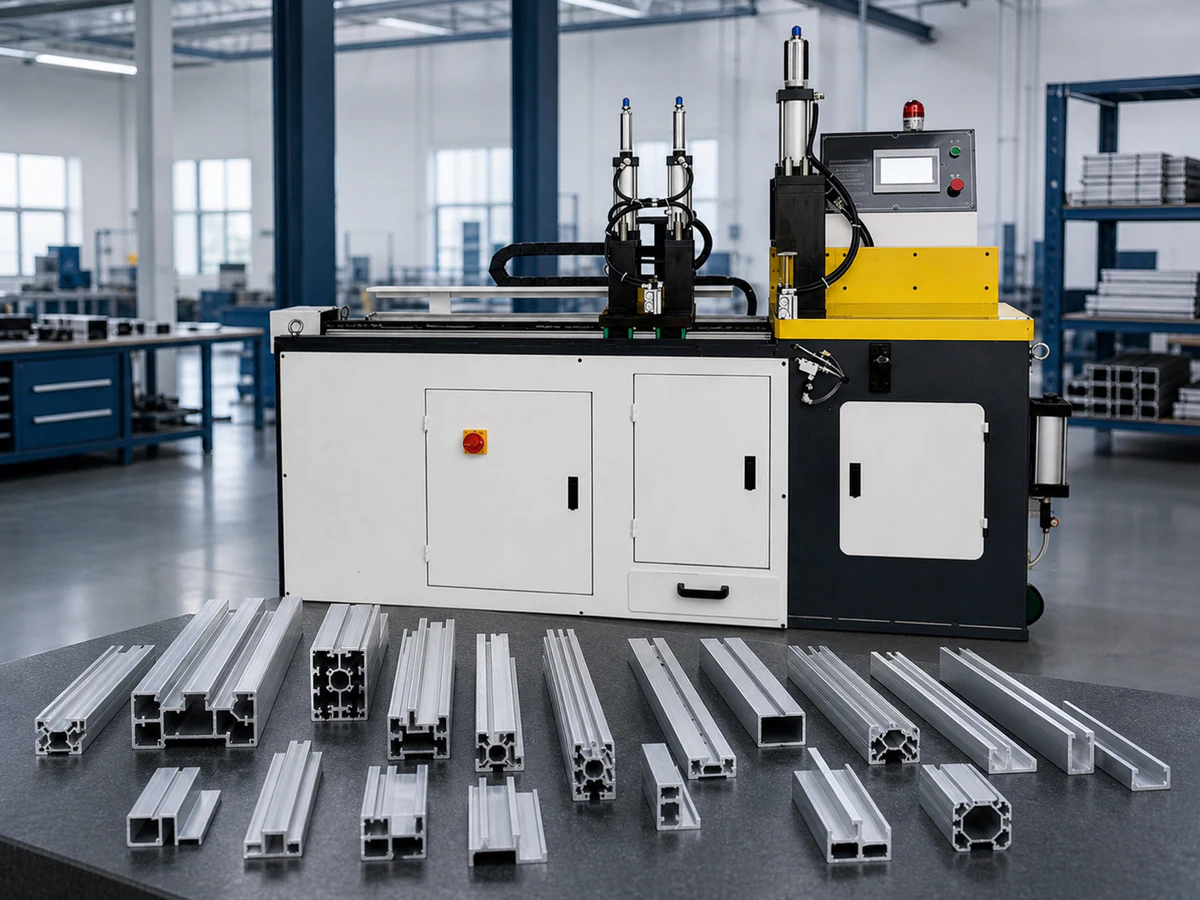
The metal blank has its own acceptance evidence
For magnetic scale rail cutting of a bare extrusion, release a drawing with the profile identifier, material and finish, cut length and tolerance, end squareness, controlled faces, hole or slot relationships, and any no-contact surfaces. Name the end from which later tape installation or a stop is referenced. Record whether coating occurs before or after cutting and whether exposed cut faces need a separate finish decision.
In a witnessed trial, use the actual approved rail section and stock condition. Check how the clamps touch the locating faces, whether the section moves as the blade enters, and whether burrs or chips remain where the tape, carriage or end hardware will sit. Measure the retained piece after release from the fixture, then inspect for marks on surfaces the guide supplier uses. A saw demonstration on a generic profile is useful for observing the machine, but it cannot substitute for this rail-specific acceptance.
If holes already exist in the extrusion, preserve their relationship to the retained ends. Our pre-punched profile cutting guide explains why equal lengths may still have different end-to-hole positions. That dimensional issue is separate from the later magnetic measuring function.

The magnetic scale needs a different sign-off
Do not copy a tape-length rule from another encoder into the saw drawing. A SIKO installation manual, for example, specifies extra magnetic-tape length beyond the measuring section for its named sensor system and describes cleaning, bonding and covering the tape. That instruction is product-specific. The buyer should obtain the installation and service requirements for the exact scale, sensor and revision being used.
Reference marks can make the boundary even sharper. Renishaw/RLS guidance for an LM13 magnetic scale treats certain cut or magnetized reference-mark options as factory-order features. It would be unsafe to assume a field saw cut can preserve a specified reference location. Ask the encoder supplier what may be cut, where the mark belongs, and how the scale is reverified; its answer governs that product.
After the metal blank is accepted, the system owner should document tape placement, adhesion and protection, sensor gap and direction, usable travel, reference or zero behavior, end-stop clearance, and functional checks required by its own procedure. Saw-part approval and measuring-system approval need separate signatures or records. A failed readout does not automatically mean the saw length was wrong; a correct length does not prove the readout is right.
A purchase brief that keeps the boundary visible
- Identify the deliverable as bare rail, rail with tape, or finished module, with the responsible supplier for each stage.
- Provide the released rail drawing, finish state, material, quantity range and permitted clamping and handling surfaces.
- State both physical rail length and required effective measuring travel, without assuming they are equal.
- Define metal-blank inspection separately from tape installation, sensor setup and system function.
- For any already assembled rail, obtain the original manufacturer’s written modification and revalidation route before quoting a cut.
This brief helps a buyer compare a complete guide-system purchase with a bare-profile sawing route. The same scope discipline also applies to other linear-actuator aluminum members: the sawed extrusion and the assembled motion product have different acceptance gates.
Watch the saw process in context
The following video is from Jiurun’s own channel and shows a JR-455CNC aluminum-profile cutting machine. It is a general equipment example only. It does not show magnetic tape, the specific rail in this article, an approved cut of an encoder assembly, or verified measuring accuracy.
Discuss your rail blank with JiurunCut: send the released extrusion drawing, actual stock sample, length schedule, required end condition and the system owner’s integration boundary. Ask for a trial on the bare metal part you intend to cut. Keep magnetic-scale installation and functional sign-off with the designated system specialist.