
The blade label is easy to compare; the sound of an installed cutting cell is harder. A buyer may pay for a “quiet” aluminum blade and still hear the extraction fan, a pneumatic exhaust, or the profile vibrating under a clamp. Before paying a premium, define the sound change that matters and test it on the actual saw. A low-noise aluminum saw blade is a tooling proposal, not a promised sound level for a complete factory line.
This guide is for a purchasing and production team comparing a compatible standard blade with a proposed noise-reduced alternative. It does not set a safe exposure limit, diagnose a machine fault, approve a blade for any Jiurun model, or replace a competent workplace noise assessment.
Which part of the cycle needs to be quieter?
Write down when the objection occurs. Is it a high-pitched tone with the spindle running free, the loaded cut, the moment a profile moves, or the extraction system that continues after the blade stops? A quiet-running claim for one blade cannot answer every one of these questions. Keep the saw’s idle state, cutting state and complete cell cycle separate in the trial record.
Also identify the listener and location. A reading beside a guard, at an operator position and at a neighboring workstation can differ. Agree fixed measurement positions and a repeatable operating state before comparing tools. Our aluminum saw noise quotation guide covers how to request a reported machine figure; this page addresses the narrower decision to substitute one blade in a specific cutting cell.

Read the low-noise aluminum saw blade claim in its own application
Blade makers describe different designs and applications. Kanefusa’s Sash Pro page describes vibration-damping slits and identifies extruded profiles, thin sheets and bars among its applications. LEUCO’s G7 non-ferrous blade entry describes special laser features for reduced noise in a named aluminum window and façade profile application. Those are manufacturer statements about particular tools. They do not show that either tool fits the proposed Jiurun saw or will reduce sound at your workstation.
Request the exact blade designation and the maker’s current application data. The machine and blade suppliers should check diameter, bore, pin pattern, kerf, tooth form, permitted speed, flange and guard fit, and the actual profile material and wall layout. Do not swap a blade solely because two catalogs use the word “silent.” The slot-design guide explains why an expansion feature and a sound-damping feature also require separate descriptions.
Run one comparison that can answer the purchase question
Agree a baseline blade and the proposed alternative before cutting. Use the same saw, recorded blade identities, representative profile lot, drawing revision, fixture and clamp arrangement, extraction status, and planned cut sequence. Note every necessary setup change; if tooth geometry or kerf requires a different program or support, the two runs are no longer a simple blade-only comparison. The suppliers should approve each configuration first.
For each run, record the blade’s condition, the saw’s idle state, a representative loaded cut, and the complete cycle. Keep the microphone location, instrument, weighting and measurement method consistent. Repeat enough comparable cuts to see whether the result is stable rather than selecting one unusually quiet cycle. A qualified assessor should choose the method for any formal occupational-noise conclusion. The OSHA Technical Manual distinguishes sound-level measurements at fixed locations from worker exposure assessment and discusses baseline surveys under normal operating conditions; its US regulatory discussion is not a substitute for the rules at the buyer’s site.

Use a simple decision sheet rather than a single headline number:
- Blade identity and approval: confirm the two actual tools and compatible machine setup.
- Profile and cut program: prevent a different job from explaining the apparent sound change.
- Idle, loaded cut and full-cycle observations: show where any change occurs and what still dominates.
- Fixed locations and method: make repeated sound observations comparable.
- Accepted parts and blade cost: keep the sound objective alongside production quality and value.
Do the cut parts still pass?
A quieter run is not a purchasing success if the revised blade leaves unacceptable burr, end geometry, length variation or visible-face damage. Keep the same acceptance drawing and inspection method for both runs. Record accepted pieces, rework and reasons for rejection, along with any change in cutting time or tool-change work. The blade cost per accepted part guide gives the separate economic lens.
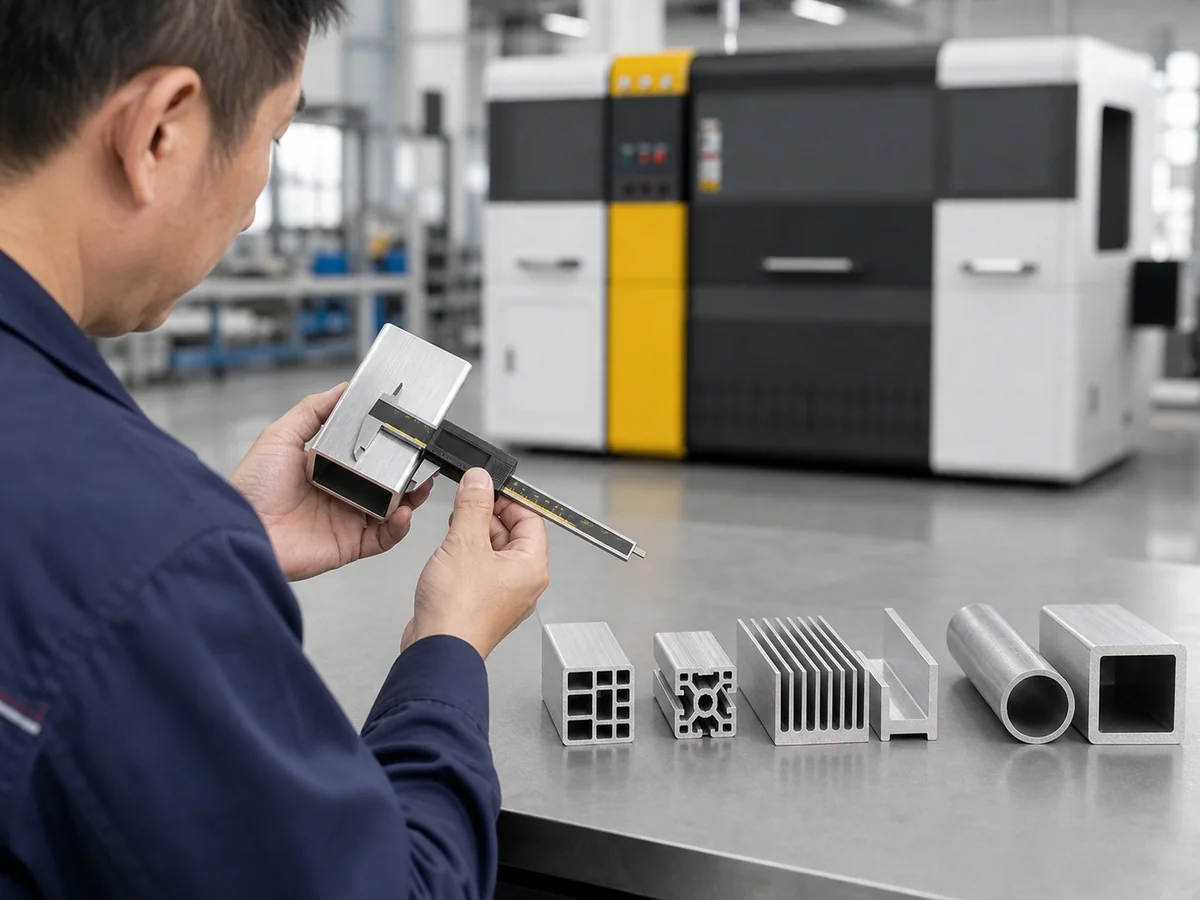
A low-noise aluminum saw blade should earn its place on the actual job, with the chosen measurement and part-quality limits recorded together. There are three sensible outcomes. If the candidate blade reduces the agreed sound observation and still makes accepted parts at an acceptable total cost, document the approved setup. If the sound change is small because another cell component dominates, investigate that source before buying blades for a problem they cannot solve. If the tool does not meet the part or machine requirements, reject that substitution regardless of its catalog noise claim. Do not infer a workplace exposure reduction from one microphone reading; worker exposure needs its own assessment.
Use the equipment video for context only
The Jiurun Machinery channel video below shows an automatic aluminum cutting machine and feed path. It helps a buyer visualize a cutting cycle to specify for a trial. It does not identify a low-noise blade, document a measured sound level, or prove the result for the proposed material, saw or factory.
What should the buyer send for an answer?
Send the saw’s exact model and current blade record, the profile drawing and material, the cut list, the objection in the cycle, the current extraction and enclosure arrangement, and the accepted-part requirements. Ask JiurunCut and the blade supplier whether the proposed tool is compatible and what controlled trial they can support. State who will measure sound and who will judge the production parts.
Contact JiurunCut about a machine and blade trial scope with those records. A useful response identifies the proposed blade and the actual test boundary before anyone promises a quieter cell.
Source limits: The linked Kanefusa and LEUCO entries describe their own blade products. The OSHA manual informs the measurement distinction. None of these sources verifies an acoustic result for a Jiurun configuration or replaces the buyer’s on-site assessment.