
Linear guide preload is a component specification that needs its product-series definition. When reviewing an aluminum feeding or positioning arrangement, retain the complete rail-and-block reference beside any preload code.
A code such as ZA is useful only when the buyer can identify the manufacturer’s applicable table. It should not be treated as a universal percentage or a finished-cut accuracy claim.
This guide reads one documented product-family example, then uses clearly invented arithmetic to show what a rating-based expression means. It provides no preload selection or adjustment for an actual machine.
On this page
Check 1: read linear guide preload in the correct product family
HIWIN’s Linear Guideway catalogue, G99TE22-2011, describes preload in its QE-series section as negative clearance between the groove and balls, used to improve stiffness.
Its printed page 111 gives the following QE preload codes. The table is a manufacturer-specific reference from that identified catalogue edition, not a selection chart for every guide or machine.
| Code and catalogue label | Listed preload expression |
|---|---|
| Z0: very light | 0 to 0.02C |
| ZA: light | 0.03C to 0.05C |
| ZB: medium | 0.06C to 0.08C |
The catalogue defines C in this table as the basic dynamic load rating. Keep that definition attached to the expression; it is not a dimension or a stated finished-part tolerance.
For an actual quotation, obtain the documentation for the exact offered series, size and version. Ask the component supplier to identify the code definition that applies.
If a seller supplies a different family or an alternative manufacturer, retain its own reference table. A familiar pair of letters should not conceal a different specification.
An invented rating makes the expression easier to read
For arithmetic only, invent a component rating C of 10,000 N. Also assume an expression of 0.03C to 0.05C is the range being interpreted.
Multiplying gives 0.03 × 10,000 = 300 N and 0.05 × 10,000 = 500 N. The invented example therefore represents a range of 300 to 500 N under its stated assumptions.
The 10,000 N rating is fictional. It is not a real QE product rating, a JiurunCut component specification or a proposed setting.
The calculation explains how to read a fraction of a rating. It does not determine the correct preload, allowable axis load, mounting method or expected service life.
Ask the actual supplier to identify the applicable component rating and selection basis. Keep its calculation and reviewed component reference together if those records form part of the agreed supply.
Do not insert an unrelated load value into the expression merely because it uses newtons. The component rating and the application’s defined loads need their own labels.
Check 2: identify the complete proposed arrangement
Request the rail and bearing-block designations, quantities and arrangement drawing. Have the supplier name the relevant moving assembly and the component locations.
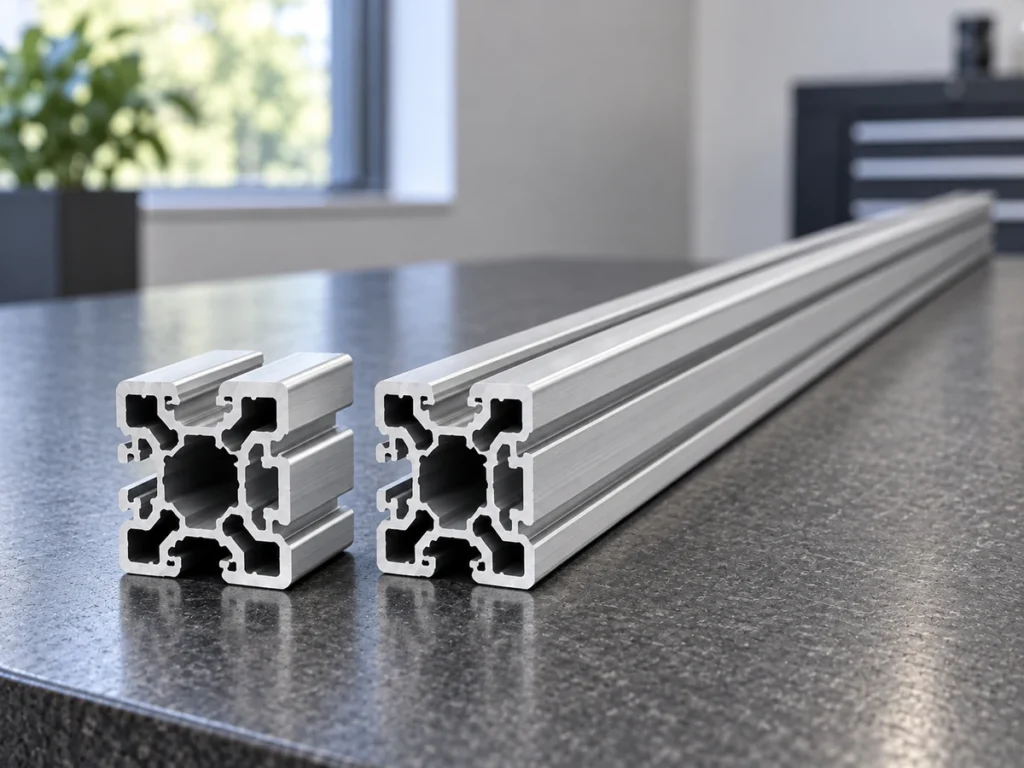
Keep rail length and required travel separately identified. The complete layout should show the arrangement being offered, rather than relying on a photograph of aluminum stock.
Ask which supports, mounting parts and protective provisions are included. Retain the supporting instructions and drawings named by the supplier.
When the aluminum member is supplied separately, define its delivered condition. A cut profile, a machined rail support and an assembled axis are different purchasing scopes.
Our aluminum rail-support guide helps organize that component handoff. Use the controlled support drawing and the selected guide’s instructions for the actual interface requirements.
If the quoted arrangement also includes a screw drive, keep its specification separately named. The ball-screw preload guide concerns the screw–nut assembly; it is not the definition of a guide-block code.
Ask the responsible designer to review the actual movement and application information. This article does not recommend a higher code because a label sounds more precise.

Check 3: retain separate evidence for the required task
Give the equipment supplier the actual aluminum section and required cut pieces. Identify the drawing revision, quantities and relevant handling requirements.
Ask the supplier to explain which task the proposed positioning arrangement supports. Keep that explanation connected to the exact offered configuration.
Agree the evidence needed for the machine review and the inspection needed for the finished parts. Name the quantities being evaluated rather than grouping every result under accuracy.
A linear guide preload entry belongs in the component record. It does not close a finished-length requirement or establish an accepted production rate.
If a supplier connects the entry to a broader performance claim, request the supporting evidence and conditions. Record the actual status as confirmed, pending review or outside the supplied scope.
For the agreed demonstration, use the defined sample material and job sequence. Retain the configuration identity with the results so a later change can have its applicability reviewed.
Our factory acceptance checklist helps organize those machine and part records. It does not replace the responsible engineering review of the component selection.
Keep the accepted configuration usable after delivery
Retain the final component list and drawing revisions with the order. Ask which supporting documents will be delivered and who supplies any outstanding record.
For spare parts, reference the accepted arrangement and machine identity. Keep an original replacement request separate from an alternative component proposal.
When a different product is proposed, ask the responsible supplier to identify the affected records and required review. Similar dimensions or a familiar preload code do not document substitution approval.
Have the service team use the applicable equipment and component instructions. A purchasing example supplies no bearing adjustment, installation torque or live-machine test routine.

Buyer questions about linear guide preload
Does ZA mean the same expression for every product?
Read the definition in the documentation for the identified offered family and version.
Does the invented calculation select a guide?
It explains multiplication under fictional assumptions. The actual component selection needs its responsible application review.
Can the code stand in for a cut-length report?
Keep the component specification and finished-part acceptance evidence separately identified.
Make the positioning question part of a clear enquiry
Send JiurunCut your actual profile drawing and cutting requirements. Include any specified component records when linear guide preload forms part of the proposed configuration review.