
LED housing mixed-length orders are easy to price by the meter and hard to deliver as usable products. One job may contain several retained lengths, yet every accepted length may also need a matching cover, end-cap arrangement and identification. A quote for cut aluminum alone can look inexpensive while leaving the buyer with unmatched components and unfinished work. Define the purchased unit first, then compare cutting routes at that same unit.
This guide is for a manufacturer or purchasing team planning repeated linear-lighting housing orders. It covers the aluminum cut stage and the commercial handoff around it. It does not assume that Jiurun supplies a particular lighting profile, cover, end cap, LED strip or complete luminaire. The buyer’s released system drawings and component approvals control the product.
Start with the deliverable, not the saw
Ask what the receiving team will actually accept. A cut-profile order supplies identified aluminum lengths; the buyer sources and fits the cover and end caps. A matched-component kit supplies a profile, the specified cover and the correct end-cap types as one traceable line item, whether loose or pre-fitted. A finished lighting assembly adds electrical, mounting and functional obligations beyond an aluminum saw. A cutting-machine RFQ should describe only the retained cutting and handling work. Do not compare a machine that produces bare cut lengths with a supplier quote for complete, tested lighting units.
Write the accepted delivery stage on the purchase order and the saw inquiry. State who cuts the cover, who prepares any wire exit, who supplies the end caps, who packs components together and who makes the final fit decision. If those steps belong to different parties, the interfaces need owners and evidence; a clean cut face is not a complete-kit acceptance.
Make one schedule for each approved profile family and length
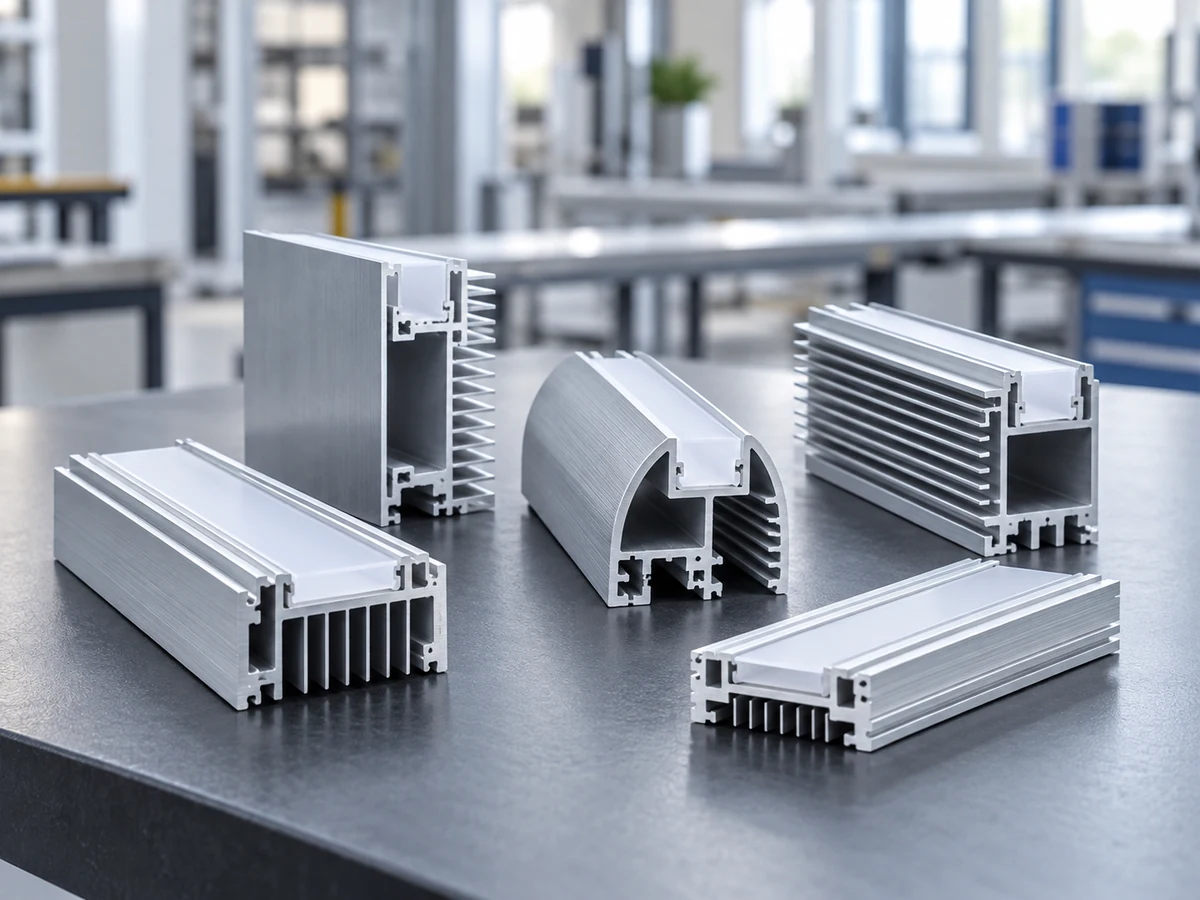
Do not send a single total-meter quantity when the order consists of several completed lengths. For every line, record the approved profile and revision, finish, retained length and its drawing datum, end treatment, required quantity, cover reference and length rule, end-cap references for each end, mounting or wire-exit variant, delivery format and receiving location. Label cosmetic faces and any section that cannot share the same locating or packing method.
Group only rows that truly share a profile family and compatible accessories. Two extrusions with similar outer dimensions can have different cover grooves or end-cap engagement. Keep left and right, cable-exit and closed-end versions separate where the design calls for them. A manufacturing list may aggregate raw bars for purchasing, but the order release must still resolve every accepted housing length and accessory variant. This is particularly important when short and long pieces use different covers or packaging.
Match the cover and end cap by system, not by appearance
Component compatibility is specific to the approved system. For example, KLUŚ publishes profile pages that identify corresponding covers, end caps and cutting options; its PDS-T-BOK product information says a nonstandard profile or cover length may require a cutting service, while its PDS-4-PLUS information notes a particular cover-length relationship with a dedicated end cap. Those are examples of why a buyer must check the actual product family, not instructions for another supplier’s extrusion.
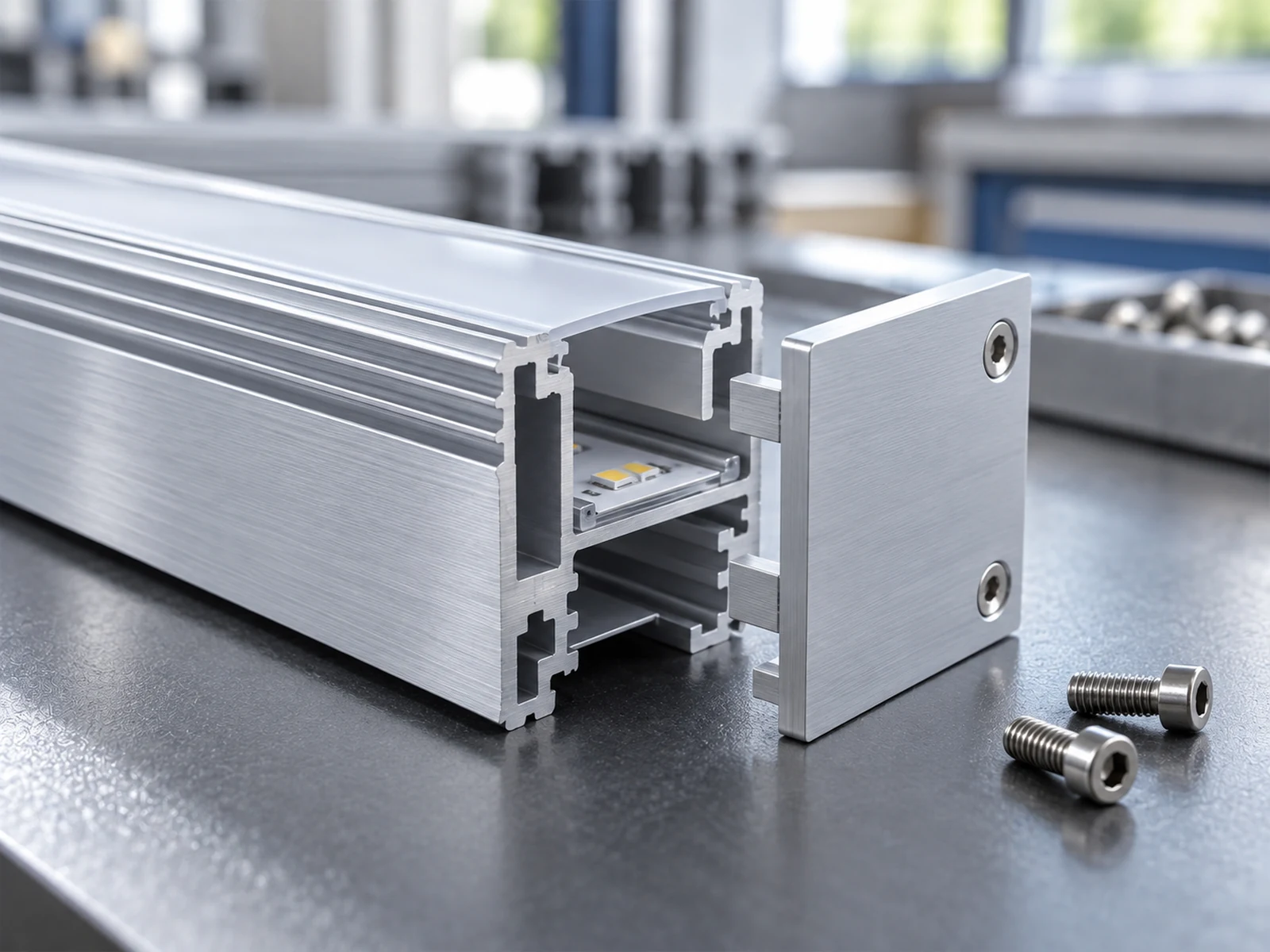
Request approved drawings or physical samples for the exact profile, cover and cap. Record whether the cover is measured to the same datum as the extrusion, is intentionally shorter or longer, or must be trimmed after assembly. Identify a cap with a cable outlet separately from a closed cap. Set the fit check with the system owner, including the visible gap, retention and any protected finish surfaces. Do not copy a dimension or fit allowance from a different lighting family.
How to quote LED housing mixed-length orders by accepted set
For LED housing mixed-length orders, a planning sheet should calculate demand by complete line item: accepted profile lengths, corresponding cover lengths, each end-cap variant and any buyer-specified hardware. Then derive raw-bar and cover-stock requirements from the approved cut plan. A high bar-yield estimate does not solve a shortage of matching covers or one wire-exit cap. Keep expected setup scrap, qualification pieces and replacement allowance visible as planning inputs supplied by the buyer or quoted supplier, not as a universal percentage.
For a mixed order, ask bidders to report the same output boundary: the number of accepted, identified sets available at the named receiving stage. If a bidder quotes only extrusion cuts, add the remaining cover cutting, accessory procurement, kitting, inspection and handling costs before comparing it with a matched-kit route. If the site is considering an in-house saw, include labor at changeover, actual bar utilization, blade and fixture service, inspection time, rework and the capacity of the downstream kitting station.
Trial the difficult length and a changeover
Select physical samples that represent the narrowest or least supported section, the shortest retained length, the longest practical support case and any cosmetic face at risk from handling. Those are test-selection principles, not machine capacity claims. The buyer should provide the released profile and a known-compatible cover and cap. Cut and identify the profile; inspect the retained end against the drawing; then perform a fit check with the actual mating components. Keep the cut result distinct from the completed lighting-unit approval.
Run at least one changeover between representative lengths or profile families if the planned order mix requires it. Confirm that the correct stock, datum, program, label, cover and cap return with the new line item. Document sample IDs, actual saw and fixture configuration, cut observations, component fit and any manual finishing still required. Our LED housing saw-trial guide details the cutting and fit evidence. A changed extrusion or accessory family needs a separate review; see the profile-change decision guide.

Receive by kit line, and hold incomplete or substituted lots
At receipt, match each carton and cut piece to the purchase-order line, profile reference, revision, finish, length and batch identity. Count covers and both cap types against the same line. Inspect packaging for bent edges, marked visible faces and mixed lengths before releasing stock to assembly. Sample the specified fit points with the approved mating parts under the buyer’s inspection plan. A paper count is not a substitute for the required fit evidence.
If a shipment contains good cut profiles but missing covers or caps, record them as controlled work in process only if the receiving contract allows split acceptance. Otherwise hold the line as incomplete. Do not silently substitute a similar extrusion, cover or end cap to clear an urgent order. Obtain design approval, revise the line identity, and decide whether a new cut or assembly trial is needed. Keep accepted, conditional and rejected quantities separate so a supplier’s yield claim cannot include parts that the buyer cannot use.
Send one RFQ package and compare one accepted outcome
- Released drawings and revisions for each profile family, with a list of every retained length and order quantity.
- Approved cover and end-cap references, including any cable-exit, mounting, finish and visible-face variations.
- Definition of the purchased unit: bare cut profile, matched component kit or complete assembly; named owners for cover cutting, cap supply, labeling, packing and inspection.
- Actual incoming stock, representative short and long parts, mating samples and the buyer’s cut-end and fit acceptance criteria.
- Required quote breakdown for setup and changeover, accepted-set output, inspection, material loss, accessory shortages, delivery splits and after-sales support.
Award the route that can repeatedly deliver the required accepted unit, with its unresolved assumptions written down. If the business retains aluminum cutting, send Jiurun the approved profile drawings, samples, cut list and target batch mix to discuss a suitable saw trial. Ask for a configuration and witnessed evidence for the real parts; do not infer a finished-luminaire result from a generic machine demonstration.
Equipment video: a general profile-cutting example
The embedded clip below is from Jiurun Machinery’s YouTube channel. We watched it showing general JR-455CNC aluminum-saw equipment and profile handling. It is equipment footage only: it does not show the lighting housings pictured here, their material or approved configuration, a customer order, a mixed-length kit trial, or achieved performance. Use the released drawing, samples and receiving plan above for a specific buying decision.
Discuss your mixed-length cut list
Send the profile family, approved accessory references, retained lengths, quantities and target receiving stage to JiurunCut. We can discuss which aluminum cutting work belongs in a saw trial and which kit or luminaire obligations remain with your product and assembly teams.