
LED aluminum housing profile change is a supply decision, not simply a new extrusion price. A revised section can alter where the cover seats, how an end cap locates, which face the saw can support, and what length is actually accepted at assembly. The buyer should approve the complete housing route before treating a new bar as interchangeable with the released one. This guide sets out the records, comparison and representative cut trial to request. It does not claim that any pictured section or machine has passed that trial.
LED aluminum housing profile change: define the affected interfaces
Start with the released housing family: the extrusion drawing and revision, cover or diffuser, end caps, mounting parts, finish, LED module arrangement and the receiving assembly. Identify whether the proposal changes only the extrusion source under the same approved drawing, changes the section geometry, replaces an accessory, or supplies a ready-cut housing kit. These are different purchase decisions. An alternate mill to the same drawing still needs source and first-lot approval; a different groove or wall shape may need a new assembly approval even when its nominal outside width looks similar.
Ask the supplier to mark every changed interface on a cross-section and to state what remains identical. In particular, check the cover-retaining lips, end-cap engagement, mounting channel, board or strip location, cable exit and any features used as saw support or clamp contact. A catalogue label such as “for LED strip” is not an interchangeability statement. For example, KLUŚ describes dedicated accessories and cover-length relationships for its own extrusion families, while LEDiL names specific profile and clip combinations. Those product-specific statements illustrate why a buyer must verify the exact proposed family rather than infer universal fit.
Compare three complete supply routes
Keep the released profile and supplier. This preserves the current approved part definition if the supplier can meet the required quantities and dates. Confirm actual available stock, finish, accessory continuity and the price for the same accepted housing, rather than assuming an old quotation remains executable.
Approve an alternate extrusion route. Request the proposed section drawing, revision, manufacturing source, finish, available stock lengths and matching accessory references. Decide whether the existing cover and caps are retained or a new matched set will be qualified. Include the work and time for cut-part and assembled-housing approval in the offer. An apparent bar-price saving can disappear if the plant must segregate two incompatible cover or cap families.
Buy ready-cut or prepared housings. Compare a supplier-delivered cut kit or prepared assembly at the same accepted stage as an in-house route. State whether covers, caps, cable exits, finishes, labels and protective packing are included. Buying a pre-cut bar without those items is not equivalent to buying a released luminaire housing.
Make the drawing and length references unambiguous
The RFQ should show the extrusion cross-section, face orientation and the datum for every cut length. Separate bar length, cut metal length, cover length, end-cap-to-end-cap length and finished luminaire outside length. Record which of these dimensions the receiving team will inspect. A saw can repeat a commanded length while the assembled cover or cap still fails to seat; the acceptance record must include the relevant assembled interface.
Specify the approved family and revision for the body, cover and each cap, including left/right or cable-exit variants where applicable. The KLUŚ PDS-4-PLUS product page, for example, explicitly ties equal cover and extrusion length to a dedicated end cap; that is a rule for that named system, not a dimension to copy into another design. Capture the proposed system’s actual condition in the buyer’s released documents. Keep electrical, thermal, optical and ingress-protection approval with the appropriate product authority rather than treating a clean saw cut as proof of those functions.
Use a mating sample, not a loose bar, to approve the change
Request a controlled sample set with the current released section and the proposed section, both labelled by drawing revision and lot. For each proposed housing variant, include the intended cover, cap and mounting component. The receiving team should inspect the cut metal end, cover seating, cap location, visible joint, cable-exit clearance and any assembled feature that the change could affect. Record pass/fail against pre-agreed drawings or master samples. Where an interface requires a separate electrical or environmental qualification, record its owner and status instead of calling the cutting trial a complete product release.
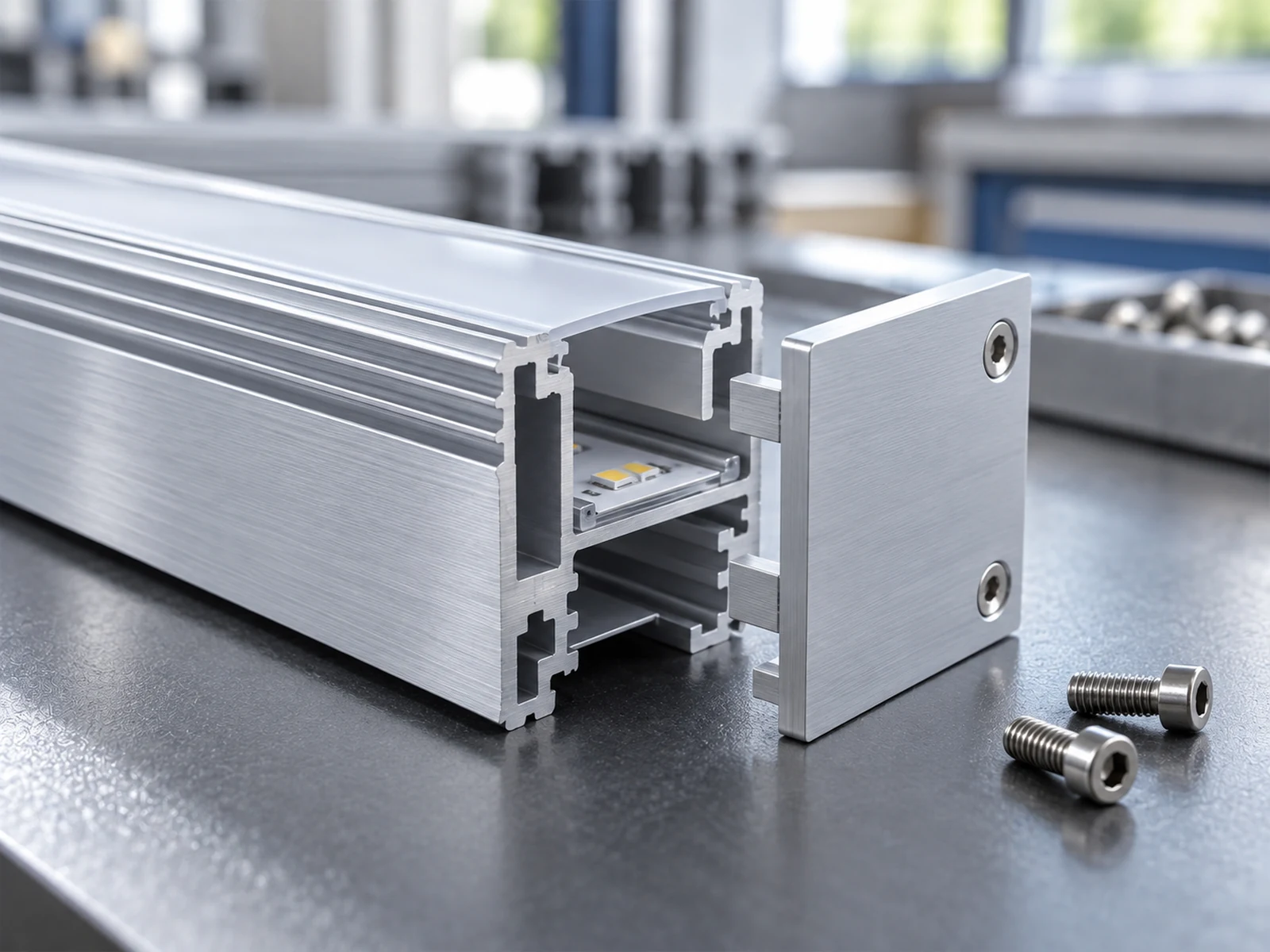
Do not merge several distinct issues into one vague “fit” result. A cover may snap in but have a changed visible line; a cap may enter but stand proud; a metal cut may meet its datum while the assembled outer length changes. Naming the failure mode lets the buyer decide whether to retain the original section, approve a matched accessory set, or change the receiving specification. It also gives the saw supplier a real part and inspection point to quote against.
Trial the actual saw route before purchasing capacity
For in-house cutting, supply representative stock from the proposed extrusion lot, the real support and clamp contact faces, the smallest and longest released members, and the end orientations used in production. Ask the machine supplier to identify the offered unit and configuration, the feed and support arrangement, and the cut sequence used. Inspect the cut ends and assembled interfaces after handling the parts as production would. If the profile is delicate or cosmetic, define which surfaces may contact fixtures and how marks are judged. Avoid extending a successful trial on one section to every profile or finish in the product family.
The quotation should separate cutting from any later drilling, deburring, cable-exit work, cleaning, coating, bonding, sealing or luminaire assembly. Jiurun supplies industrial aluminum and non-ferrous circular saw cutting equipment; this article makes no claim that its saw performs those later operations or achieves a specified finished-housing tolerance without an agreed configuration and test.
Equipment video: The Jiurun Machinery channel video below shows general saw and feed equipment footage. It is an illustrative equipment view only. It does not demonstrate the lighting housing profiles pictured here, the proposed material or model configuration, a customer job, a qualification cut, or any performance result.
Compare offers at the same accepted housing stage
Build the cost comparison around a defined period, released product mix and accepted receiving unit. For an in-house route, count approved bars, offcuts and rejected cuts, covers and caps, operator and inspection time, saw capacity, tooling and support, remaining processing, packing and traceability. For bought kits, include qualification samples, minimum orders, supplier lead time, delivery condition and the same downstream work. Compare delivered and accepted housings, not merely price per metre of extrusion or a quoted saw cycle.
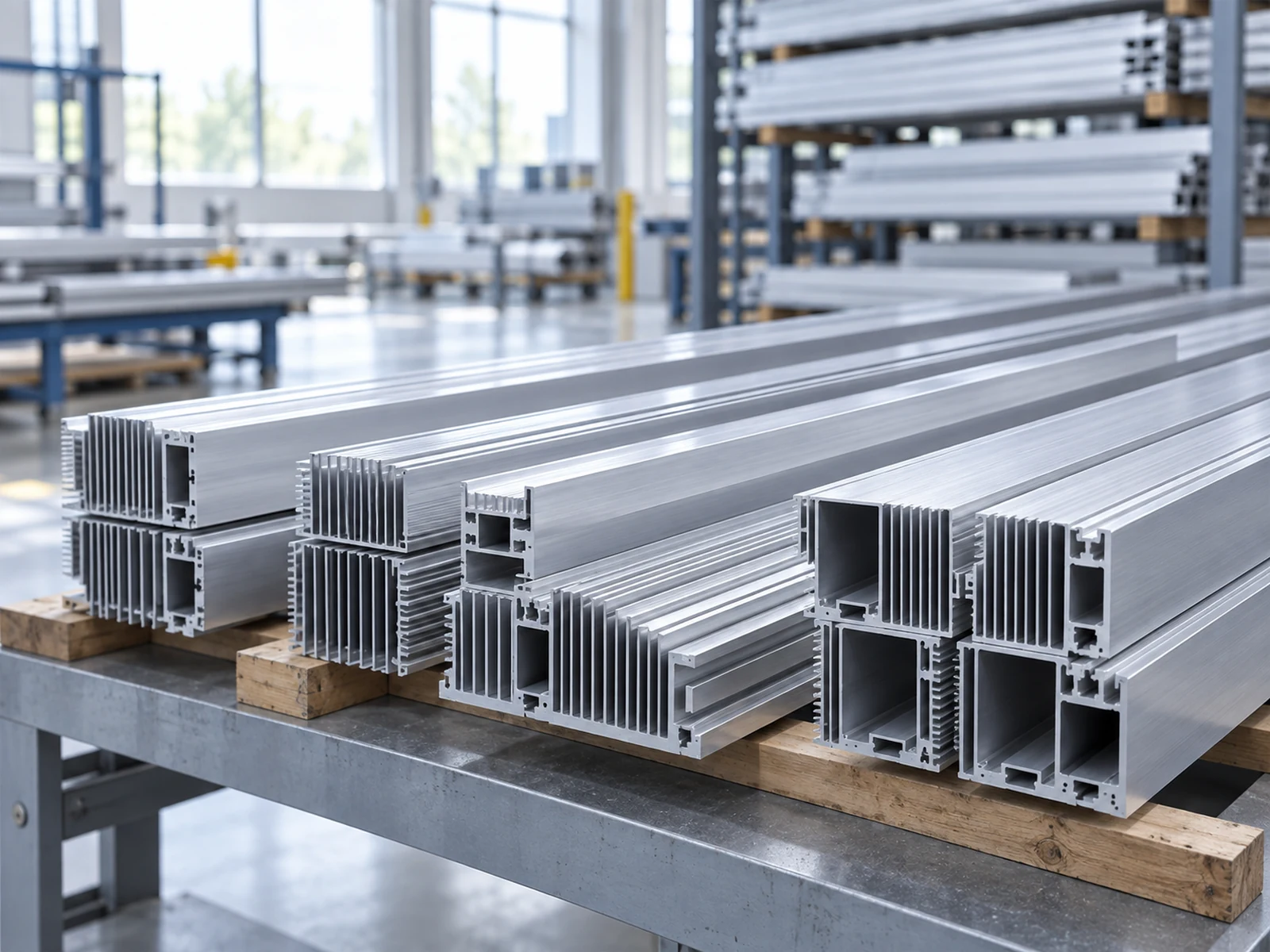
A supplier change can also create a transition cost. List old stock and accessories on hand, work orders already released, open spare-part commitments and the date after which a new section may be used. If both routes must coexist, specify separate identifiers and a policy for assemblies that mix old and new parts. Do not hide obsolete stock or rework behind a lower new-bar unit price.
Release the first production lot with traceable evidence
Agree who approves the new section, what the first-lot sample contains, where the approved drawing lives and how nonconforming material is held. Connect the extrusion lot to cut members and to the finished housing family. The first lot should include the same cover and cap variants that matter in regular production, with inspection results retained under the correct revision. A later finish or accessory change should trigger the relevant part of this review again; approval of one variant is not a blanket approval of every luminaire.
Set a fallback before phasing out the old source. Identify the last usable released stock, the supply date for the new matched accessories, and the responsible decision-maker if the first lot fails. This keeps a failed substitution from quietly becoming an urgent unapproved assembly change.
Put these questions in the RFQ
- Which exact extrusion drawing, revision, alloy/temper and finish are offered, and who controls changes?
- Which cover, cap, mounting and cable-exit part numbers are approved with that section?
- What is the receiving unit: cut metal member, cut kit, prepared housing or accepted luminaire subassembly?
- Which length datum and assembled fit are inspected, by whom, and against what released evidence?
- Which proposed stock lengths, lots, section variants and end orientations will the saw trial cover?
- What operations and accessories are outside the saw quotation, and who supplies them?
- How will old and new profile families be segregated, traced and supported as spares?
- What is the total cost and achievable supply date at the same accepted stage?
For an existing housing family, an LED aluminum housing profile change requires approval of a complete interchangeable route or visibly separate variants. A cut bar is only one input to that decision. Buyers comparing an initial LED housing saw trial, the wider lighting fixture manufacturing route, or an installed luminaire housing replacement should keep those separate approval purposes clear.
Source notes and next step
KLUŚ PDS-4-PLUS product information describes a dedicated end-cap condition for equal cover and extrusion length, and KLUŚ POLI product information identifies dedicated accessories and offered cutting service. The LEDiL FLORENCE-1R compatibility guide specifies named clip/profile combinations. These are examples of product-specific interface rules; none establishes compatibility or performance for an untested Jiurun project.
If you are comparing an in-house saw with prepared LED housing supply, send JiurunCut the released section drawing, approved accessory list, stock condition, member-length schedule and receiving acceptance points. Ask for an offered-machine configuration and a representative cutting trial against those records before committing to a purchase.