
The JR-650CNC loading line outfeed is a buying decision in its own right. Automatic presentation of a bar does not tell you where each accepted piece, first-piece hold, reject, and reusable remainder will go after cutting. If an operator must clear a small table before the next profile advances, the usable line output can be governed by that handoff rather than by the saw cycle. A quotation should therefore define the route from the blade exit to the buyer’s agreed collection point.
JiurunCut describes the JR-650CNC automatic feeding production line as a reference route for extrusion-line integration, while the final layout, capacity, and discharge arrangement remain project-specific. This article is a method for testing that proposal, not a statement that a particular conveyor, sorter, sensor, or storage buffer is standard. The companion bar-selection and single-profile-feed trial examines the upstream side. Here the purchase question is whether finished parts can leave the cutting zone without confusing identity or interrupting the next agreed feed cycle.
Draw the JR-650CNC loading line outfeed boundary
Begin the RFQ with a simple layout showing the saw, its proposed discharge opening, any support or transfer device, the operator position, and the final place where your plant accepts parts. Mark the exact point at which the supplier’s responsibility ends. A discharge chute, short table, conveyor, placed-part system, and staffed container are different scopes even when all are described as “outfeed.” Ask which items are supplied, which are optional, and which belong to the buyer or another integrator.
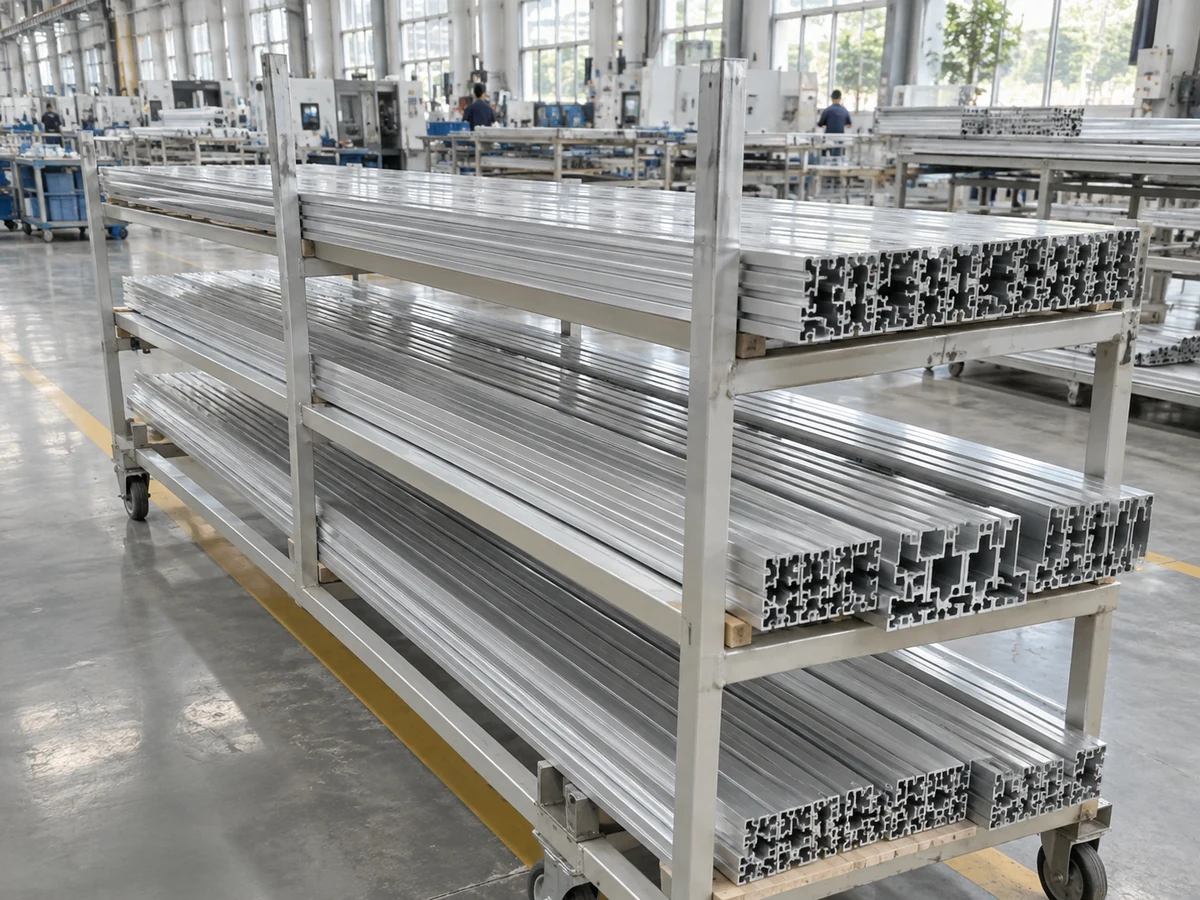
Do the same for non-accepted material. Identify a first-piece hold location, a reject route, the last usable section of the bar, and any offcut or sample bin. A drawing that shows only the intended product path is incomplete if the cell regularly handles trials, mixed lengths, or short remnants. The overview image used as this article’s featured illustration provides machine-line context; it is not evidence of the discharge hardware in a specific quotation or a witnessed production layout.
Test the longest and shortest approved pieces
Bring a cut list that includes the longest finished part you expect the collection system to receive, the shortest accepted part, and a representative middle length. Record the stock section, alloy or temper when relevant, incoming bar length, finished length reference, surface requirements, and receiving container for each. Have the supplier show how a piece is supported as it exits the cut and how it is transferred without a free drop, collision, or uncontrolled rotation that would violate your acceptance criteria.
The shortest piece may fall between supports or be hidden among offcuts; the longest may overhang the available collection area or demand a second person. Neither outcome can be settled from a catalog photograph. Our separate short-part outfeed support guide explains the support geometry in more detail. For this line purchase, ask the supplier to record the actual route and handling action for each length in the proposed configuration.
Measure whether removal interrupts the next feed
Define the trial boundary before timing anything. For each selected length, observe the cut, the movement of the finished piece away from the saw, the safe removal or transfer, and the point at which the next bar or cycle is allowed to proceed. If the discharge route becomes occupied, record whether the system waits, an operator clears it, or a proposed buffer holds the part. Do not describe a pause as a machine defect until the supplier and buyer agree which equipment and staffing were included in the trial.
Use the plant’s normal order size, part mix and staffing assumption. A steady run with an empty receiving area can hide the bottleneck that appears once a container fills or an inspector holds the first piece. Log the number of pieces cut, accepted, rejected and still awaiting inspection separately. Record manual touches and the reason for each wait. Compare the complete accepted-output window with the stated saw-cycle observation; do not turn either into a guaranteed production rate from one demonstration.
Also ask what a full container means operationally. Who notices it? Where does the next piece wait? Can the proposed equipment stop and resume according to its normal operating instructions, and who checks the first part after a restart? These are questions for the supplier’s documented sequence and a witnessed trial, not assumptions about a standard JR-650CNC control feature.
Keep accepted parts, holds and offcuts apart
The collection design should make the disposition of every part visible. Identify the accepted-part destination, first-piece inspection hold, rejected-piece container, and reusable-remnant route before the trial begins. Put the order ID and drawing revision on the receiving record or container at the point where responsibility transfers. If the output changes from one customer order to another, clear and reconcile the prior order before releasing the next.
Ask the supplier to demonstrate the physical distinction with your part family. A stack of similar extrusions is not a count record, and a cut command is not an accepted-part count. Reconcile accepted pieces against samples, rejects, pieces still inside a transfer path, and stock remaining after the last cut. The illustrative image below shows a rack and bins as a handling question; it does not document an actual JR-650CNC outfeed, a customer’s production, or a validated sorting system.

Compare quoted discharge arrangements on the same basis
A low-cost collection table can be appropriate when a person is already assigned to remove each piece and the space is sufficient. A supported transfer surface may reduce handling of longer parts. A conveyor or accumulation buffer may be justified when discharge would otherwise stop the next feed, but only if its length range, occupancy response, guarding, controls, handoff and maintenance access are defined. A sorting or placed-part system adds another requirement: it must preserve order identity and produce a verifiable count, not merely move material away from the blade.
Ask every supplier to quote the same boundary. Compare included equipment, civil or electrical interfaces, operator tasks, inspection hold points, spare collection containers, and the exact sample-cut acceptance record. If one quotation ends at the saw exit and another includes a downstream conveyor and release station, their prices do not describe the same deliverable. For the general model route and the need to confirm discharge with the buyer, see JiurunCut’s extrusion cutting line overview.
A witnessed outfeed trial record for the buyer
For each representative part, capture the drawing revision and stock identity; the proposed machine and discharge configuration; support and destination; the cut and transfer sequence; any wait or manual intervention; length and surface inspection method; accepted, rejected and held quantities; and the person who releases the lot. Photograph the agreed boundaries with permission and label the images by step. If the test uses substitute stock or an unquoted temporary table, mark those differences in the record and leave the production arrangement unqualified.
At the end, ask the supplier to mark each unresolved item as included, optional, buyer-supplied, or requiring a separate engineering review. A strong acceptance plan states what the installation trial will repeat, which results will be recorded, and what happens if a short piece, full container, or handoff pause fails the agreed criteria. This gives procurement a practical comparison, not a promise extrapolated from an attractive demonstration.
What the equipment video can show
The following clip is from Jiurun’s own YouTube channel. It shows a different JR-455CNC automatic saw as a general equipment and feed/cut sequence example. It does not show the JR-650CNC loading line, this article’s discharge arrangement, quoted configuration, stock, customer, accepted counts, outfeed timing or performance. Use it only to frame questions for a witnessed test on your actual parts.
Send a complete outfeed question with your RFQ
Send your part drawings, stock and finished-length range, cut list, required output identity, available floor space, and the collection point your plant expects. State who will inspect first pieces and who will remove filled containers. Ask JiurunCut to return a layout, included-equipment list, operator actions, a representative trial sequence and an installation acceptance plan that covers the shortest and longest pieces. Contact JiurunCut with that package before comparing machine quotations.