
JR-510CNC vs JR-650CNC is a production-route decision, not a contest between two model numbers. For an energy-storage aluminum frame kit, the useful output is a complete, accepted set of parts released to assembly at the required pace. A saw that produces one easy rail quickly may still leave a kit short of crossmembers, angled ends, or usable last-bar pieces. Before asking for either model, define the project mix, the acceptance rules, and the exact configuration being quoted.
The comparison below is a buyer’s trial plan. It does not claim that either machine achieves a particular tolerance, cycle time, scrap rate, or automatic function on your stock. Jiurun’s energy-storage cutting overview describes JR-650CNC-3A-1S as a direction for recurring automatic batch production and JR-510CNC-3A-1S as a direction for changing project lists and mixed lengths. Treat those descriptions as starting hypotheses. Your drawings, profiles, handling layout, and signed trial decide whether either route fits.
Start with one released kit, not a machine brochure
Give each supplier one controlled drawing pack and cut list. It should state profile family and alloy/temper where known, stock length and straightness assumptions, every finished length and quantity per kit, cut orientation, required datum, visible faces, downstream joining allowance, and the allowed method for checking burrs and cut-end geometry. Mark which dimensions are critical to assembly and which are merely stock-preparation dimensions. If a datum or acceptance method is missing, resolve it before a machine trial; otherwise two operators can report different results from the same cut.
Separate a mixed-project kit from a repeat batch. The mixed kit should contain the real sequence of changing profiles, short and long pieces, and the changeovers buyers expect in a week. The repeat batch should use the recurring high-volume family, with the actual replenishment and outfeed rhythm. Keep input stock, acceptance gauges, operator duties, and shift assumptions visible. This prevents a polished single-profile demonstration from standing in for the project that will be purchased.
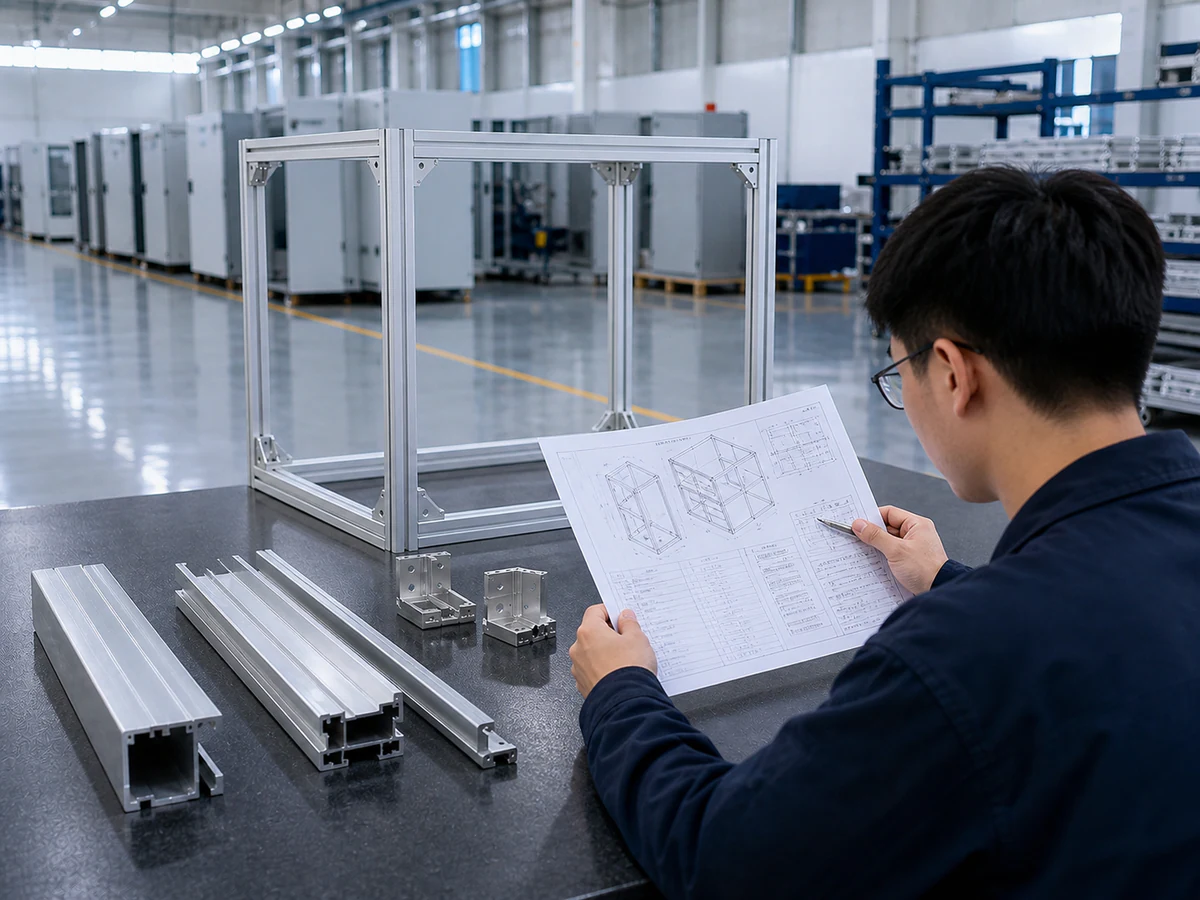
What the JR-510CNC route needs to prove
The JR-510CNC-3A-1S direction is worth testing when jobs change often and a buyer must deliver many different frame-kit line items in small or medium runs. Its value would come from completing the mix with controlled setup, sound support, and traceable first-piece approval—not merely cutting a chosen profile. Ask the supplier to show the actual quoted unit, its fixture and feed arrangement, and the operator steps required to change between your sections and lengths.
Run the mixed kit in the sequence your shop uses. Record time and material consumed in finding the first accepted part after each change, then record the count of accepted pieces for every line item. Include the final usable bar length under the same cutting plan used in production. A changeover should be counted from the last accepted part of the prior item to the first accepted part of the next item, including fixture, blade, program, gauge, and inspection work that your operators will really perform. If a special clamp or support is needed, put it in the quotation and trial record.
For a narrower last-bar discussion, use the JR-510CNC tail-pulling quotation checklist. For trial design across changing sections, use the mixed-profile trial guide. Those pages address specific checks; this comparison uses their evidence to decide a whole-kit route.
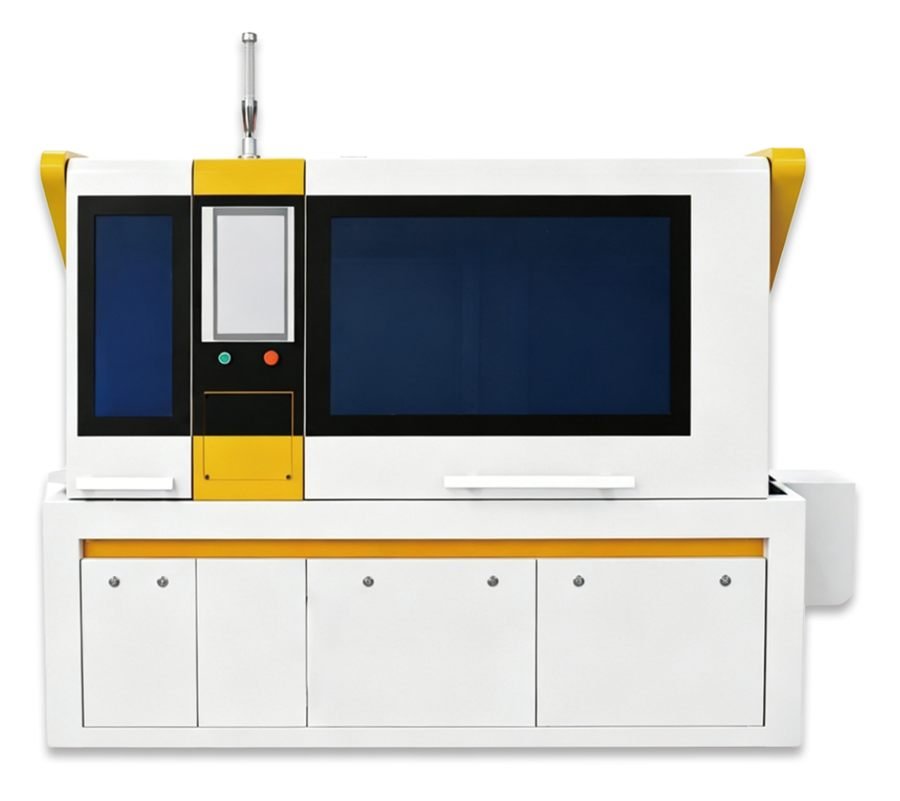
What the JR-650CNC route needs to prove
The JR-650CNC-3A-1S direction is worth examining when one or a few frame families repeat in batches and the production question centers on feed, support, cutting, and outfeed over sustained runs. A larger-looking machine is not automatically a better purchase. Ask whether the quoted feed and handling system keeps the accepted kit moving without adding an unplanned second operator or a manual sorting bottleneck after the cut.
Use the repeat batch to measure the time from a released cut list to complete, inspected kits staged for the next operation. Observe the first part, parts after a program or stock change, several consecutive parts during steady running, and the final stock segment. Record interruptions, operator interventions, changeover time, rejected or reworked pieces, and how pieces are identified for each kit. If the machine is shown with rollers, automatic loading, tail handling, or special clamps, identify precisely which are included in the offer and which are demonstration equipment.
Be especially careful with the model name. The Jiurun material identifies more than one JR-650CNC-3A-1S catalog presentation, including a long-stroke version. The Jiurun Machinery automatic-saw category lists the model families, but the category listing is not an offer for your specific configuration. Do not transfer a dimension, feed arrangement, or end-of-bar claim from one illustration to another quotation merely because the model label matches. Have the vendor mark the exact revision, physical layout, options, stock range, and utility requirements on the proposed bill of equipment. The JR-650CNC quotation checklist gives additional feed and section questions.

JR-510CNC vs JR-650CNC: run two trials with the same acceptance rules
Give both candidate routes the same two scenarios, even if one supplier expects to excel in only one. This reveals where a route earns its place and where the operating cost moves to the buyer. Do not compare a factory’s best cycle-time screen with another factory’s complete inspected kit. Use the same start and stop definitions, gauges, representative stock, and line-item reconciliation for each run.
| Trial question | Mixed-project kit | Repeat batch |
|---|---|---|
| Output unit | All required lengths and profile families for one accepted kit | A stated number of complete, accepted kits |
| Time boundary | Last accepted prior item to first accepted new item, then kit completion | Released list to inspected kits staged at outfeed |
| Material record | Stock used, setup pieces, remnant and final usable bar | Stock used, interruptions, rejected pieces and remnants |
| Quality checks | First piece after every setup plus assembly-critical ends | First, consecutive, post-interruption and last-bar pieces |
| People and equipment | Who changes fixtures, programs and gauges | Who loads, monitors, sorts and clears outfeed |
For a JR-510CNC vs JR-650CNC decision, compare both trials at the same accepted-kit boundary. At sign-off, reconcile the accepted piece count against the kit bill of materials. A run with ninety-nine good rails and one missing crossmember is not a complete kit. If a result is inconclusive because stock was substituted or a fixture was unavailable, mark it inconclusive and repeat that portion with the right input. Avoid turning a demonstration into a promise about finished-part precision. Feed-position data, if quoted, are not the same thing as verified length, squareness, or assembly fit on finished parts.
Measure the surrounding line, not just the saw
Map stock receiving, staging, loading, cut-part collection, identification, deburring, inspection, and transfer to assembly. Check the longest incoming bar against the real floor plan, including safe access to maintenance points and the swing or travel of any moving support. Ask how the operator handles an occasional short section or an urgent engineering change while a repeat batch is queued. A route that saves cutting time but blocks inspection or outfeed may not improve accepted-kit delivery.
For both models, request a side-by-side quotation with machine revision, fixture set, blade and coolant assumptions, feed/roller/infeed and outfeed scope, electrical and pneumatic requirements, installation responsibility, training, spares, acceptance trial, and exclusions. Require photographs or a layout of the exact quoted arrangement. If an option is essential to the observed trial, make it an included line item, not a note that can disappear from the purchase order. Check service access and spare-parts support with the same attention as the first purchase price.
Use the video as an equipment example only
The following video is from Jiurun Machinery’s own YouTube channel and shows general JR-650CNC equipment and material-handling activity. It is an example of the kind of process to ask about. It does not demonstrate your energy-storage frame material, the offered configuration, a customer’s accepted parts, a JR-510CNC comparison, or a verified cycle time or cutting result. Confirm all such points in your own documented trial.
Make the purchase decision from accepted kits
Favor a JR-510CNC trial outcome if the mixed-project scenario repeatedly delivers complete kits with less changeover burden, less setup loss, and a manageable operator workflow at the quoted configuration. Favor a JR-650CNC trial outcome if the recurring batch delivers complete accepted kits at the needed pace with stable handling, clear outfeed, and justified space and staffing. If the evidence splits, a buyer may need two production routes or a revised process plan rather than forcing one saw into both jobs. The model badge alone cannot decide this.
Before issuing a JR-510CNC vs JR-650CNC purchase order, attach the signed cut list, acceptance method, trial record, annotated machine layout, itemized configuration, and responsibility for any remaining process steps. Ask the vendor to state what will be repeated at factory acceptance and at your site. This makes the comparison reproducible when the project mix or people change.
Next step: Send JiurunCut your released frame-kit drawings, stock list, quantity by part, project-mix forecast, and available floor layout through the contact page. Request a configuration-specific JR-510CNC versus JR-650CNC trial plan that reports complete accepted kits, not an unqualified machine-speed claim.